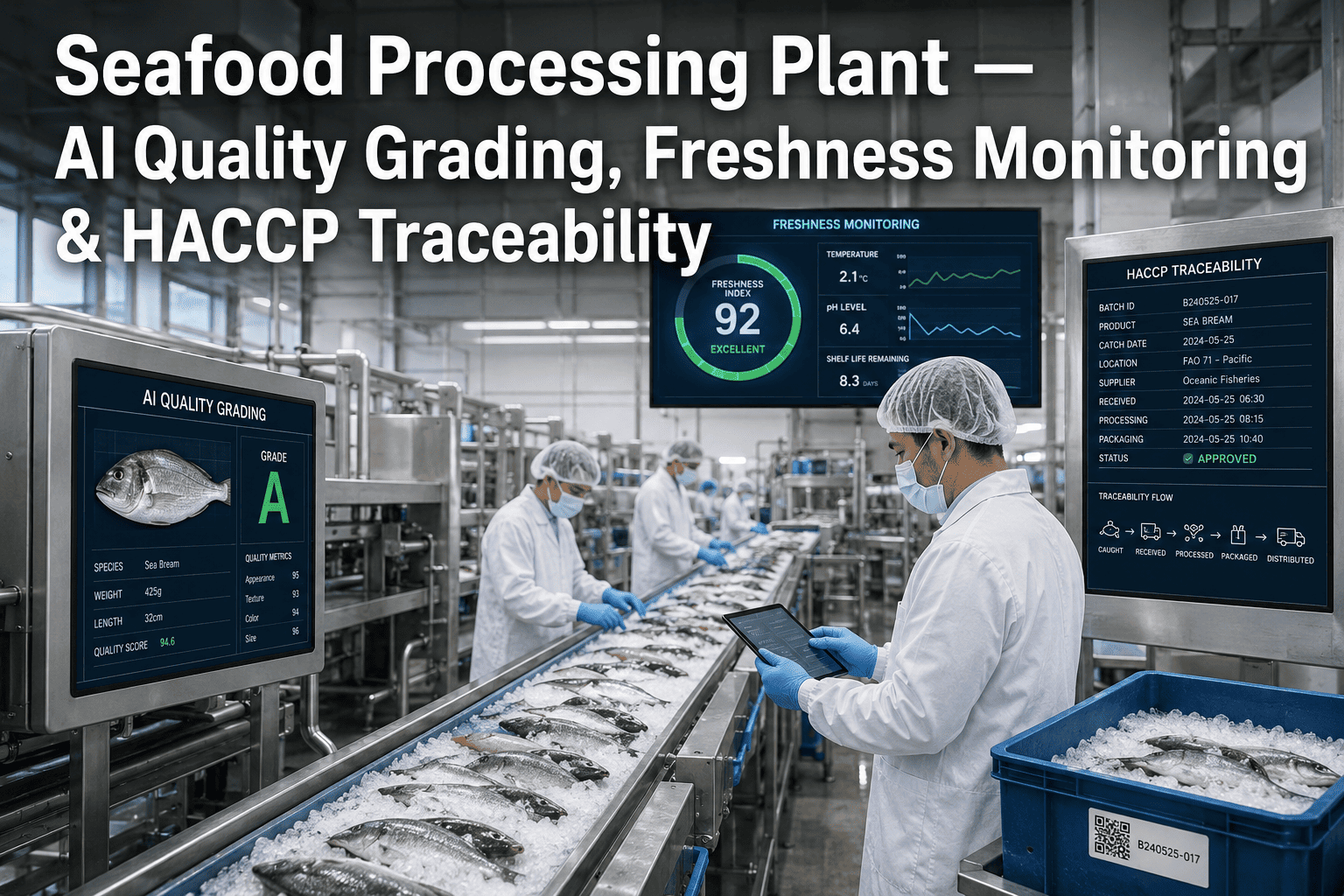
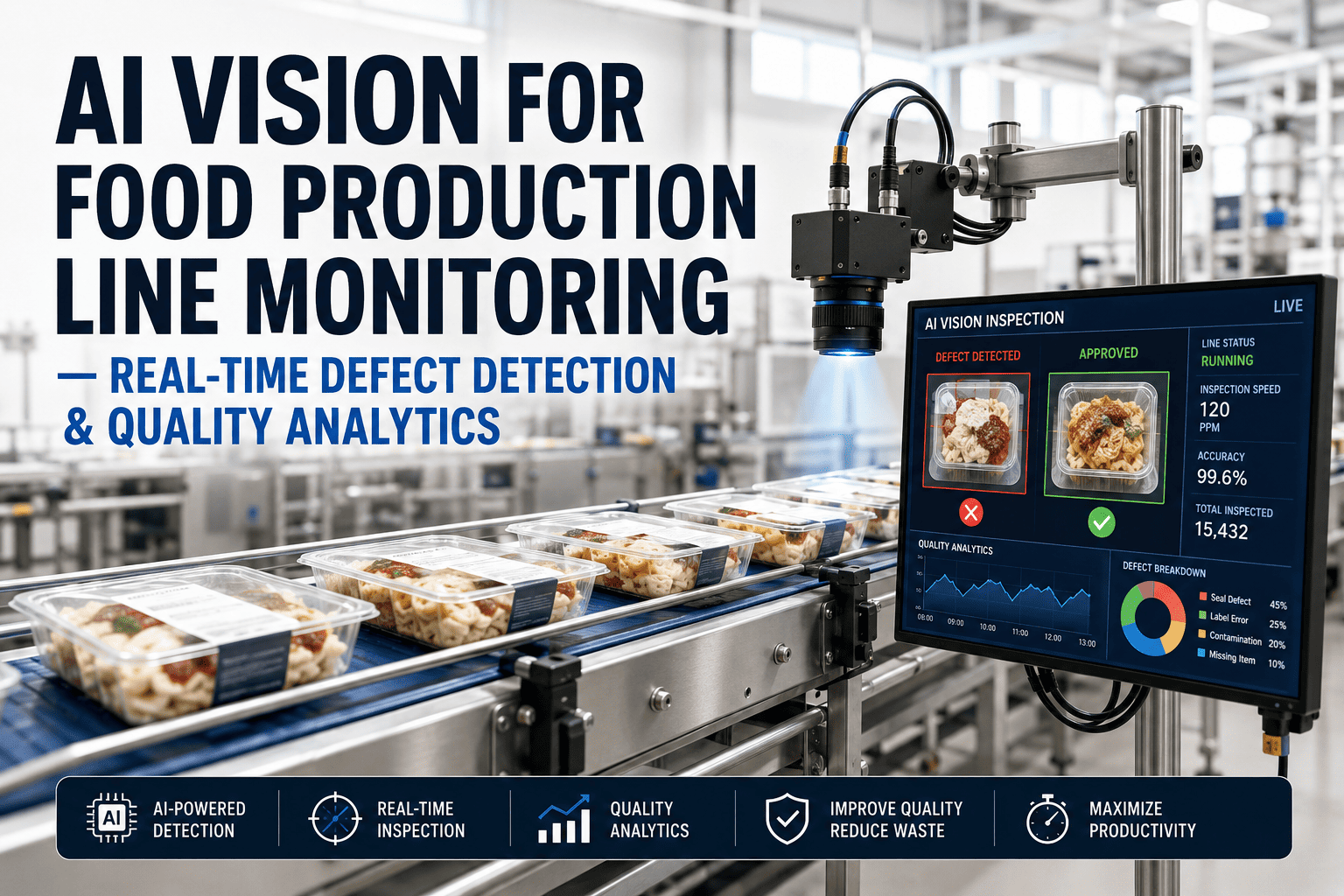
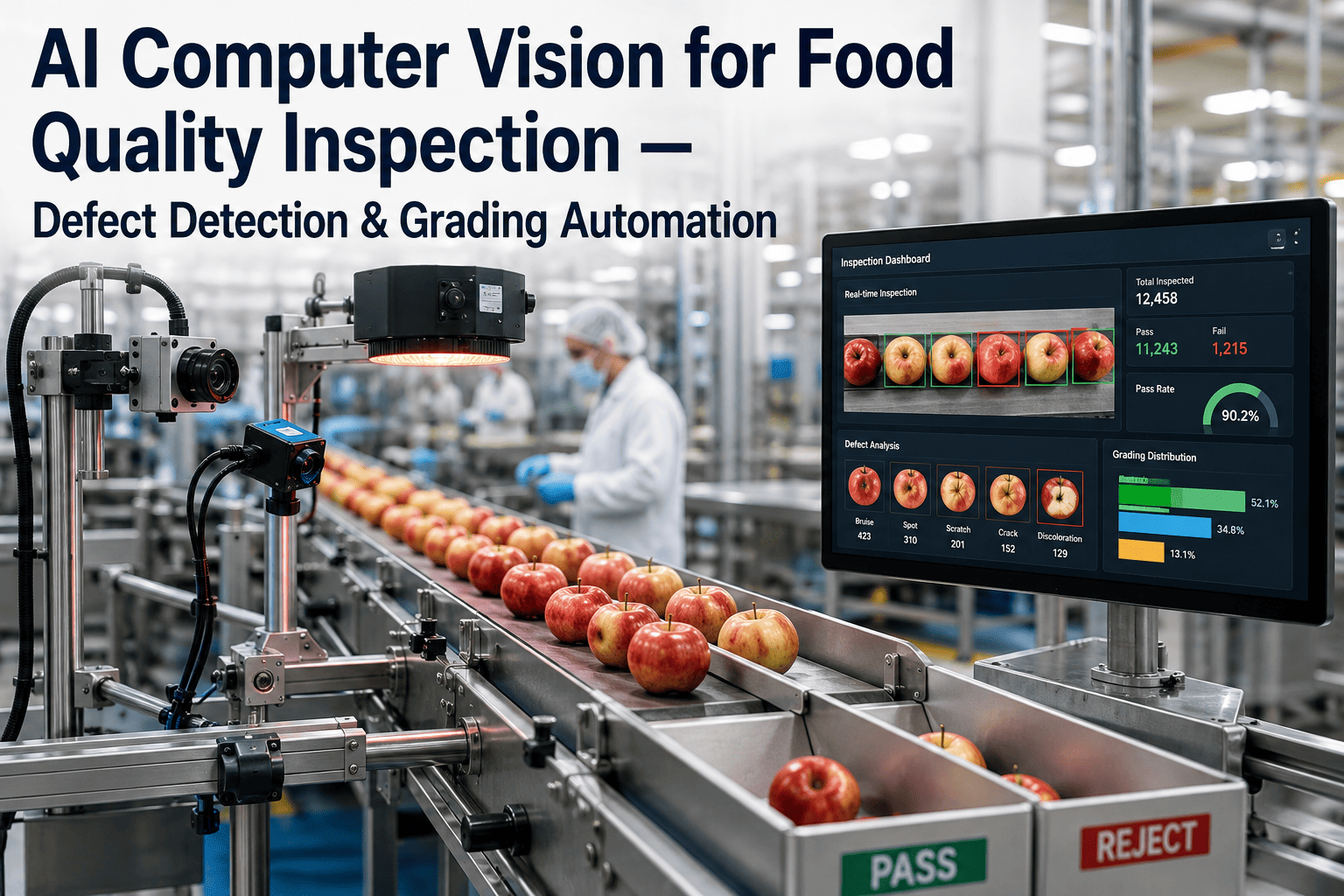
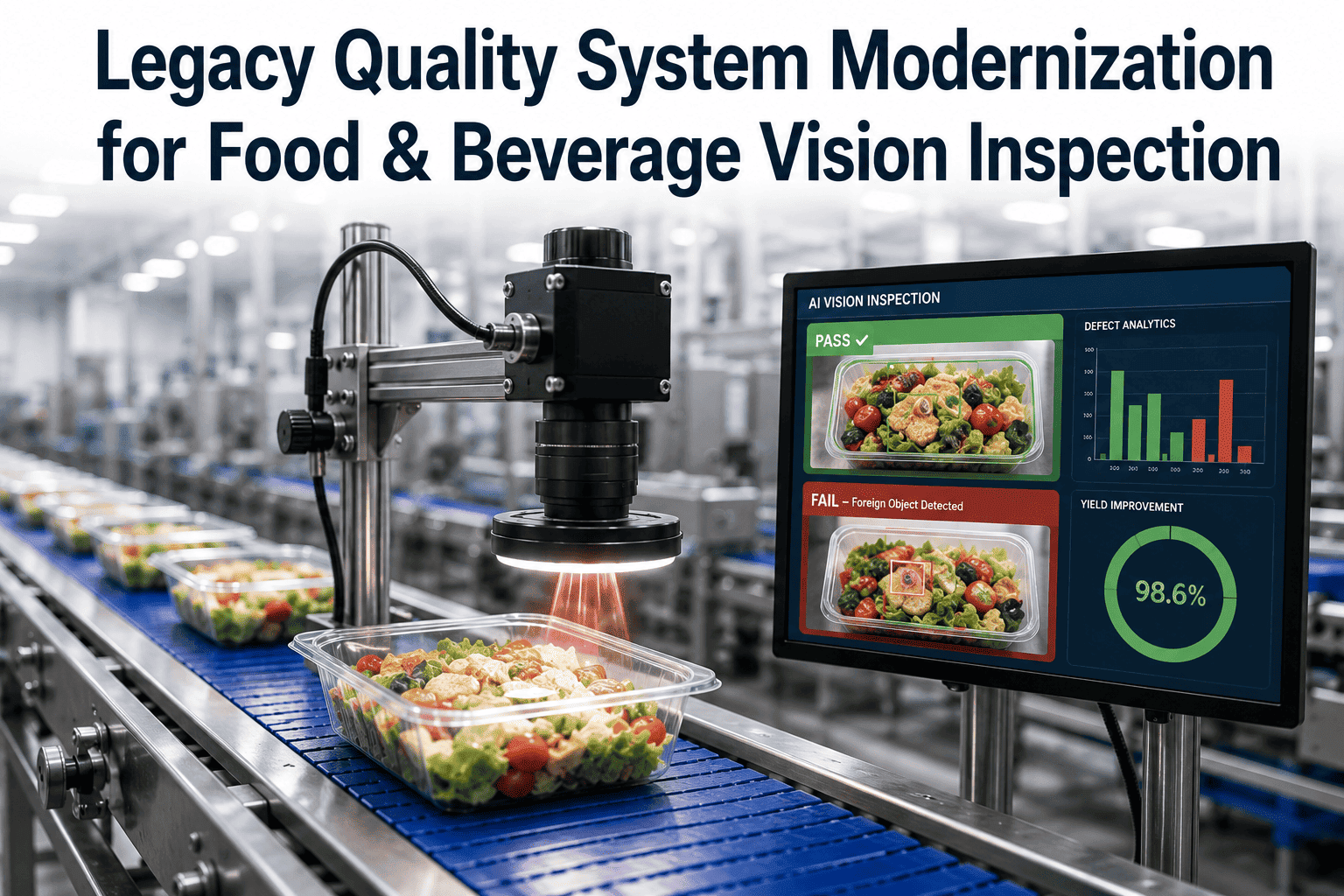
Seafood processing plants face a grading problem that human inspectors have handled the same way for decades: a line worker glances at eye clarity, gill color, and skin sheen for a fraction of a second before a fillet moves on to the next station. That visual snapshot decides whether a batch is graded premium, standard, or rejected, and it happens thousands of times per shift under fluorescent light that shifts color perception, at a line speed that leaves little room for a second look. Parasite detection is even harder, because Anisakis larvae in whitefish species are often translucent, embedded in muscle tissue, and nearly invisible under standard lighting conditions that most plants still rely on. AI vision systems are now being deployed across seafood processing lines to standardize freshness grading and catch parasites that manual candling misses, and the shift is happening because buyers, regulators, and export markets are demanding consistency that manual inspection alone cannot deliver.
Why Manual Freshness Grading Breaks Down at Scale
Freshness grading in seafood processing depends on a handful of visual signals that fade in a predictable but non-linear way after catch: eye clarity moves from convex and transparent to sunken and cloudy, gill color shifts from bright red to brown and grey, and skin loses its metallic sheen and firmness. Trained inspectors can read these signals reasonably well in isolation, but consistency collapses across shifts, fatigue cycles, and lighting conditions that vary from one processing line to another. A fillet graded premium by one inspector at the start of a shift may be graded standard by a different inspector three hours later, and that inconsistency creates downstream problems for export documentation, customer complaints, and price negotiation with buyers who expect grading to match a fixed specification rather than an individual's judgment on a given day.
Three Visual Signals AI Vision Reads on Every Fish
AI vision systems for seafood grading do not attempt to replace an inspector's judgment with a single automated pass or fail rule. Instead, the system captures high-resolution images of each fish or fillet at multiple points on the line, extracts specific visual features that correlate with established freshness indices, and scores each feature against calibrated reference ranges built from thousands of graded samples. The result is a numeric freshness score paired with a category grade, both of which are logged with a timestamp and image reference so that grading decisions can be audited later if a customer or regulator raises a question about a specific batch.
Eye Clarity and Convexity
Cameras positioned above the line capture the eye region and measure corneal transparency, convexity of the eyeball, and pupil definition. As freshness declines, the eye flattens and clouds in a way that AI models trained on graded reference sets can score more consistently than a human glance under variable line lighting.
Gill Color and Texture
Gill covers are lifted or exposed at a dedicated station where a camera reads color saturation across the red to brown spectrum along with mucus texture and filament separation. Color drift that would be subtle to a fatigued inspector's eye is measured numerically against a calibrated freshness curve.
Skin Sheen and Firmness Proxy
Surface reflectance and scale pattern integrity are captured under polarized lighting to reduce glare interference. Loss of metallic sheen and early signs of scale lifting are flagged as proxies for declining firmness, supplementing the eye and gill signals into a combined freshness index.
Species-Specific Calibration
Freshness curves differ across species such as cod, haddock, salmon, and tilapia, so the vision model is calibrated per species rather than applying one generic threshold, which keeps grading accuracy consistent as a plant processes mixed species runs across a single shift.
Catching Anisakis and Other Parasites Before They Reach Packaging
Anisakis simplex and related nematode species are among the most consistent food safety concerns in whitefish processing, particularly for cod, haddock, herring, and mackerel destined for raw or lightly cured consumption. Manual candling, where a fillet is held up against a light table for visual inspection, remains standard in many plants, but larvae embedded deeper in muscle tissue or positioned against the bone are frequently missed, especially at the line speeds required to meet daily throughput targets. AI-assisted transillumination changes the detection approach by pairing a calibrated light source with a camera and a trained detection model that flags larvae shapes and shadow patterns far more consistently than a human eye scanning a moving fillet for a few seconds. Book a Demo to see how transillumination detection performs against your current whitefish species mix and line speed.
| Detection Method | Typical Detection Rate | Line Speed Impact | Documentation |
|---|---|---|---|
| Manual candling only | 25–35% of embedded larvae | Requires dedicated slow-down station | Paper log, inconsistent |
| Manual candling with magnification aid | 40–55% | Moderate slow-down | Paper or basic digital log |
| AI-assisted transillumination | 85–95% | Maintains standard line speed | Automated image record per fillet |
| AI transillumination with multi-angle imaging | 92–98% | Maintains or improves line speed | Automated, audit-ready image trail |
How a Seafood Plant Rolls Out AI Vision Grading
Plants that adopt AI vision grading typically move through a staged rollout rather than replacing manual inspection outright on day one. The first stage runs the vision system alongside existing manual grading so that the model's output can be compared against inspector judgment and calibrated to the plant's own product mix and lighting environment. Once the model's scoring aligns closely with the plant's grading standard, the system moves into a primary grading role with manual inspection shifting to spot-check and exception handling rather than line-by-line assessment.
Baseline Calibration
Cameras are installed at eye, gill, and skin inspection points and calibrated against the plant's current graded reference samples across each species processed.
Parallel Run
The AI system scores product alongside manual inspectors for a defined evaluation window, and scoring gaps are reviewed and used to refine the model thresholds.
Primary Grading Transition
The vision system becomes the primary grading and parasite screening layer, with automated logging feeding directly into quality and export documentation systems.
Continuous Model Refinement
Grading accuracy is reviewed on a rolling basis as new species, seasons, and supply sources introduce visual variation that the model is retrained to account for.
What iFactory's AI Vision Layer Adds for Seafood Processors
Beyond the camera and model layer, the value for most seafood processors comes from connecting grading and parasite screening data into the systems that already run the plant, including quality management records, export documentation, and traceability platforms that buyers and regulators increasingly require.
Automated Grade Logging
Every freshness score and parasite screening result is time-stamped, linked to a batch and lot number, and stored with the source image for later audit or customer dispute resolution.
Species-Level Calibration Library
Grading models are maintained per species and updated as new reference samples are added, so mixed-species processing days do not degrade accuracy.
Export Documentation Integration
Grading and screening results feed directly into export certificate workflows, reducing manual data entry and the risk of documentation mismatches at customs.
Exception and Alert Routing
Borderline grades and any parasite detection flags are routed to a supervisor station for rapid human confirmation rather than sitting in a batch review queue.
Standardize Freshness Grading and Parasite Screening Across Every Line
iFactory's AI vision platform reads eye clarity, gill color, skin texture, and embedded parasite signals at full line speed, replacing inconsistent manual snapshots with a documented, audit-ready grading record for every fish that crosses the line.
AI Vision for Seafood Grading — Frequently Asked Questions
Yes, the grading model is calibrated per species rather than applying a single generic threshold across every product. When a plant switches between cod, haddock, salmon, or tilapia on the same line, the system references the calibration profile matched to the species being processed at that moment, so grading accuracy does not degrade during mixed runs. Plants that regularly introduce new supply sources or seasonal species can add new reference samples to expand the calibration library over time, and booking a demo is the fastest way to see calibration performance against your specific species mix.
Standard manual candling relies on an inspector holding a fillet against a light source and visually scanning for larvae shapes within a few seconds, which misses larvae embedded deeper in muscle tissue or positioned against bone structures. AI-assisted transillumination pairs a calibrated light source with a camera and a detection model trained on thousands of confirmed larvae images, allowing the system to flag shadow and shape patterns that are difficult for a human eye to catch consistently at line speed. This typically raises detection rates from the 25 to 55 percent range achieved by manual methods to 85 percent or higher.
Properly configured AI vision grading is designed to run at existing line speeds rather than introduce a new bottleneck, since image capture and model scoring happen in milliseconds at each inspection point. In most deployments the line speed impact is neutral to positive, because manual candling stations that previously required a deliberate slow-down for careful visual inspection can be integrated into the same throughput as automated capture, removing the dedicated pause that manual methods often require.
Borderline freshness scores and any parasite detection flags are routed automatically to a supervisor or quality technician station for rapid human confirmation rather than being auto-rejected or auto-approved without review. This exception routing keeps a trained person in the loop for the cases that matter most while removing the burden of reviewing every single unit on the line, and every flagged event is logged with its source image for later reference.
Yes, every freshness grade and parasite screening result is stored with a timestamp, batch identifier, and reference image, which many processors feed directly into export certificate workflows and buyer-facing quality documentation. This reduces manual data entry and the risk of mismatches between what was actually inspected and what appears on shipping paperwork, and gives processors an auditable record if a customer or regulator raises a question about a specific shipment.
Bring Consistent, Documented Grading to Every Fish on the Line
iFactory's AI vision platform standardizes freshness grading and parasite detection across every species and shift, replacing inconsistent manual snapshots with a calibrated, auditable inspection record.