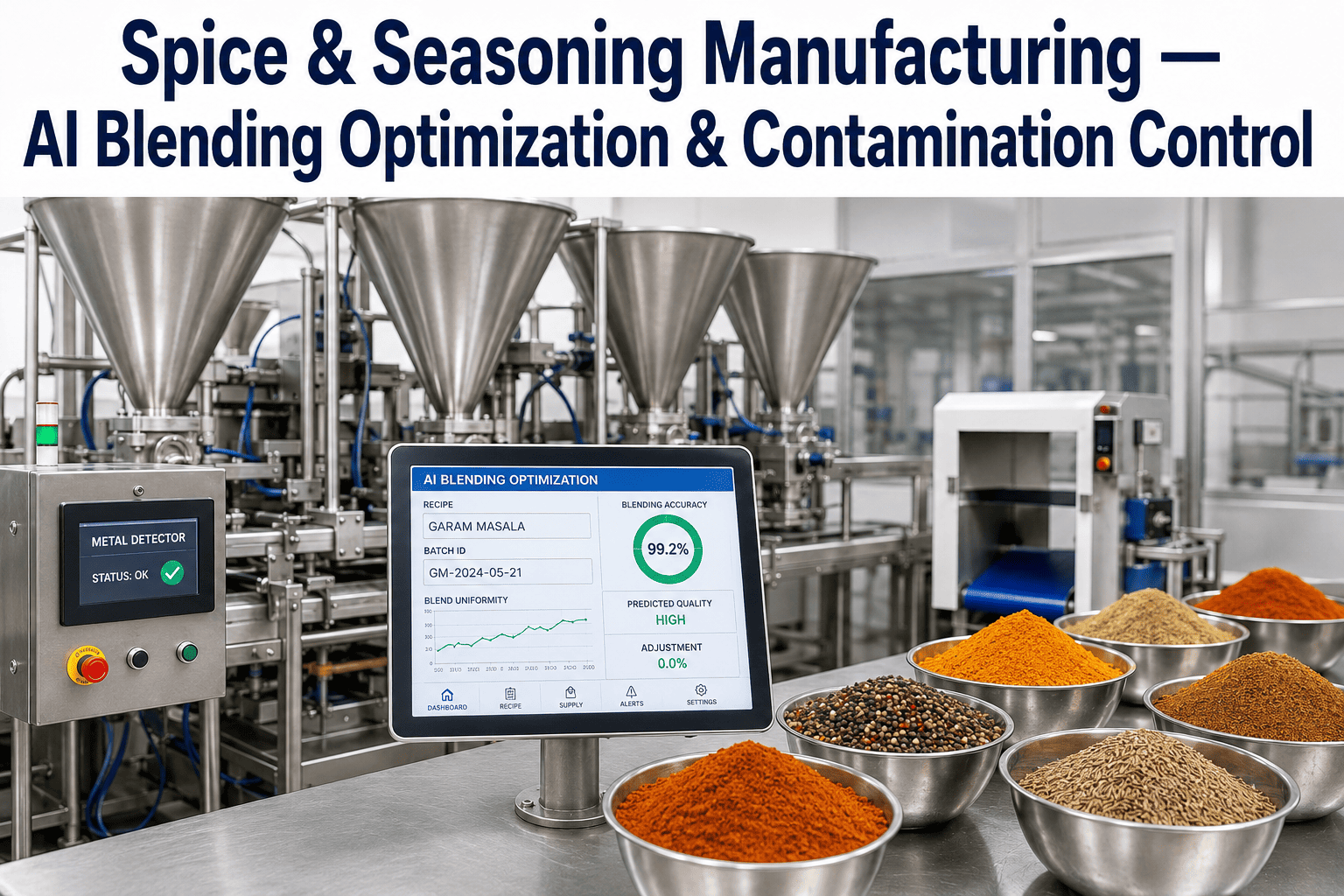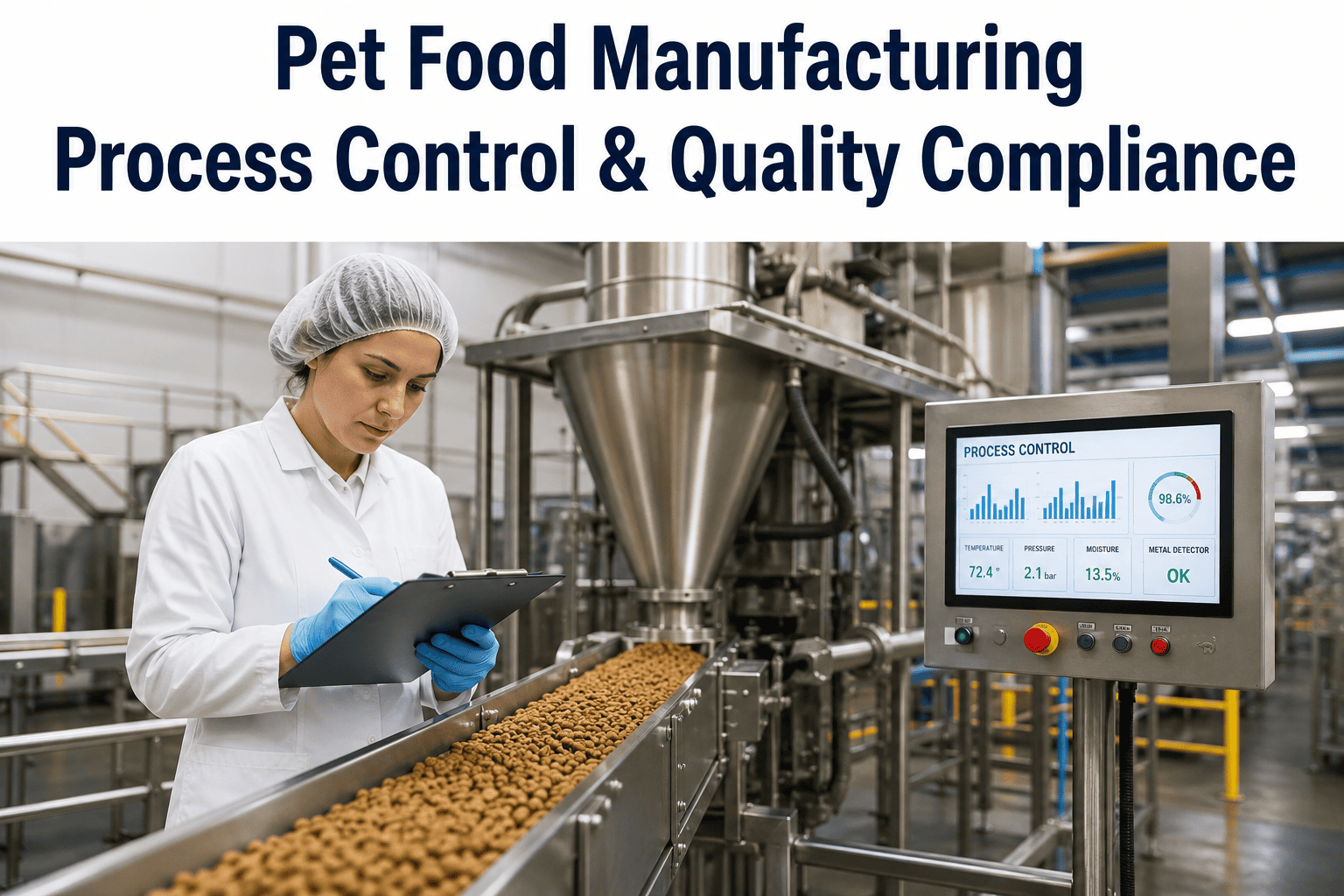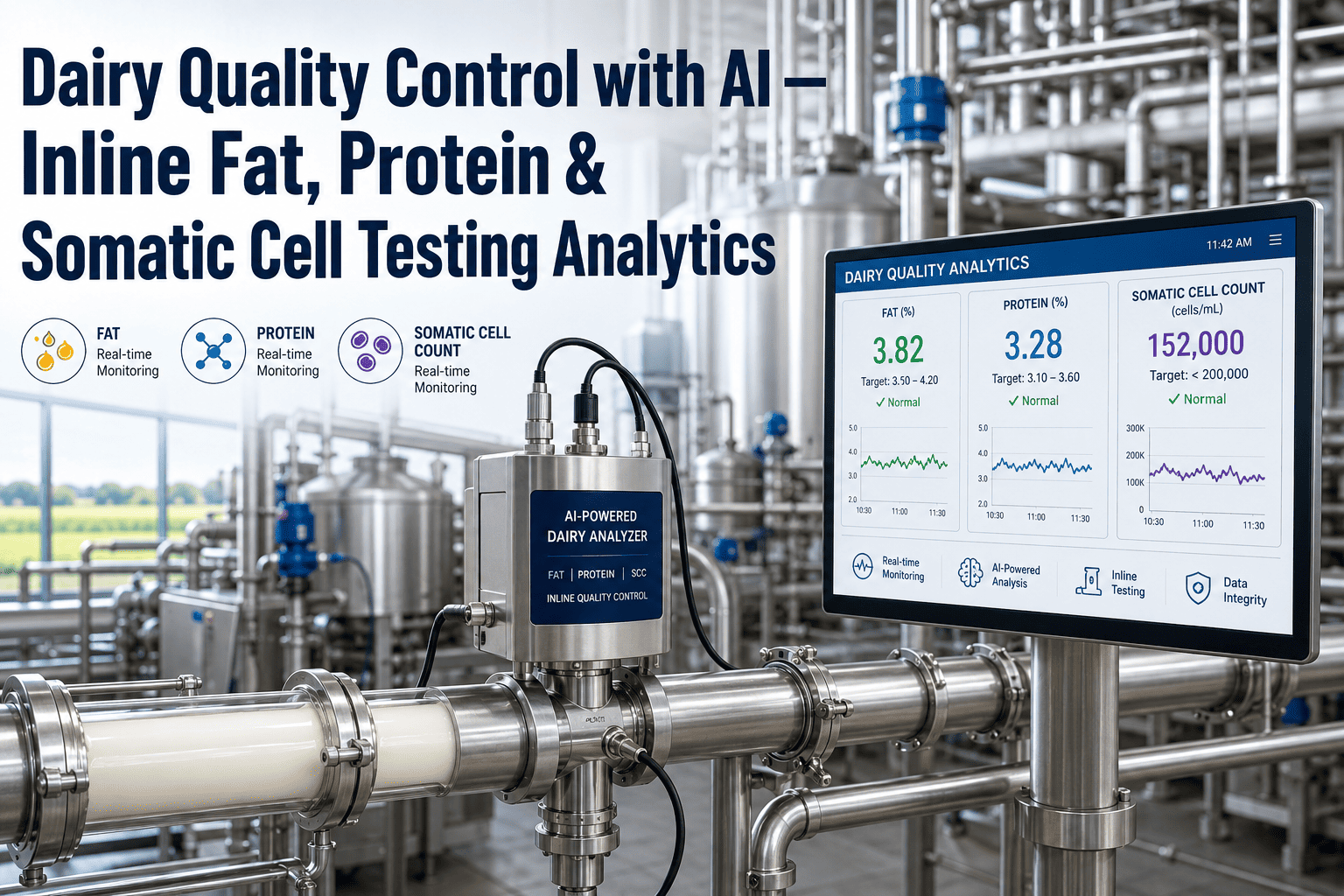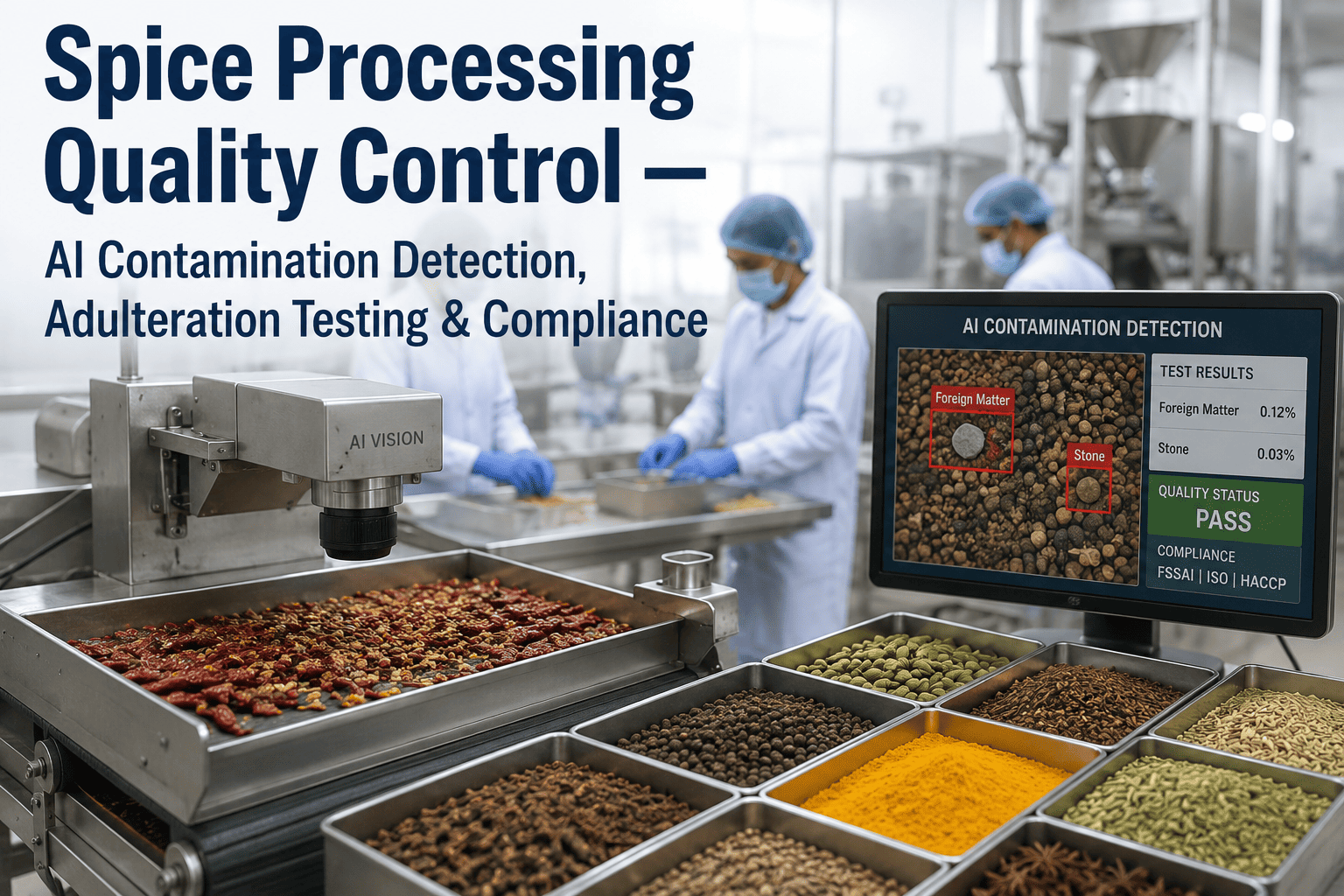
In the high-stakes world of spice processing, quality control is not merely a compliance checkbox—it is the bedrock of brand reputation, consumer safety, and operational excellence. Contamination from mycotoxins, heavy metals, and physical adulterants; color and moisture inconsistencies; and evolving FSMA regulations present formidable challenges. Traditional QC methods, reliant on manual sampling and lab analysis, are too slow, limited in scope, and prone to human error. Artificial intelligence, powered by machine learning and computer vision, is revolutionizing spice quality control by enabling real-time, non-destructive detection and predictive analytics. This comprehensive guide, tailored for Quality Managers and Plant Directors, explores how AI-driven solutions can detect adulterants, monitor moisture, analyze color, and ensure full compliance. By leveraging these technologies, spice manufacturers can reduce waste, prevent recalls, and build unassailable trust with customers. Book a Demo to see how iFactory transforms your QC operations.
Revolutionizing Spice Quality Control with AI
Real-time contamination detection, adulteration testing, and compliance automation for spice processors.
Core Challenges in Spice Quality Control
Mycotoxin Contamination
Aflatoxins and ochratoxins from fungal growth during storage or transport can cause severe health risks and regulatory non-compliance. AI models analyze hyperspectral images to detect toxin presence below 2 ppb.
Heavy Metal Residues
Lead, cadmium, arsenic from soil or processing equipment accumulate in spices. AI-powered XRF analysis provides real-time screening, flagging batches exceeding 0.1 ppm thresholds.
Adulteration & Fraud
Intentional addition of cheaper fillers (e.g., papaya seeds in black pepper, lead chromate in turmeric) is detected via AI spectral fingerprinting with 99.5% accuracy.
Color Inconsistency
Consumer expectations demand uniform color. Computer vision systems measure CIELAB values, triggering alerts when delta E exceeds 2.0, ensuring batch-to-batch consistency.
Moisture Imbalance
Excess moisture (>12%) promotes mold growth and reduces shelf life. AI-driven NIR sensors monitor moisture in real-time, adjusting drying parameters automatically.
FSMA Compliance
Preventive controls, supply chain verification, and traceability are mandatory. AI automates documentation, hazard analysis, and corrective actions, reducing audit preparation time by 70%.
AI-Enabled Detection Technologies
Advanced AI models, trained on thousands of spectral signatures and visual patterns, enable real-time detection of contaminants that are invisible to the human eye. Hyperspectral imaging captures data across 200+ wavelength bands, while convolutional neural networks (CNNs) classify defects with sub-millimeter precision. For heavy metals, portable X-ray fluorescence (XRF) analyzers integrated with AI provide instant results, eliminating the need for destructive lab tests. These systems are deployed inline at speeds exceeding 10 tons per hour, ensuring every granule is inspected without slowing production.
| Technology | Detection Capability | Speed | Accuracy |
|---|---|---|---|
| Hyperspectral Imaging | Mycotoxins, adulterants, color defects | 15 tons/hr | 99.7% |
| XRF Spectroscopy | Heavy metals (Pb, Cd, As) | 5 sec/sample | 99.2% |
| NIR Moisture Sensors | Moisture content | Real-time | ±0.2% |
| Computer Vision (RGB) | Color uniformity, foreign objects | 20 tons/hr | 99.5% |
Implementation Roadmap
Assessment & Gap Analysis
Evaluate current QC workflows, identify contamination risks, and map critical control points. AI readiness audit includes data infrastructure and personnel training needs.
Sensor & System Integration
Deploy hyperspectral cameras, XRF analyzers, and NIR sensors at key points. Integrate with existing PLCs and MES via OPC-UA for seamless data flow.
Model Training & Validation
Train AI models using historical batch data and known contamination samples. Validate against third-party lab results to achieve >99% accuracy before go-live.
Dashboard & Alert Configuration
Set up real-time dashboards for QC managers, with automated alerts for out-of-spec conditions. Configure traceability logs for FSMA compliance.
Continuous Optimization
Monitor model drift and retrain with new data. Adjust detection thresholds based on customer feedback and regulatory updates. Achieve 85% reduction in manual QC labor.
Transform Your Spice QC Today
Deploy AI-powered detection in weeks, not months. Achieve 99.7% accuracy and full FSMA compliance.
AI Implementation Checklist for Spice Processors
Frequently Asked Questions
How does AI detect mycotoxins in spices?
AI models are trained on hyperspectral imaging data that captures unique spectral signatures of mycotoxins like aflatoxins. The system analyzes each particle as it passes through the inspection zone, comparing its spectral profile against known toxin patterns. Detection thresholds can be set as low as 1 ppb, with results delivered in milliseconds. This non-destructive method replaces traditional ELISA tests that require hours of lab work. Book a Demo to see real-time mycotoxin screening in action.
Can AI distinguish between natural variation and adulteration?
Yes, AI models are trained on thousands of authentic spice samples from different origins and harvests to understand natural variability. Adulterants, such as lead chromate in turmeric or papaya seeds in black pepper, exhibit spectral and visual patterns that fall outside this natural range. The system uses anomaly detection algorithms to flag any sample that deviates beyond a statistically defined threshold (e.g., 3 sigma). This eliminates false positives caused by terroir differences. Contact Support for more details on model training.
What is the ROI of implementing AI-powered QC?
Manufacturers typically achieve a full ROI within 6 to 12 months. Cost savings come from reduced labor (automation of manual inspection), elimination of recalls (saving millions in liability), decreased waste (early detection prevents entire batch rejection), and improved yield (real-time process adjustments). For a mid-size facility processing 10,000 tons annually, the annual savings exceed $2 million. Book a Demo to calculate your specific ROI.
How does the system ensure FSMA compliance?
The AI platform automatically generates all required documentation for FSMA's Preventive Controls rule, including hazard analysis, risk assessments, corrective actions, and verification records. Every batch is traceable from raw material receipt to finished product shipment, with immutable audit trails. The system also monitors supply chain data to ensure supplier verification requirements are met. Alerts are sent when any critical limit is breached, ensuring immediate corrective action. Contact Support for a compliance checklist.
Can the AI system integrate with our existing ERP?
Yes, the platform supports integration with major ERP systems (SAP, Oracle, Microsoft Dynamics) via REST APIs and OPC-UA. Real-time QC data flows into your existing workflows for inventory management, batch release, and supplier scorecards. The system can also export data in standard formats (CSV, JSON, XML) for custom integrations. Implementation typically takes 4-6 weeks with minimal disruption to ongoing operations. Book a Demo to discuss your specific integration needs.
Secure Your Spice Quality Future
Join industry leaders using AI to eliminate contamination, ensure authenticity, and achieve FSMA compliance with zero recalls.