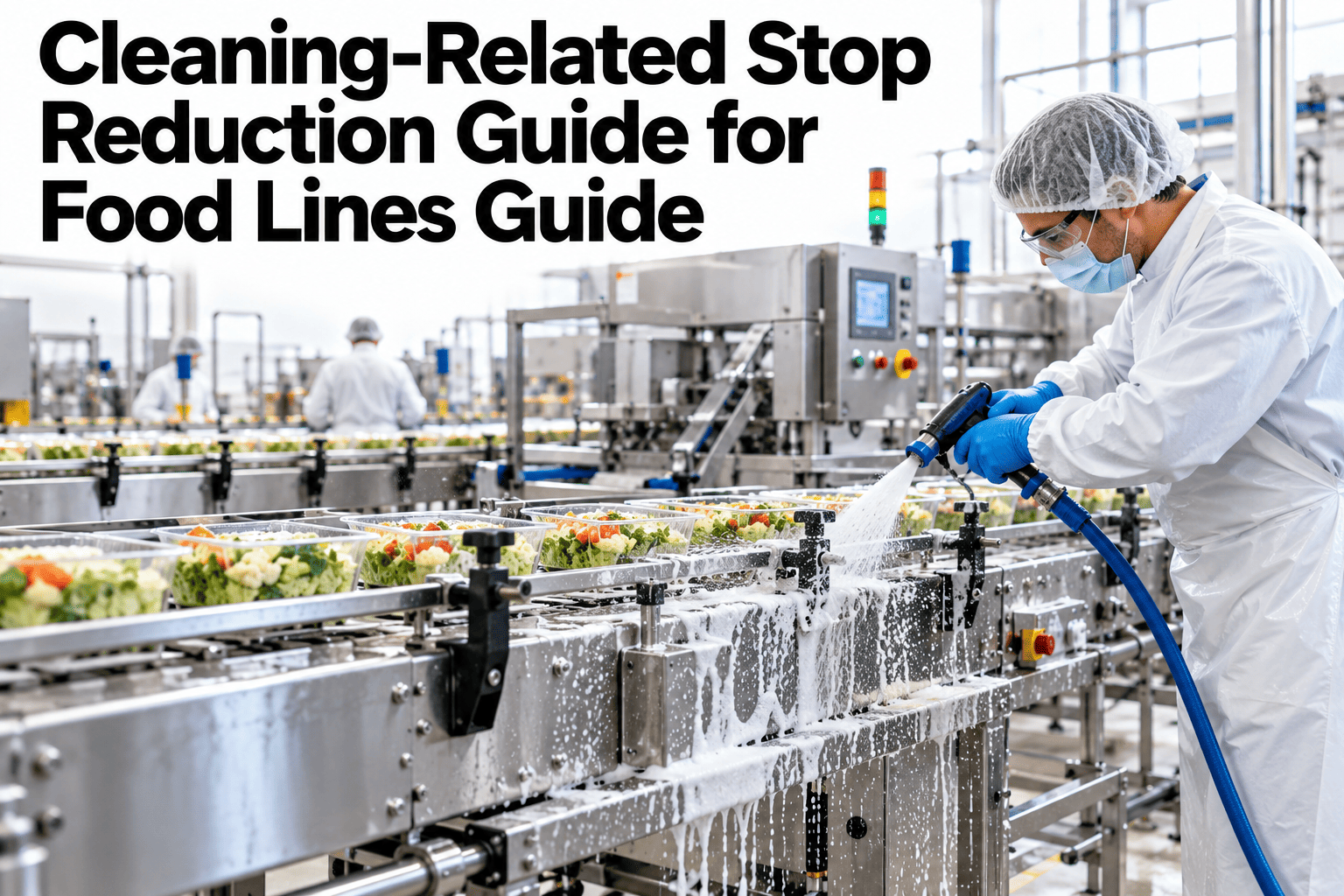
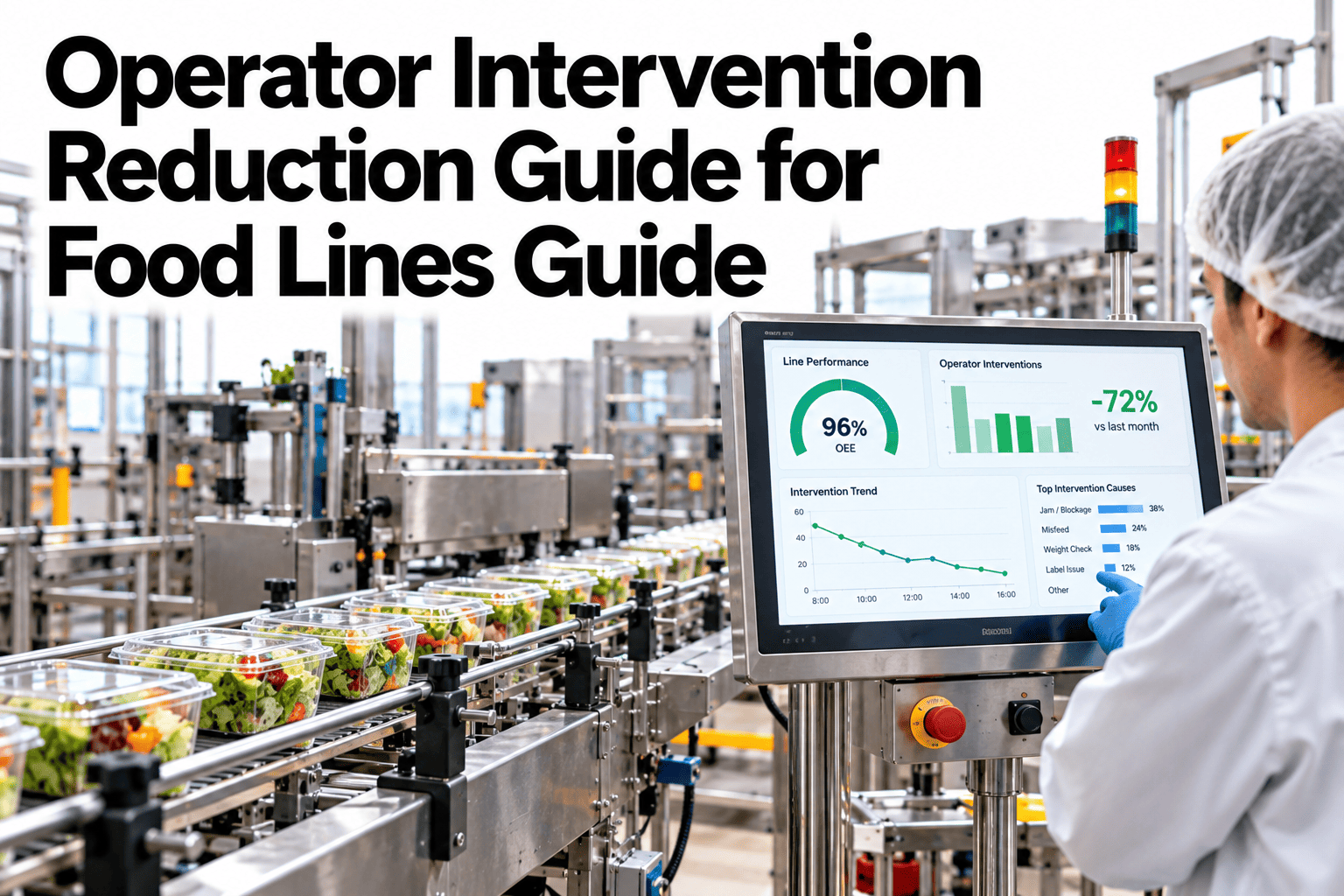
On many food lines, short cleaning stops happen all through the shift without ever being recorded as cleaning. Operators brush off dry product, purge a glue system or clear a jam and wipe the area, then restart and move on. These mini-cleans are real stops with real cost, and they are often the hidden cleaning loss that no code captures. Counting them is the first step to reducing them without ever weakening hygiene. To see how this could work for your lines, you can review a cleaning stop study with our team.
Micro-stop and changeover losses
Make the Hidden Mini-Cleans on Your Lines Visible and Then Reduce Them
iFactory AI detects and classifies short cleaning stops, so teams can fix their causes while keeping every hygiene step in place.
Mini-cleans nobody codes
Dry swabGlue purgeJam clearWipe down
The hidden lossShort Cleans Fall Between the Codes
Planned cleaning has a code. Short, unplanned cleaning often does not.
Something builds up
Dust, glue or residue affects the machine
Operator stops the line
Brushes, wipes or purges
Restart
Often with slow running or rejects
No record
The stop is coded as other or not at all
Because the cost is spread across many tiny stops, nobody sees the total.
Types of mini-cleanSix Short Cleans That Often Go Uncoded
Dry swab or brush
Removing powder, crumbs or dust from sensors, belts and guides.
Glue or sealant purge
Clearing hot-melt or adhesive nozzles that have clogged.
Jam clear with wipe
Clearing a jam and cleaning the area before restart.
Sensor cleaning
Wiping lenses and photocells that read incorrectly.
Conveyor wipe
Removing spillage or sticky residue from belts.
Quick rinse
A short rinse of a contact surface between runs.
Always follow your hygiene procedures. This guide is about measuring and reducing the need for unplanned cleans, not about cleaning less.
Capturing themFour Steps to Code Cleaning Stops Properly
1
Define the codes
Create clear codes for each type of mini-clean.
2
Detect the stop
Use machine signals to find short stops.
3
Tag the cause
Let operators pick a cause in one tap.
4
Review weekly
Rank mini-cleans by count and total time.
Keep codes few and clear. Operators will use a short list that matches what they actually do.
Find the Cleaning Stops Your Reports Never Show
Share a week of stop data and see how iFactory AI would detect and classify short cleaning stops on your lines.
Coding guideHow to Describe Each Cleaning Stop
| Clean type | Typical trigger | How to code it | What to track |
|---|
| Dry swab | Dust or crumbs on sensors | Cleaning, dry, unplanned | Count and minutes per shift |
| Glue purge | Nozzle blockage or temperature drift | Cleaning, adhesive | Frequency by machine and product |
| Jam clear | Product stuck at transfer | Jam, with cleaning flag | Link to the jam cause |
| Sensor wipe | False readings | Cleaning, sensor | Repeats on the same sensor |
| Belt wipe | Spillage or sticky product | Cleaning, conveyor | Frequency by position |
What drives the lossAn Illustrative Split of Unplanned Cleaning Time
The mix differs by line and product. This example is illustrative.
35 percent: Dust and powder
Product residue on sensors and guides.
25 percent: Adhesive and glue
Nozzle and system issues.
25 percent: Jam-related cleaning
Spills and residue after jams.
15 percent: Other
Mixed minor cleaning tasks.
The biggest slice usually points to a design or process fix, such as better extraction or product conditioning.
Planned versus unplannedSort Cleaning Stops Into Four Groups
Cleaning event
Quality-critical
Not quality-critical
Planned
Keep as is
Part of the validated hygiene plan
Investigate cause
Unplanned but needed for quality
Unplanned
Review frequency
Planned, may be over-frequent
Reduce
Unplanned and avoidable
Never reduce planned cleaning that protects food safety. The focus is on unplanned events that can be designed out.
Why they happenFive Root Causes Behind Frequent Mini-Cleans
1
Dust and fines
Product shedding powder onto sensors and belts.
2
Adhesive problems
Temperature drift, wrong settings or ageing nozzles.
3
Jam-prone transfers
Poor guide settings or damaged parts.
4
Sensor placement
Sensors too close to dust or spill zones.
5
Missing preventive care
Small jobs not done on a schedule, so problems grow.
Counted versus hiddenWhat Changes When Cleaning Stops Are Coded
Hidden cleaning stops
Coded as other or not at all
Cause unknown
Frequency unseen
No owner for improvement
Coded cleaning stops
Clear type and cause
Trends by machine and product
Weekly ranking of the worst
Named owner for each fix
Visibility alone often starts improvement. People fix what they can see.
A guiding principleHygiene Comes First
Always protect
Keep every validated cleaning and hygiene step unchanged.
Measure
Count and code unplanned cleans with operators.
Reduce causes
Fix the process, machine or product issue behind each mini-clean.
Food safety, quality and customer requirements remain non-negotiable. To discuss approaches, ask our team about hygiene-safe reduction.
RolloutFive Steps From Coding to Fewer Cleans
1
Agree the codes
Quality, production and operators decide together.
2
Capture for four weeks
Detect and tag short cleaning stops.
3
Rank the causes
Sort by count, minutes and machine.
4
Fix the top three
Use engineering, maintenance and process changes.
5
Review monthly
Track the trend and move to the next causes.
Cleaning stop codes agreed with quality
Short stops detected from machine signals
Operators can tag causes quickly
Planned cleaning protected and unchanged
Top three causes assigned to owners
Dust, glue and sensor issues checked
Monthly trend reviewed with the team
Hygiene sign-off by quality for every change
Expert reviewWhat a Food Hygiene Manager Would Check First
Expert review
Reducing unplanned cleaning is a hygiene benefit as well as a productivity gain, because fewer messes mean fewer risks. Never let a time target tempt anyone to skip a validated step.
VerdictStrong when codes are clear and every reduction is hygiene-reviewed.
Watch forCutting planned cleaning to hit a loss target.
Do nextCode mini-cleans for a month and show the total to production and quality.
Frequently asked questionsWhat Food Line Teams Ask About Cleaning-Related Stops
Are mini-cleans really worth counting?
Yes. Individually they are short, but together they can add up to hours per week and tie operators to the line. Counting them reveals the causes and often shows quick fixes.
See a cleaning stop summary.
Will counting mini-cleans change our hygiene routines?
It should not. Planned and validated cleaning stays exactly as it is. The aim is to understand and reduce unplanned cleans, often by fixing dust, glue or sensor issues. Quality should approve every change.
Ask about hygiene safeguards.
How do we code a stop that is both a jam and a clean?
Use the primary cause code, such as jam, and add a cleaning flag. This avoids double counting while still revealing how much cleaning follows jams.
Plan a coding scheme.
Can sensors detect cleaning events automatically?
Machine signals can detect that a stop happened and how long it lasted. Cleaning type usually needs a quick operator tag or a pattern match learned over time.
Ask about automatic detection.
Who should own the reduction effort?
A named owner from production or engineering, working with quality, should own the programme, with operators and maintenance contributing fixes. Review progress weekly at first.
Plan ownership with our team.
Hygiene first, losses second
See the Cleaning Stops Hiding on Your Lines
Book a session with iFactory AI to code your mini-cleans, find their causes and plan fixes that keep every hygiene step in place.