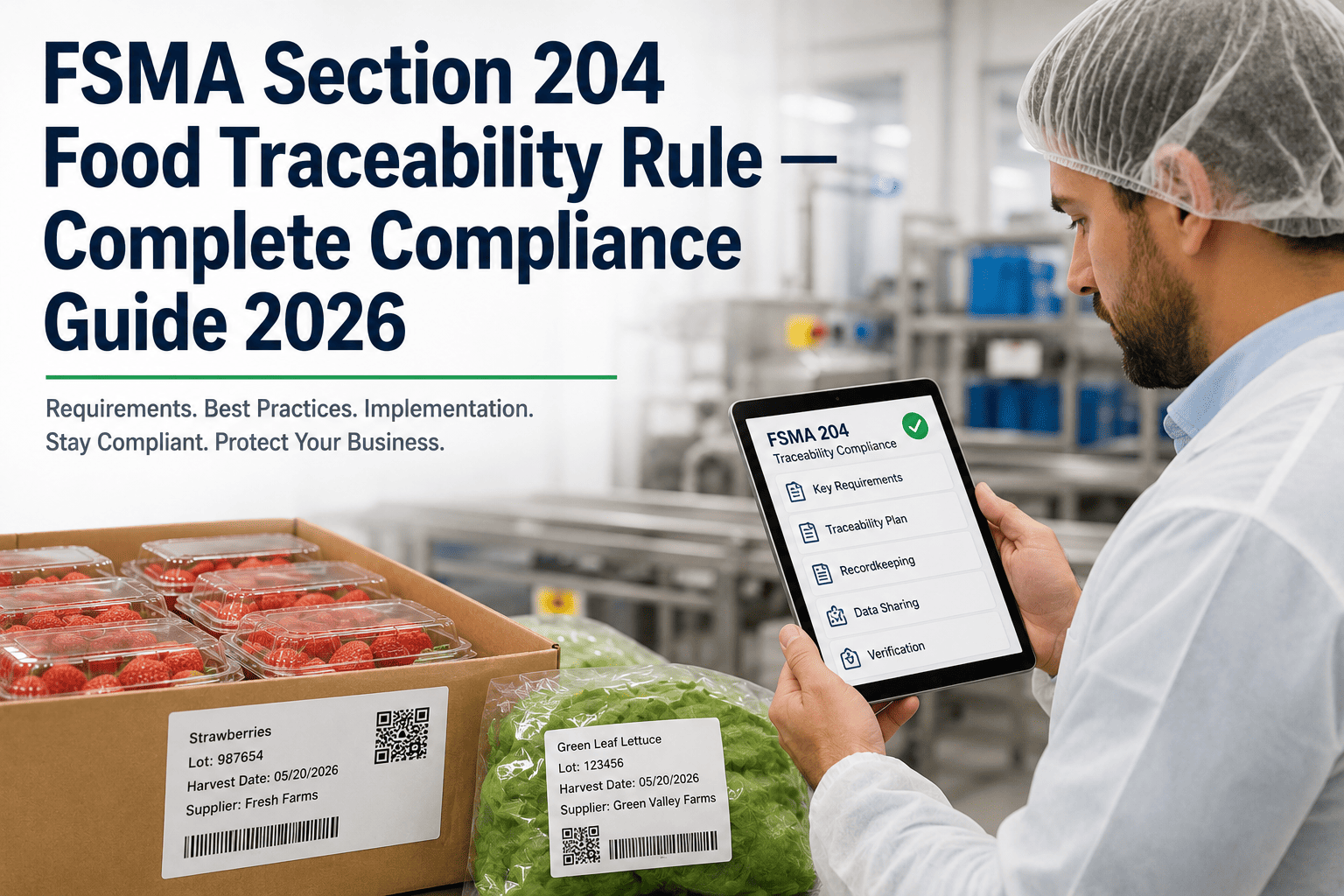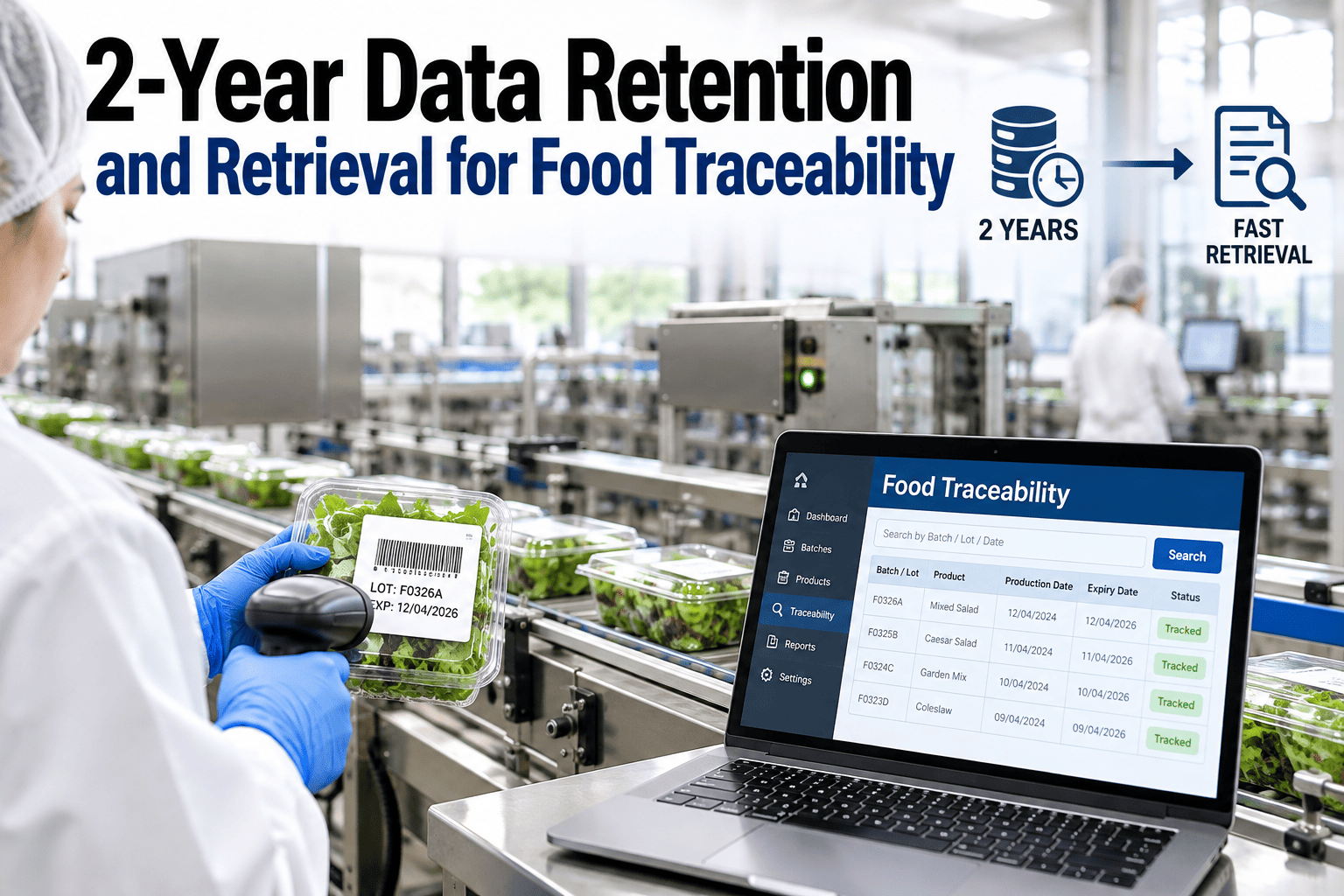
Most food manufacturers think of record retention as a storage problem, decide how long to keep files, then archive them somewhere and move on, but FSMA 204 turns retention into a retrieval problem instead, one where the FDA can request records tied to a Food Traceability List item and expect a response within 24 hours regardless of how long ago that record was created. A retention policy built only around minimum storage duration misses the harder requirement entirely: records need to stay not just kept but genuinely retrievable, in a searchable, sortable electronic format, for the full retention window the rule requires. With the compliance deadline now extended to July 20, 2028, manufacturers have real runway to build retention and retrieval systems properly rather than scrambling with a paper archive nobody can search quickly. Manufacturers ready to build a retention and retrieval system that actually meets this bar can start that conversation with iFactory's support team.
Keeping the Record Isn't the Hard Part. Finding It in 24 Hours Is.
iFactory keeps every traceability record electronically searchable for the full required retention window, so a 24-hour FDA request never turns into a scramble through a paper archive.
Why "We Kept the Records" Isn't the Same as Compliance
A filing cabinet full of paper receiving logs technically satisfies a naive reading of "retain records for two years," but it fails the actual requirement the moment someone needs a specific lot's history back within 24 hours, since manually searching physical or disconnected digital archives at that speed is simply not realistic at scale.
Paper Archives Can't Be Searched Quickly
Finding a specific lot's records in a physical filing system within 24 hours depends entirely on how well that system happened to be organized months or years earlier.
Disconnected Spreadsheets Create the Same Problem Digitally
A digital record that isn't connected to a searchable, sortable system is functionally just as hard to retrieve quickly as a paper one.
Retention Periods Get Set Without Checking Retailer Contracts
Some retailer agreements require longer retention than the regulatory minimum, and a policy built only around the FSMA baseline can fall short of a customer contract requirement.
Old Records Get Archived Somewhere Nobody Remembers
Without a documented, tested retrieval process, records that technically still exist can be functionally lost the moment they're actually needed.
What "Retrievable" Actually Means Under the Rule
The retrieval requirement specifies more than just having the data somewhere, it specifies the format and speed records need to be produced in.
| Requirement | What It Means in Practice | Common Failure Point |
|---|---|---|
| Electronic Format | Records must exist digitally, not solely on paper | Legacy paper logs never digitized |
| Sortable Spreadsheet | Data must be exportable into a structured, filterable format | PDF scans that can't be sorted or searched |
| 24-Hour Response | Complete record retrieval within one day of a request | Manual search across disconnected systems |
| 2-Year Minimum Retention | Records available going back at least two years | Automatic deletion policies set too aggressively |
Building a Retention System That Passes a Real Test
A retention and retrieval system is only as good as its performance during an actual, unannounced test, not its theoretical design on paper.
Confirm Your Actual Retention Requirement, Not Just the Minimum
Checking retailer contracts and certification standards alongside the regulatory floor, since some requirements exceed the two-year baseline.
Digitize Records at the Point of Creation
Capturing traceability data electronically from the start avoids the retroactive digitization problem that paper-first systems eventually face.
Run a Mock Recall to Test Real Retrieval Speed
Simulating an actual 24-hour request reveals gaps a theoretical policy review never would.
Set Deletion Policies With Real Margin, Not Right at the Minimum
Building in a buffer beyond the strict minimum protects against edge cases like delayed discovery of an issue near the retention boundary.
Make Sure Your Records Are Retrievable, Not Just Retained
iFactory keeps every traceability record electronically searchable for the full retention window, tested against real 24-hour retrieval scenarios.
A Composite Scenario: The Mock Recall That Took Four Days Instead of One
A composite frozen vegetable processor believed its retention practices were solid, having kept every receiving and shipping record for well over the required two years in an organized filing system at its facility. A scheduled mock recall exercise, simulating a real FDA 24-hour request for a specific lot's complete history, told a very different story.
Locating and compiling the full set of records for that single lot, spanning receiving, blending, and shipping documentation stored across three separate physical and digital locations, took the quality team nearly four days rather than the required one, revealing that the records existed but were nowhere close to genuinely retrievable within the rule's actual window. The plant used the mock recall's findings to justify digitizing its retention system before the compliance deadline, rather than discovering the same gap during an actual FDA request with real consequences attached.
Common Mistakes in Food Traceability Data Retention
Confusing Keeping Records With Being Able to Retrieve Them
Records that technically still exist but can't be compiled quickly fail the actual requirement regardless of how long they've been retained.
Never Running a Real Mock Recall Test
A retention policy that looks solid on paper can hide serious retrieval gaps that only surface under an actual timed test.
Setting Deletion Right at the Regulatory Minimum
A retention window with no buffer risks losing a record right before it's actually needed for a delayed investigation.
Ignoring Retailer Contract Requirements That Exceed the Regulatory Floor
Some customer agreements specify longer retention than FSMA 204's baseline, and missing that distinction creates a contractual gap even if regulatory compliance is met.
Is Your Retention System Ready for a Real 24-Hour Request
Your records exist in an electronic, sortable format
Digital, structured data is what actually enables the retrieval speed the rule requires.
You've confirmed retention length against retailer contracts, not just the regulatory minimum
Some customer requirements exceed the FSMA baseline and need to be accounted for separately.
You've run a mock recall to test actual retrieval speed
A real timed test is the only reliable way to confirm your system meets the 24-hour window in practice.
Your deletion policy includes a buffer beyond the strict minimum
Extra margin protects against edge cases where a record is needed right at the boundary of the retention window.
Frequently Asked Questions
What's the current FSMA 204 compliance deadline manufacturers should be planning around?
The FDA extended the original January 20, 2026 compliance date by thirty months, moving the deadline to July 20, 2028, to give the food industry more time to build interoperable, compliant systems, though the rule's core requirements themselves remain unchanged. Food safety leaders generally recommend treating this extension as preparation time rather than a reason to delay, since the recordkeeping and retrieval systems required will still take real time to implement properly. Manufacturers wanting help planning around this timeline can talk to iFactory support.
Does the two-year retention requirement apply to every food product we make?
The enhanced traceability recordkeeping requirements specifically apply to foods on the FDA's Food Traceability List and ingredients that remain in the same form as they appear on that list, rather than to every product a facility produces. Manufacturers handling a mix of covered and non-covered products need to identify which specific lines actually fall under the enhanced requirements to scope their retention system correctly.
Can paper records ever satisfy the 24-hour retrieval requirement?
Technically the rule doesn't mandate a specific technology, but practically, paper-based or disconnected recordkeeping systems struggle badly to meet the 24-hour window at any meaningful scale, especially once a request spans multiple critical tracking events across different departments or locations. Most facilities find that electronic, connected records are the only realistic way to consistently meet this timeline.
What should a mock recall exercise actually test?
A genuine test simulates receiving an actual FDA-style request for a specific lot's complete traceability history and timing exactly how long it takes to compile that record into the required electronic, sortable format, revealing whether the true bottleneck is data availability, system connectivity, or simply organizational process. Book a demo to see how a mock recall test gets structured around your specific product lines.
Should retention periods ever exceed the two-year regulatory minimum?
Often yes, particularly when retailer contracts or certification standards like GFSI-aligned programs specify longer retention than the FSMA baseline, and building in a buffer beyond even those requirements protects against edge cases where an issue is discovered close to the retention boundary. Checking every applicable contract and standard, not just the regulatory floor, is the more complete way to set an actual retention policy.
Build Retention That Passes a Real 24-Hour Test, Not Just a Policy Review
iFactory keeps your traceability records electronically searchable for the full required window, ready for a genuine FDA retrieval request.