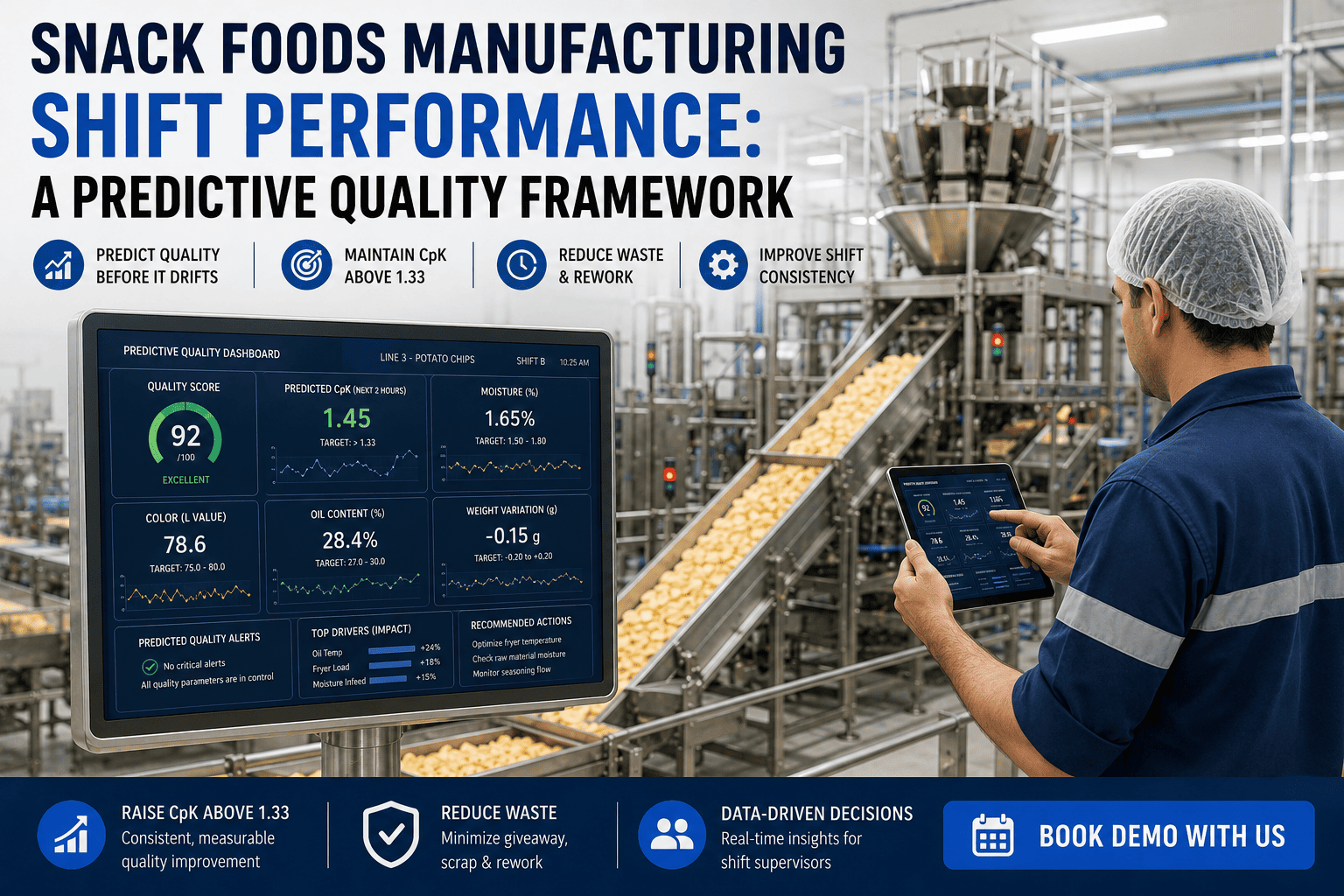
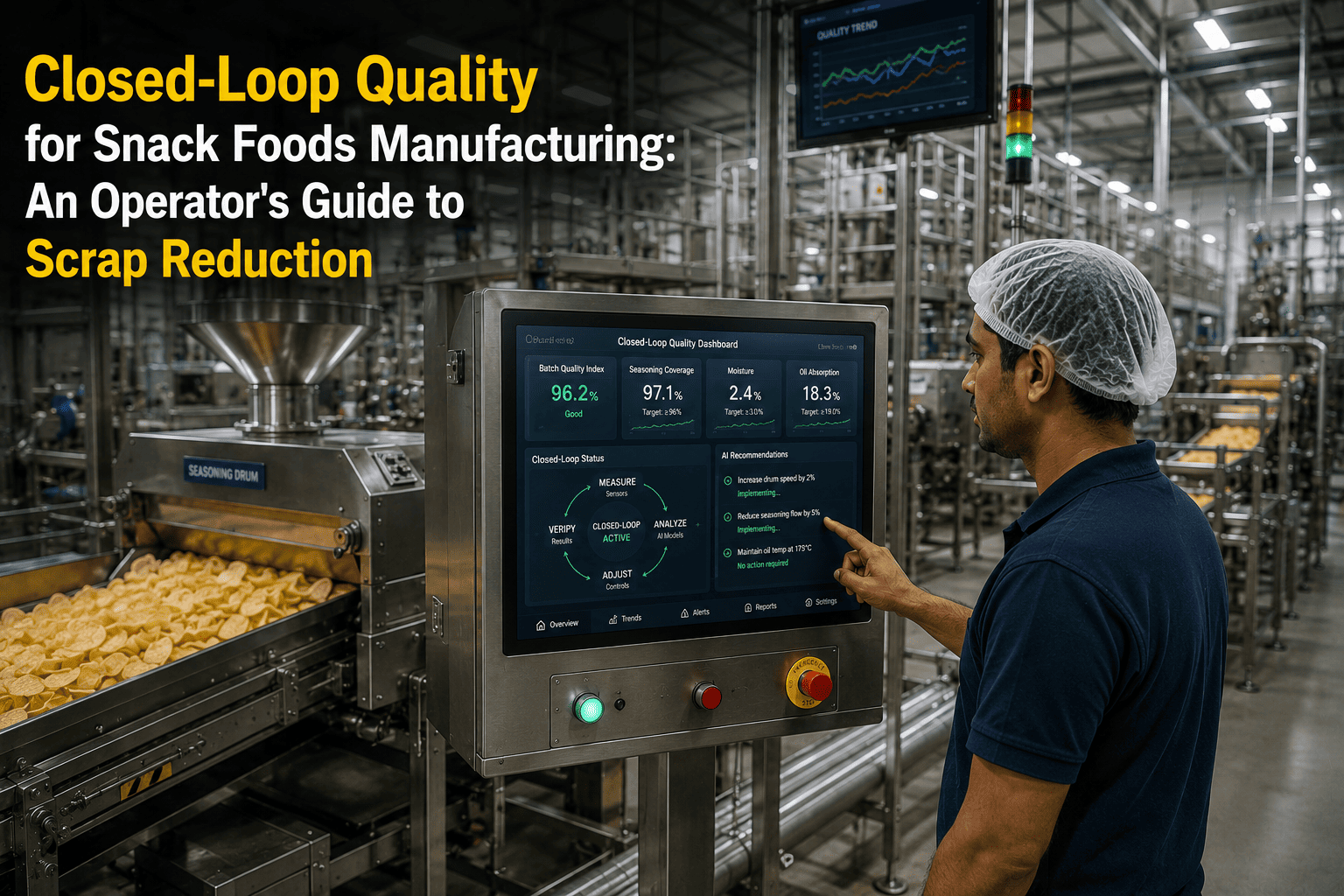
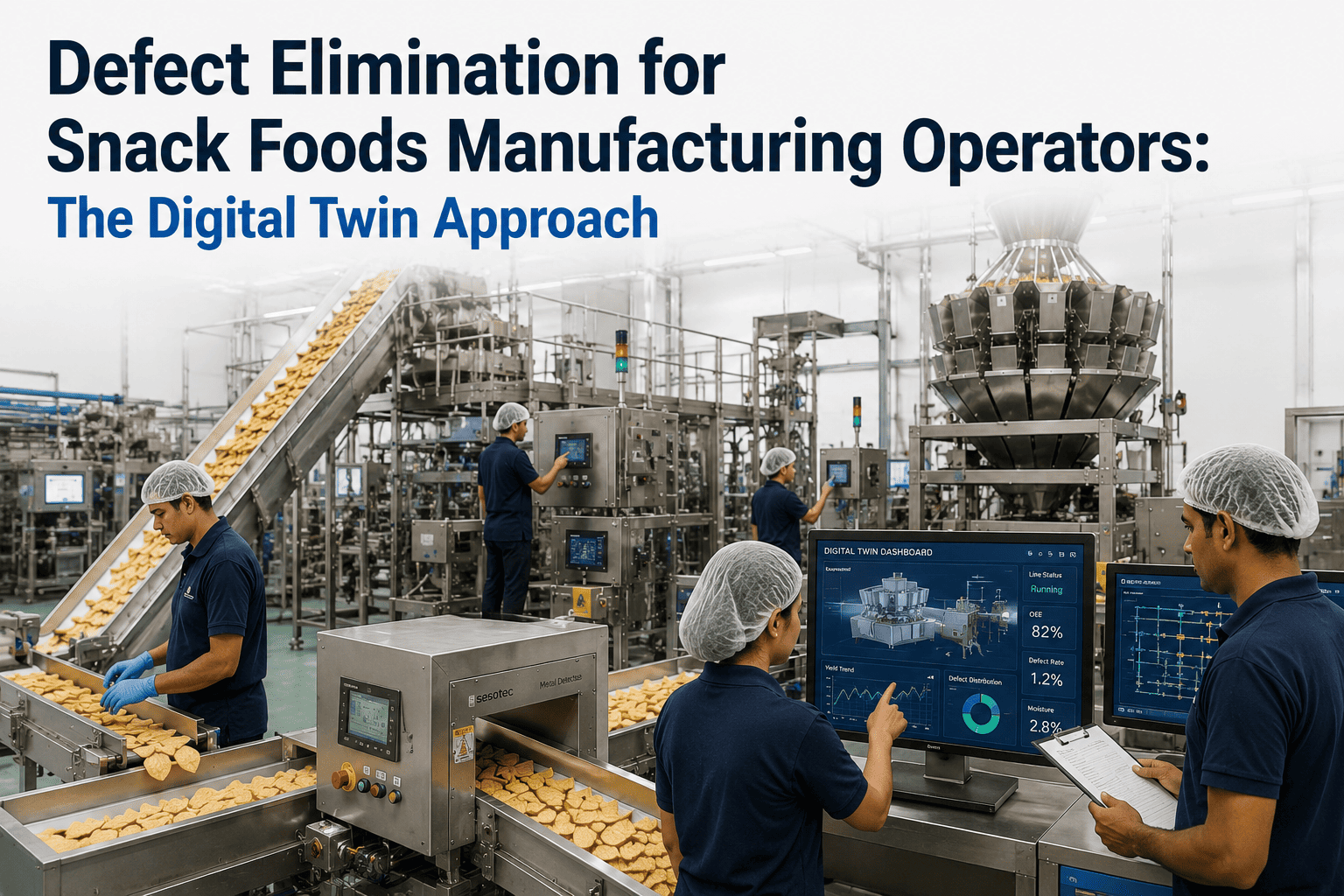
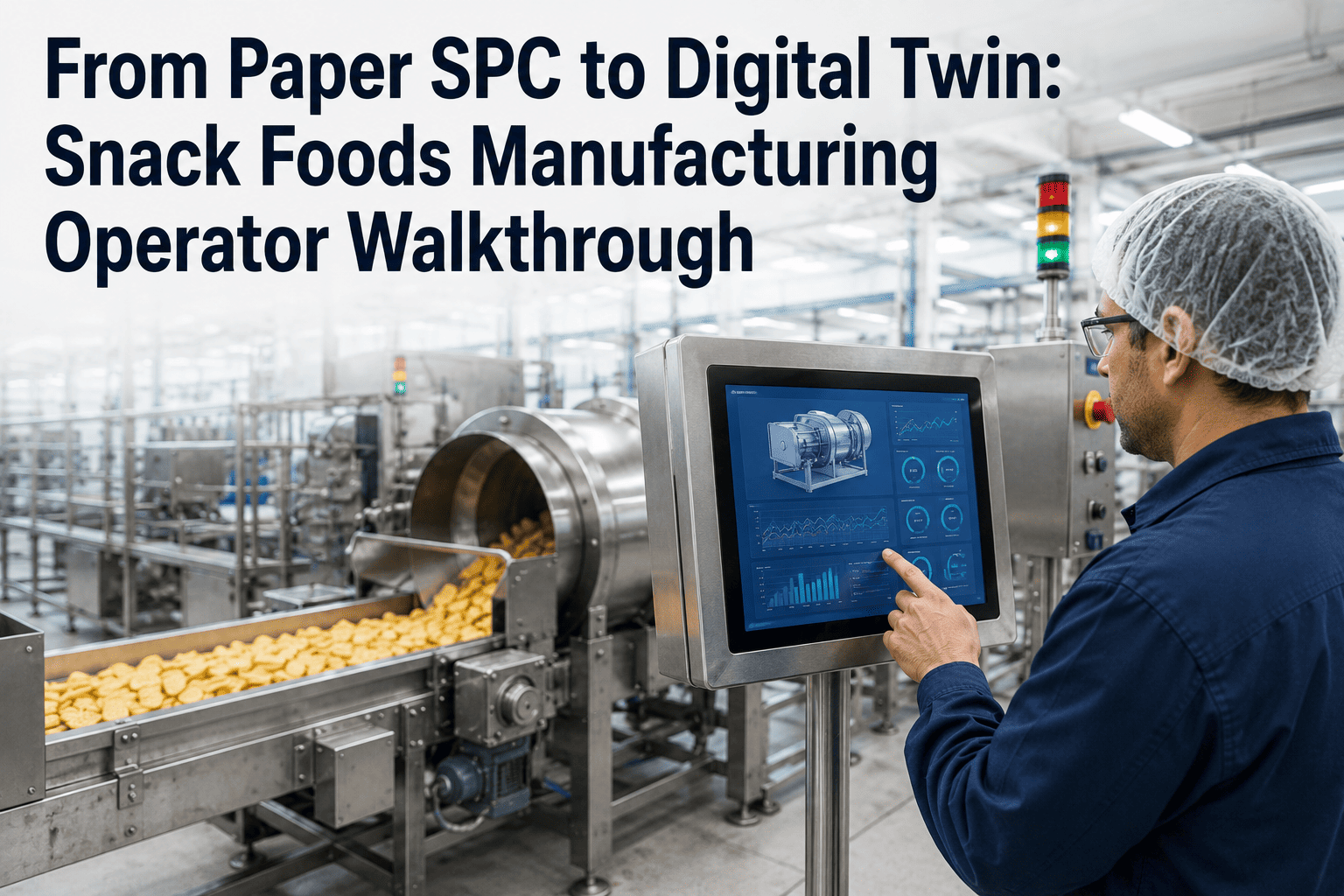
For shift supervisors in snack foods manufacturing, scrap during changeovers and warm‑up periods is a persistent drain on productivity. Every time you switch from BBQ tortilla to salted kettle chip, you lose 20‑30 minutes of production and generate 200‑500 lbs of scrap. Traditional methods rely on operator memory and trial‑and‑error adjustments. Digital twin technology changes this: a virtual replica of your fryer, seasoning drum, weigher, and extruder runs simulations in real time, predicting optimal settings for each SKU and detecting drift before it causes scrap. Shift supervisors can see exactly what will happen if they change a parameter — without wasting product. The result is 45% reduction in changeover scrap, 35% less start‑up waste, and 12 hours per week of supervisor time reclaimed for continuous improvement. This guide shows how snack foods shift supervisors deploy digital twins on fryers, seasoning drums, weighers, and extruders — with real plant data, implementation roadmap, and measurable scrap reduction results. Book a digital twin demo for your snack lines.
The Digital Twin Opportunity: Why Snack Lines Need Virtual Replicas
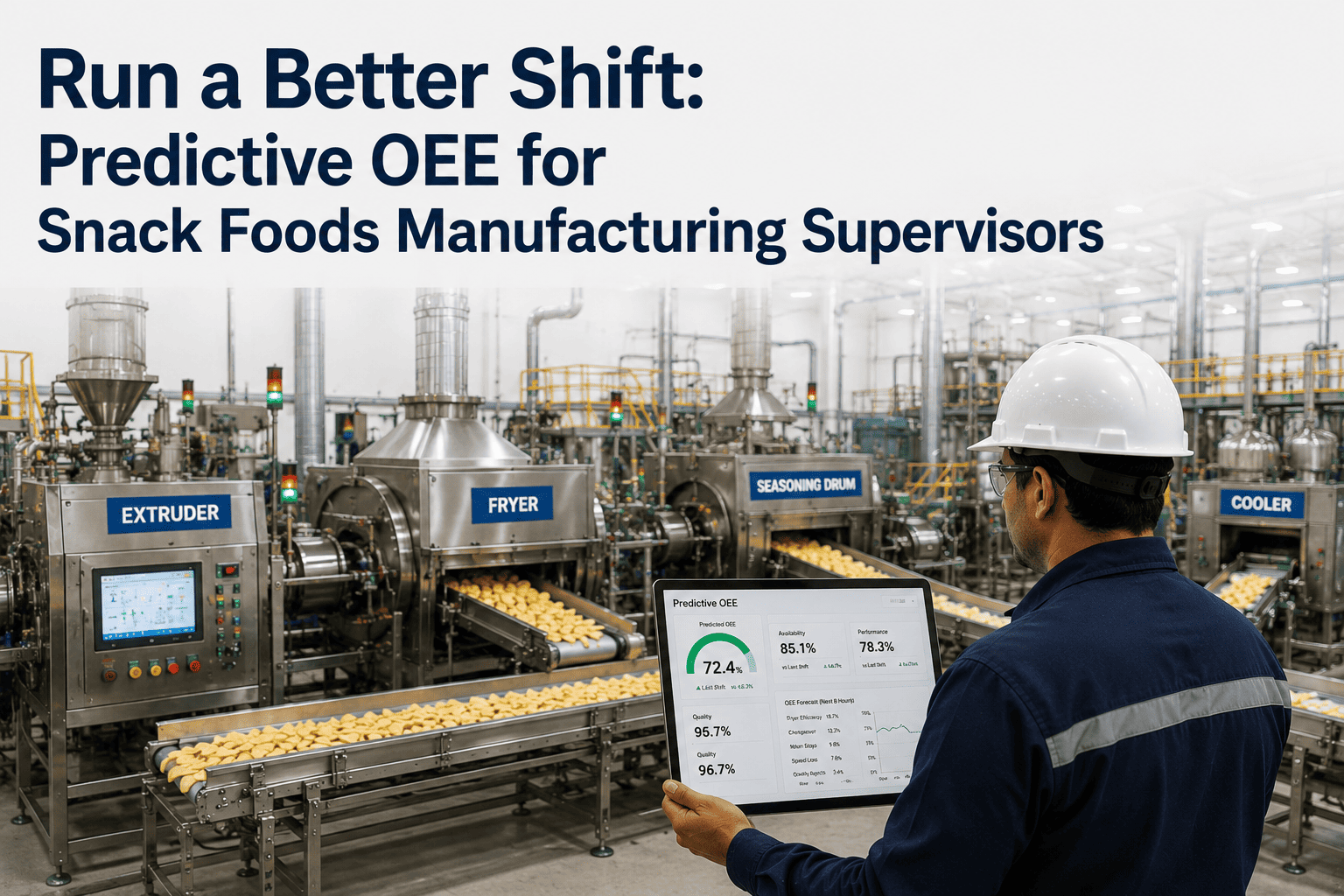
Digital twin technology creates a real‑time virtual model of your snack line that mirrors physical behaviour — fryer temperature response, seasoning drum dynamics, weigher target accuracy, extruder SME. Shift supervisors can run “what‑if” scenarios: “If I increase fryer temperature by 2°C, how will moisture change?” “If I reduce drum speed by 5%, what happens to seasoning coverage?” The twin predicts outcomes before you touch the line. During changeovers, the twin recommends optimal settings for the next SKU, reducing the trial‑and‑error period. During start‑up, it identifies when the line has stabilised, minimising warm‑up scrap. A survey of 28 snack lines using digital twins found average changeover scrap dropped from 320 lbs to 175 lbs per change, and start‑up waste from 210 lbs to 135 lbs. Talk to iFactory about a digital twin assessment for your line.
Phase 1: Process Modelling — Building Your Digital Twin
The digital twin is trained on 6‑12 months of historical sensor data and quality outcomes. For each asset (fryer, seasoning drum, weigher, extruder), the AI models the relationship between control parameters (temperature, speed, target weight) and outcomes (moisture, coverage, giveaway, texture). The twin also models dynamic responses: how long it takes for fryer temperature to stabilise after a change, how seasoning drum speed affects coverage lag, etc. The result is a high‑fidelity virtual replica that behaves like your real line.
Phase 2: Simulation Validation — Testing the Twin Against Reality
Before using the twin for decision‑making, its predictions are validated against actual line behaviour. For one week, the twin runs in parallel with production, predicting outcomes for each batch. Actual results are compared. For example, the twin predicts moisture ±0.2%; actual lab results are within 0.2% for 92% of batches. The validation also tests changeover scenarios: the twin predicts that transitioning from SKU A to SKU B will require 12 minutes of stabilisation; actual time is 11.5 minutes. Once validation confirms accuracy >90%, the twin is ready for supervisor use.
Phase 3: Changeover Optimisation — Simulating SKU Transitions
For every SKU transition, the digital twin now provides the optimal recipe: starting temperature, drum speed, weigher targets, and warm‑up time. Supervisors input the current SKU and target SKU; the twin simulates the changeover and outputs recommended settings and predicted scrap. Operators follow the recipe, and scrap during changeover drops dramatically. The twin also identifies the earliest point when the line reaches steady state, allowing supervisors to stop diverting scrap 30‑50% sooner.
Phase 4: Start‑Up Stabilisation — Knowing When the Line Is Ready
During warm‑up after a changeover or after a weekend shutdown, the digital twin monitors key parameters and predicts when the line will reach steady state. It alerts the supervisor: “Line stabilised — good product expected in 2 minutes.” Operators stop diverting scrap earlier, saving 100‑200 lbs per start‑up. The twin also identifies if a parameter is taking too long to stabilise, flagging potential equipment issues (e.g., slow fryer heat recovery due to fouling).
Phase 5: Continuous Optimisation — Predictive Drift & What‑If Analysis
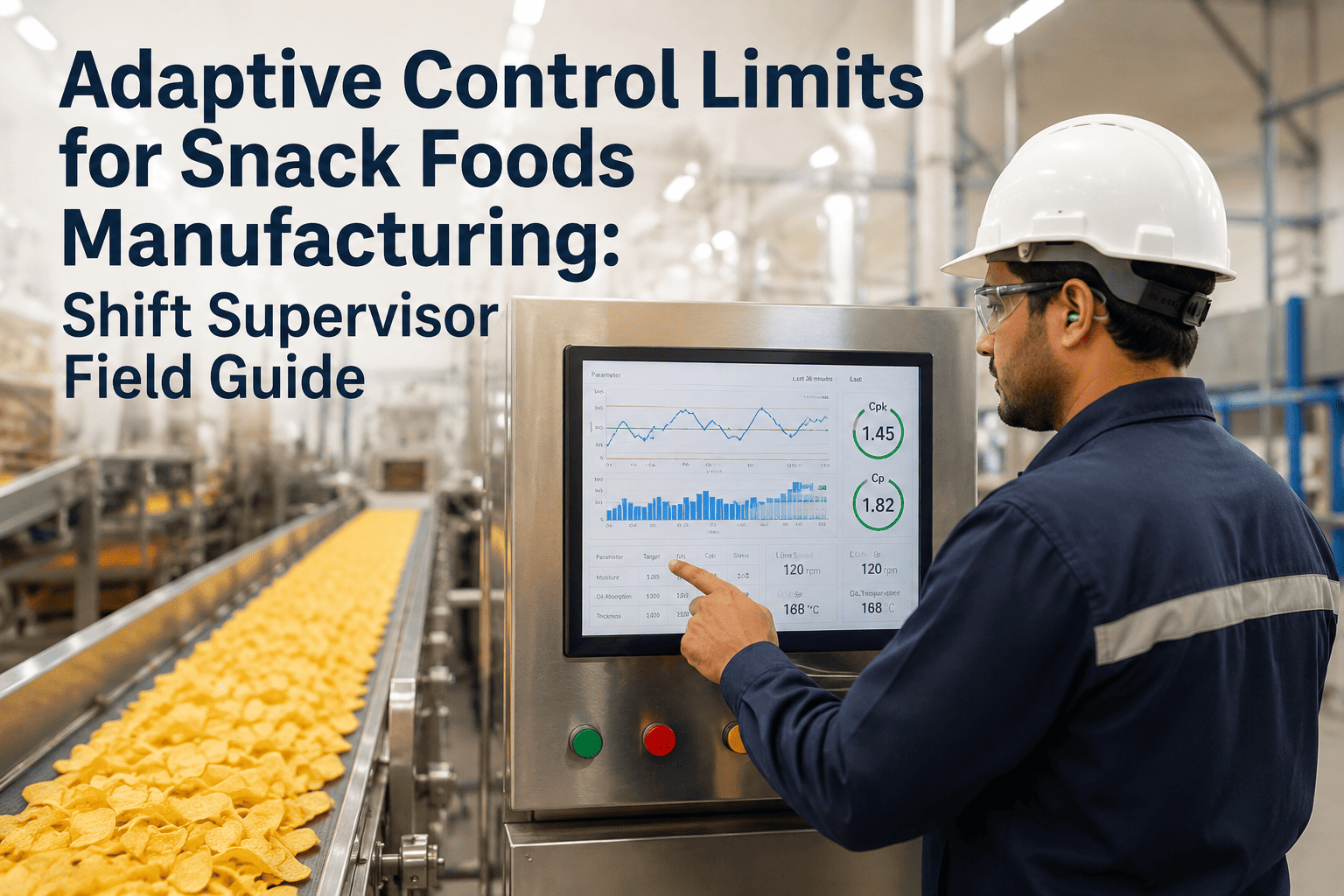
After deployment, the digital twin continues learning from new data. It can predict drift before it happens: “In 20 minutes, fryer temperature will drift 1.5°C above setpoint if oil flow is not adjusted.” Supervisors can run “what‑if” simulations: “If I reduce weigher target by 2g, what happens to giveaway and underweight risk?” The twin answers instantly, enabling data‑driven decisions without wasting product. Over time, the twin becomes more accurate and expands to cross‑line learning — improvements on one line automatically update other lines’ models.
Before vs After: Digital Twin for Scrap Reduction
8 Lessons From Snack Plants Using Digital Twins
The iFactory Digital Twin Platform for Snack Foods
The platform that has reduced changeover scrap by 45% and start‑up waste by 35% across snack lines — with real‑time simulation, what‑if analysis, and predictive drift — is exactly what iFactory delivers. Both on‑premise edge and cloud analytics are available.
FAQ: Digital Twin for Snack Foods Shift Supervisors
Deploy a Digital Twin — Reduce Scrap & Optimise Changeovers
iFactory’s digital twin platform has reduced changeover scrap by 45% and start‑up waste by 35% across snack lines — while giving shift supervisors a powerful simulation tool. We will build a twin for one of your SKU transitions in 4 weeks: connect to your PLCs, train the model on 6 months of data, and show you live what‑if simulations. No commitment, no hardware purchase. You will see exactly how much scrap can be eliminated before deciding to deploy fleet‑wide.