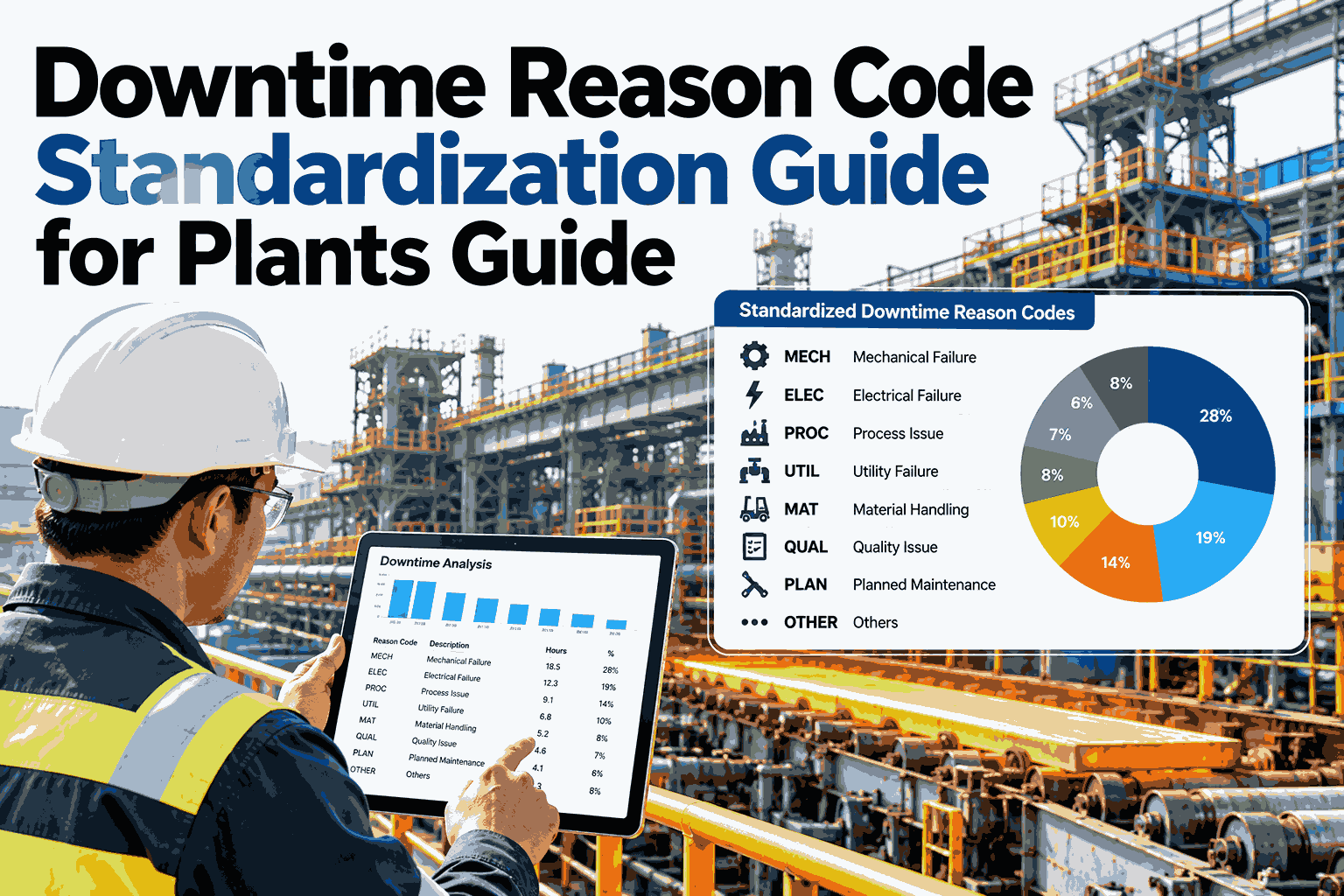
Downtime Reason Code Standardization Guide for Plants Guide

By James Smith on October 8, 2026

downtime-reason-code-standardization-guide-for-plants-guide

If three shifts describe the same stoppage three different ways, your downtime report is not data, it is opinion. Most food plants collect plenty of stop events but cannot compare them across shifts, lines, or sites because the reason codes are vague, overlapping, or dominated by a catch-all called Other. The fix is not more reporting but a better code taxonomy, one that operators can pick in seconds and managers can trust in a Pareto chart. This guide shows how to design, test, and roll out that taxonomy, and you can see a clean reason code hierarchy running on live line data before you rebuild yours.

GUIDE · DOWNTIME REASON CODES · FOOD PLANTS

Downtime Reason Code Standardization Guide for Food Plants

Build a code taxonomy that survives cross-shift comparison and delivers Pareto insight you can act on.

THE PROBLEM

One Stoppage, Three Different Records

The same jam, logged by three crews, can end up in three different buckets.

Shift A
Conveyor issue
Shift B
Product jam
Shift C
Other
Three labels for one cause means no honest Pareto. Standard codes make them one line.
THE HIERARCHY

A Four Level Tree Operators Can Actually Use

Level 1
Loss category: equipment, process, material, planned stop
Level 2
Area: mixing, filling, packaging, utilities
Level 3
Equipment: filler, capper, labeler
Level 4
Cause: sensor fault, jam, seal leak
BEFORE AND AFTER

What Standard Codes Do to Your Pareto

Illustrative share of downtime minutes by code. The catch-all shrinks and real causes appear.

Before
Other
Largest bucket
Mechanical
Too broad
Operator
Vague
After
Filler jam
Clear cause
Label fault
Clear cause
Other
Small
DESIGN RULES

Six Rules for a Taxonomy That Lasts

1
Keep it to four levels or fewer.
2
Make codes mutually exclusive, so a stop fits one place.
3
Let operators choose in seconds, not minutes.
4
Require a note whenever Other is chosen.
5
Give every code an owner and a plain definition.
6
Use the same codes on every line and shift.
CODE LIBRARY SAMPLE

Example Codes With Plain Definitions

CategoryExample CodeDefinitionCommon Confusion
EquipmentJam at filler infeedProduct blocks flow before the fillerMixed with conveyor stop
EquipmentSeal failureSeal leak stops the machineLogged as mechanical
ProcessRecipe change delayTime lost waiting on parametersLogged as changeover
MaterialPackaging shortageFilm or cartons not at the lineLogged as operator wait
PlannedSanitationScheduled cleaning stopCounted as a loss
ROLLOUT

From Draft Codes to Trusted Data

Draft
Build the tree with maintenance, production, and quality.
Pilot
Test on one line for two weeks and refine.
Train
Short sessions with examples from real stops.
Audit
Review Other and misfits weekly, then tighten.
FREQUENTLY ASKED QUESTIONS

What Food Plant Teams Ask About Reason Codes

How many reason codes should a line have?
Aim for a list operators can scan quickly, usually a few dozen at the lowest level and far fewer at the top. Too many codes slow entry and invite guesses. Too few hide the real causes. Size your code list with our team.
How do we keep Other from becoming the biggest bucket?
Require a short note for Other and review those notes every week. Repeated notes become new codes, and rare ones stay put. Showing the Other share on the dashboard keeps attention on it. See an Other review workflow live.
Can machines assign codes automatically?
Often yes. Controller states and alarms can pre-fill the most likely code, and the operator confirms or corrects it. This improves speed and consistency. Ask support which signals can pre-fill codes.
How do we compare lines with different equipment?
Use the upper levels of the tree for comparison and the lower levels for local detail. Category and area levels stay the same across lines even when machines differ. This gives fair comparisons without losing precision. Review a cross line comparison in a demo.
How often should the taxonomy be reviewed?
Review it quarterly, with a quick weekly look at misfits and the Other bucket. Change codes sparingly so trends stay comparable. Record every change with a date. Set up a review rhythm with a specialist.
ONE LANGUAGE FOR EVERY STOP

Turn Messy Downtime Notes Into Root Cause Insight

See how iFactory standardizes reason codes, pre-fills them from machine data, and builds Pareto views you can trust.

Share This Story, Choose Your Platform!