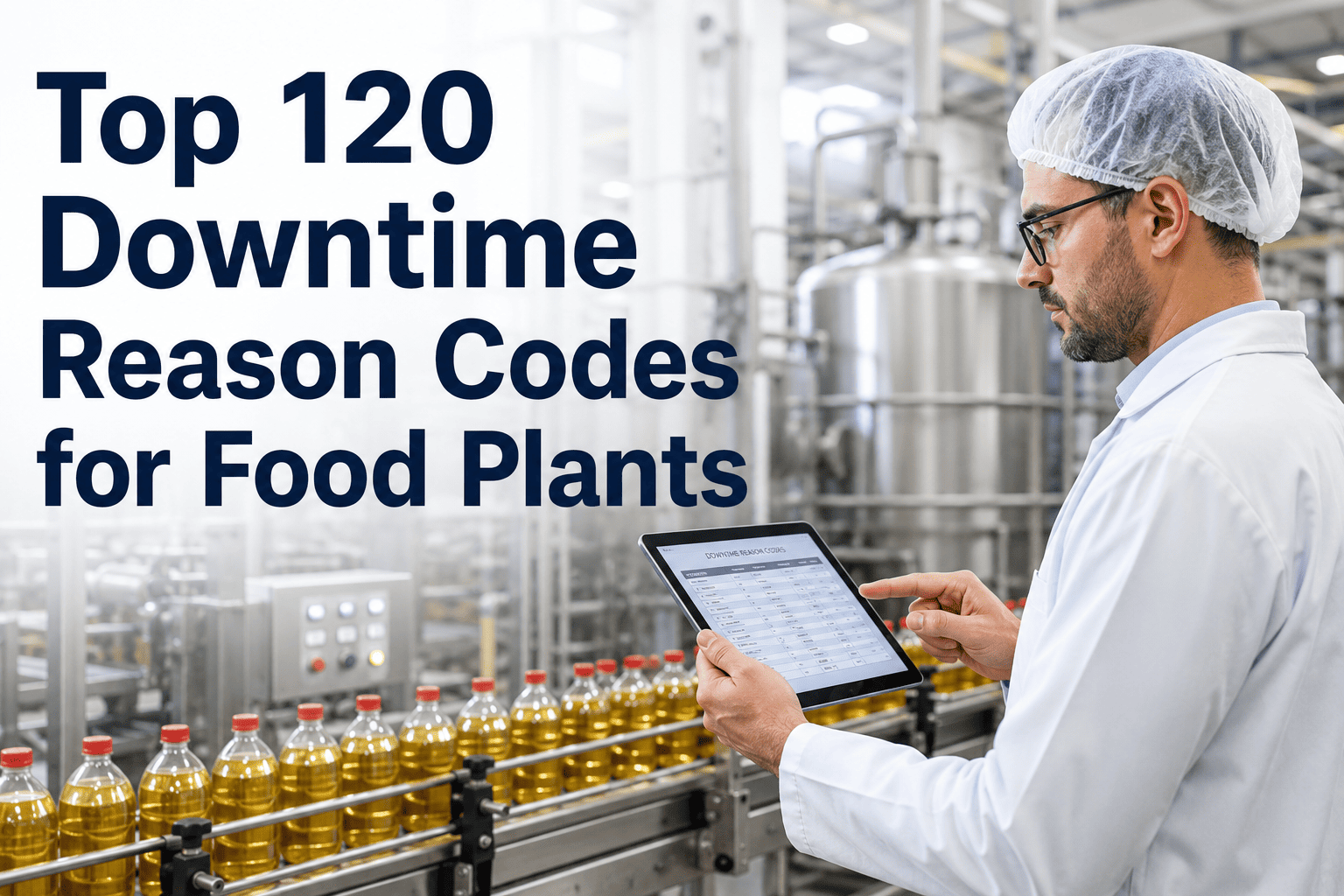
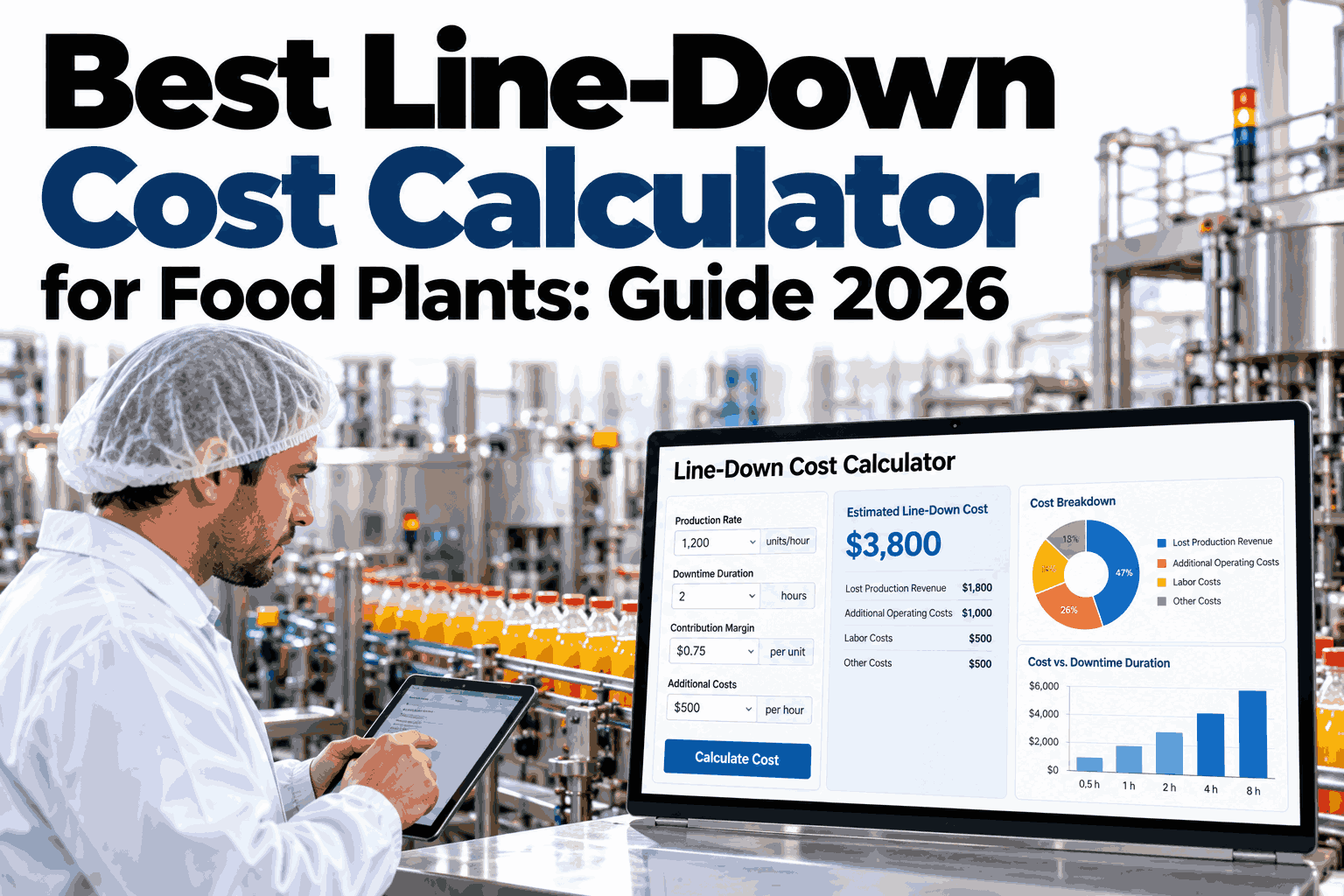
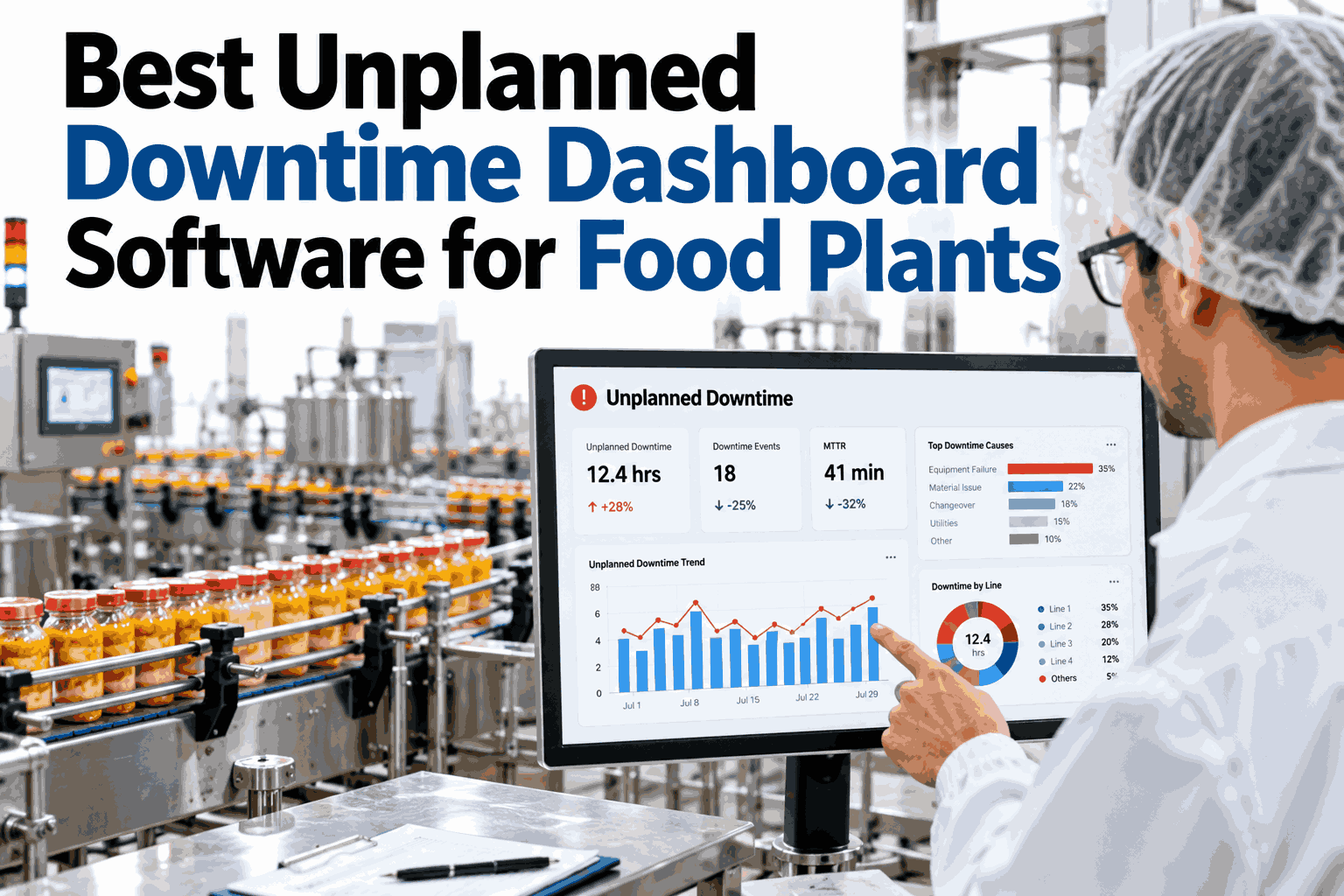
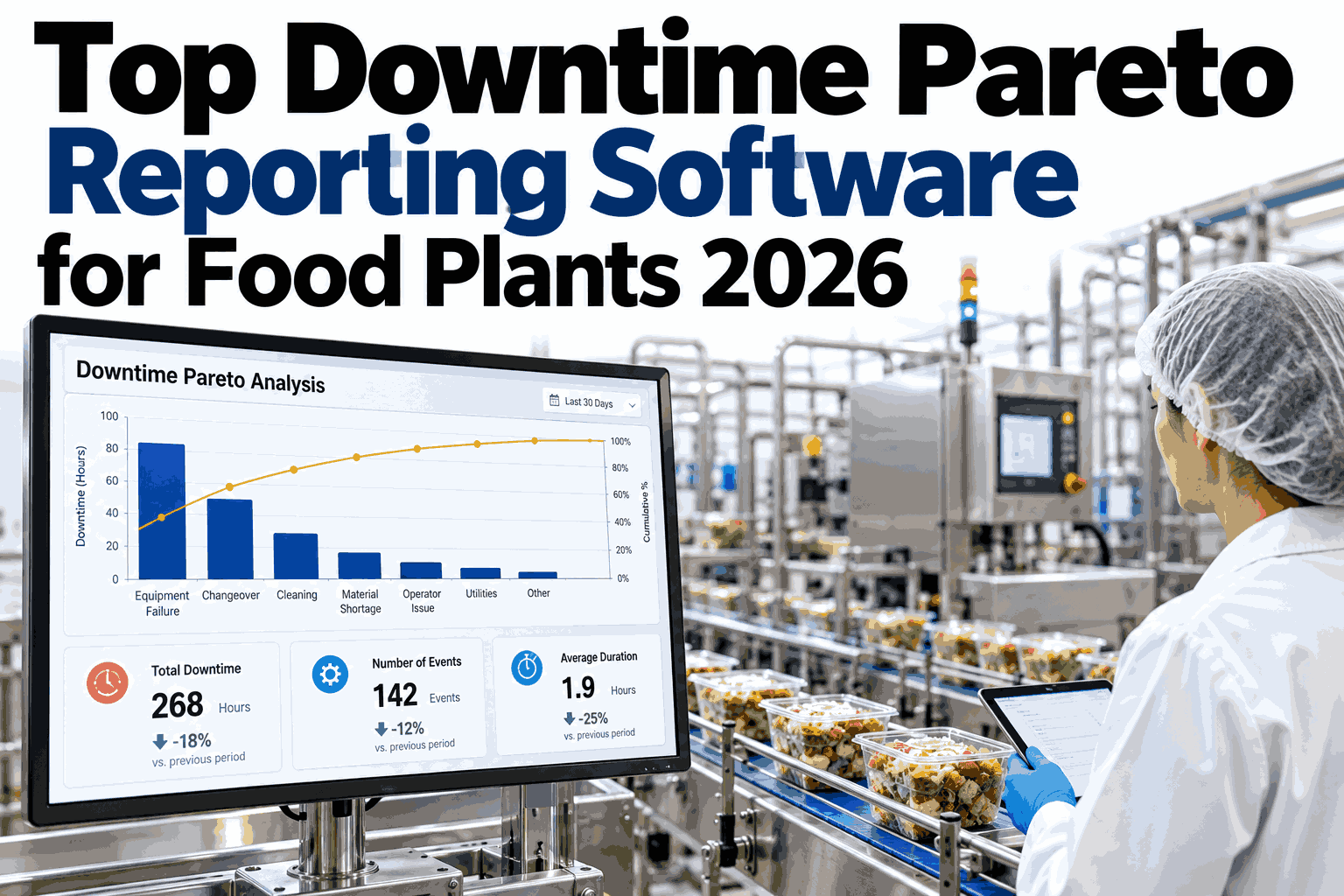
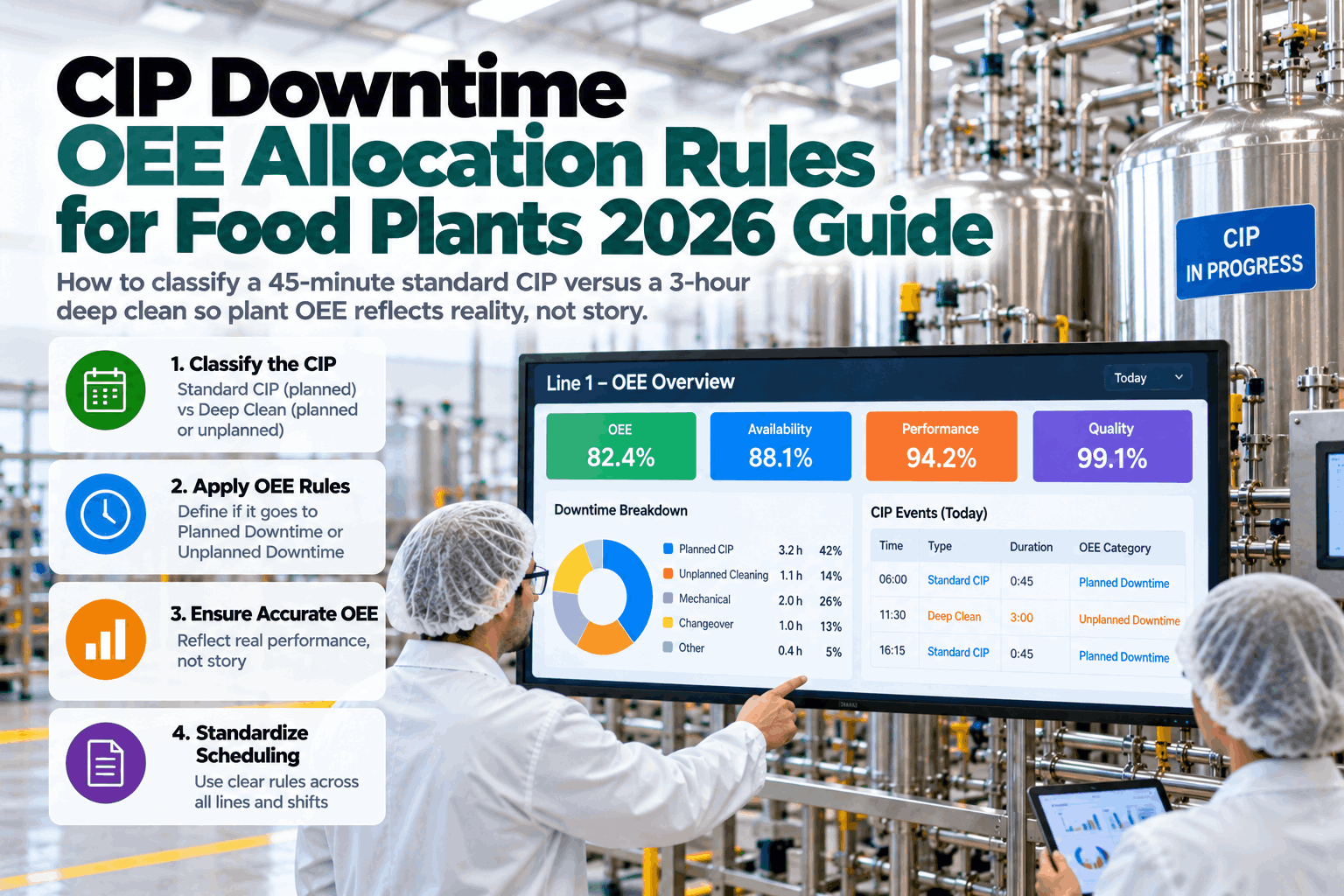
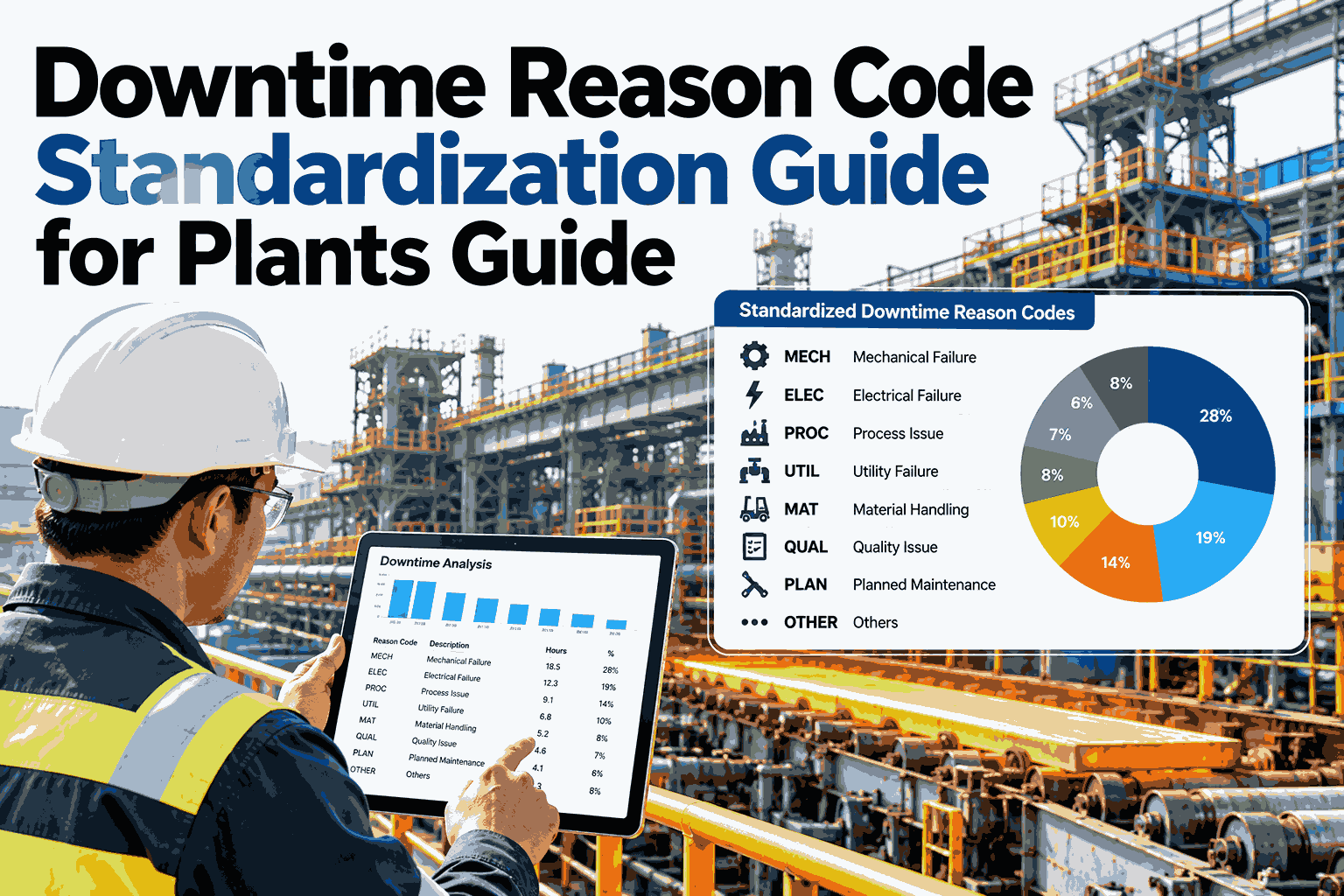
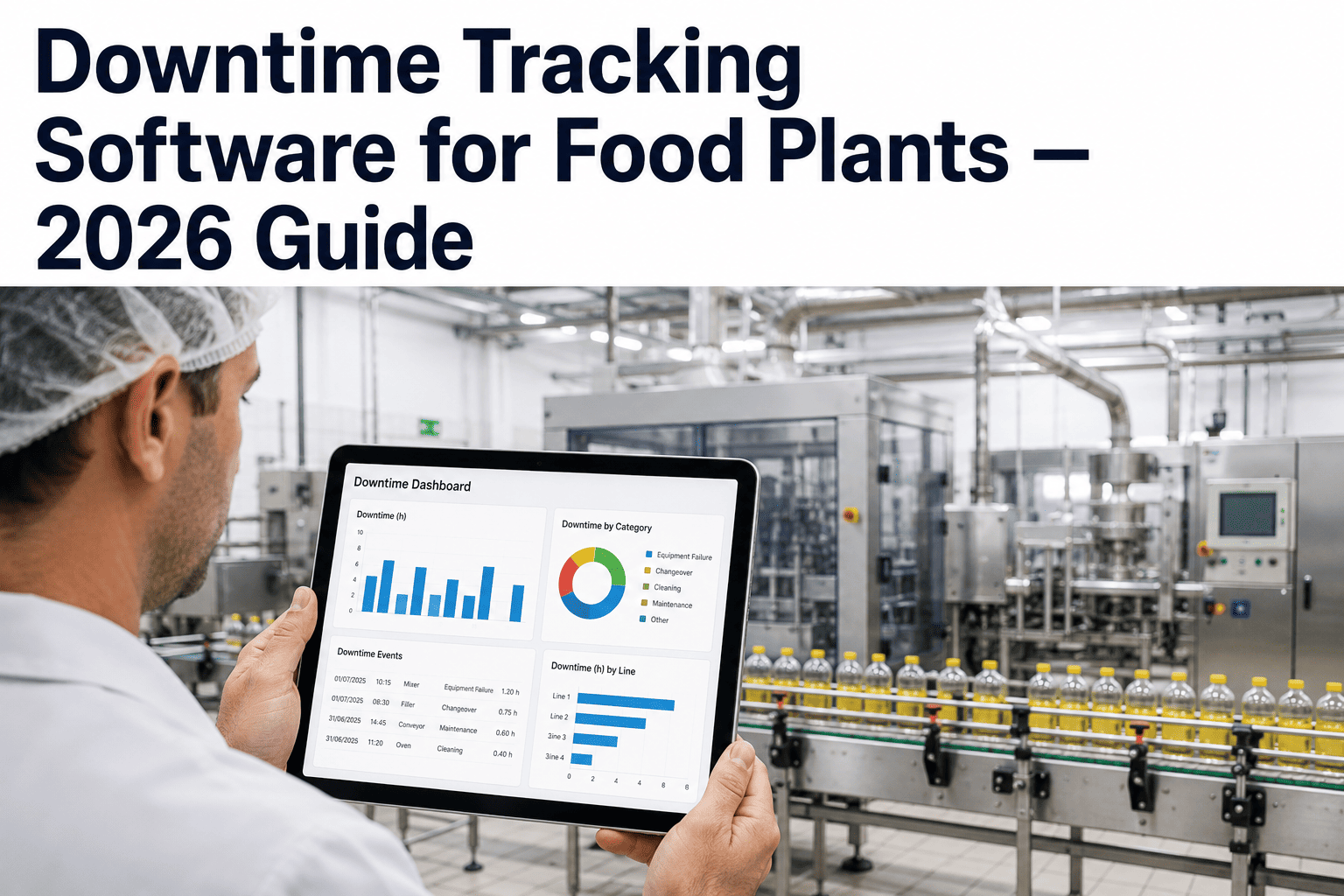
A reason code library sounds like a small administrative detail until a plant tries to compare downtime causes across three shifts and discovers that "jam" means five different things to five different operators, while "changeover" quietly absorbs everything from a five-minute label switch to a ninety-minute allergen flush. Without a shared, structured taxonomy, every downtime report becomes a translation exercise before it can even be analyzed. Food plants have specific categories that generic manufacturing libraries were never built around, from CIP and sanitation cycles to allergen-driven changeover sequences that carry their own verification steps. iFactory ships with a 120-code reason library aligned to ISO 22400 conventions and extended specifically for food and beverage operations. You can book a demo to see the full library mapped against your own current downtime categories.
REASON CODE LIBRARY · ISO 22400 ALIGNED · FOOD & BEVERAGE
120 Reason Codes Built For How Food Plants Actually Stop
A structured, ISO 22400-aligned downtime taxonomy extended with food-specific categories for CIP cycles, allergen changeovers, and packaging line stoppages.
18
CIP And Sanitation Codes
16
Material And Supply Codes
WHY GENERIC CODES BREAK DOWN
When Every Operator Defines Downtime Differently
A downtime report is only as useful as the consistency of the categories behind it, and generic or overly broad reason codes make cross-shift and cross-line comparison unreliable even when the underlying data capture itself is accurate.
30%+
Share of downtime often mislabeled under a single catch-all reason code in plants without a structured taxonomy
120
Reason codes in the full iFactory food and beverage library, organized into eight major categories
1-2 wks
Typical time to map an existing plant's informal categories onto the structured library
HOW THE LIBRARY IS STRUCTURED
Built On ISO 22400, Extended For Food Production
Rather than inventing a taxonomy from scratch, the library starts from the ISO 22400 standard for manufacturing operations management and layers in categories specific to food and beverage production that the base standard does not fully cover.
01
Standard Base Categories
Equipment failure, planned maintenance, and material shortage codes aligned to ISO 22400 conventions.
02
Food-Specific Extensions
CIP, sanitation, allergen changeover, and shelf-life hold categories layered on top of the base standard.
03
Micro-Stop Sub-Categories
Granular codes for jams, misfeeds, and sensor faults that would otherwise be lumped into one minor stop bucket.
04
Site-Specific Customization
A final layer for codes unique to your own equipment or process, added without breaking the standard structure.
Map Your Current Codes Onto This Library
Bring your existing downtime categories to a demo and we will show you exactly how they translate into the structured 120-code library. Book a session to get started.
SAMPLE CODES BY CATEGORY
A Look Inside The Full Library
The complete library covers all 120 codes across eight categories; the sample below illustrates the level of specificity applied throughout, using a few representative entries from the most food-specific categories.
| Code |
Category |
Description |
| CIP-04 |
CIP And Sanitation |
Scheduled clean-in-place cycle between allergen-containing SKUs |
| CHG-11 |
Changeover |
Allergen changeover requiring full verification swab before restart |
| MST-07 |
Micro-Stop |
Filler nozzle misfeed under 30 seconds |
| MAT-03 |
Material Supply |
Upstream ingredient supply interruption from mixing area |
| QUL-05 |
Quality Hold |
Line held pending quality verification after a process deviation |
CATEGORIES COVERED
Eight Major Categories Across The Full Library
Each major category in the library is broken down into a specific number of granular codes designed to capture the real variety of stoppage causes on a food or beverage line.
Equipment And Mechanical Faults
Motor, sensor, conveyor, and drive failure codes covering the full range of mechanical stoppage causes.
Changeover And Setup
Standard and allergen changeover codes distinguishing routine SKU switches from higher-verification sequences.
CIP And Sanitation
Scheduled and unscheduled cleaning cycles separated from unplanned downtime entirely.
Material And Supply
Upstream and external supply interruption codes distinguishing internal from external causes.
WHO THIS SERVES
Any Plant Standardizing Downtime Reporting
A structured reason code library earns its value fastest in operations where cross-shift or cross-line comparison currently breaks down due to inconsistent categorization.
Multi-Shift Operations
Consistent codes across shifts remove the guesswork from comparing performance fairly.
Multi-Plant Food Groups
A shared taxonomy across sites supports fair benchmarking and centralized reporting.
Plants Preparing For Audit
Structured, ISO-aligned coding supports cleaner documentation during quality and compliance reviews.
Teams Migrating From Paper Logs
A ready-built library removes the burden of designing a taxonomy from scratch.
FREQUENTLY ASKED QUESTIONS
Questions About Adopting A Structured Code Library
Can we keep some of our existing reason codes instead of switching entirely?
Yes, most plants map their existing informal categories onto the structured library rather than discarding them outright, since many existing codes already correspond closely to a code in the standard set. Where a genuinely unique code is needed for your specific equipment or process, it can be added as a site-specific extension without breaking the overall structure.
Book a demo to map your current codes against the library.
How long does it take operators to learn the new code structure?
Operators typically adapt within the first one to two weeks since the codes are grouped logically by category and presented through a simple selection interface rather than requiring memorization of numeric codes. Training usually focuses on the handful of categories most relevant to a given line rather than the entire 120-code library at once.
Contact our support team to discuss operator training for your rollout.
Is the library actually aligned with ISO 22400 or just inspired by it?
The base category structure follows ISO 22400 conventions for downtime and loss classification, which allows the core categories to map cleanly to that standard for organizations that need to report against it. The food-specific extensions sit alongside the standard structure as additional detail rather than replacing or conflicting with it.
Book a demo to review the standard alignment in detail.
Can the code library differ by line or product type within the same plant?
Yes, while the overall 120-code library is shared across the plant for consistency, individual lines can be configured to surface only the subset of codes relevant to their equipment and process, keeping the operator-facing selection list short and relevant. This balances plant-wide consistency with line-level simplicity.
Contact our support team to discuss configuring codes by line.
What happens if a stoppage does not fit any existing code?
An operator can flag an event as uncategorized with a free-text note, and these flagged events are reviewed periodically to determine whether a new code should be added to the library. This keeps the taxonomy evolving with your actual operating reality rather than staying static after initial setup.
Book a demo to see how uncategorized events are reviewed and resolved.
Standardize Downtime Reporting Across Every Line
iFactory ships with a 120-code, ISO-aligned reason library built specifically for food and beverage production. Book a demo and see it mapped against your own plant.