In the high-stakes world of food manufacturing, coating and enrobing processes are critical for product quality, consistency, and consumer satisfaction. From the precise thickness of chocolate enrobing on a biscuit to the uniform distribution of seasoning on a snack, every micron and milligram counts. Traditional methods relying on manual adjustments and reactive quality checks are no longer sufficient to meet the demands of modern production lines, where throughput, waste reduction, and zero-defect quality are paramount. iFactory’s AI-driven predictive maintenance and smart analytics platform revolutionizes coating operations by providing real-time, data-driven insights that ensure perfect coverage, minimize waste, and optimize weight control. This comprehensive guide dives deep into the technical nuances of coating and enrobing optimization, exploring how artificial intelligence transforms these processes for unparalleled efficiency. Book a Demo to see how iFactory can elevate your coating line.
Master Coating & Enrobing with AI Precision
Achieve perfect uniformity, eliminate waste, and gain real-time control over every coated product.
Real-Time Coverage Monitoring
Deploy AI vision systems that analyze coating thickness and distribution at line speed, identifying deviations instantly.
Predictive Weight Control
Machine learning models forecast final product weight from process parameters, enabling proactive adjustments.
Waste Reduction Analytics
Identify root causes of over-coating or under-coating with granular data, cutting material waste by up to 30%.
The Science of Coating Uniformity
Coating uniformity is the holy grail of enrobing processes. Whether it's chocolate, batter, or seasoning, achieving a consistent layer across every product unit is fraught with challenges. Variations in product geometry, conveyor speed, viscosity of the coating medium, and temperature fluctuations all contribute to non-uniformity. Advanced AI algorithms process high-frequency sensor data—including thermal imaging, laser profilometry, and hyperspectral cameras—to build a real-time map of coating thickness. This map is compared against a digital twin of the ideal product, and any deviation triggers an immediate correction in nozzle pressure, belt speed, or coating formulation. The result is a dramatic reduction in standard deviation of coating weight, often from ±5% to less than ±1.5%.
AI-Driven Coating Process Workflow
Data Acquisition
Multi-spectral sensors capture coating thickness, temperature, and viscosity at 1000+ points per second.
Real-Time Analysis
Edge AI models compare live data against historical patterns to detect anomalies in milliseconds.
Predictive Adjustment
Automated feedback loops adjust nozzle parameters, conveyor speed, and coating temperature dynamically.
Continuous Learning
Every production run updates the AI model, improving accuracy for future batches.
Traditional vs. AI-Enhanced Coating
| Parameter | Traditional Process | AI-Enhanced Process |
|---|---|---|
| Coating Weight Variation | ±5-8% | ±1-2% |
| Changeover Time | 45-60 minutes | 15-20 minutes |
| Material Waste | 8-12% | 3-5% |
| Defect Rate | 3-5% | <0.5% |
Transform Your Coating Line Today
Achieve unmatched precision and efficiency with iFactory's AI platform. Reduce waste, improve quality, and boost throughput.
Advanced Sensor Fusion for Coating Control
Modern coating lines generate a torrent of data from disparate sensors: infrared thermometers, mass flow meters, vision systems, and load cells. The true power of AI lies in sensor fusion—combining these heterogeneous data streams into a coherent, actionable model. For example, a sudden drop in coating weight might be caused by a viscosity change due to temperature drift, or by a partial nozzle blockage. The AI system cross-correlates temperature readings with flow rate and pressure data to pinpoint the exact root cause within seconds, enabling corrective action before a single defective product reaches the packaging station.
Moreover, predictive models trained on historical data can anticipate coating defects before they occur. By analyzing subtle trends in sensor readings—such as a gradual increase in nozzle pressure—the system flags an impending failure and schedules maintenance during the next planned changeover, avoiding unplanned downtime. This level of foresight is impossible with traditional threshold-based alarms, which only react after a deviation has already happened.
Chocolate Enrobing Precision
Maintain consistent temper and thickness across all products, even with complex shapes. AI adjusts enrober curtain flow and air knife pressure in real-time.
Batter Coating Uniformity
Optimize batter viscosity and pick-up weight for fried or baked products. AI models correlate batter temperature, pH, and solids content with final coating weight.
Seasoning Distribution Control
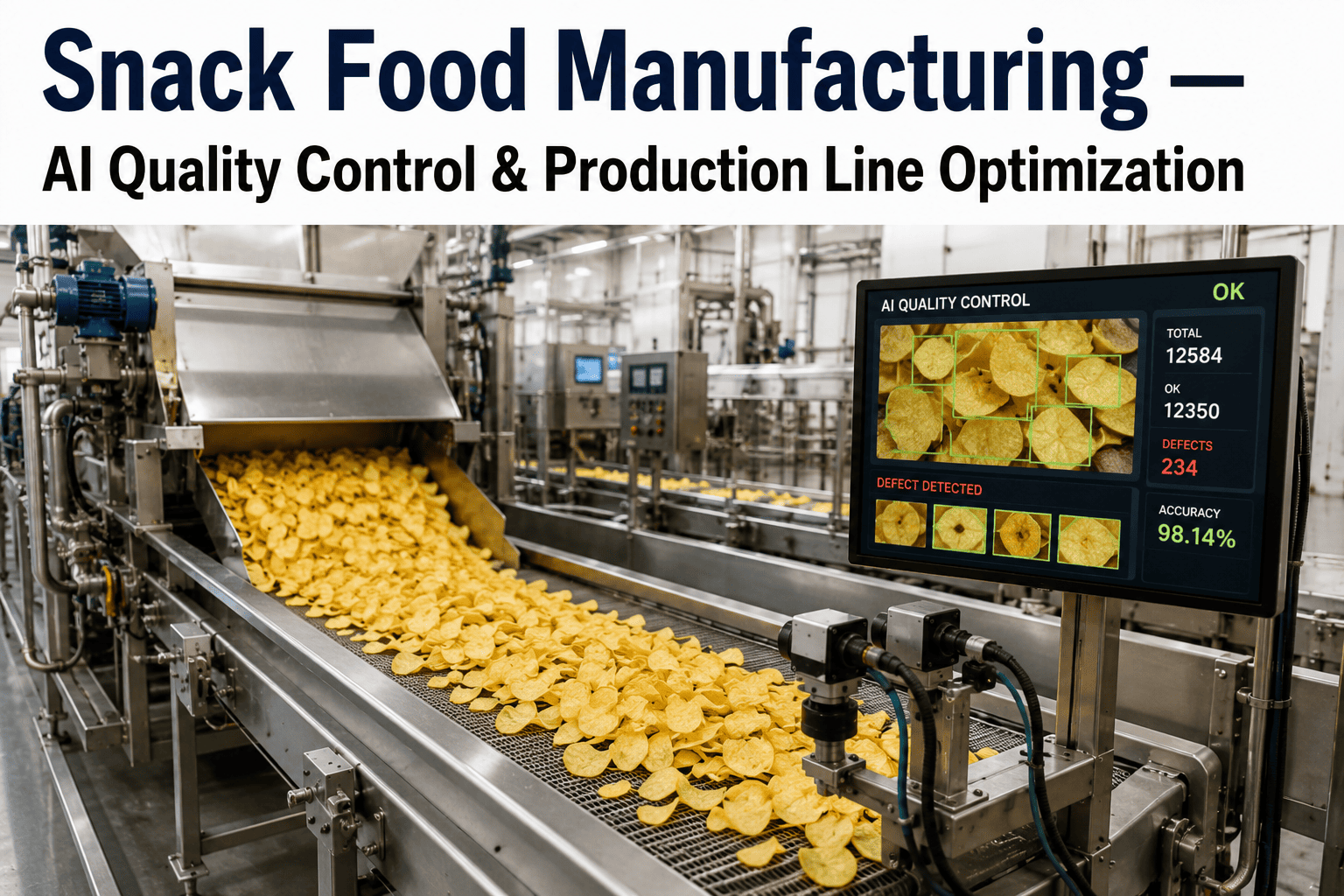
Achieve uniform seasoning coverage on snacks and cereals using real-time particle size analysis and spray pattern optimization driven by machine learning.
Steps to Deploy AI Coating Optimization
Step 1: Sensor Audit
Assess existing sensor infrastructure and identify gaps. iFactory engineers conduct a thorough audit of your coating line to determine optimal sensor placement and type.
Step 2: Digital Twin Creation
Build a virtual replica of your coating process, calibrated with historical production data. This digital twin serves as the baseline for AI model training.
Step 3: AI Model Training
Train machine learning models on your specific coating parameters, using supervised and unsupervised learning to detect patterns and anomalies.
Step 4: Closed-Loop Integration
Connect AI predictions directly to PLCs and actuators for automated, real-time adjustments. This step requires careful validation to ensure safety and stability.
Frequently Asked Questions
How does AI improve coating weight control?
AI improves coating weight control by analyzing real-time data from multiple sensors—including mass flow meters, vision systems, and temperature probes—to predict and adjust coating parameters dynamically. Unlike traditional PID controllers that react after a deviation, AI models anticipate changes based on historical patterns and process trends. For example, if the system detects an upward drift in batter viscosity, it can preemptively reduce nozzle pressure to maintain target weight. This proactive approach reduces weight variation from ±5% to under ±1.5%, saving significant material costs. Book a Demo to learn more about weight control optimization.
What types of coating processes benefit most from AI?
AI delivers the greatest value in high-speed, high-volume coating processes where uniformity and waste are critical. This includes chocolate enrobing for confectionery, batter coating for fried products, seasoning application for snacks, and glaze application for baked goods. Processes with frequent product changeovers also benefit significantly, as AI models can adapt to new product geometries and coating requirements in minutes rather than hours. Additionally, processes using expensive ingredients—such as premium chocolate or specialty seasonings—see rapid ROI from even small reductions in over-coating. Contact Support for a personalized assessment.
How long does it take to implement AI coating optimization?
Implementation timelines vary based on line complexity and existing infrastructure. A typical deployment involves a 2-week sensor audit and digital twin creation, followed by 4-6 weeks of AI model training using historical and live data. Integration with existing PLCs and control systems takes an additional 2-3 weeks, including safety validation. Total time from project kickoff to full closed-loop operation is usually 8-12 weeks. iFactory provides dedicated project managers and on-site support to minimize disruption to production. Book a Demo to discuss your specific timeline.
What is the ROI of AI-driven coating control?
ROI is typically realized within 6-12 months, driven by three main factors: material waste reduction (20-30%), increased throughput (10-15% due to fewer rejects and faster changeovers), and reduced maintenance costs (predictive maintenance prevents unplanned downtime). For a mid-size production line processing 10,000 kg of coated product per day, a 5% reduction in coating material waste can save over $500,000 annually. Additionally, improved product quality reduces customer complaints and returns. Contact Support for a detailed ROI calculator.
Can AI integrate with existing coating machines?
Yes, iFactory's platform is designed for seamless integration with existing coating and enrobing equipment from major manufacturers. The system connects via standard industrial protocols (OPC-UA, Modbus, Profinet) and can be deployed as an overlay without replacing existing controllers. Sensor data is collected via non-intrusive add-ons, and control outputs are sent to PLCs using secure, validated interfaces. iFactory engineers work closely with your team to ensure compatibility and minimal disruption. Book a Demo to see integration examples.
Ready to Perfect Your Coating Process?
Join industry leaders who have transformed their coating lines with iFactory's AI platform. Achieve zero defects, minimal waste, and maximum efficiency.