A new product concept usually clears the ideation stage in a week and then spends the next eight months in formulation iteration, sensory panels, and shelf-life testing before anyone outside R&D sees it. Most of that time isn't spent having good ideas, it's spent waiting: waiting for a panel to be scheduled, waiting for a stability test to finish, waiting for a scale-up trial slot on a pilot line. AI-assisted formulation and sensory prediction don't replace the food scientists doing this work, they shrink the waiting between iterations, which is easier to see in a demo against a real product development pipeline.
The Slowest Part of Food Product Development Is Rarely the Idea. It's Everything Between Concept and Launch
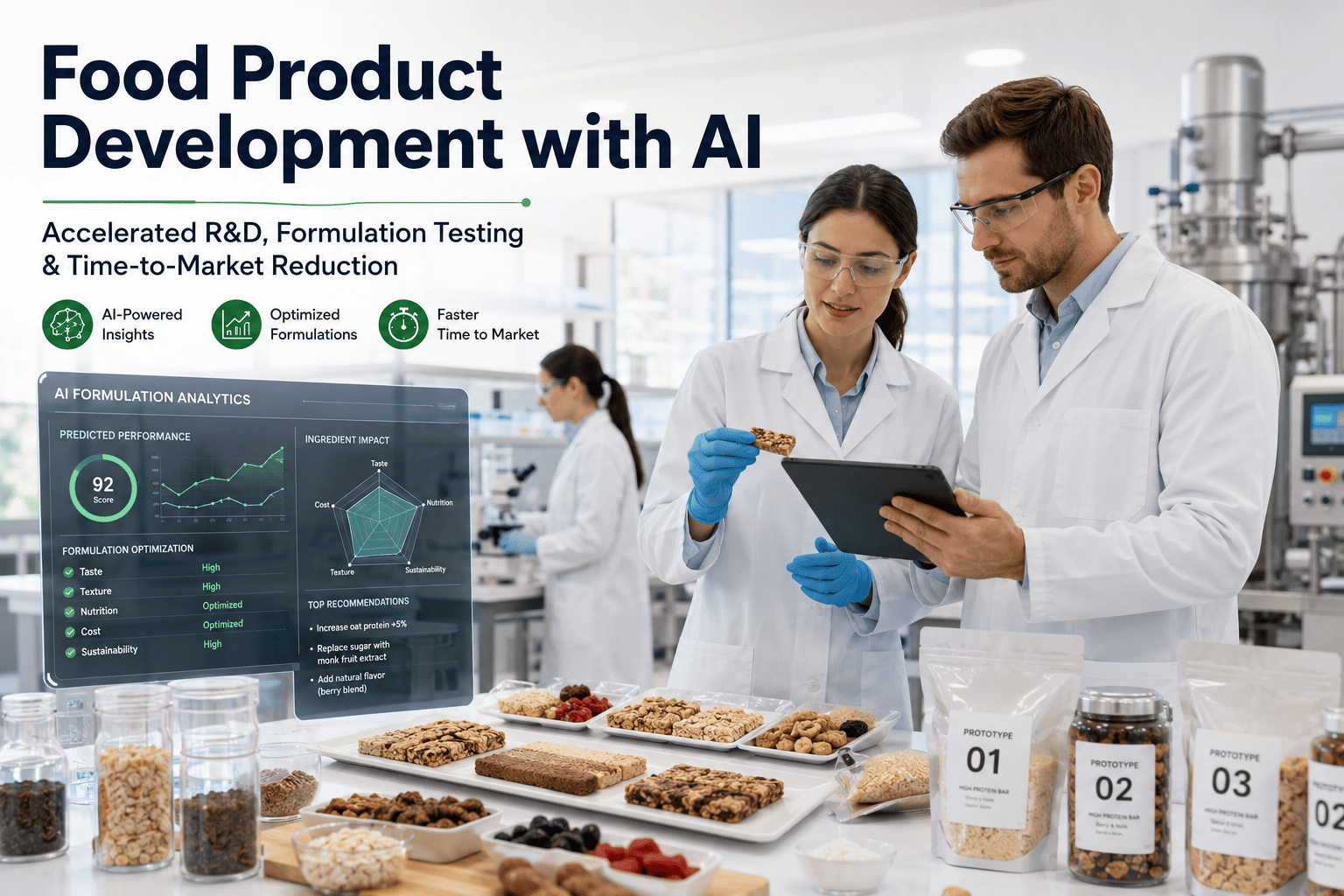
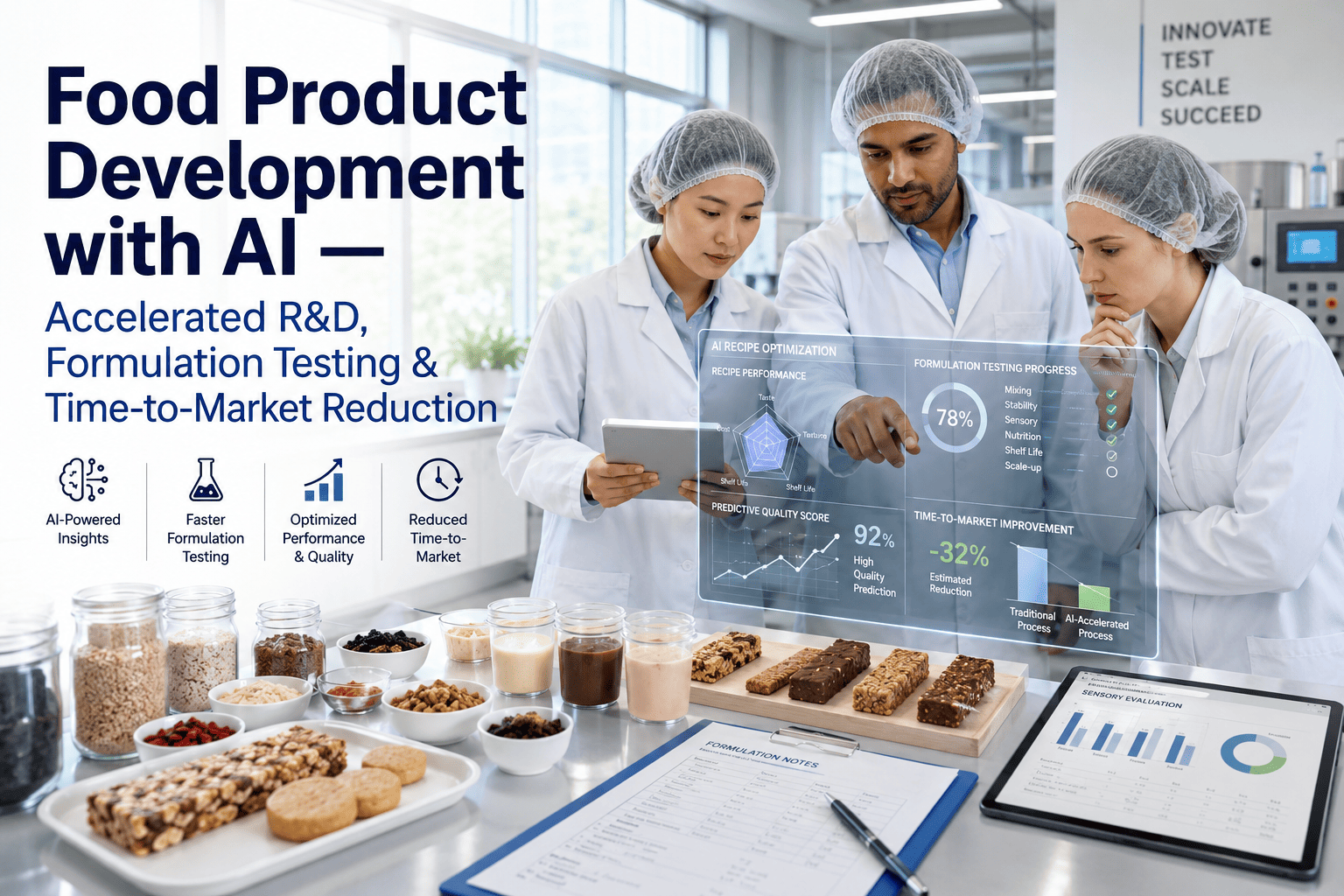
iFactory applies AI to formulation prediction, sensory modeling, and scale-up simulation, compressing the iteration cycles that usually stretch a product launch from months into quarters.
Every Product Concept Loses Candidates at Each Stage of the Pipeline
A typical product development pipeline starts with far more concepts than ever reach a shelf, and each stage exists specifically to filter out the ones that won't work before more time and budget go into them.
Four Places iFactory's AI Shortens the Development Cycle
Rather than replacing food scientists, the AI layer narrows the range of formulations, sensory outcomes, and scale-up risks worth testing physically, so fewer full iterations are needed to reach a launch-ready product.
Formulation Prediction
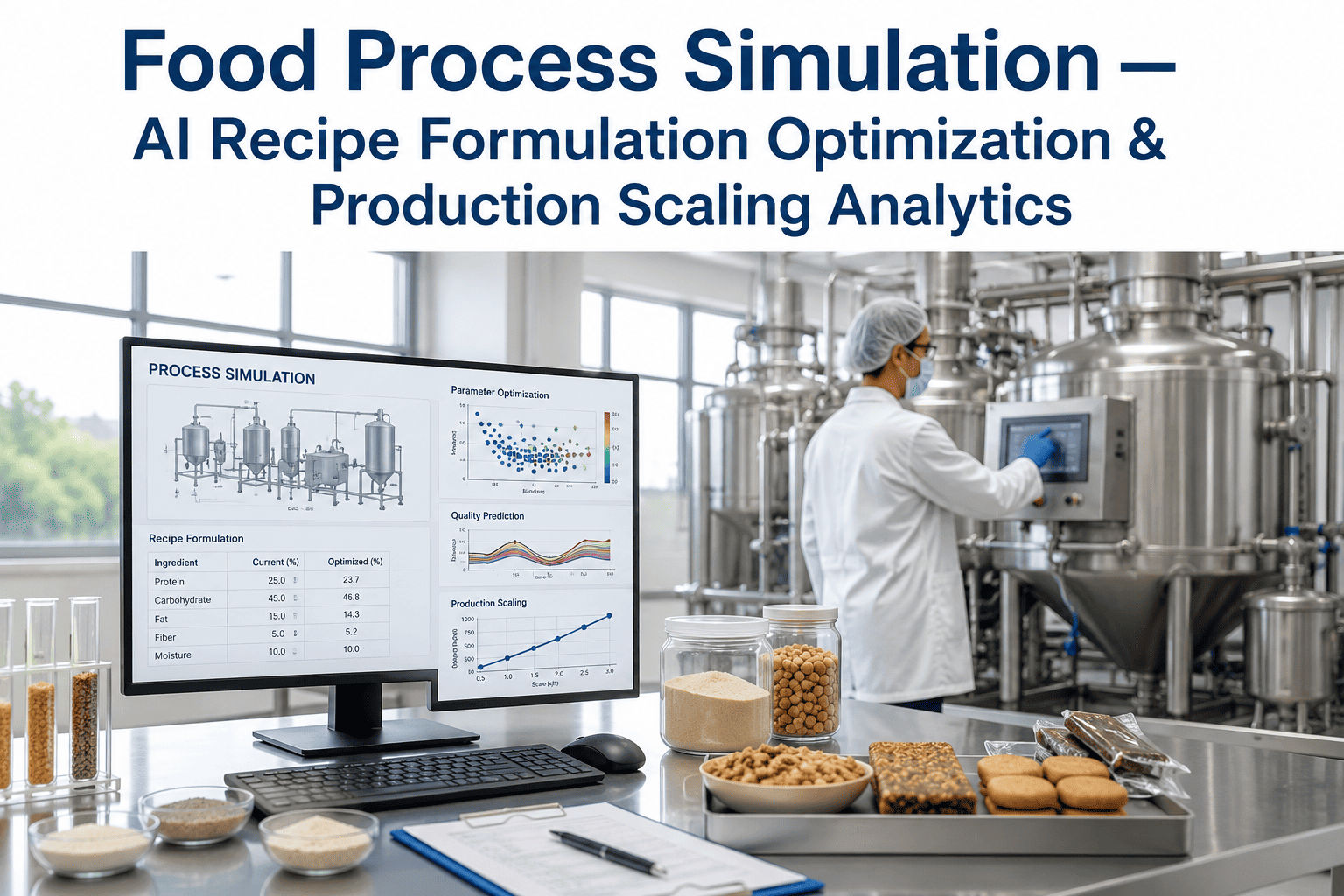
Models how ingredient ratio changes are likely to affect texture, flavor, and stability before a physical batch is made, narrowing the test list.
Sensory Profile Modeling
Predicts likely consumer sensory response from formulation data, helping prioritize which candidates go to a full panel first.
Shelf-Life Estimation
Uses accelerated stability data patterns to project shelf life earlier in development, rather than waiting for full real-time testing.
Scale-Up Risk Simulation
Flags formulations likely to behave differently at production scale versus bench scale, reducing surprise failures during scale-up trials.
Every Month Shaved Off Development Is a Month Earlier at Retail
iFactory's AI-assisted R&D pipeline management helps food science teams cut iteration cycles without cutting testing rigor.
Traditional vs AI-Assisted Development Timeline by Stage
Actual timelines vary by product category and complexity, but this pattern reflects the general shift reported when AI-assisted tools are added to an existing development process.
| Stage | Traditional Timeline | AI-Assisted Timeline |
|---|---|---|
| Formulation Iteration | 8-12 weeks | 4-6 weeks |
| Sensory & Shelf-Life Testing | 10-16 weeks | 6-10 weeks |
| Scale-Up Trials | 4-8 weeks | 3-5 weeks |
Results Reported by Food R&D Teams Using AI-Assisted Development
These figures reflect outcomes reported by food product development teams after introducing AI-assisted formulation and sensory tools into an existing pipeline.
Questions Process Engineers and Food Scientists Ask About AI in R&D
Get Products From Concept to Shelf Faster Without Cutting Corners on Testing
See how iFactory's AI-assisted R&D pipeline could shorten your next product development cycle.