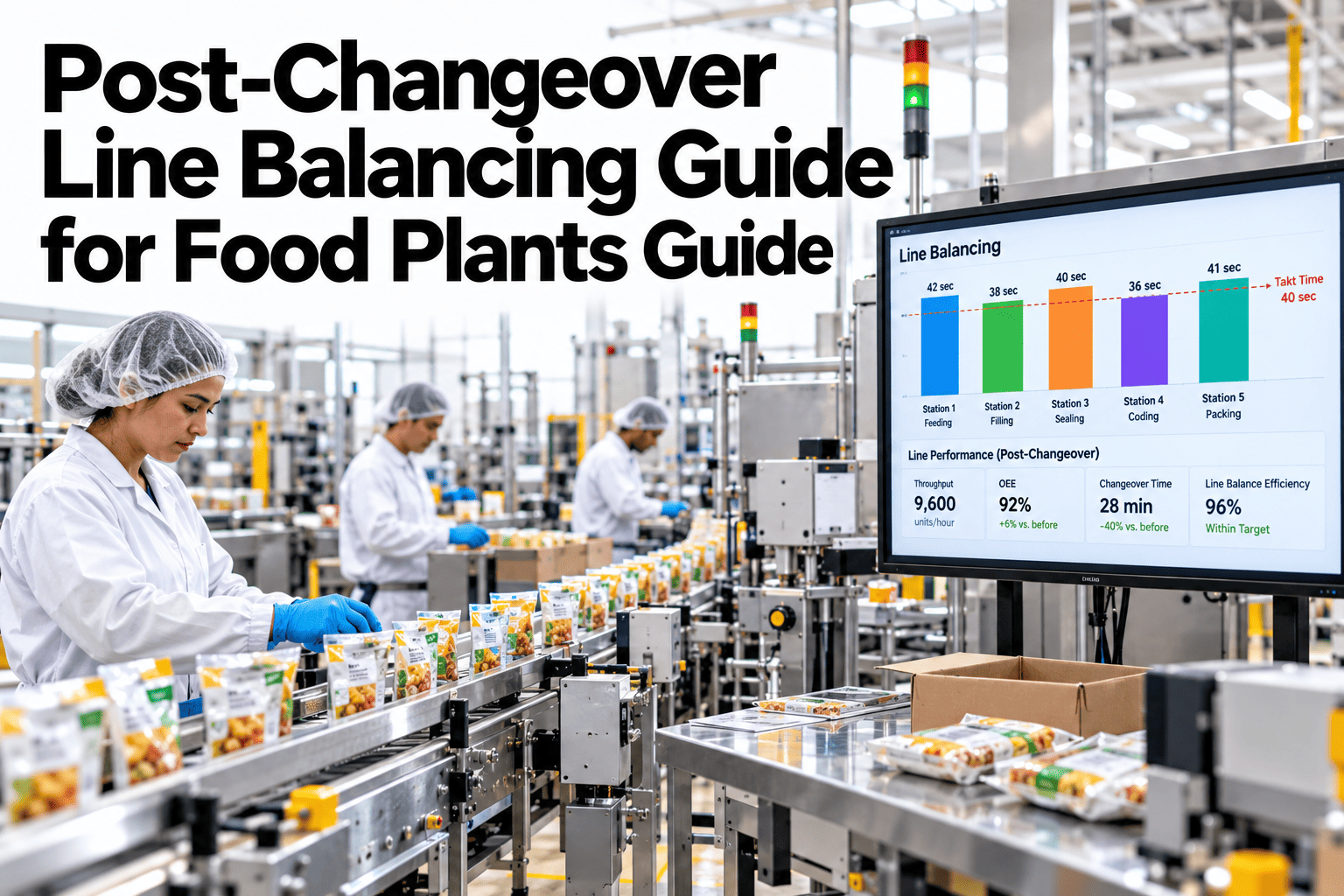
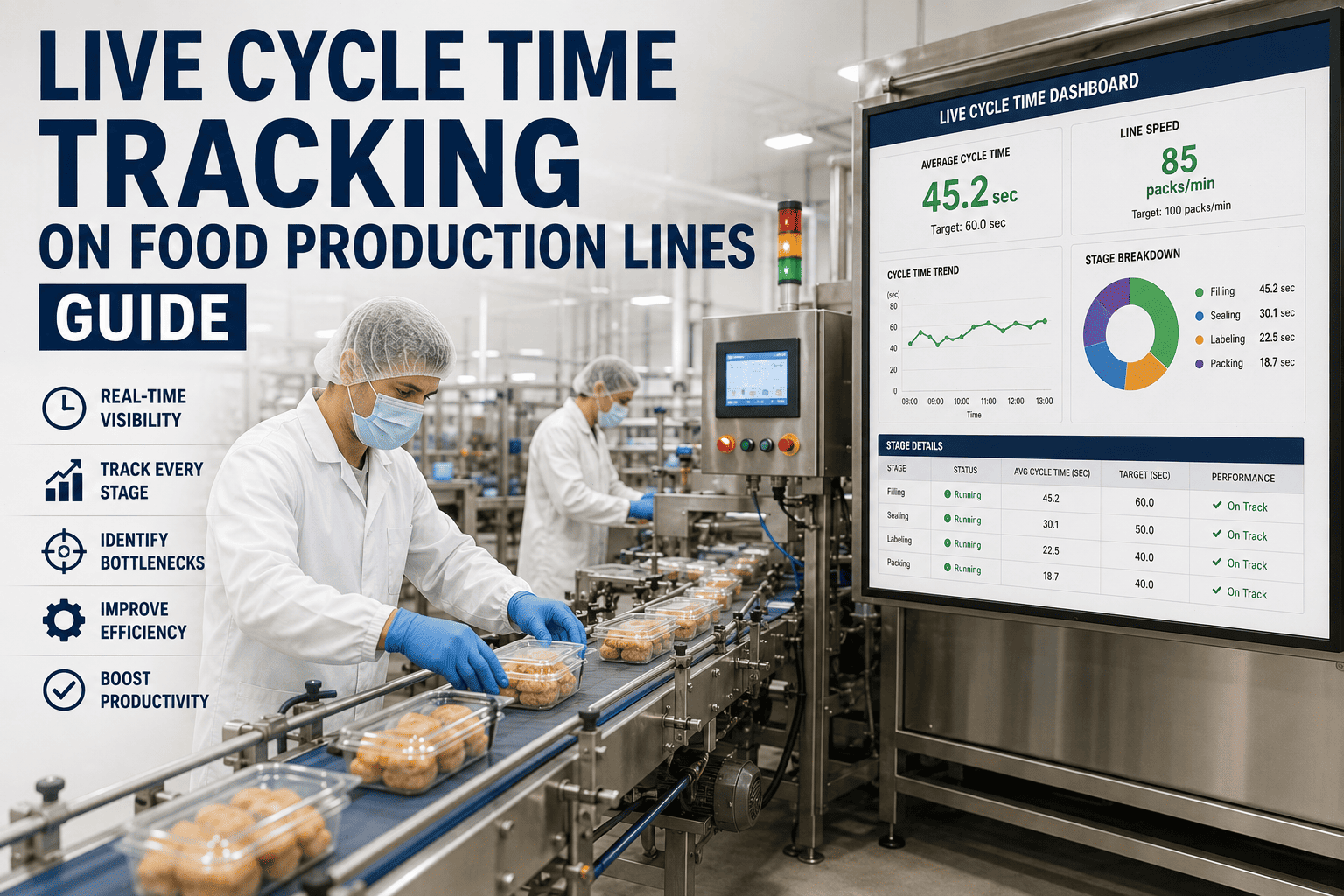
Switching a food line from one product to the next always takes time, but not all of that time is unavoidable. A tank must be purged, pipes flushed and allergens verified, yet a surprising share of the delay is often waiting for someone to say the line is OK to run. Separating the necessary steps from the avoidable waits is the fastest way to shorten SKU switches without cutting hygiene or safety. To see how this applies to your lines, you can review a changeover timeline with our team.
Micro-stop and changeover losses
Shorten SKU Switches by Cutting the Waiting, Not the Cleaning
iFactory AI timestamps every step of a product switch, so plants can see what is truly needed and what is simply delay.
The four parts of a product switch
PurgeCleanVerifyRelease
Where the time goesA Product Switch Is More Than a Tank Flush
Teams often blame purge time for long switches. Timestamps usually show a more complicated picture.
Purge
Draining and flushing product from lines and tanks
Clean
Cleaning to the level the next product needs
Verify
Checks such as allergen or hygiene tests
Release
Waiting for the line to be signed off
Each part needs a different kind of improvement. Treating them as one block hides where the delay really sits.
An illustrative breakdownTypical Shares of a Product Switch
The split below is an example, not a benchmark. Measure your own switches to see the real picture.
45 percent: Purge and flush
Mostly set by tank size, pipe length and product.
20 percent: Cleaning and verification
Needed for hygiene and allergen control.
20 percent: Waiting for release
Paperwork, sign-offs and availability of people.
15 percent: Set-up and restart
Settings, first packs and ramp-up.
The waiting share is often the easiest to cut, because it does not touch cleaning or safety steps.
Unavoidable and avoidableSeparate What Must Happen From What Merely Delays
Unavoidable
Draining and flushing product
Cleaning to the required standard
Allergen or hygiene verification
Setting the line for the new product
Avoidable
Waiting for a person to sign off
Searching for tools and parts
Late paperwork or label checks
Doing tasks one after another that could run together
Hygiene and safety steps stay. The goal is to remove waiting and rearrange tasks, not to shorten verified cleaning.
See the Real Timeline of Your Product Switches
Share a few weeks of changeover records and see how iFactory AI would timestamp each step and separate necessary time from delay.
Step by stepWhat Each Step Needs and Where Time Can Be Saved
| Step | Unavoidable? | Improvement lever |
|---|
| Drain and flush | Mostly | Better sequencing, shorter lines, optimised flush volumes |
| Clean | Yes, to standard | Prepare tools beforehand, run tasks in parallel |
| Allergen or hygiene check | Yes | Prepare samples and testing capacity in advance |
| OK-to-run sign-off | Needed, but delay is avoidable | Clear criteria, digital sign-off and named backups |
| Set-up and first packs | Partly | Recipe settings and ready materials |
The OK-to-run gateFour Steps to Remove Release Delays
1
Define the checklist
List exactly what must be true before running.
2
Prepare in parallel
Do label, material and paperwork checks during cleaning.
3
Sign off digitally
Use a simple form that notifies the next person.
4
Name backups
Make sure someone can sign when the usual person is away.
A clear gate removes waiting and arguments. It also gives auditors a record of what was checked.
Quick changeover thinkingMove Work From Inside the Stop to Outside It
1
List every task
Write each action in the changeover.
2
Mark inside and outside
Inside tasks need the line stopped. Outside tasks do not.
3
Move tasks outside
Prepare tools, labels and materials while the line still runs.
4
Run tasks in parallel
Use extra people for tasks that can happen together.
5
Standardise and repeat
Write the new routine and review it each month.
This is the core of quick changeover methods such as SMED. It shortens switches without touching the cleaning standard.
Smart sequencingOrder Products to Make Switches Easier
Production order can make switches shorter or longer. A simple grid helps plan.
Switch type
Frequent
Rare
Long
Redesign
Change the sequence or the process
Plan carefully
Schedule around known long switches
Short
Standardise
Make quick switches even quicker
Planners can also sequence from lighter to darker colours or from lower to higher allergen content where products allow. To explore sequencing, ask our team about changeover sequencing rules.
What improvement looks likeSwitch Time Before and After Process Changes
Step down in stages as each change takes effect. This chart is illustrative.
Step 1
Release delay removed
Step 2
Tasks run in parallel
Some plants report reductions of around a quarter in switch time after separating avoidable delay, but results depend on the starting point.
Product familiesLayers of Sequencing Rules
Allergen order
Lower-allergen products before higher-allergen ones where possible.
Colour and flavour
Lighter before darker, mild before strong.
Cleaning level
Group products needing the same clean.
Order priority
Balance sequence benefits against customer deadlines.
Timestamps for each step of every switch
Unavoidable and avoidable time separated
OK-to-run checklist agreed with quality
Backups named for sign-off
Inside and outside tasks listed
Parallel tasks assigned to named people
Sequencing rules written for planners
Monthly review of switch time by product pair
Expert reviewWhat a Food Technologist and Line Manager Would Check First
Expert review
Never trade hygiene for speed. The safest time savings come from removing waiting, preparing in parallel and sequencing smartly, not from shortening verified cleaning.
VerdictStrong when cleaning and verification stay untouched and delays are removed.
Watch forPressure to skip checks to hit a time target.
Do nextTimestamp ten switches and separate waiting time from required steps.
Frequently asked questionsWhat Food Plants Ask About Product-Switch Delays
Can we shorten switches without risking allergen control?
Yes, if you focus on avoidable delay rather than verification steps. Prepare tasks in parallel, remove waiting for sign-offs and sequence products sensibly. Keep your allergen verification steps exactly as validated.
See a safe changeover approach.
What is an OK-to-run delay?
It is the time between finishing cleaning and the line actually restarting, often spent waiting for approval, labels or paperwork. It is a common hidden loss. Clear criteria and digital sign-off usually shorten it.
Ask about release gate design.
How do we separate purge time from avoidable delay?
Timestamp every step of a switch, then compare each against what is physically required. Waiting and idle periods between steps point to avoidable delay. Observation of a few switches helps confirm.
Plan a timestamp study.
How much time can we expect to save?
Some plants report reductions of around a quarter in switch time after removing avoidable delay, but results depend on your starting point and equipment. Measure a baseline for each product pair.
Ask about baselines.
Does sequencing really matter?
Yes. Moving from lighter to darker products or from lower to higher allergen content can shorten or simplify cleaning. Balance sequence benefits against delivery dates and stock.
Explore sequencing options.
Faster switches, same standards
Take the Waiting Out of Every Product Switch
Book a session with iFactory AI to timestamp your switches, separate required steps from avoidable delay and plan changes that keep hygiene intact.