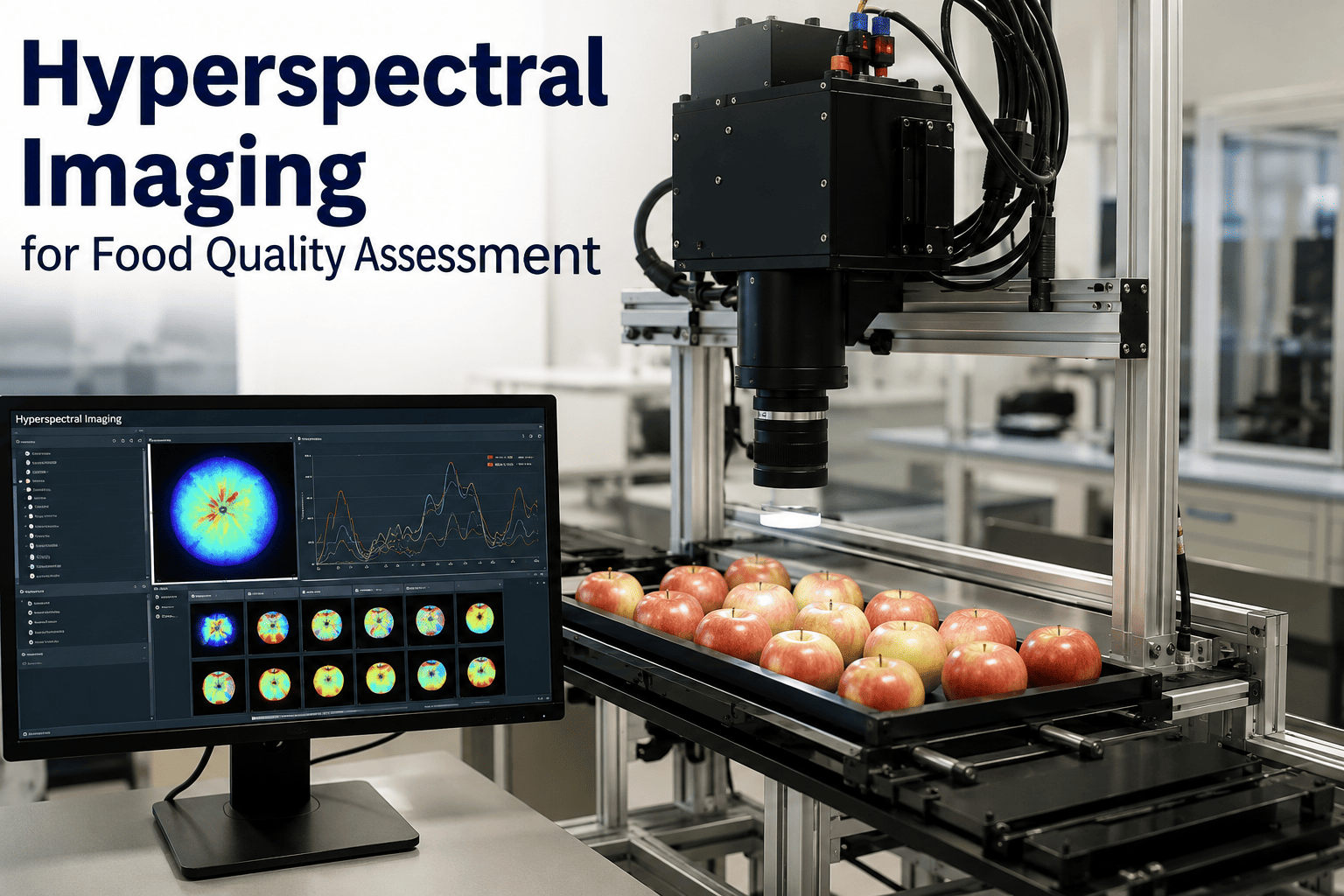
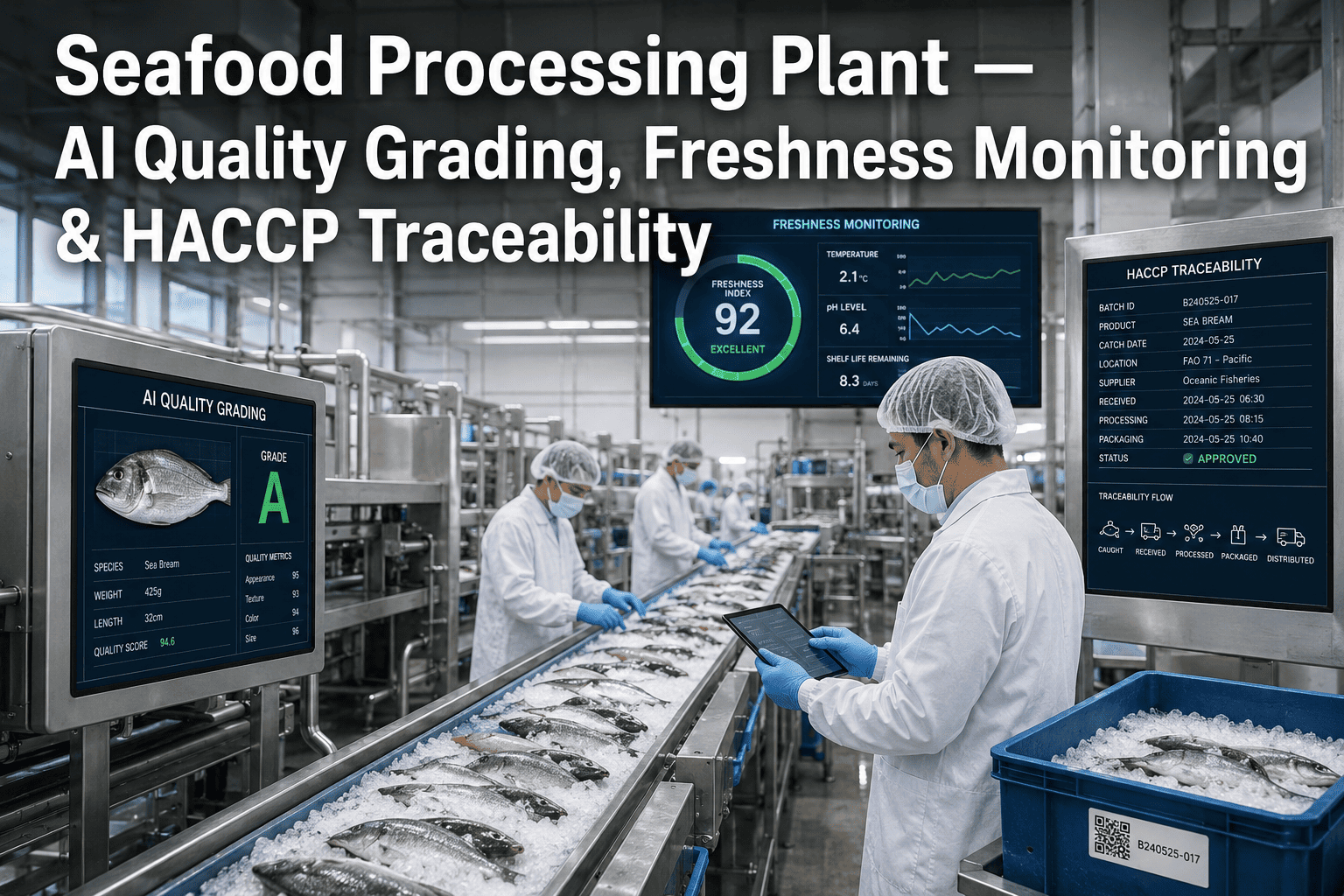
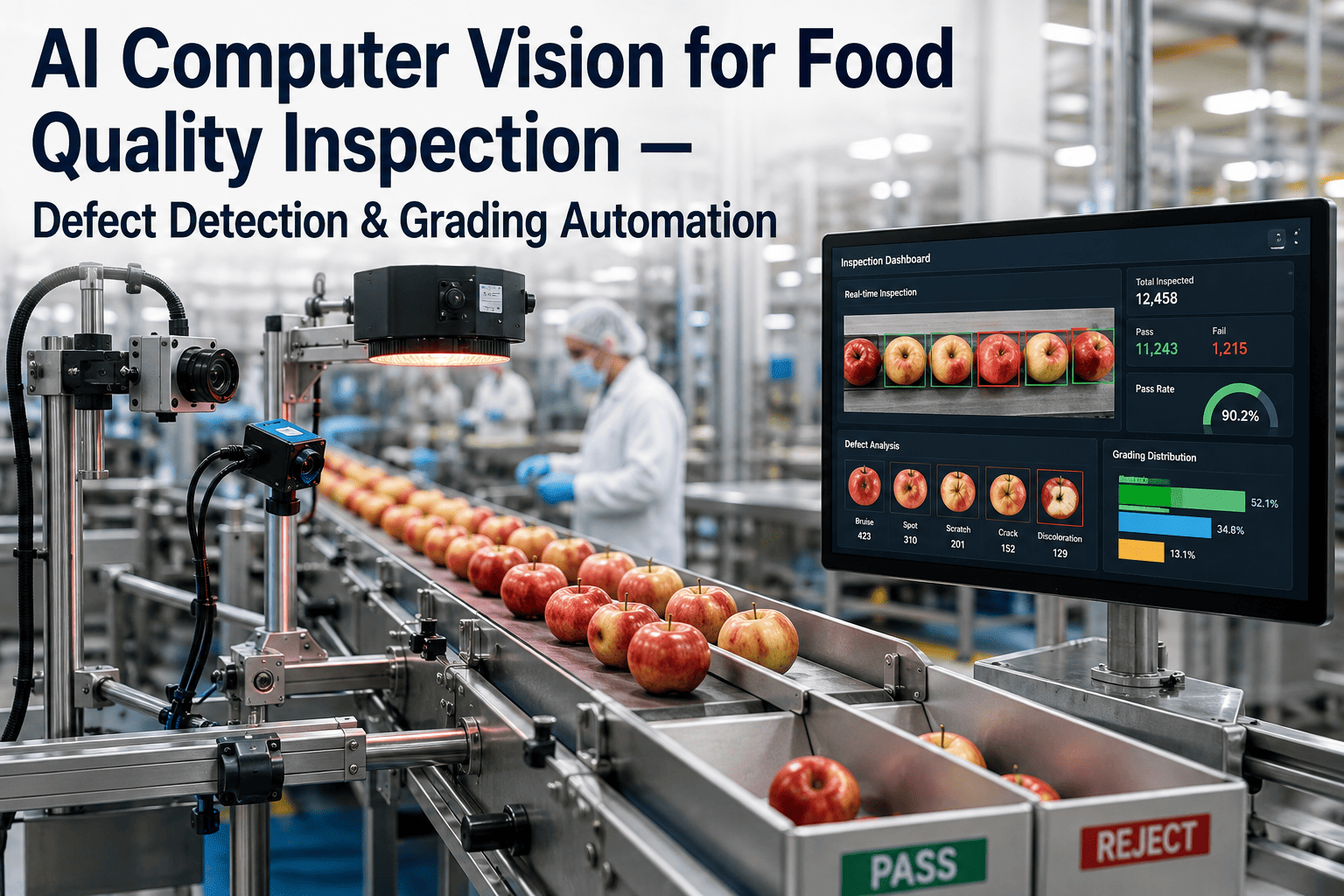
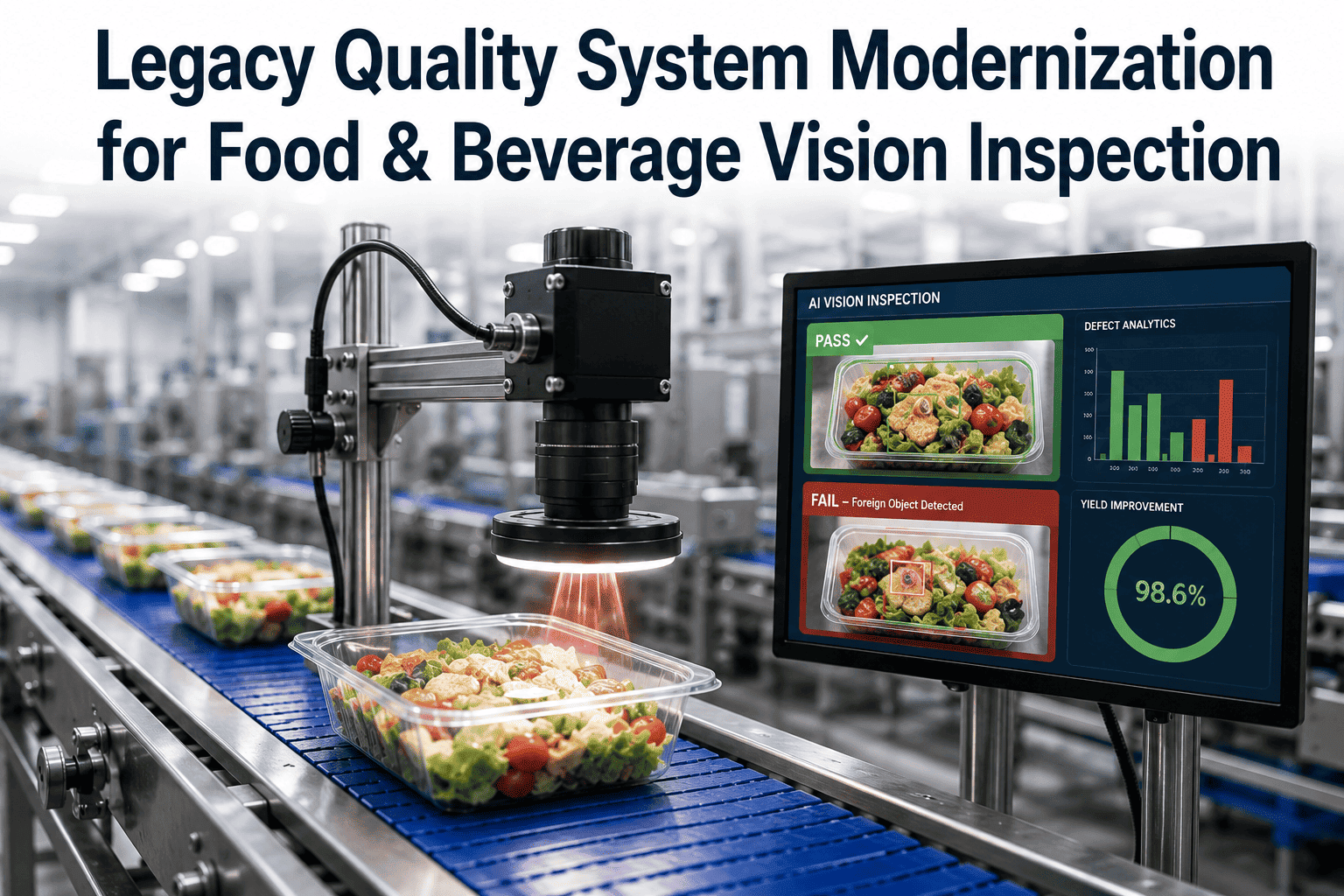
A standard camera sees the surface of a piece of fruit or a stream of grain the way a person does — colour, shape, and light. It cannot see the sugar content inside a tomato, an early bruise forming beneath unbroken skin, or a trace of mould growing where the peel still looks clean. Hyperspectral imaging solves that blind spot by capturing dozens or hundreds of light wavelengths across the visible and near-infrared spectrum for every point on a product, turning each scan into a chemical fingerprint rather than just a picture. That capability is why food processors chasing tighter quality and safety margins increasingly pair it with iFactory's inspection platform on their production lines.
FOOD SAFETY · SPECTRAL IMAGING · NON-DESTRUCTIVE TESTING
See the Chemistry, Not Just the Surface
A single hyperspectral scan captures a full spectral signature at every pixel, allowing one pass over a product to simultaneously assess moisture, fat, sugar content, bruising, mould, and foreign material — attributes that would otherwise need several separate tests.
What a Hyperspectral Scan Actually Captures
Ordinary machine vision works with three colour channels — red, green, and blue — which is enough to judge shape, size, and obvious colour defects but nothing about what is happening beneath the surface. Hyperspectral imaging instead builds what is called a data cube: two spatial dimensions plus a full spectral dimension at every point, often spanning visible light through near-infrared wavelengths. Different compounds in food — water, sugar, protein, fat, chlorophyll — absorb and reflect light at distinct wavelengths, so the resulting spectral curve for a given pixel works like a chemical signature unique to what is actually present there.
400-500nm
Surface colour, early bruising, blue-violet contrast
500-700nm
Chlorophyll, ripeness, general visible defects
700-1000nm
Water content, subsurface bruising, sugar proxies
1000-1700nm
Fat, protein, moisture mapping, adulterants
Where This Beats a Standard Camera or a Lab Test
Two older approaches dominate food quality testing today, and hyperspectral imaging sits in the gap between them. Standard RGB machine vision is fast and cheap but blind to anything below the surface. Wet chemistry lab testing sees composition accurately but destroys the sample, takes hours to return a result, and can only ever check a small fraction of total output. Hyperspectral imaging is the rare method that is both non-destructive and chemically informative, which is why it has moved from a research-lab tool into production environments over the past several years.
Standard RGB Vision
Sees surface colour and shape only
Fast, low cost, real-time capable
Cannot detect internal defects or composition
Lab Chemistry Testing
Accurate composition data
Destroys the sample, takes hours
Checks a tiny fraction of total output
Hyperspectral Imaging
Sees composition and surface together
Non-destructive, scales to full line speed
Higher upfront cost, needs trained models
See a Hyperspectral Scan Run Against Your Own Product
iFactory's team can walk through what a spectral scan surfaces on your specific raw material or finished product line.
Four Places Processors Are Already Deploying This
01
Grain and Kernel Quality
Moisture and protein content are calculated per kernel, and a qualitative model separates healthy grain from contaminated or diseased kernels in the same pass.
02
Fruit Ripeness and Bruising
Sugar concentration and subsurface bruising are both visible well before either would show up to the naked eye on the skin.
03
Foreign Material Detection
Bone, cartilage, plastic film, wood, and rubber fragments carry distinct spectral signatures from the surrounding product, even when their colour closely matches it.
04
Packaging Seal Integrity
Contamination trapped between a seal and the packaging film, or a compromised heat seal, is detectable through spectral variation invisible to a standard camera.
The Practical Barriers Worth Knowing Before You Invest
Hyperspectral imaging is not a drop-in replacement for a standard vision camera, and being honest about the barriers upfront saves a lot of wasted budget later. Equipment cost and physical footprint are both higher than RGB vision, and the data volume produced by a full spectral cube is large enough that most plants need dedicated processing infrastructure rather than a lightweight edge box. There is also no universal calibration standard across hardware vendors, which means a model built for one camera and lighting setup usually needs re-validation if the hardware changes, and every new product category still typically needs its own custom-trained model rather than a generic off-the-shelf one.
What This Means for a Rollout Plan
The processors getting the most value out of hyperspectral imaging are not trying to replace every RGB camera on the line with one. They are placing it at the specific points where a standard camera genuinely cannot see the risk — incoming raw material grading, a contamination checkpoint before a high-value packaging step, or a spot-check station validating a claim like sugar content or fat percentage — and letting conventional vision continue to handle shape, count, and surface-level checks everywhere else.
Hyperspectral vs. X-Ray vs. Metal Detection for Contamination
| Detection Method | What It Catches | What It Misses |
| Metal Detection |
Ferrous, non-ferrous, and stainless metal fragments |
Everything non-metallic |
| X-Ray |
Dense objects: glass, stone, bone, metal |
Low-density plastic, rubber, cartilage, wood |
| Hyperspectral Imaging |
Surface and near-surface organic and chemical anomalies |
Objects fully embedded below scan depth |
Find Out Where Spectral Imaging Fits Your HACCP Plan
Most food safety programs layer hyperspectral imaging alongside metal detection and X-ray rather than replacing them — iFactory can help map the right combination for your hazard profile.
Frequently Asked Questions
Is hyperspectral imaging fast enough for a high-speed production line?
Line-rate hyperspectral systems exist and are used in grain and produce sorting today, though the achievable speed depends on the number of spectral bands captured and the resolution needed for the target defect. In practice, most processors deploy it at a slightly slower checkpoint than the fastest packaging line stages, reserving standard RGB vision for the full line-speed steps. Ask
iFactory Support for throughput numbers specific to your product and line speed.
Does hyperspectral imaging replace metal detectors and X-ray systems?
No. Each technology detects contamination through a different physical mechanism, and they are complementary rather than substitutes. Metal detection and X-ray remain the standard for dense foreign objects, while hyperspectral imaging fills the gap for organic, low-density, and chemical contamination that those methods often miss.
How much training data does a hyperspectral model need before it's reliable?
Because every product category and even every cultivar or recipe variant produces a distinct spectral pattern, models are generally trained on a representative sample of the specific product rather than a generic industry dataset. The exact volume needed depends on how visually and chemically variable the product naturally is, with more uniform products needing less data than highly variable fresh produce.
Can hyperspectral imaging measure things like sugar content or fat percentage directly?
Yes, this is one of its most established uses. Because specific wavelengths correlate strongly with water, sugar, protein, and fat content, a calibrated model can output a quantitative estimate for these attributes rather than a simple pass or fail classification, which is valuable for grading and labelling claims.
What's the realistic first step for a plant that wants to try this?
Most successful rollouts start with a narrow pilot on a single high-value defect category — bruising in a specific fruit, contamination on a specific raw material, or a labelling claim that needs verification — rather than a plant-wide deployment on day one.
Book a demo to scope a pilot around your highest-priority use case.
FOOD SAFETY · SPECTRAL IMAGING · NON-DESTRUCTIVE TESTING
Move Past What a Standard Camera Can See
Talk to iFactory about where a spectral imaging checkpoint would catch the defects your current inspection setup is missing.