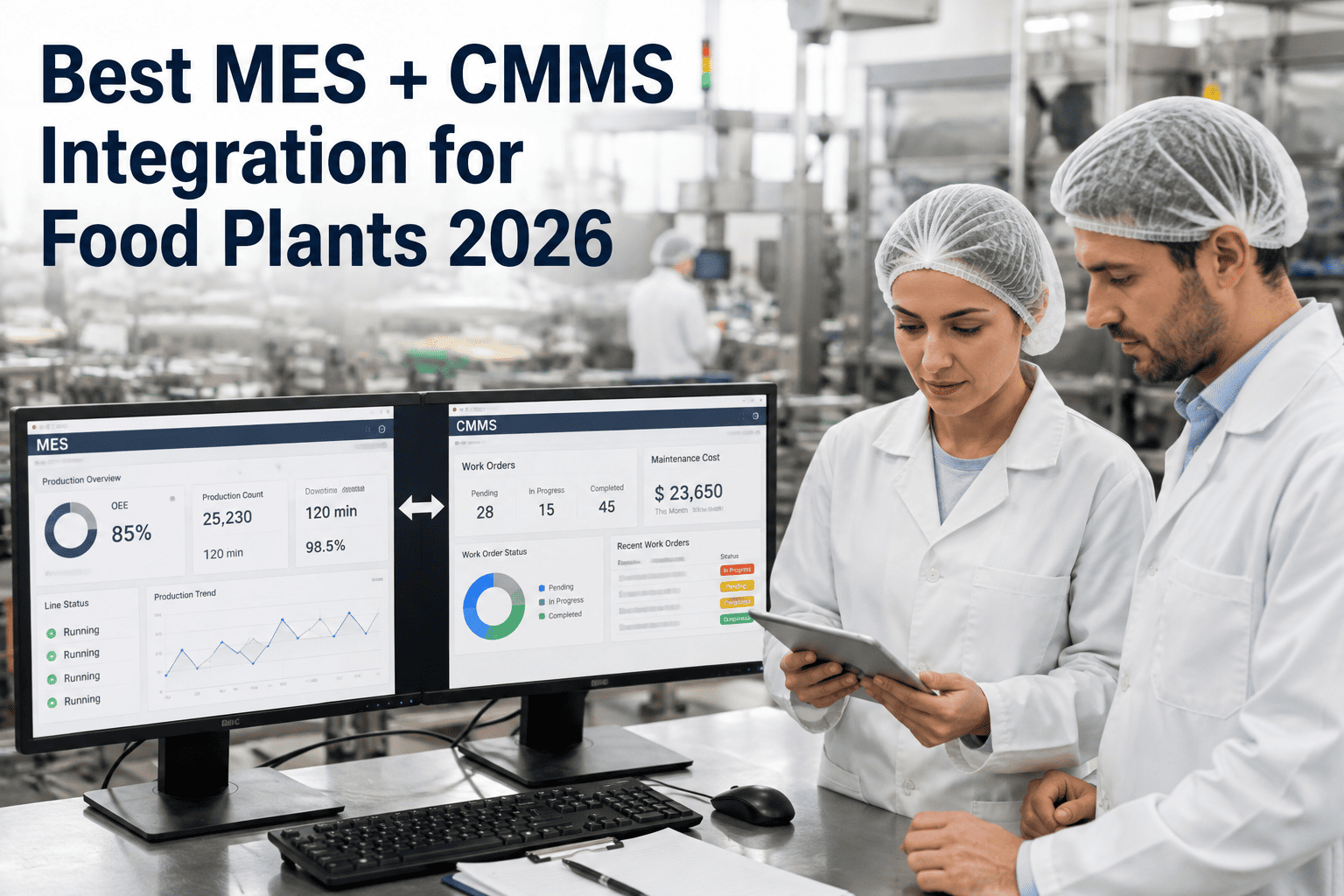
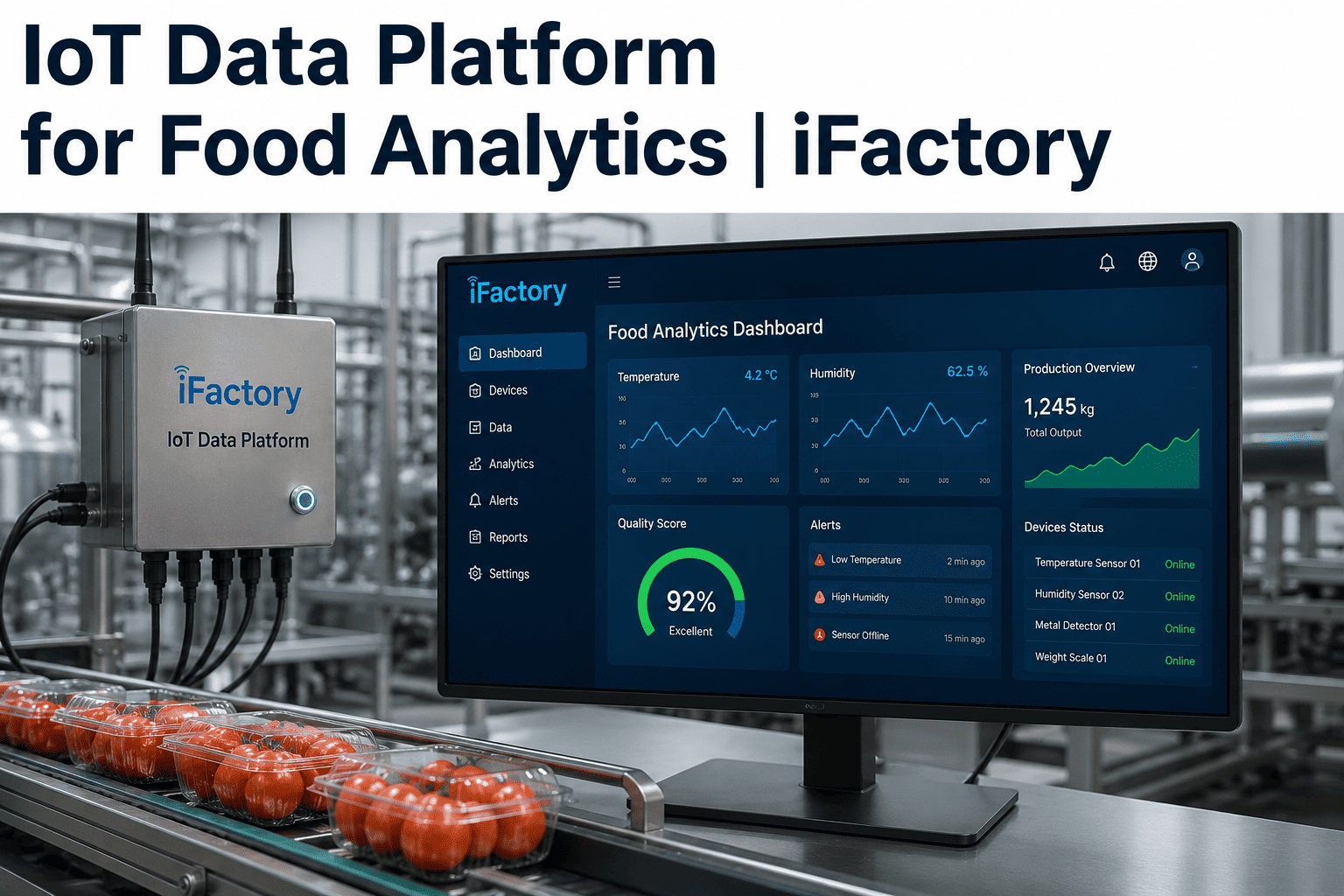
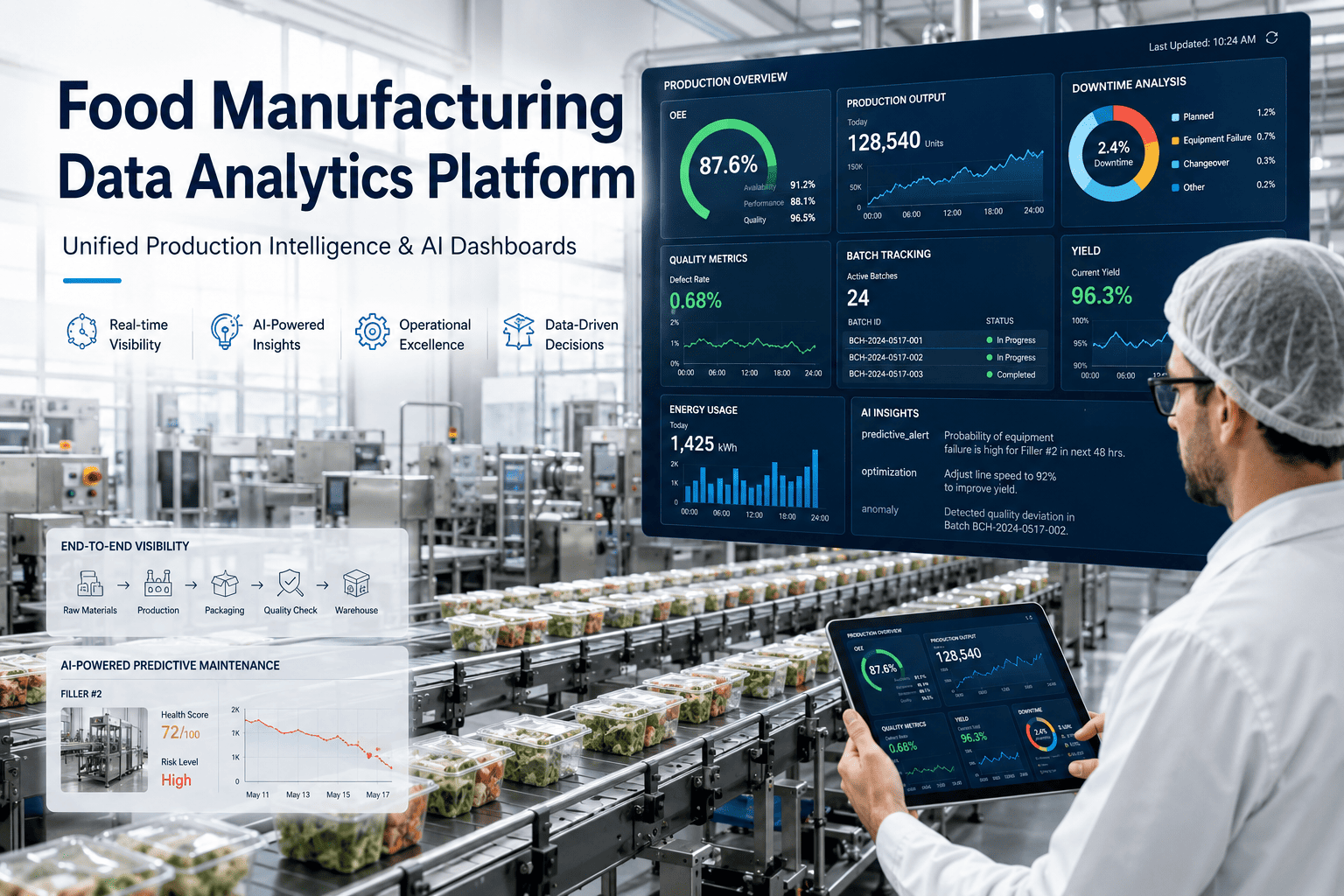
An RCA team working from PLC stop codes alone, without visibility into the CMMS work order that followed or the quality hold that may have triggered it, is reconstructing half a story and treating it as the whole one. Disconnected machine data — PLC, MES, CMMS and quality systems each holding a different slice of the same event — is why an OEE number can look confidently precise and still be wrong by a meaningful margin once someone actually reconciles it against the full picture. You can see your own data gaps mapped with our team.
Food Plant Data Integration, 2027
An OEE Number Built on Half the Data Is a Confident Guess
iFactory, an on-premise AI platform for manufacturing execution (MES) and data integration, unifies PLC, MES, CMMS and quality data into one connected view, so RCA investigations start with the full picture and OEE numbers stop silently drifting from reality.
What it is
What Does Machine Data Integration Actually Solve?
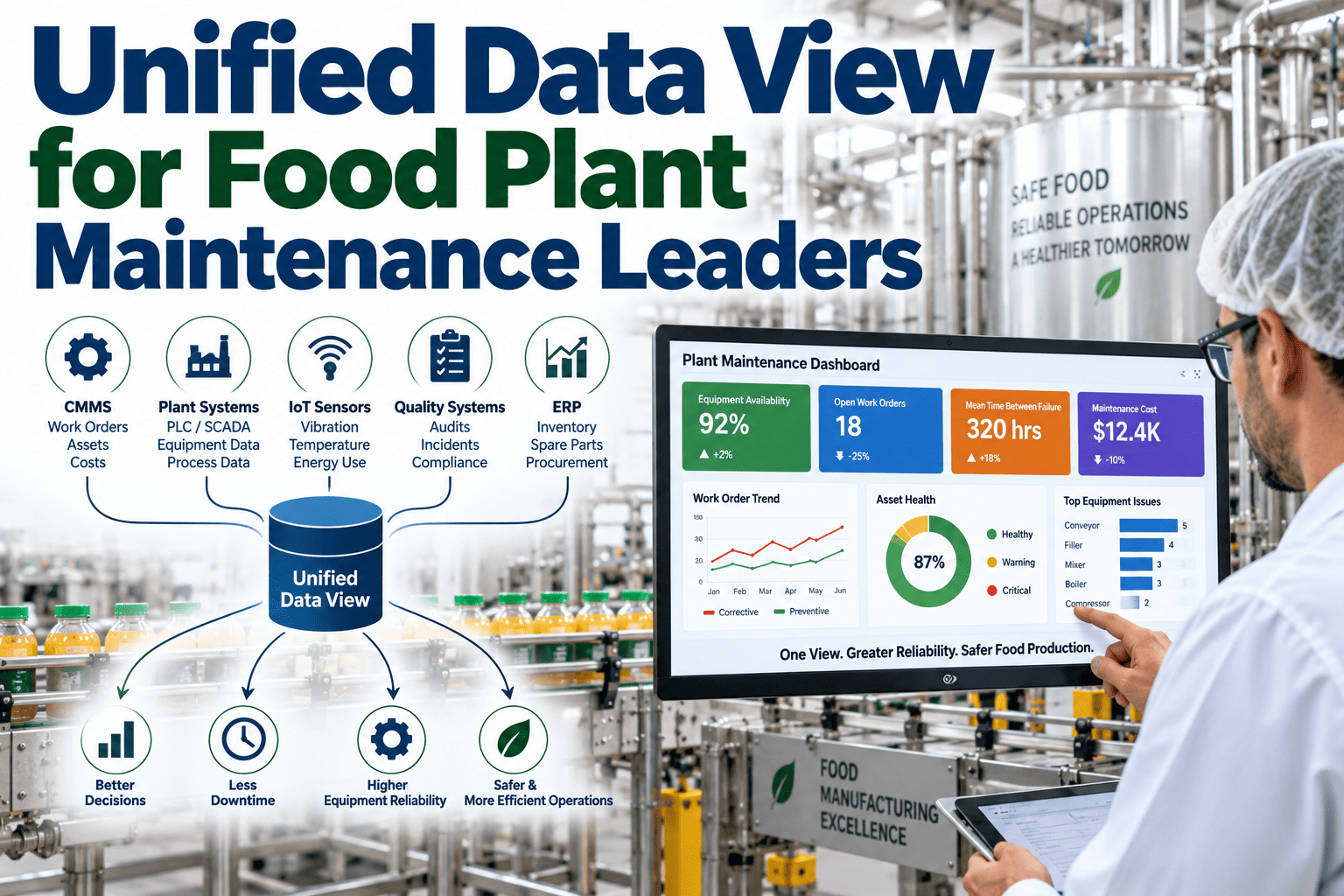
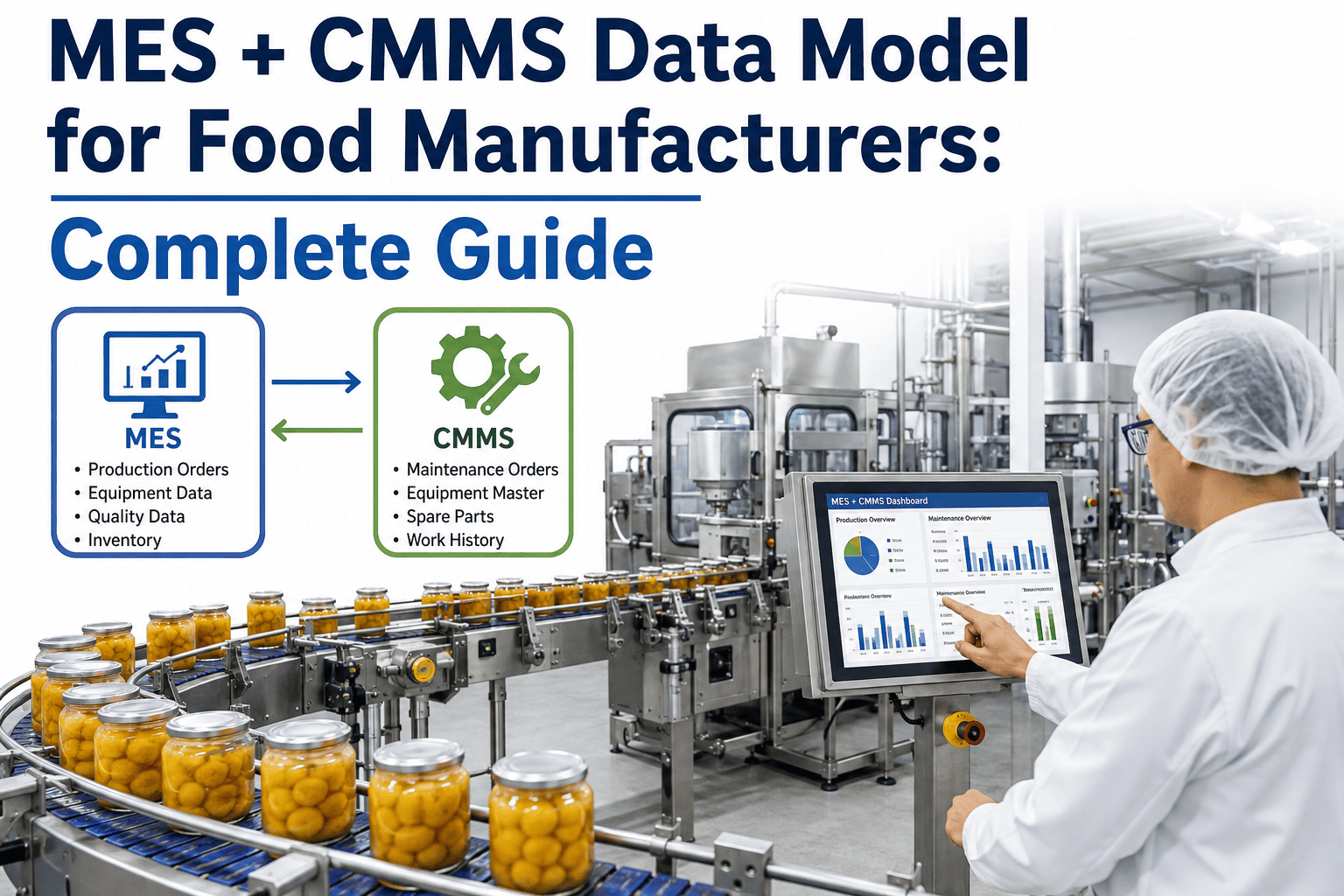
Machine data integration links four systems that typically run independently in a food plant — PLC stop and alarm data, MES execution records, CMMS work orders, and quality holds or deviations — around one shared event identifier, so an investigation or a KPI calculation can draw on all four without manual reconciliation.
Each system is correct within its own scope. The PLC accurately logs that a stop happened. The problem is that none of the four systems alone knows the full story: what caused the stop, what maintenance did about it, and whether it produced a quality issue downstream.
Why OEE drifts
How a 15% OEE Gap Hides in Disconnected Data
A reported OEE figure built only from PLC run-time data, without cross-referencing CMMS downtime reason codes or quality rework events, systematically miscounts time. Short stops that never get properly reason-coded often get bucketed as "running" when they were not, and rework loops back through MES without always being flagged against the original quality event.
The result compounds quietly: a plant reporting OEE a step ahead of where it actually performs is not lying, it is simply missing the reconciliation layer that would catch the gap. Once PLC, MES, CMMS and quality data are unified, that gap typically becomes visible immediately.
The four sources
What Each System Contributes to a Complete Picture
PLC
Raw stop, alarm and cycle-time signals from the machine itself.
MES
What was being executed — the work order, product and shift context.
CMMS
What maintenance did in response, and how long it took.
Quality
Whether the event produced a hold, rework or customer-facing defect.
How it works
Five Steps to Unifying Machine Data for RCA and OEE
1
Establish one shared event identifier — asset, time window, and shift — that all four systems can tag consistently.
2
Connect PLC stop and alarm data as the base signal layer, ideally through a historian or direct tag integration.
3
Link MES execution records so every stop is tied to the specific work order and product running at the time.
4
Pull in CMMS work order response data for every maintenance-related event, not just closed tickets.
5
Attach quality holds and rework events to the originating stop, closing the loop from cause to consequence.
Expert review
What a Plant Reliability Manager Would Check First
Holds up
Unifying operational, maintenance and quality data around a shared event identifier is a well-established data foundation practice, not specific to food manufacturing.
Watch for
An integration that connects PLC and MES but leaves CMMS and quality as manual lookups — the RCA picture is still incomplete without all four.
Do next
Start with your highest-downtime line, since that is where the reconciliation gap between reported and actual OEE is usually largest.
FAQ
What Food Plants Ask About Machine Data Integration
How much can OEE actually be off without integrated data?
A commonly cited gap is around 15 percent between a PLC-only reported figure and a reconciled figure that accounts for CMMS downtime coding and quality rework, though the exact size depends on how disconnected your systems currently are.
Check your own gap with our team.
Do we need to replace our existing PLC, MES, CMMS or quality systems?
No — integration connects your existing systems around a shared event identifier rather than requiring any of them to be replaced. The goal is a unified view, not a platform swap.
Ask about connecting your current systems.
What is the minimum shared identifier needed across all four systems?
Asset identity, a time window, and shift context are the minimum needed to match events across systems reliably; without a consistent way to tie a PLC stop to the right work order and quality record, reconciliation has to be done manually and inconsistently.
How long does a typical integration project take?
Connecting one line's data across all four sources is often achievable within weeks once the shared identifier scheme is agreed; a full-plant rollout typically runs longer and is best phased by line or area.
Discuss a realistic timeline for your plant.
Does this require a historian system?
A historian makes PLC data integration easier and more scalable, but it is not strictly required — direct tag-level integration is possible without one, though it typically takes more engineering effort to maintain over time.
Discuss your current data architecture with our team.