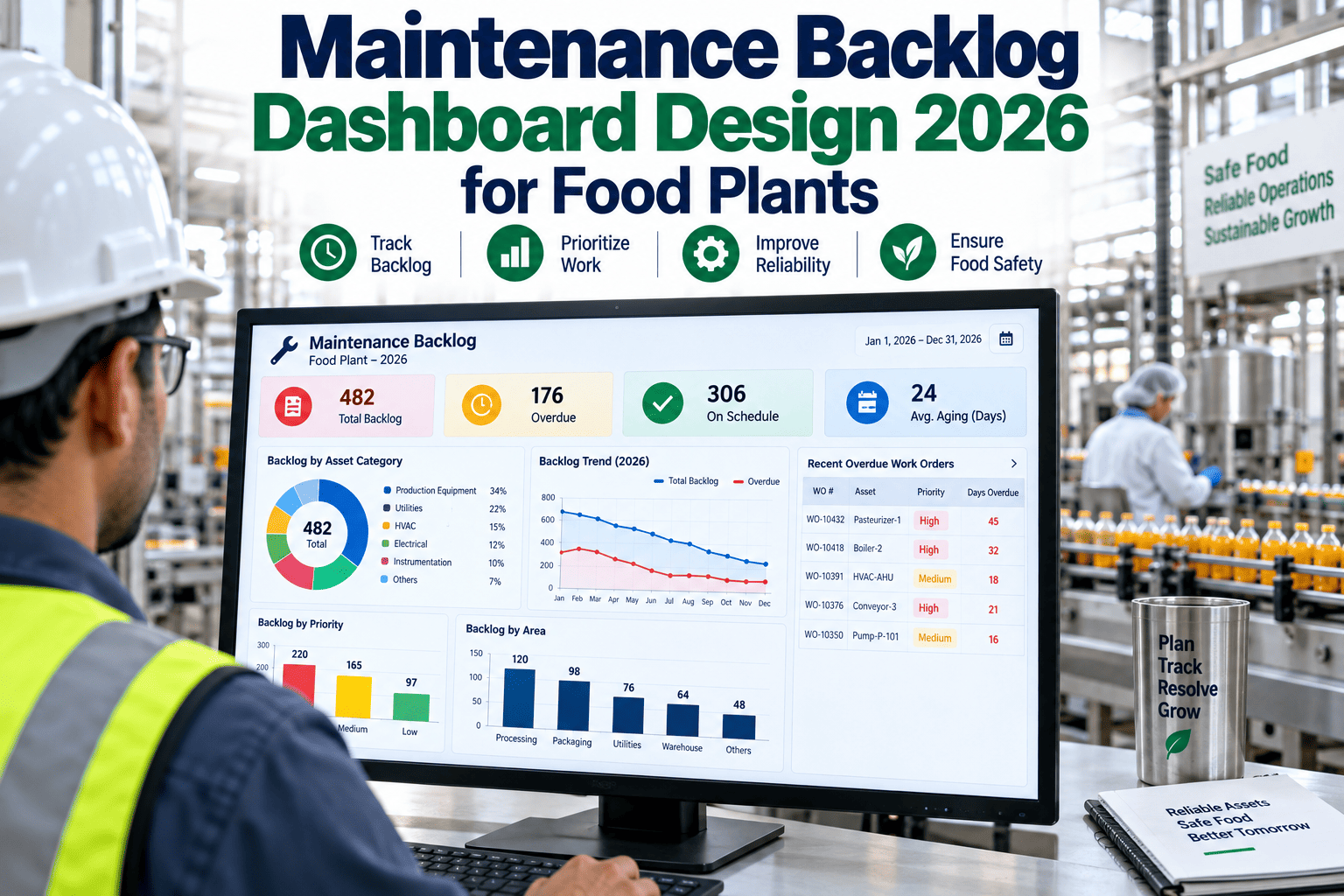
Eight hundred open work orders looks impossible until you stop treating it as one number. Most of that pile is not urgent, some of it is no longer relevant, and only a fraction actually protects the plant from a breakdown. A recovery plan works by triaging that pile fast, clearing the dead weight, and giving the crew a realistic path back to a healthy few weeks of forward work, without hiring a single extra technician. This guide lays out a 60 day plan built around that idea, and you can build a recovery timeline against your own backlog before you start.
GUIDE · PM BACKLOG RECOVERY · FOOD PLANTS
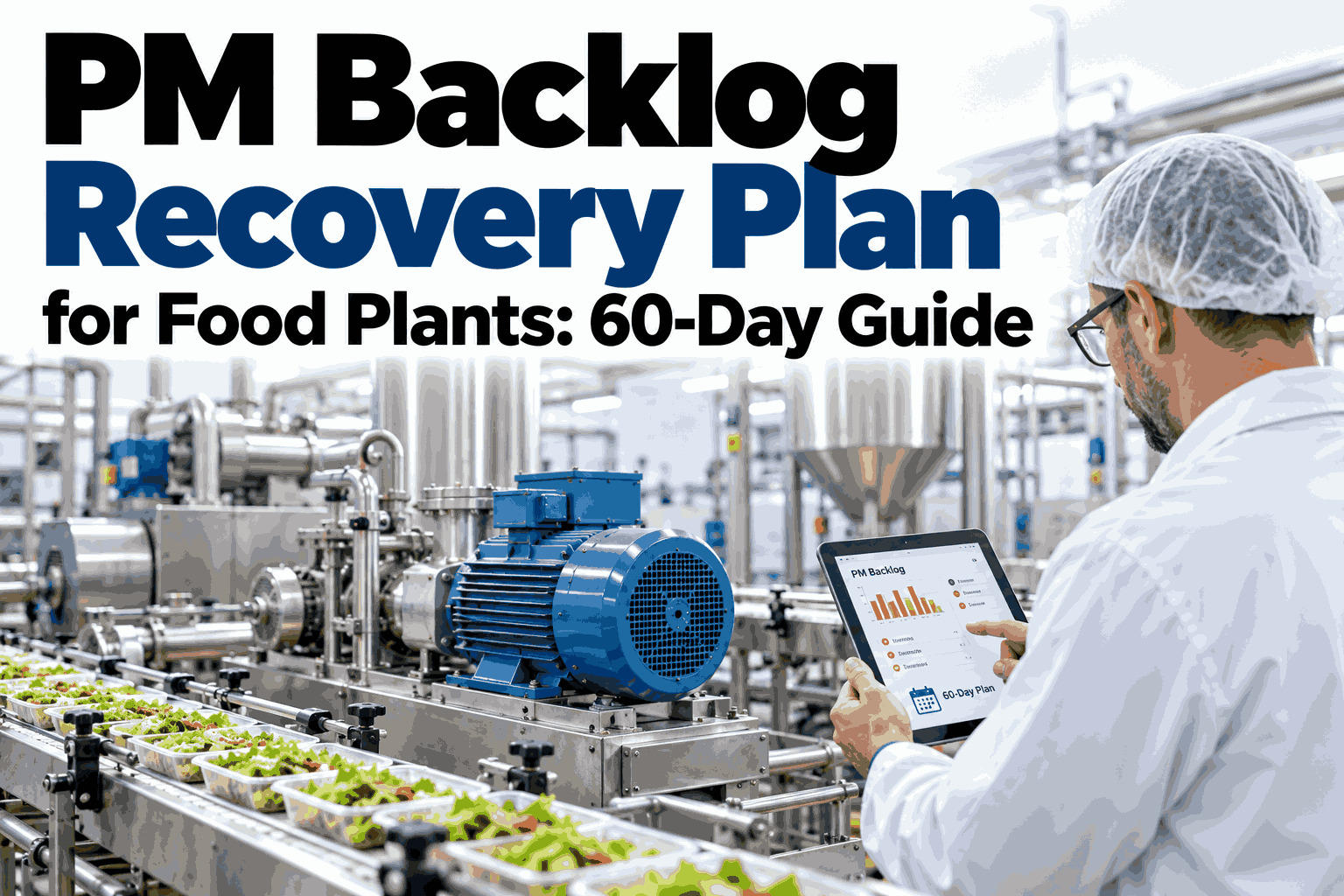
PM Backlog Recovery Plan for Food Plants: A 60 Day Guide
Walk hundreds of open work orders down to a healthy few weeks of forward work, using the crew you already have.
WHY BACKLOGS SPIRAL
The Loop That Turns Overdue Into Unmanageable
1
PMs slip during a busy season.
2
Slipped PMs become overdue, then stale.
3
Crew time goes to reactive fires instead.
4
More assets slip, and the pile grows faster.
THE 800 ORDER PROBLEM
One Pile Hides Four Very Different Buckets
Still valid
Needs doing, on a sensible schedule
Urgent
Protects a critical or at risk asset
Duplicate
Same task logged more than once
Obsolete
Asset retired or task no longer applies
A recovery plan starts by sorting into these four, not by working the list top to bottom.
THE 60 DAY ARC
Where the Backlog Should Sit Week by Week
Illustrative glide path from a large backlog to a healthy level. Your own starting size will differ.
THE PLAN
Four Phases Across 60 Days
Days 1 to 10
Triage
Sort every order into the four buckets and close duplicates and obsolete items.
Days 11 to 25
Stabilize
Clear urgent and critical asset work first, protecting the plant from the worst risk.
Days 26 to 45
Burn down
Work the remaining valid backlog at a steady weekly rate above new demand.
Days 46 to 60
Hold the line
Settle into a routine that keeps new PMs from slipping again.
WITHOUT NEW HIRES
Where the Extra Capacity Actually Comes From
| Lever | How It Frees Capacity |
|---|
| Cut duplicates and obsolete orders | Removes hours that were never real work |
| Bundle by asset and shutdown window | Fewer setups, more wrench time per stop |
| Risk based triage | Stops low value PMs from blocking high value ones |
| Condition based extensions | Defers PMs safely when data shows no need yet |
TRACKING PROGRESS
Three Numbers to Watch Every Week
Weeks of backlog
Open planned hours against crew capacity, falling steadily.
PM compliance
Share of scheduled PMs completed on time, rising.
New vs cleared
New work orders against closed ones, staying in your favor.
FREQUENTLY ASKED QUESTIONS
What Food Plant Teams Ask About Backlog Recovery
Is 60 days realistic for a backlog this large?
Sixty days is a planning horizon, not a guarantee, and the right pace depends on your crew size and how much of the pile turns out to be duplicate or obsolete. Many plants see the biggest drop in the first two weeks once dead weight is cleared. Track your own glide path rather than assuming this exact curve.
Build your own 60 day plan with us.
How do we triage 800 orders quickly?
Group by asset and reason first, since duplicates and obsolete items usually cluster together. A short review session with maintenance leads can sort most of the pile in a few days. Software that flags likely duplicates speeds this further.
See triage tooling in a live demo.
Will cutting PMs raise failure risk?
Not if cuts are limited to duplicates, obsolete tasks, and low risk work deferred using condition data. Critical and at risk assets stay protected throughout. The goal is removing noise, not real protection.
Ask support how risk is protected during cuts.
How do we stop the backlog from building up again?
Keep weekly completion slightly ahead of new demand and review the aging report regularly so nothing sits unresolved. Condition based PM reduces how often new urgent work appears. A short monthly check keeps the routine honest.
Set up an ongoing review rhythm with our team.
What does recovery cost if we are not hiring?
Most of the gain comes from removing wasted hours and reordering priority, not from working more hours. Some plants add temporary overtime during the stabilize phase, then drop it once the pile shrinks. Your own numbers will show whether that is needed.
Estimate your recovery plan with a specialist.
FROM 800 OPEN ORDERS TO A HEALTHY FEW WEEKS
Walk Your Backlog Down Without Adding Headcount
See how iFactory triages, tracks, and holds the line on your PM backlog across every line and asset.