A reefer trailer can look perfectly fine from the outside while running a compressor fault that nobody notices until the driver opens the doors at the delivery dock and the receiving team catches the smell or the temperature reading on arrival. Refrigerated transport sits at one of the highest-risk points in the cold chain precisely because it combines mechanical equipment that can fail mid-route, multiple stop delivery patterns that mean doors open and close dozens of times per day, and long stretches where nobody physically checks on the cargo until it reaches its destination. Real-time monitoring of temperature, location, and reefer unit performance has become the standard response to that risk, turning a black box on wheels into a continuously visible asset.
Refrigerated Truck Monitoring: GPS, Temperature, and Reefer Performance Best Practices
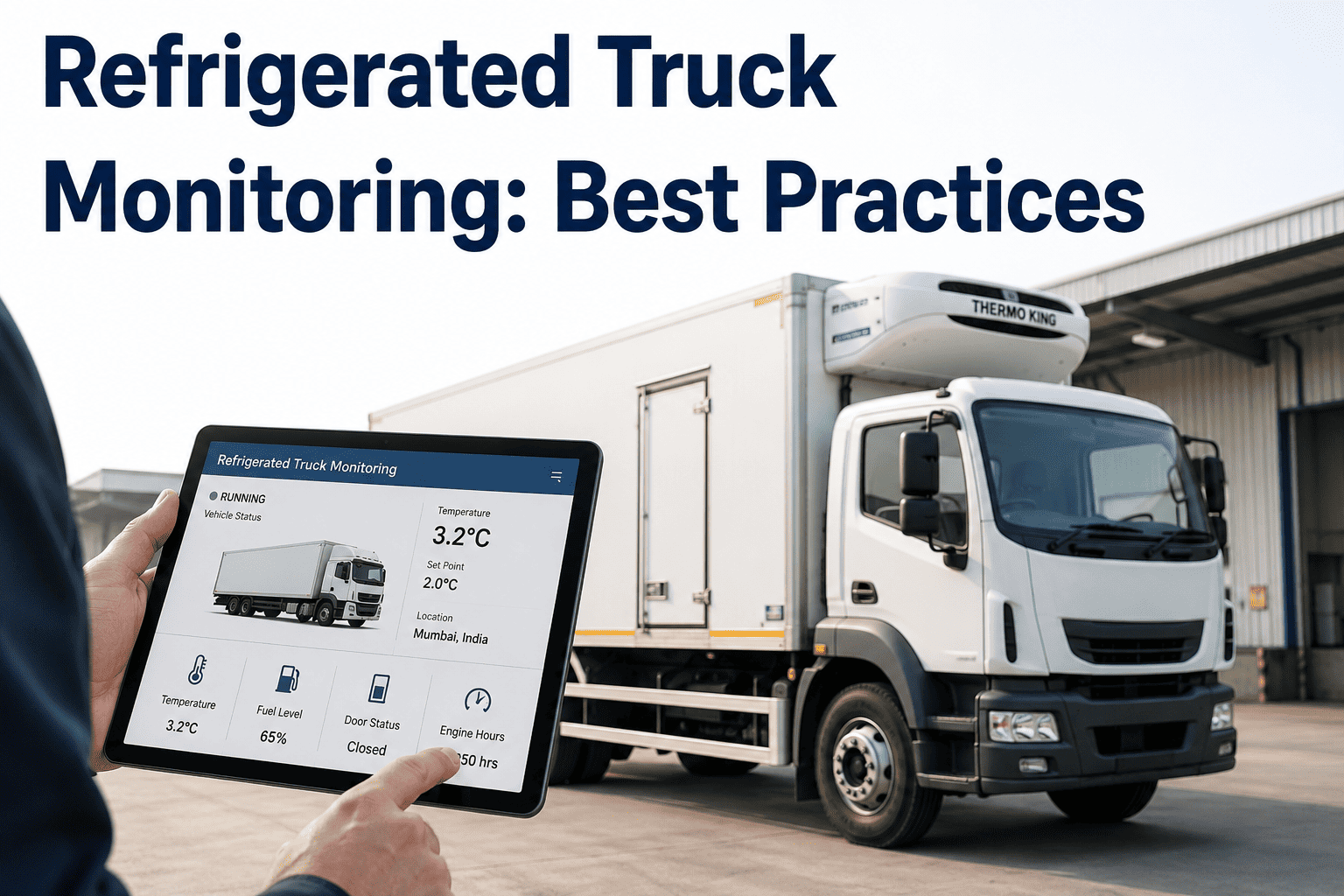
Real-time monitoring of temperature, GPS location, and reefer unit performance, with door-open alerts and automated documentation for every temperature excursion in transit.
Why Refrigerated Transport Is the Highest-Risk Cold Chain Stage
Refrigerated transport differs from fixed cold storage in three ways that meaningfully increase risk: the equipment is mobile and subject to road vibration and mechanical stress that fixed refrigeration units rarely experience, the cargo is inaccessible for direct inspection during transit, and multi-stop delivery routes mean door-open events happen far more frequently than in a controlled warehouse environment. A reefer unit running on a fuel or battery system also has failure modes that a plugged-in warehouse compressor does not, including fuel delivery interruption and battery depletion during extended idle periods, both of which can silently degrade cooling performance long before a driver notices a problem.
Mechanical stress from road vibration increases reefer unit failure rates compared to stationary refrigeration equipment.
Cargo is physically inaccessible for inspection between the point of loading and the delivery dock.
Multi-stop routes create frequent door-open events that each introduce a temperature recovery period.
What Continuous Monitoring Tracks on Every Route
A properly instrumented reefer trailer monitors more than just cargo temperature, since temperature alone does not explain why a reading is out of range or predict a failure before it happens. Location, reefer unit operating parameters, and door status all combine into a complete picture that lets a monitoring team distinguish between a brief, harmless temperature blip during a quick delivery stop and a genuine mechanical problem that needs immediate attention.
Cargo Temperature
Multi-point temperature sensors placed throughout the trailer catch variation between the front, middle, and rear of the cargo space rather than relying on a single reading near the reefer unit.
GPS Location and Route Tracking
Continuous location tracking correlates temperature events with specific points on the route, distinguishing a delivery-stop door-open event from an unexpected extended idle period.
Reefer Unit Diagnostics
Compressor run status, fuel or battery level, and set-point versus actual temperature readings reveal mechanical issues developing before they cause a full cooling failure.
Door-Open Event Logging
Door sensors log the exact duration of every open event, giving dispatch and quality teams a clear record distinguishing routine delivery stops from unusually long openings.
Alert Types and How Dispatch Teams Should Respond
Not every alert generated during a route requires the same level of urgency, and a monitoring system that treats every minor fluctuation the same way as a genuine mechanical failure quickly trains dispatch teams to ignore alerts altogether. Book a Demo to see how alert tiering and routing would work for your specific fleet and delivery pattern.
| Alert Type | Typical Trigger | Recommended Response |
|---|---|---|
| Minor temperature drift | Brief rise during a short delivery stop | Monitor for recovery within expected window |
| Extended door-open event | Door open beyond expected delivery stop duration | Dispatch contacts driver to confirm status |
| Sustained temperature excursion | Reading outside range for an extended period | Immediate driver contact and route assessment |
| Reefer unit fault signal | Compressor fault or fuel and battery depletion warning | Immediate maintenance dispatch or route diversion |
Turn Every Reefer Trailer Into a Continuously Visible Asset
iFactory's cold chain transport monitoring platform combines temperature, GPS, and reefer diagnostics into a single alerting system built for dispatch teams managing multi-stop delivery routes.
Turning Transit Data Into Delivery Documentation
Beyond real-time alerting, continuous monitoring during transport generates a documentation trail that matters just as much after delivery as it does during the route itself. Receiving teams, customers, and auditors increasingly expect a complete temperature and event record for every shipment, not just a single reading captured at the delivery dock.
Full Route Temperature History
A continuous temperature log for the entire route is available immediately at delivery, rather than requiring a driver to manually download a logger device.
Door-Open Event Reconciliation
Delivery stop counts and door-open events are automatically reconciled against the planned route, flagging any discrepancy for review.
Excursion Documentation for Disputes
If a customer disputes product condition on arrival, the full time-stamped temperature and location record settles the question quickly rather than relying on driver recollection.
Fleet-Wide Performance Trends
Aggregated data across the fleet identifies reefer units or routes with recurring issues, informing maintenance scheduling and route planning decisions.
Refrigerated Truck Monitoring — Frequently Asked Questions
Most reefer trailer monitoring deployments use between three and six sensor points distributed across the front, middle, and rear of the cargo space, since a single sensor near the reefer unit itself will consistently read colder than the far end of the trailer and miss variation caused by loading pattern or airflow blockage from densely packed pallets. The exact count depends on trailer length and the type of product being transported, with more temperature-sensitive cargo often warranting additional sensor points to catch localized variation that a minimal sensor count would miss entirely.
Yes, this distinction is made by correlating multiple data points rather than relying on temperature alone, since a brief temperature rise during a scheduled delivery stop combined with a door-open event and a GPS location matching the planned route looks very different from a temperature rise occurring during a period when the truck should be moving with the door closed. Reefer unit diagnostic data, such as compressor run status and set-point versus actual readings, adds another layer that helps distinguish a routine, self-correcting fluctuation from a genuine equipment fault requiring intervention.
Most reefer monitoring systems rely on cellular connectivity as the primary data link, with onboard data buffering that stores readings locally during any coverage gap and transmits the full backlog once connectivity is restored, so a temporary loss of signal does not create a permanent gap in the temperature record. Routes that regularly pass through extended low-coverage areas may benefit from satellite connectivity as a supplement, though this adds cost and is typically reserved for fleets with a meaningful share of their routes in genuinely remote areas rather than standard highway corridors.
A sustained excursion alert, meaning a reading that stays outside the acceptable range beyond the expected recovery window for a routine event, should trigger immediate driver contact to confirm the reefer unit status and assess whether a route diversion to the nearest service point is needed. The specific response time target depends on the product's sensitivity and the length of the remaining route, but the core principle is that this alert tier should never wait for a scheduled check-in, since delayed response is what turns a recoverable issue into a full product loss.
Yes, this is one of the most immediately valuable applications of continuous transport monitoring, since a complete time-stamped temperature and location record for the entire route provides objective evidence when a customer disputes product condition on arrival, replacing what would otherwise be a disagreement based on driver recollection or a single spot-check reading. Having this record available immediately at delivery, rather than requiring a manual data download after the fact, also speeds up dispute resolution significantly. Book a demo to see how the documentation record is structured and delivered for your specific fleet.
Get Real-Time Visibility Into Every Reefer Trailer on the Road
iFactory combines temperature, GPS, and reefer unit diagnostics into one monitoring platform, giving dispatch teams the alerts they need before a routine issue becomes a product loss.