Handing a new sanitation team member a chemical and a checklist isn't training, and it's usually how a plant ends up with cleaning quality that varies wildly depending on who worked the shift the night before. Effective sanitation is a skilled trade — proper chemical dilution and contact time, correct disassembly and reassembly of equipment, and the judgment to recognize when a surface isn't actually clean despite looking fine — and treating it as unskilled labor shows up directly in swab results and audit findings. iFactory helps food plants build structured sanitation training and competency certification programs, with the complete approach at iFactory support.
Sanitation Workforce Development · Food Plant Cleaning
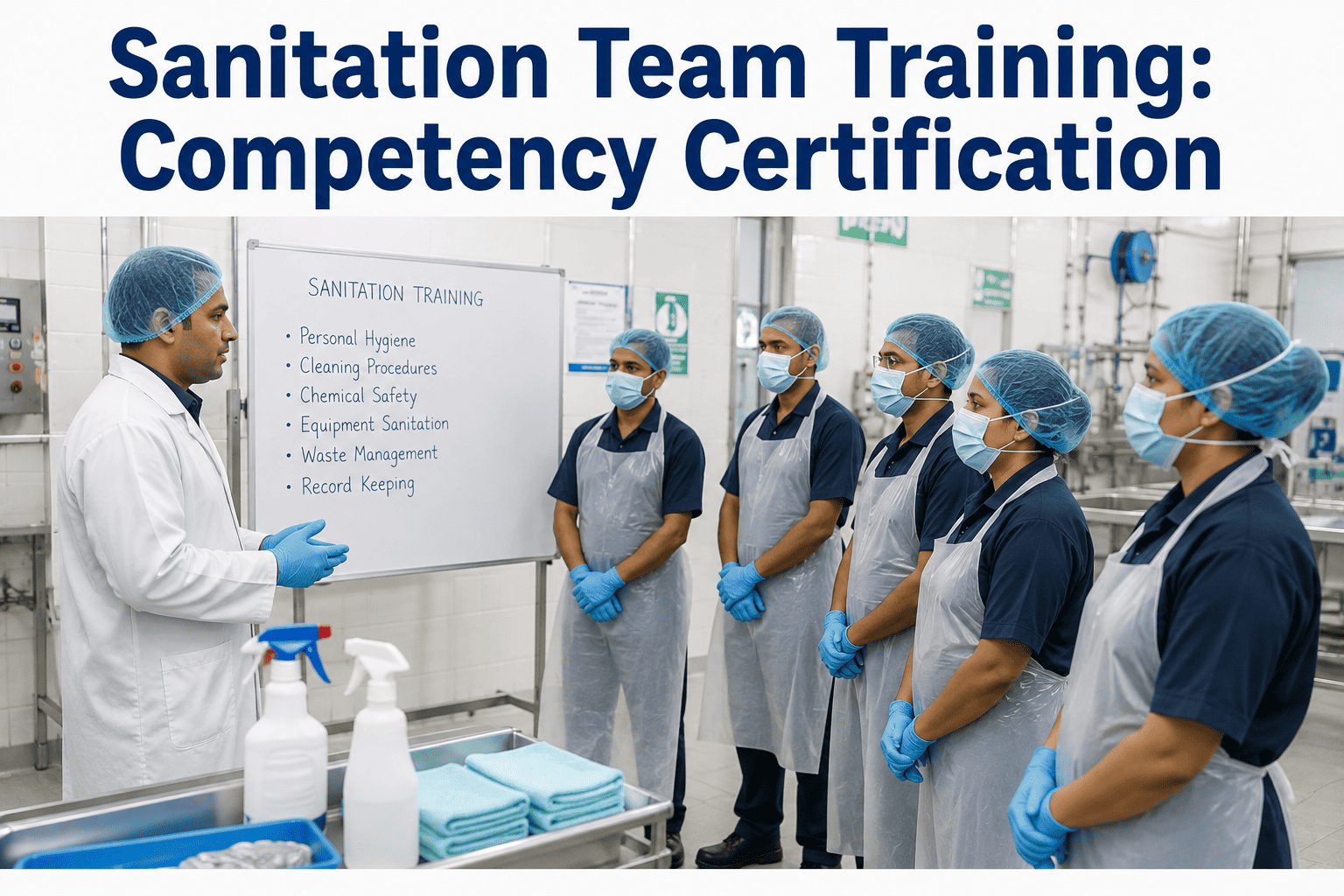
Sanitation Team Training: Cleaning Quality Shouldn't Depend on Who's Working the Shift
iFactory helps design structured sanitation training programs covering chemical handling, equipment operation, and verification, with a competency certification track that makes skill level visible and trackable.
The Four Training Pillars
What a Complete Sanitation Training Program Actually Covers
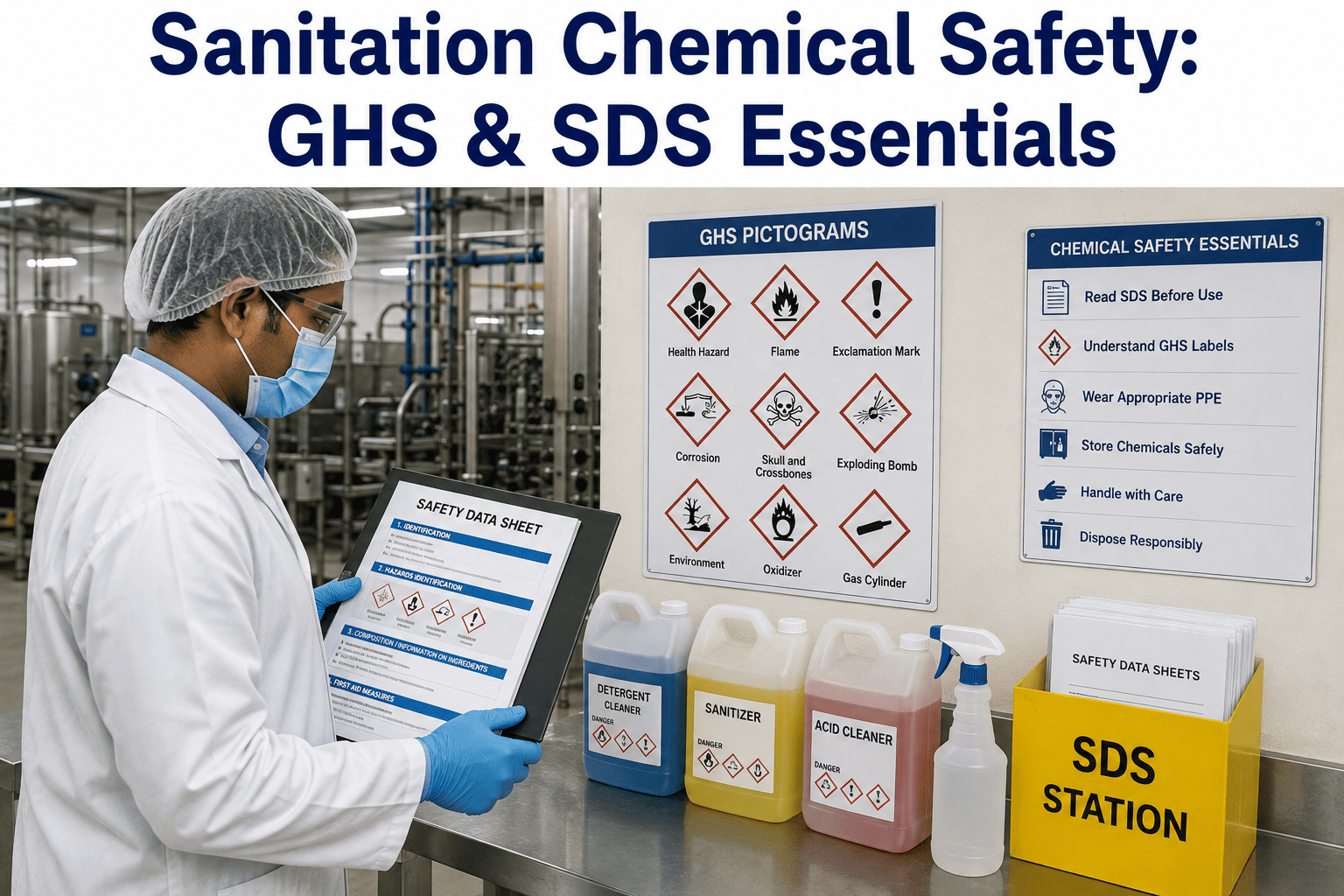
Chemical Handling & Safety
Correct dilution ratios, contact time requirements, chemical compatibility, and PPE use, with an understanding of why each matters rather than rote rule-following.
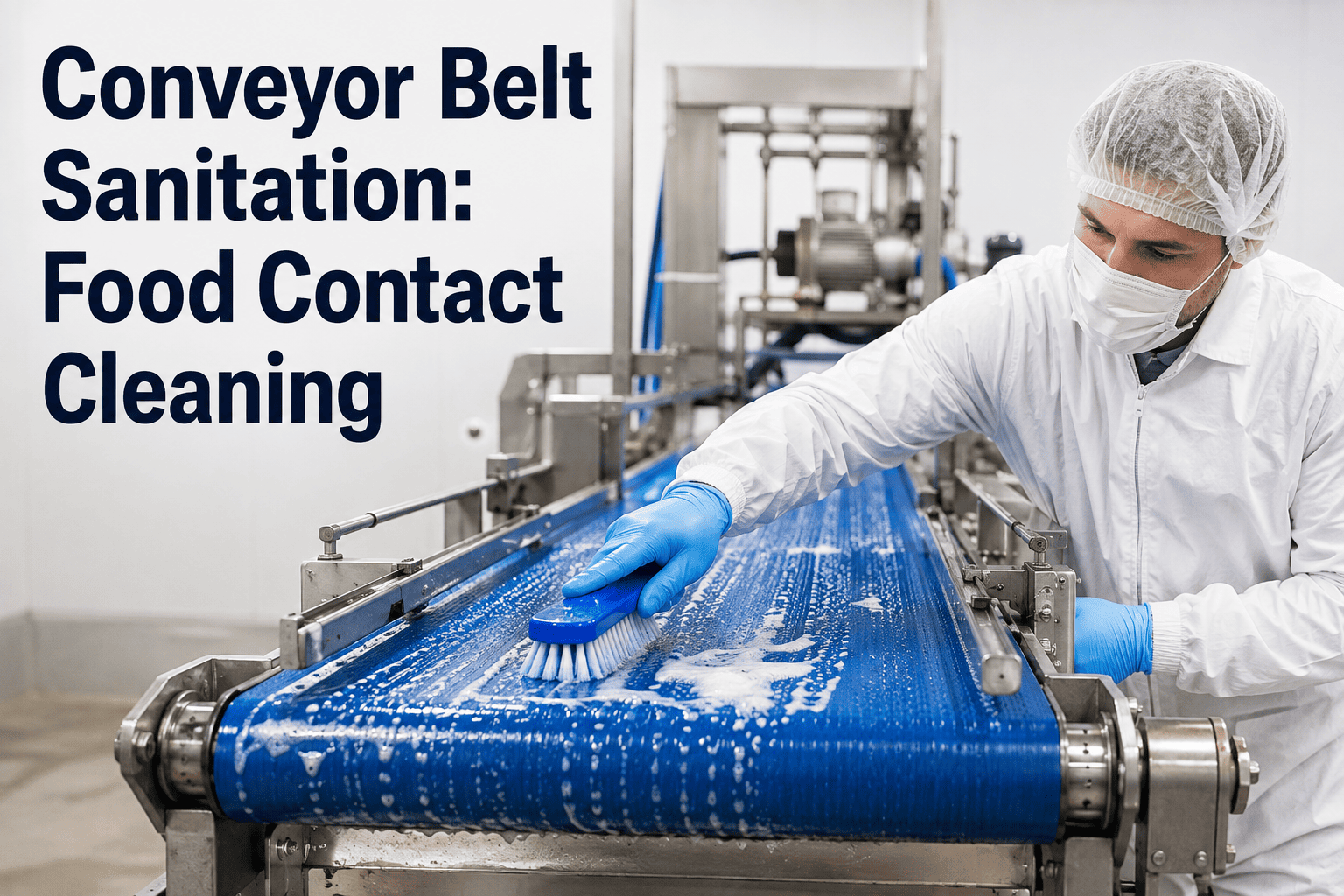
Equipment Disassembly
Proper disassembly and reassembly of processing equipment to expose hidden soil-collecting areas without damaging components or creating a safety hazard.
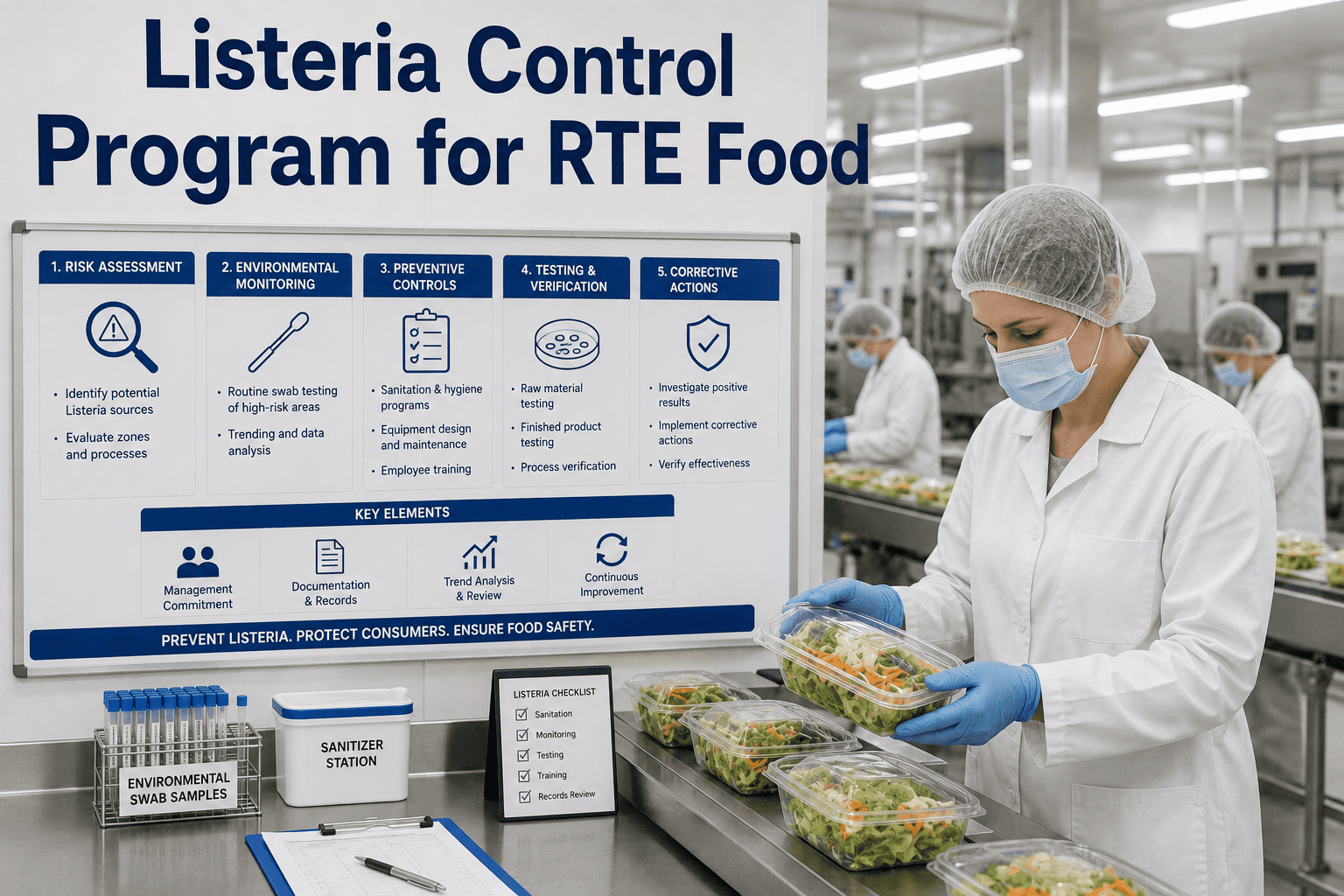
Verification Methods
How to use ATP testing, visual inspection, and swab sampling correctly, and how to interpret results to know when a job actually needs to be redone.
Documentation Accuracy
Recording cleaning completion, chemical usage, and verification results accurately, since sanitation records are among the most frequently reviewed documents in a food safety audit.
Inconsistent Sanitation Quality Is Almost Always a Training Gap, Not a Motivation Problem
Structured, competency-based training closes the skill variance between team members that a generic onboarding checklist never addresses.
Certification Tiers
A Three-Level Path From New Hire to Lead Sanitor
1
Foundational Certification
2
Equipment-Specific Certification
3
Lead Sanitor / Trainer Certification
Program Design Checklist
Five Elements of a Certification Program That Holds Up
1Define clear, observable competency criteria for each certification level, not vague standards like "cleans thoroughly."
2Include hands-on skills assessment, not just a written test, since sanitation is a physical, judgment-based skill.
3Recertify on a defined schedule rather than treating certification as a one-time achievement.
4Track individual verification results against certified skill level to catch training gaps that emerge over time.
5Tie certification level to specific equipment authorization, so only qualified staff clean the most complex or highest-risk equipment.
Frequently Asked Questions
Sanitation Training — Common Questions
How long does foundational sanitation certification typically take?
Foundational certification covering chemical safety, basic equipment cleaning, and verification fundamentals typically takes one to two weeks of combined classroom and supervised hands-on training, depending on prior experience. Equipment-specific certification for complex assets like fillers or heat exchangers generally adds another one to three weeks depending on equipment complexity.
Book a Demo to discuss a training timeline for your team.
How do we assess hands-on competency objectively?
Structured assessment checklists with specific, observable pass criteria — correct dilution measured rather than estimated, complete disassembly of every required component, accurate documentation completed in real time — remove subjectivity from the evaluation and give both the trainee and trainer a clear, defensible record of what was actually demonstrated.
Should recertification happen on a fixed schedule or based on performance?
Most effective programs combine both — a baseline recertification interval, commonly annual, ensures skills stay current even for staff who haven't had a documented issue, while a performance trigger, such as a pattern of failed verification checks tied to a specific individual, prompts earlier recertification regardless of the fixed schedule.
Contact support to review a recertification schedule for your facility.
Can this help reduce turnover-related sanitation quality dips?
A structured, clearly documented training path tends to shorten the ramp-up period for new hires compared to informal shadowing, since new staff know exactly what's expected at each stage rather than picking up inconsistent habits from whoever happens to be training them. This generally reduces the quality dip that follows staff turnover, even if it doesn't eliminate turnover itself.
How is this connected to our broader food safety documentation?
Individual certification records can be linked to equipment authorization logs and verification result history, giving auditors a clear trail showing that the person who cleaned a specific piece of equipment on a specific date was certified to do so, which is increasingly a specific point of interest in third-party audits.
Turn Sanitation From an Inconsistent Task Into a Certified, Trackable Skill
Structured training design and competency certification, live in as little as two weeks.