A food plant generates far more than just spoiled product on its way to the dumpster — organic byproduct, packaging waste, hazardous cleaning chemicals, and wastewater loaded with fats and solids all leave the facility through different streams, each governed by its own disposal rules, and mixing them up is one of the fastest ways to trigger a regulatory citation that has nothing to do with food safety itself. Waste management rarely gets the same attention as HACCP or sanitation programs, yet it sits at the intersection of environmental compliance, cost control, and increasingly, sustainability reporting that customers and auditors are starting to ask about directly. Getting the segregation, documentation, and disposal contracts right up front saves plants from the far more expensive problem of discovering a gap during an environmental inspection, and a free waste stream review can help map where your current program has exposure.
Food & Beverage · Waste Compliance
Waste Management in Food Plants: Getting Every Stream Right
Organic waste, packaging, hazardous materials, and wastewater each carry their own compliance requirements. Here's how to structure a waste program that holds up under regulatory review.
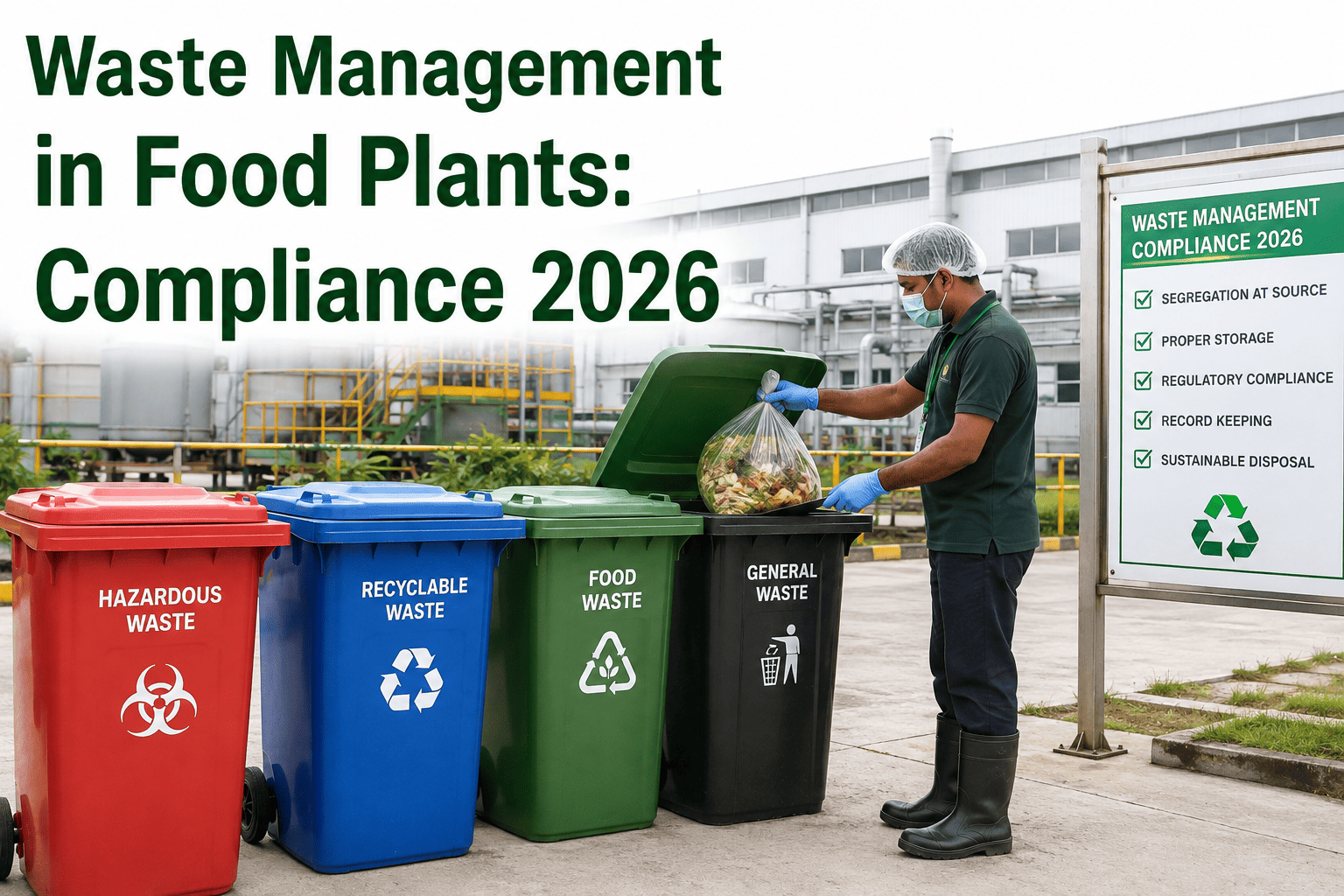
The Four Waste Streams Every Food Plant Manages
Most food plants generate waste across four distinct categories, and treating them as one undifferentiated "trash" problem is where compliance gaps and unnecessary disposal costs both tend to originate. Each stream has its own regulatory framework, its own disposal or recycling pathway, and its own documentation requirements that auditors and inspectors will ask about separately.
01
Organic Waste
Spoiled product, trim, and processing byproduct. Often the largest volume stream by weight, and increasingly diverted to composting or anaerobic digestion instead of landfill.
02
Packaging Waste
Cardboard, plastic film, and rejected packaging materials. Recycling viability depends heavily on contamination levels from product residue left on the packaging.
03
Hazardous Waste
Spent cleaning chemicals, lubricants, and certain sanitizers. Subject to the strictest handling, labeling, and disposal documentation requirements of any stream.
04
Wastewater
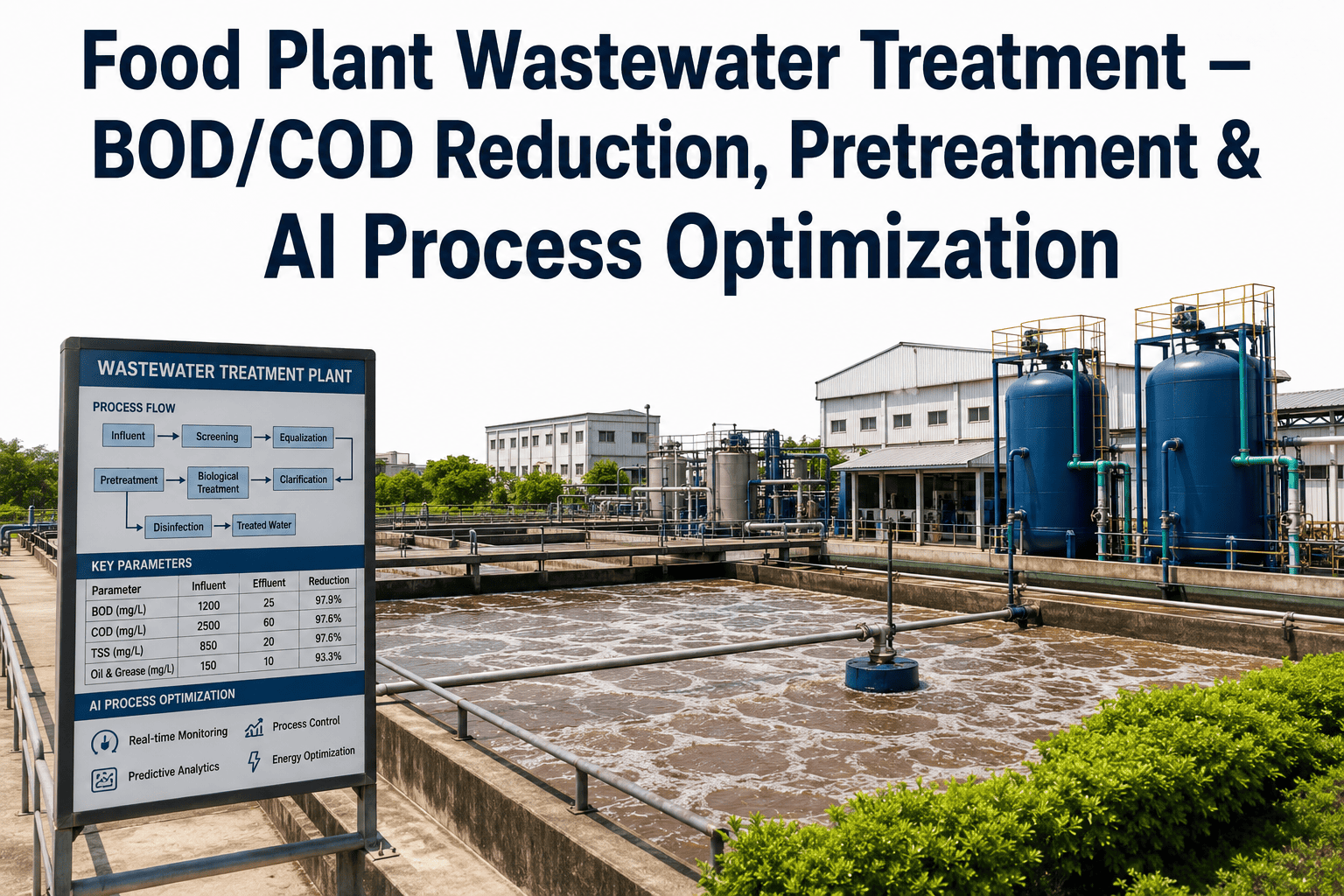
CIP effluent, floor drains, and process water carrying fats, oils, solids, and cleaning chemistry, typically requiring pretreatment before discharge to a municipal system.
Disposal Pathways by Stream
| Waste Stream | Common Disposal Pathway | Key Documentation |
|---|
| Organic waste | Composting, anaerobic digestion, or landfill | Manifest or weight ticket per haul |
| Packaging (clean) | Recycling facility | Recycling contract and volume tracking |
| Packaging (contaminated) | Landfill or specialty processor | Contamination assessment record |
| Hazardous waste | Licensed hazardous waste handler | Manifest, generator ID, storage log |
| Wastewater | Pretreatment then municipal discharge | Discharge permit and sampling records |
Are Your Waste Streams Documented the Way an Inspector Expects?
Our team can review your current waste segregation and disposal documentation, at no cost.
Wastewater: The Stream Most Plants Underestimate
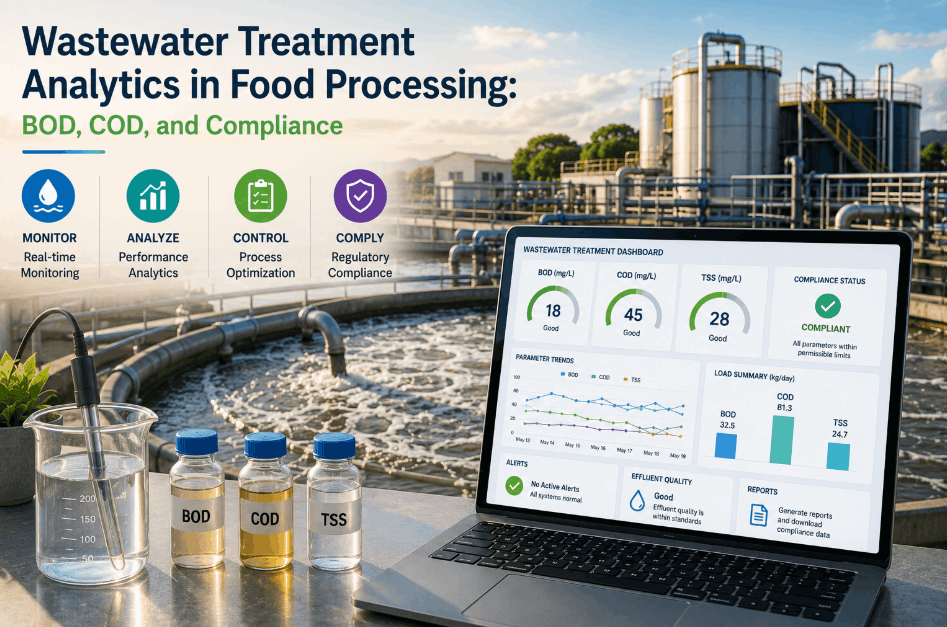
Wastewater compliance is where many food plants encounter their most expensive surprises, because discharge limits on fats, oils, grease, biochemical oxygen demand, and total suspended solids are set by the local municipal authority and can vary significantly between jurisdictions. A plant that meets its permit limits comfortably today can drift out of compliance simply by adding a new product line with a different fat content, without anyone realizing the discharge characteristics have changed until a sampling event flags an exceedance.
CIP effluent and floor drains
→
Grease trap or interceptor
→
Pretreatment (if required)
→
Sampling against permit limits
→
Municipal discharge
Hazardous Waste Handling Requirements
Spent CIP chemicals, certain sanitizers, and equipment lubricants can qualify as hazardous waste depending on their concentration and chemical characteristics, which means a food plant may hold hazardous waste generator status without fully realizing the compliance obligations that come with it. Requirements typically include proper labeling of accumulation containers, time limits on how long waste can be stored on-site before removal, staff training for anyone handling the material, and a manifest trail proving the waste was transported by a licensed handler to an approved disposal facility.
✓ Accumulation containers labeled with contents and start date
✓ Storage time limits tracked and not exceeded
✓ Staff trained on hazardous waste handling procedures
✓ Manifest retained for every hazardous waste pickup
✓ Generator status reviewed annually as volumes change
Reducing Waste Volume and Cost Together
Compliance and cost reduction tend to move in the same direction when it comes to waste management, since better segregation almost always reduces the volume going to the most expensive disposal pathway. Plants that improve organic waste diversion away from landfill toward composting or digestion frequently see lower disposal costs alongside sustainability reporting benefits, and plants that reduce packaging contamination through better production floor practices unlock recycling revenue that a contaminated stream headed straight to landfill never generates.
Frequently Asked Questions
How do we know if our spent cleaning chemicals qualify as hazardous waste?
Classification depends on the specific chemical composition and concentration of what's being discarded, and it's determined by regulatory characteristics like corrosivity, reactivity, or toxicity rather than simply whether the chemical was used for cleaning. A safety data sheet review for each cleaning product, cross-referenced against your regulatory framework, is the starting point, and your waste hauler can typically help confirm classification for specific waste streams.
What triggers a wastewater discharge violation?
A violation typically occurs when a sampling event shows a parameter — commonly fats, oils, grease, or biochemical oxygen demand — exceeding the limit set in your municipal discharge permit. Violations can also occur from insufficient sampling frequency or missing required reports, even if the actual discharge quality would have passed, since documentation gaps are treated as compliance failures on their own.
Can contaminated packaging still be recycled?
It depends on the recycling facility's contamination tolerance and the type of contamination present. Light product residue on cardboard is often acceptable, while plastic film with significant product buildup usually needs to go to landfill or a specialty processor rather than standard recycling, since contamination can compromise an entire batch of otherwise recyclable material.
How often should our waste stream classifications be reviewed?
At minimum annually, and also whenever a new product line, ingredient, or cleaning chemical is introduced, since any of these changes can shift a waste stream's regulatory classification or volume without an obvious trigger to prompt a review otherwise. Reach out to
our support team to talk through how to build this review into your existing compliance calendar.
Is it worth tracking waste stream data digitally rather than through hauler invoices alone?
Yes — invoices alone rarely give you the trend visibility needed to catch a volume spike or a compliance drift early, and reconstructing a full waste history from paper invoices during an audit or a sustainability reporting request is far slower than pulling from a centralized digital record. Book a
free consultation to see how this could fit your current waste management setup.
Get Every Waste Stream on Solid Compliance Footing
Let our team help you map, document, and streamline your waste management program, at no cost.