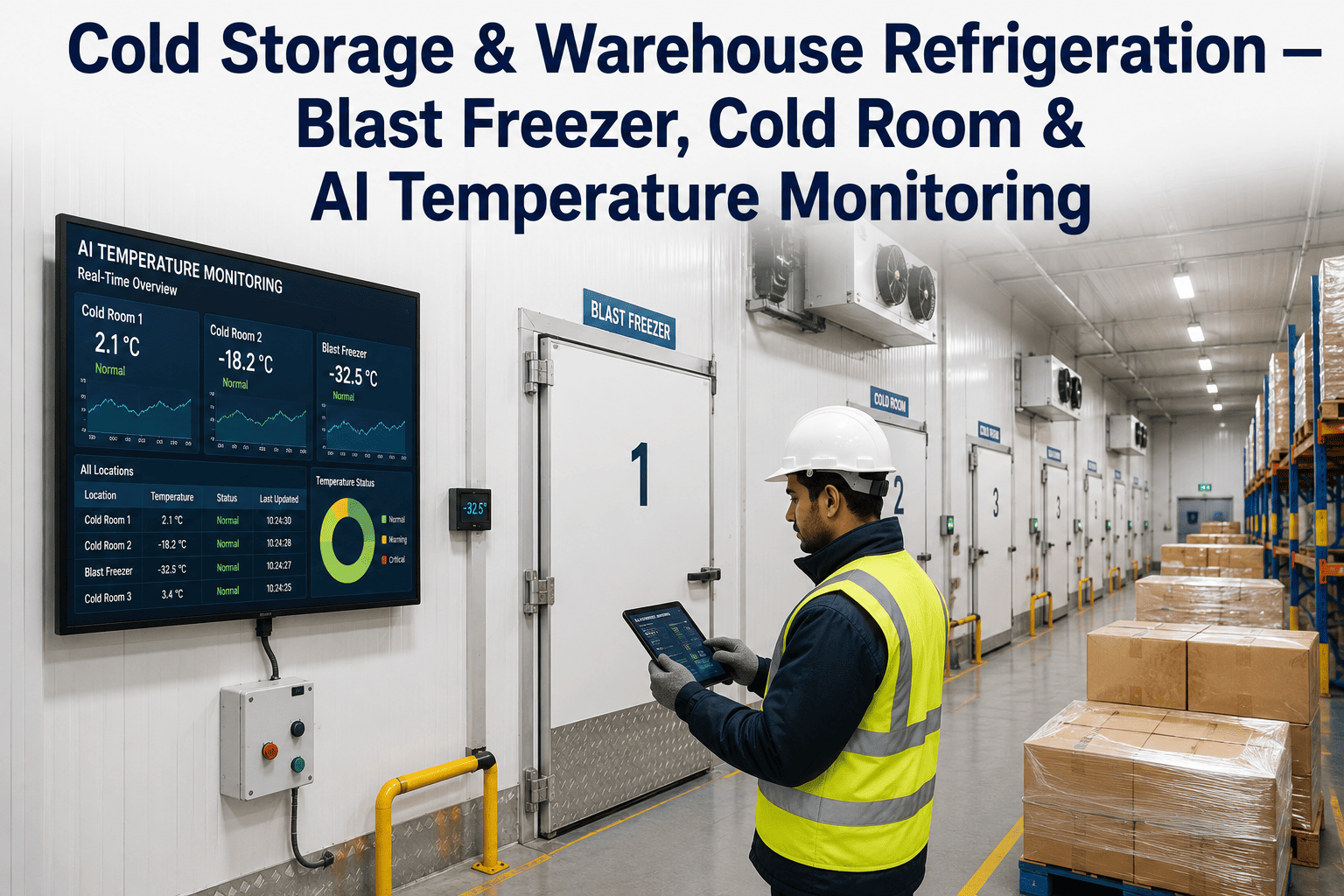
The maintenance manager's phone rang at 2:47 AM on a Tuesday. A blast freezer compressor had finally given out after running with elevated head pressure for twenty-three days straight, the kind of slow decline a dashboard would have flagged in week one if anyone had been watching it that closely. The outcome was eighteen hours of downtime, tens of thousands of dollars in spoiled product, and an auditor two days later asking to see temperature logs that did not exist in any organized form. iFactory exists to make sure that story does not repeat at your facility, and you can see how by choosing to book a demo with our team.
Cold Storage Has Zero Tolerance for Drift, and Most Refrigeration Failures Happen Silently
A general warehouse can absorb a temperature swing without consequence. A frozen-goods facility cannot. Compressors, condensers, evaporators, and defrost controllers degrade gradually and almost always before anyone on the floor notices, which is exactly why iFactory gives cold chain teams continuous visibility instead of a once-a-shift walk-through.
Temperature Exceedances Are Almost Always Maintenance Failures in Disguise
A refrigeration system rarely fails all at once. It degrades through one of a small number of well-understood failure modes, each of which gives off a measurable signal well before the room actually drifts out of setpoint. A structured preventive maintenance program built around these five modes catches the great majority of temperature excursions before they become a compliance or product-loss event.
Return Air Temperature Moves Before the Room Does
Sensors positioned in the return air stream of each evaporator provide the earliest possible warning of a developing cooling problem. When a compressor begins failing or refrigerant levels drop, return air temperature at the evaporator rises noticeably before the general room temperature shows any meaningful change, since the room's stored product mass and insulation buffer the space from an immediate swing.
That gap between return air warning and room-level impact is the window a maintenance team actually has to respond before product is at risk. A facility monitoring only the general room temperature, rather than return air at each evaporator, is effectively watching the last indicator to move rather than the first, which erases most of the response time a well-instrumented system would otherwise provide.
Transition zones between temperature bands deserve their own dedicated attention for the same reason. The boundary between a deep blast-freeze area and an adjacent general storage zone creates real thermal stress on both the equipment and the product moving across it, and that boundary is exactly where inconsistent monitoring most often leaves a gap in coverage.
Catch the Return Air Signal Before the Room Ever Drifts
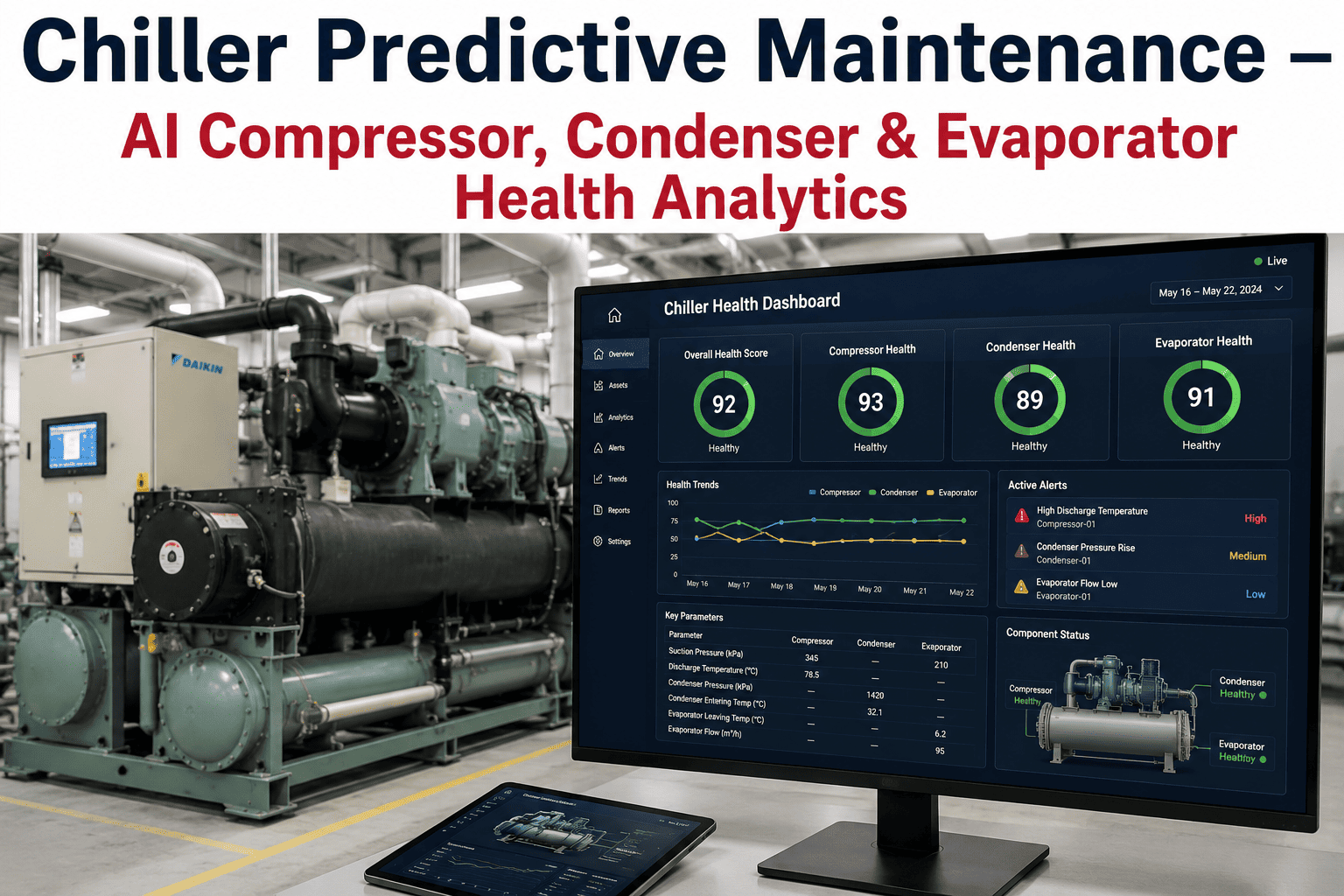
iFactory streams temperature, humidity, and door status from every zone at short intervals, escalating automatically the moment a reading crosses a threshold.
The Maintenance Tasks That Correlate Most Directly With Fewer Excursions
Not every maintenance task carries equal weight in preventing a temperature excursion. These are the specific checks that correlate most directly with catching a developing refrigeration failure before it reaches the product.
| Task | Frequency | What It Catches |
|---|---|---|
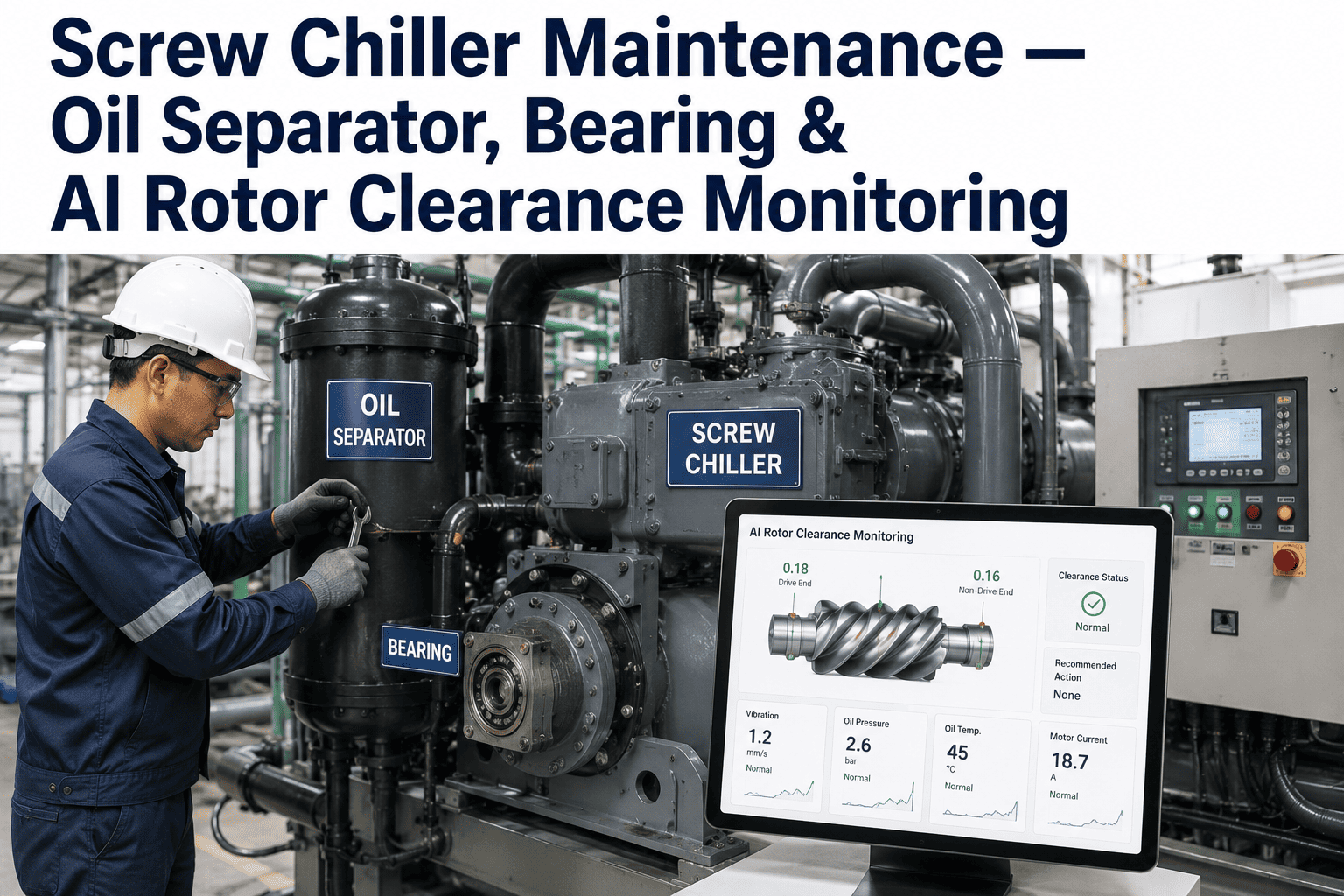
| Oil Level, Pressure & Vibration Check | Weekly | Early compressor wear before it progresses to a full failure |
| Condenser Coil Cleaning | Monthly to Quarterly | Restricted airflow that silently drives up energy consumption |
| Defrost Cycle & Heater Verification | Weekly | Ice buildup risk before it restricts evaporator airflow |
| Door Gasket & Seal Inspection | Monthly | Warm air infiltration forcing unnecessary compressor load |
| Refrigerant Leak Detection | Quarterly | Slow refrigerant loss that gradually reduces cooling capacity |
What Changes When Every Site Reports Into One Dashboard
A regional cold storage operator running several sites faces the same visibility problem a single facility does, multiplied by every additional building. Without a centralized platform, each site's temperature logs, PM records, and compliance documentation live in a different system, or in no system at all, which makes it nearly impossible for a regional director to compare performance across the network or spot a failure pattern repeating at more than one location.
A shared dashboard threshold-mapped by zone, freezer, cooler, and dock buffer changes that entirely. Breaches trigger automated work orders dispatched to the correct on-site technician team with escalation rules based on how long a deviation has persisted, and regional directors see aggregate compliance status across every site without needing to call each facility manager individually for an update.
The compliance dimension matters just as much as the operational one. Audit-ready temperature records, generated automatically rather than reconstructed from memory after an inspector asks for them, are what separates a cold chain operation that can prove its product integrity from one that is simply hoping nothing goes wrong between now and the next audit.
Spoiled Product Is Rarely the Only Line Item on the Bill
When a facility calculates the cost of a refrigeration failure, the first number that comes to mind is usually the value of the product lost, and that figure alone is often enough to justify a stronger monitoring program on its own. But a full accounting of a single excursion event typically includes several additional costs that are easy to underestimate until they actually happen: emergency technician dispatch at after-hours labor rates, expedited parts shipping to get a failed compressor or component back in service quickly, and the operational disruption of shifting product between facilities while the affected room is out of service.
Regulatory and customer-facing consequences frequently outlast the immediate operational disruption. An excursion serious enough to trigger a food safety investigation can mean days of inspector attention, a review of records the facility may not have kept in an easily producible form, and in some cases a temporary hold on shipments from the affected facility while the investigation proceeds. For a facility supplying retail or foodservice customers directly, a documented cold chain failure can also affect the vendor relationship itself, independent of whatever the immediate financial cost of the spoiled product turns out to be.
None of these downstream costs are hypothetical, they are the well-established pattern behind nearly every serious cold storage incident on record. That pattern is exactly why the return on a structured monitoring and PM program is rarely measured against the cost of the platform alone, it is measured against the full, compounding cost of the single incident the program was built to prevent.
Not Every Refrigeration Plant Needs the Same Maintenance Cadence
Cold storage refrigeration plants running on ammonia versus HFC refrigerants, and screw compressor versus reciprocating compressor designs, carry different maintenance requirements and different regulatory obligations, which means a single generic PM template applied uniformly across a mixed-technology facility will inevitably under-serve some equipment while over-servicing other equipment. Ammonia systems in particular carry additional regulatory recordkeeping requirements around refrigerant handling that HFC systems generally do not, and a maintenance program needs to account for that distinction explicitly rather than treating all refrigeration equipment as functionally identical.
System age is the second variable that should shape maintenance frequency, since a compressor approaching the end of its expected service life benefits from closer monitoring intervals than one recently installed or overhauled, even if both are nominally the same model and capacity. A facility maintaining a mixed fleet of older and newer equipment across multiple sites needs a maintenance platform that can apply different PM cadences by asset age and condition, rather than a single fixed interval applied uniformly regardless of how close any individual compressor actually is to the end of its reliable service window.
Questions Maintenance Managers Ask About Cold Storage Refrigeration
Make Sure the Next 2:47 AM Call Never Happens
iFactory gives cold storage and refrigerated warehouse teams continuous temperature visibility, automated PM scheduling, and audit-ready compliance records across every site.