Two different leak-repair thresholds now apply to HVAC systems, and most contractors are still working from the one they learned first. The traditional Section 608 rule triggers at 50 pounds of charge. A newer AIM Act rule, in effect since January 1, 2026, triggers at 15 pounds — low enough to catch multi-zone mini-splits and light commercial rooftop units that never used to qualify. Check which threshold applies to a specific system with the iFactory AI team before the next service call.
EPA Section 608 Compliance, Mapped to What Actually Triggers an Obligation
Certification type, recovery equipment, sales restrictions, and two separate leak-repair thresholds — organized around the moment each rule actually applies on a job.
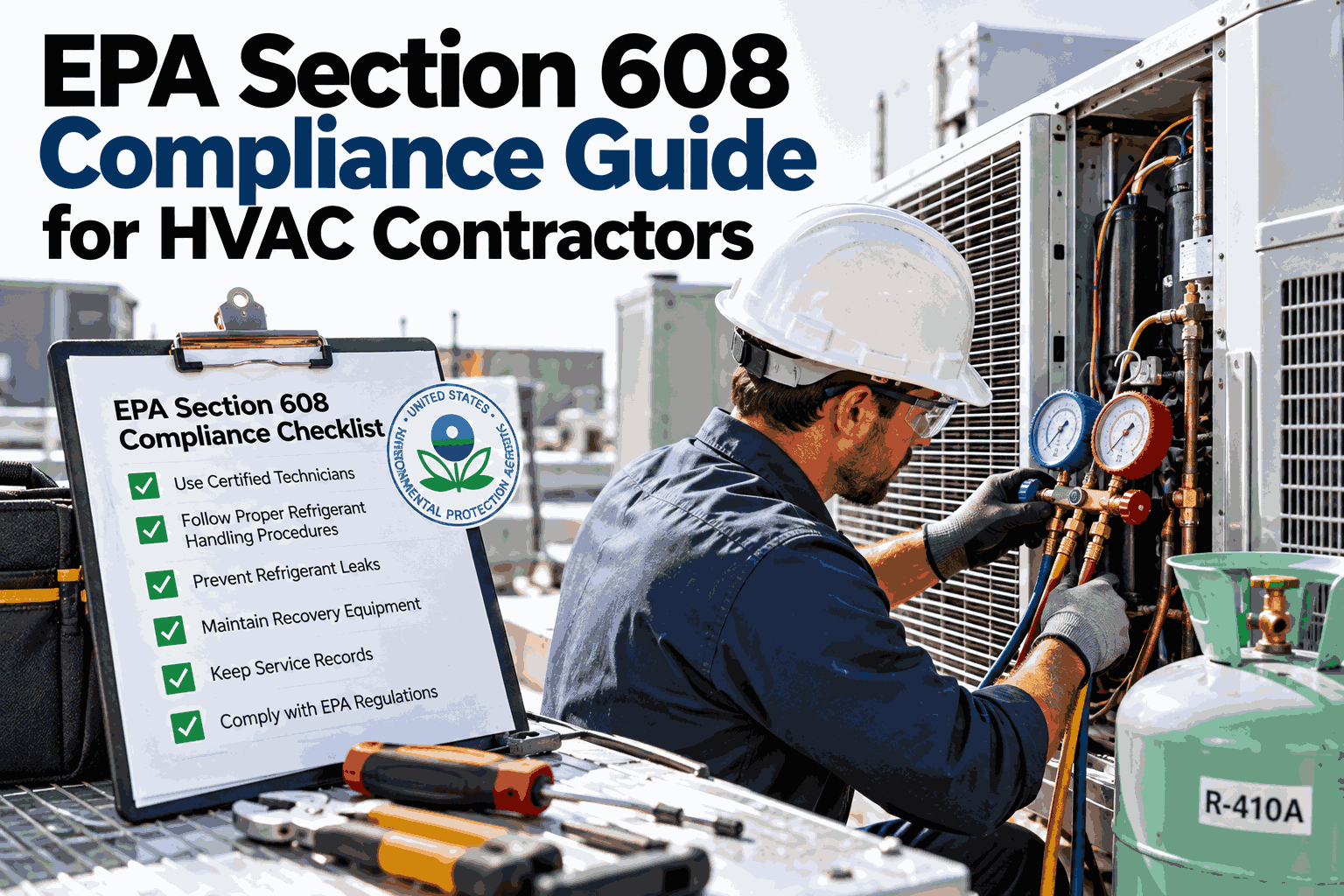
Start Here: Which Certification Covers This Job?
Section 608 certification is split by equipment type, not by trade license. A technician can hold one, two, three, or all four types, and the type in hand decides which jobs are legal to perform.
Small Appliances
Factory-sealed systems holding 5 pounds or less of refrigerant — household refrigerators, window units, and small packaged systems.
High-Pressure Appliances
Most split-system and packaged comfort-cooling equipment using R-410A, R-22, and similar refrigerants — the certification most residential and light-commercial HVAC techs need.
Low-Pressure Appliances
Chillers using low-pressure refrigerants, common in large commercial and institutional buildings rather than residential work.
All Equipment Types
Covers Type I, II, and III equipment. Requires passing a proctored core exam — an open-book core test does not qualify a technician for Universal.
Certifications do not expire once earned, so the usual failure point is not a lapsed card. It is a technician certified for Type II work being sent to a Type III chiller, or an apprentice working unsupervised past what the exemption allows.
Two Leak-Repair Thresholds, Not One
This is where most compliance gaps actually happen. A system that was exempt under the old rule can be squarely covered under the new one, and the two rules run on different math.
The 50-Pound Rule
The 15-Pound Rule
A 15-pound R-410A mini-split system that never triggered anything under the old rule can now carry a tracked leak-repair obligation under the new one. Teams can map a system list against both thresholds in a short working session.
The Leak-Repair Sequence When a Trigger Is Hit
Exceeding the trigger rate starts a clock, and the clock has rules about what stops it.
Leak Rate Calculated
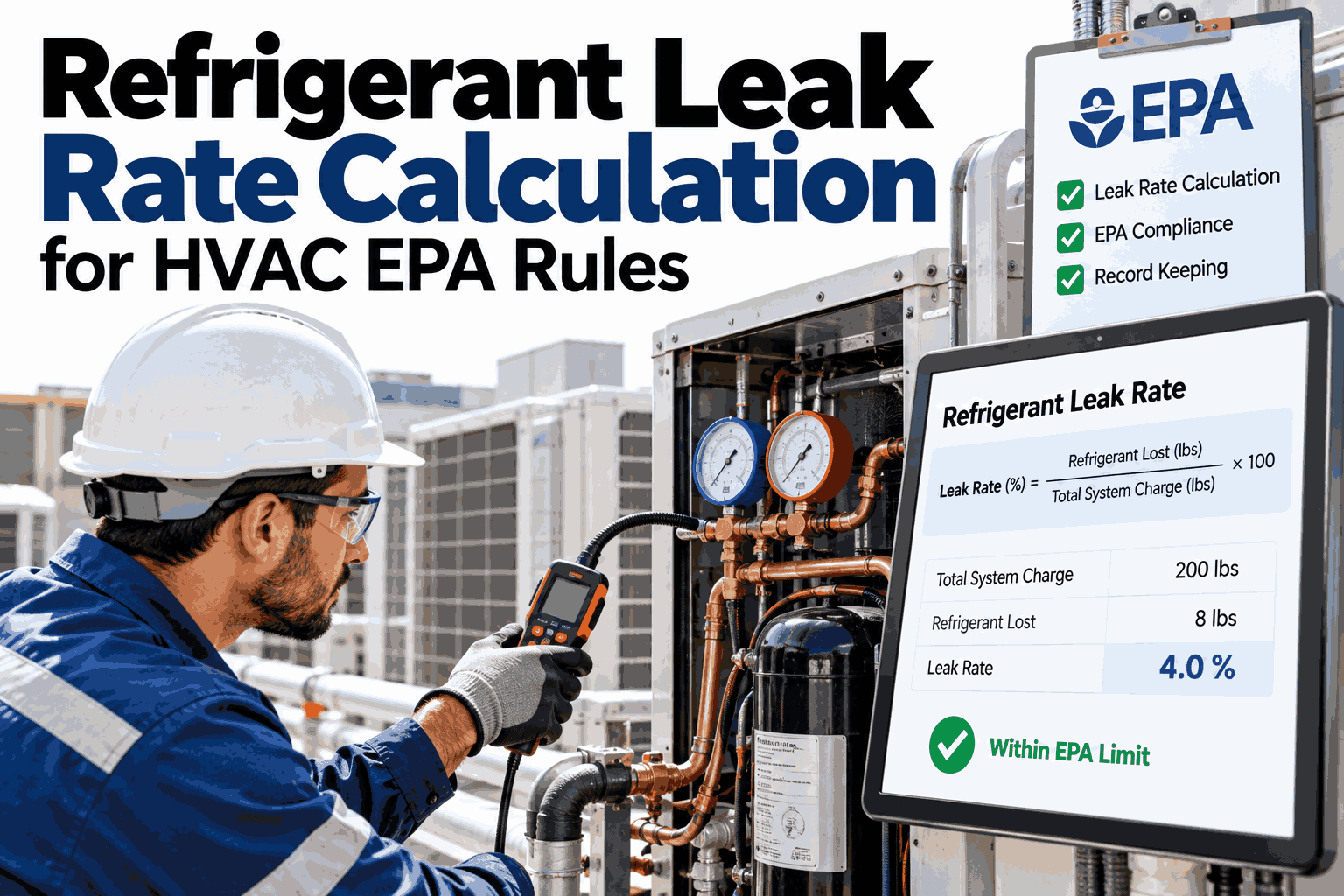
Refrigerant added to the system over a 12-month period is compared against the full charge to produce an annualized leak rate.
Threshold Exceeded
The rate crosses the applicable trigger for that appliance category, and a clock starts the day the exceedance is discovered, not the day it is reported.
Repair or Plan
The leak is repaired within 30 days, or a retrofit or retirement plan is developed within 30 days and completed within a year.
Verification Test
After repair, the system is retested to confirm the leak rate has fallen below the trigger, and the result is recorded against the work order.
Missing the clock is the exposure, not the leak itself. A documented repair attempt inside the window is treated very differently from a leak that was simply never addressed.
See Both Thresholds Tracked Against a Real System List
Bring a sample of covered systems to a 30-minute session and see how charge size, refrigerant type, and leak history map to each rule automatically.
Recovery Equipment: Certified Doesn't Mean Compliant Alone
A technician's personal certification and the recovery equipment used on a job are two separate compliance requirements, and both have to hold.
EPA-Certified Equipment Only
Recovery machines must meet EPA performance standards for the refrigerant type and appliance category being serviced. Equipment bought for one refrigerant class cannot be assumed to cover another.
No Venting, Ever
Intentionally releasing refrigerant to the atmosphere during installation, service, or disposal is prohibited for all technicians, certified or not, with narrow exceptions for de minimis releases during normal recovery.
Disposal Chain Documentation
Final disposal of appliances requires documented refrigerant recovery before the unit leaves the site, with the recovering technician's certification on record.
A contractor can own the right machine and still fail an audit if the paperwork connecting technician, machine, and job does not exist.
The Sales Restriction in One Paragraph
This part of Section 608 is simple to state and easy to get tripped up on anyway.
Who Can Buy
Refrigerant subject to the sales restriction can only be sold to technicians certified under Section 608, or to companies employing certified technicians, with distributors required to verify certification before the sale.
What Counts as a Violation
Purchasing on behalf of an uncertified technician, letting a certification lapse into a job in progress, or allowing an apprentice to purchase without supervision all create exposure for the purchasing company, not just the individual.
The restriction exists to keep refrigerant out of the hands of people who were never trained to handle it safely, which is also the simplest way to explain it to a new hire.
Three Gaps That Create Exposure Without a Single Leak
A business can pass every leak-repair deadline and still carry compliance risk, because several requirements under Section 608 have nothing to do with how fast a leak gets fixed.
Charge Size Never Confirmed
Many contractors estimate a system's full charge from the nameplate rather than confirming it, which can place a system on the wrong side of the 15-lb or 50-lb line entirely.
Refrigerant Additions Go Unlogged
A top-off during a routine service call that never makes it into a log breaks the leak-rate calculation for every future visit, since the math depends on a complete addition history.
Disposal Paperwork Trails Off
Recovery before disposal is required, but the technician's certification record tied to that specific recovery event is the piece most often missing when an auditor asks for it later.
None of these three require a leak to be a problem. They are documentation gaps that turn an otherwise clean record into an open question during a review.
What iFactory AI Adds to EPA Refrigerant Compliance
iFactory AI is smart manufacturing and industrial software, and the same compliance tracking engine that runs regulated plant floors applies directly to field HVAC refrigerant management: tracked thresholds, automated calculations, and audit-ready records.
iFactory AI arrives pre-configured on an NVIDIA server that ships racked and ready with the compliance and leak-register module pre-loaded. Rack it, connect power and Ethernet, and threshold tracking starts running. Scope covers cabling, network, field-service software integration, team training, and 24x7 remote monitoring.
Section 608 Readiness Self-Check
Use these ten checks to find where a compliance program still depends on someone remembering a rule rather than a system enforcing it.
Each unchecked box is a gap an EPA inspector or an insurance auditor could find before the business does.
Frequently Asked Questions
Does the new 15-pound rule replace the 50-pound Section 608 rule?
No, both apply at once but to different refrigerant categories. The 50-pound trigger under Section 608 covers ozone-depleting substances, while the 15-pound AIM Act Subpart C trigger covers HFC refrigerants like R-410A, and a contractor's system list usually has coverage under both. Walk through which rule applies to a specific fleet in a short session.
What certification does a residential HVAC technician typically need?
Most residential and light commercial split-system and packaged equipment falls under Type II, the high-pressure appliance category. A technician who also services small sealed units or commercial chillers would need Type I or Type III in addition, or Universal to cover all equipment types at once.
What happens if a leak is found but not repaired in 30 days?
The owner or operator can instead develop a retrofit or retirement plan within the same 30-day window and complete it within one year, which keeps the system compliant while the longer-term fix is scheduled. Doing neither within the window is where exposure builds.
Do apprentices need their own certification to work on covered equipment?
Apprentices are exempt from holding their own certification only while under the close and continual supervision of a certified technician. The exemption does not cover an apprentice working alone on a job, even briefly.
How long do leak-repair and certification records need to be kept?
Records under the AIM Act leak-repair requirements must be retained for at least five years, and most compliance programs keep certification and recovery records on the same schedule for consistency. Ask how retention is configured for a specific record type.
Track Both Thresholds Without Reading Two Rulebooks
iFactory AI flags every covered system against the 50-lb and 15-lb rules, calculates leak rates automatically, and keeps the repair clock visible before it closes. Book a walkthrough using your own equipment list.