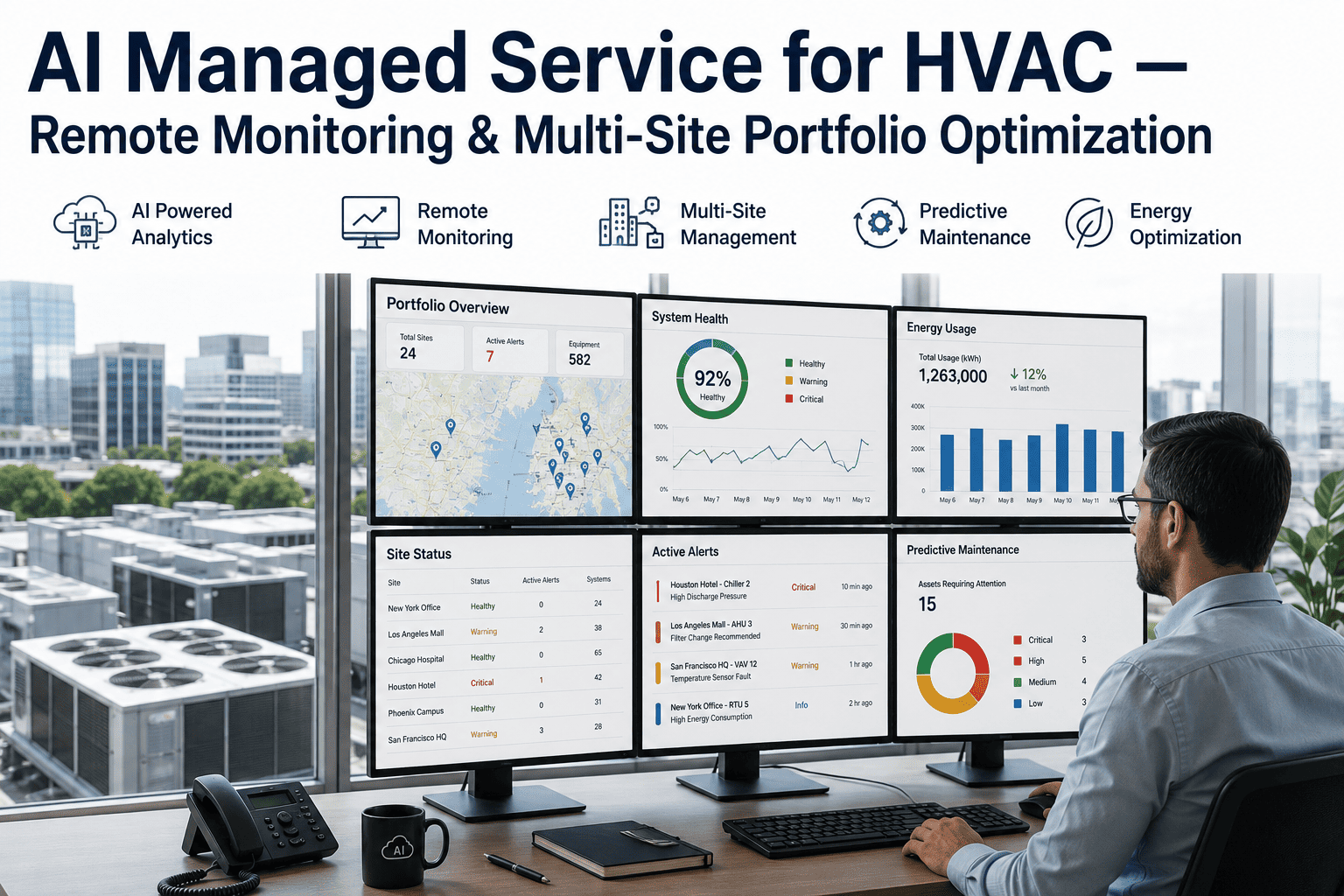
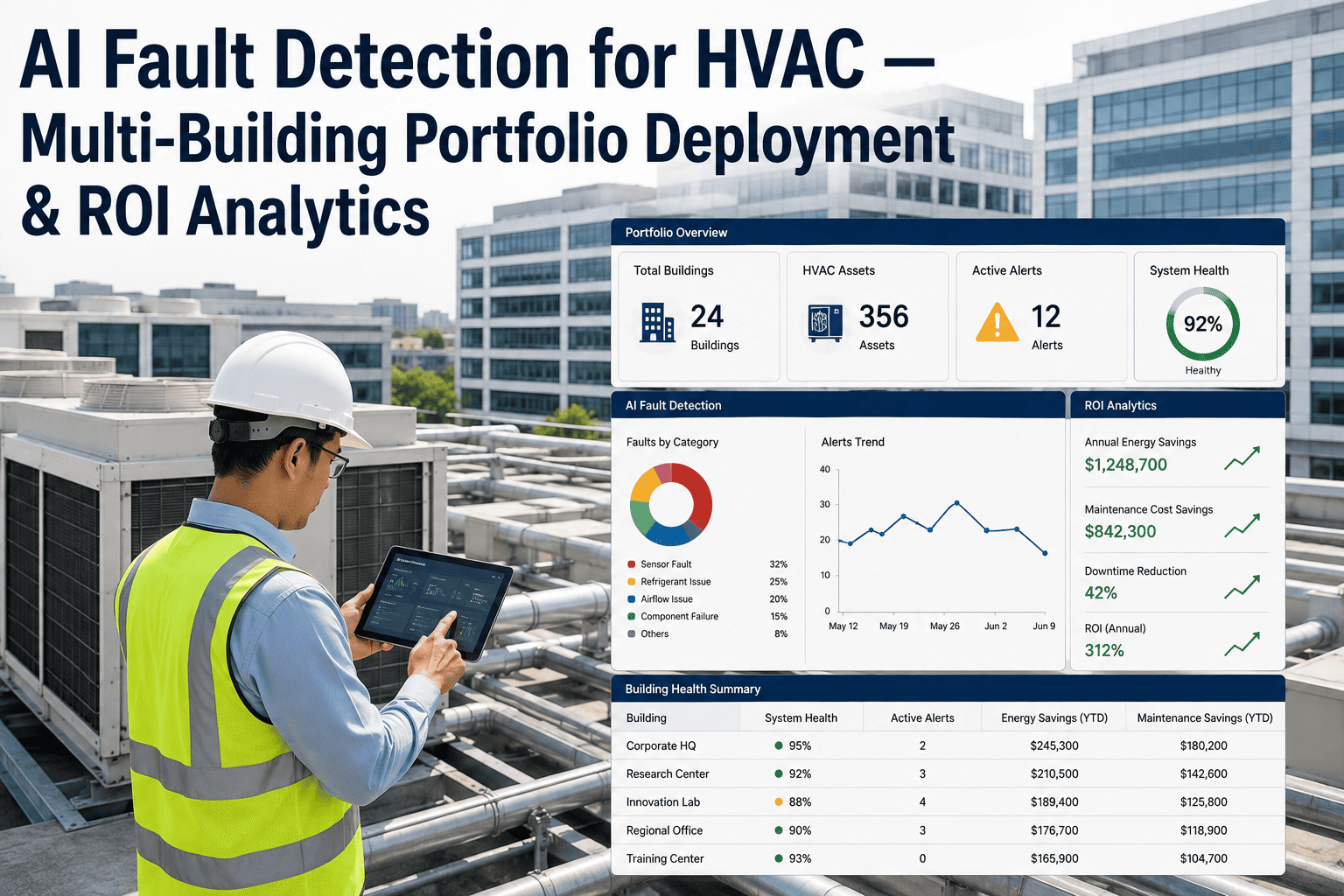
Rolling out a single HVAC CMMS across one building is a project. Rolling it out across a twelve-property portfolio is a completely different challenge, because every site has a different equipment age, a different local maintenance team culture, and a different tolerance for standardization versus local flexibility. Get the balance wrong in either direction — forcing identical processes everywhere or letting every site do its own thing — and portfolio-level reporting becomes useless. Getting that balance right across a multi-site rollout is the specific problem iFactory solves for property management teams.
MULTI-SITE ROLLOUT
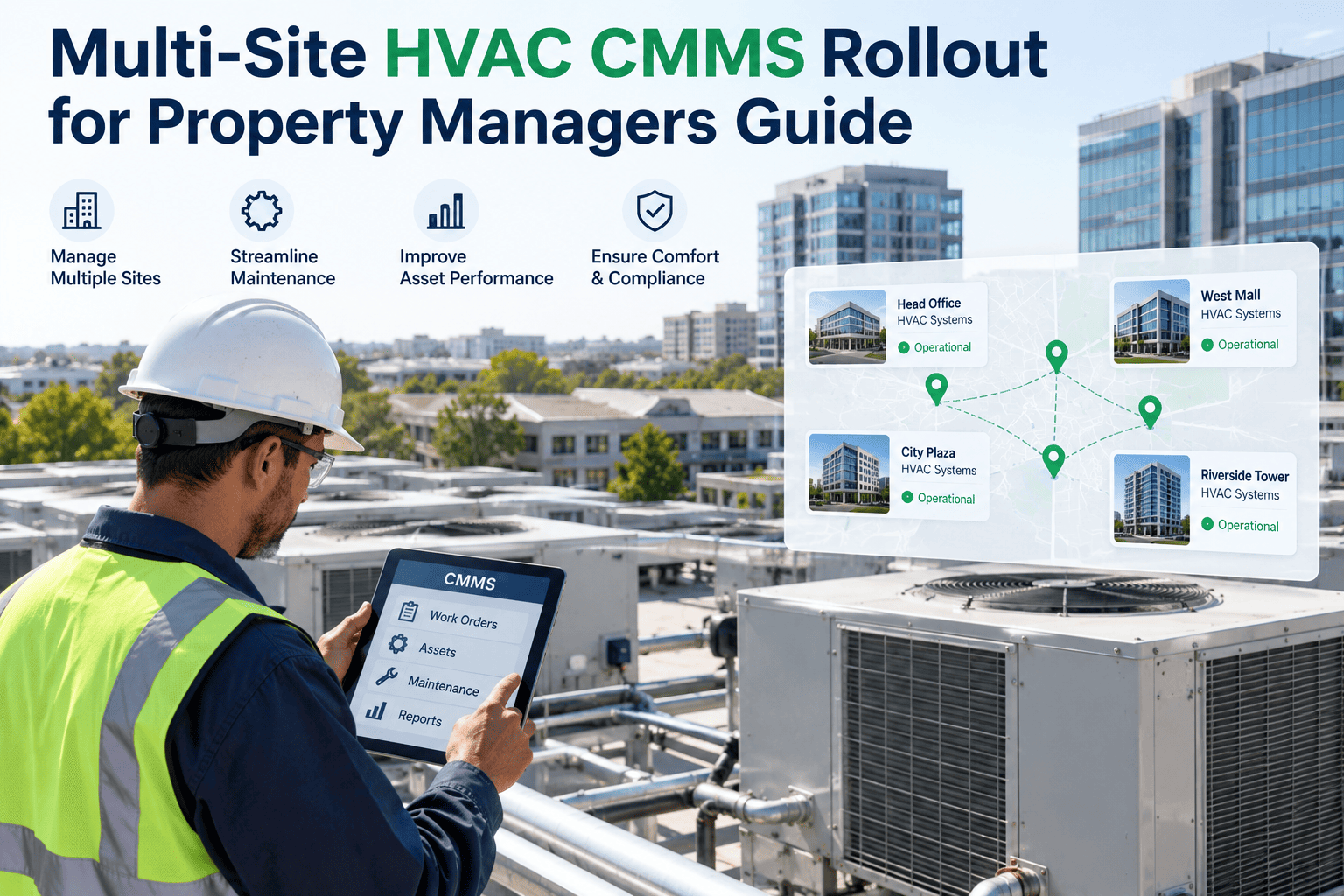
Multi-Site HVAC CMMS Rollout for Property Managers
Standardization versus local flexibility, phased site onboarding, and portfolio reporting that actually scales across a growing building portfolio.
Site A
Site B
Site C
Site D
Site E
Site F
The Standardization vs Flexibility Tension
Full standardization across every site sounds appealing in theory — one PM library, one reporting structure, one workflow everywhere — but it consistently runs into a practical wall: a fifteen-year-old building with aging chillers has different maintenance needs than a newly built site with modern equipment, and forcing both into identical PM schedules either over-services one or under-services the other. Full local flexibility solves that problem but destroys the portfolio-level visibility that was the whole point of a multi-site rollout in the first place. The right approach standardizes what should be consistent and leaves room for what genuinely needs to differ.
What to Standardize vs What to Leave Flexible
Drawing this line correctly is the single most important design decision in a multi-site rollout, and getting it wrong in either direction creates predictable problems down the line.
Standardize Across All Sites
Core equipment categories and naming conventions
Base PM task templates by equipment type
Portfolio-level reporting metrics and definitions
Escalation and critical-asset alert protocols
Leave Flexible By Site
PM frequency, adjusted for site-specific equipment age and condition
Local technician team structure and shift patterns
Site-specific integration with local BMS vendors
Parts sourcing and local vendor relationships
Phased Site Onboarding — Why Rolling Out All Sites at Once Fails
Attempting a simultaneous go-live across an entire portfolio multiplies every implementation risk across every site at the same time, with no opportunity to learn from an early mistake before it's repeated everywhere. A phased approach, onboarding sites in deliberate waves, is what most successful multi-site rollouts actually follow.
| Wave | Typical Site Selection | Purpose |
|---|
| Wave 1 | 1-2 representative sites, moderate complexity | Validate PM templates and workflow before wider rollout |
| Wave 2 | 3-5 sites, including at least one high-complexity property | Stress-test the standardized approach against edge cases |
| Wave 3 | Remaining portfolio sites | Full rollout using the refined template and process from prior waves |
Design a Phased Rollout for Your Own Portfolio
iFactory helps property management teams decide what to standardize and what to leave flexible, then sequences a phased onboarding plan across your full building portfolio.
Building Portfolio Reporting That Actually Means Something
Portfolio-level reporting only works if every site is measuring the same thing the same way, which is precisely why metric definitions belong on the standardization side of the line drawn above. A downtime hour, a PM compliance percentage, and a critical asset designation need to mean the same thing whether the report is pulled from a 1990s building or a site built last year.
✓
Every site categorizes equipment using the same critical asset tiering, so a portfolio-wide risk view is genuinely comparable across properties.
✓
PM compliance is calculated identically at every site, avoiding a situation where one property's "95% compliant" means something different than another's.
✓
A single portfolio dashboard lets leadership compare site performance side by side without pulling separate reports from each property.
✓
Site-specific flexibility in PM frequency or vendor relationships is visible in the data without breaking the underlying comparability.
A VP of Property Operations on Finding the Right Balance
"
Our first attempt at standardizing HVAC maintenance across our portfolio tried to force every single property onto identical PM schedules regardless of the building's age or equipment condition, and it created real friction almost immediately. Our newest property, with equipment barely three years old, ended up with the same aggressive PM frequency as a building with thirty-year-old chillers, which meant we were over-servicing the new site and burning technician hours that could have gone toward the older buildings that genuinely needed more attention. When we redesigned the approach to standardize the things that actually needed to be consistent — naming conventions, base task templates, and how we defined our metrics — while leaving PM frequency itself adjustable per site based on actual equipment condition, both problems resolved at once. Our portfolio dashboard still gives leadership a clean, comparable view across every property, because the underlying metric definitions never changed, but the actual maintenance work at each site now reflects that site's real needs instead of a generic average applied everywhere.
— VP of Property Operations, Commercial Real Estate Portfolio · Oversees HVAC Across 22 Properties
Frequently Asked Questions
How many sites should be included in the first rollout wave?
One to two sites is typically the right size for an initial wave, selected specifically for moderate rather than extreme complexity, since the goal is validating the base PM templates and workflow in a real environment without the added risk of your most difficult property being the first test case. A site with an experienced, relatively receptive facilities team also tends to produce more useful early feedback than one already dealing with significant operational challenges unrelated to the CMMS itself.
How do we decide which sites belong in the higher-complexity second wave?
Second-wave sites should specifically include at least one property that stress-tests an edge case the first wave didn't cover — a site with older equipment, a unique BMS vendor not used elsewhere in the portfolio, or a technician team with a notably different existing workflow. Deliberately including this complexity in wave two, rather than saving every difficult case for last, surfaces problems with the standardized approach while there's still time to adjust it before the bulk of the portfolio goes live in the final wave.
What happens when a local site team resists giving up their existing process for a standardized one?
This resistance is often a signal worth investigating rather than simply overriding, since local teams sometimes have legitimate reasons rooted in real site-specific conditions that the standardization plan didn't fully account for. Reviewing the specific objection against the standardize-versus-flexible framework above often reveals either a case where local flexibility should genuinely be allowed, or an opportunity to explain clearly why a particular standard serves the portfolio's broader reporting and risk management goals in a way the local team may not have fully considered.
How do we handle portfolio reporting for a newly acquired property with completely different existing systems?
A newly acquired property should generally be treated as its own onboarding wave, following the same phased approach used for the initial portfolio rollout — asset registry validation, PM template mapping against your standardized base library, and metric alignment before it's fully integrated into portfolio-wide reporting. Attempting to merge a newly acquired site's data directly into portfolio reports before this validation work is complete risks introducing exactly the kind of inconsistent metric definitions the standardization effort was designed to prevent.
Can iFactory help design the standardization approach for our specific portfolio?
Yes — iFactory works with property management teams to review your portfolio's equipment diversity, existing local processes, and reporting needs to determine what should be standardized versus left flexible, then sequences a phased onboarding plan across your specific sites. To scope a multi-site rollout for your portfolio,
book a demo with our team.
Scale HVAC Maintenance Across Your Portfolio Without Losing Site-Level Fit
The right multi-site rollout standardizes what needs to be consistent and leaves room for what genuinely differs by property. iFactory designs that balance and sequences a phased onboarding plan across your full portfolio.