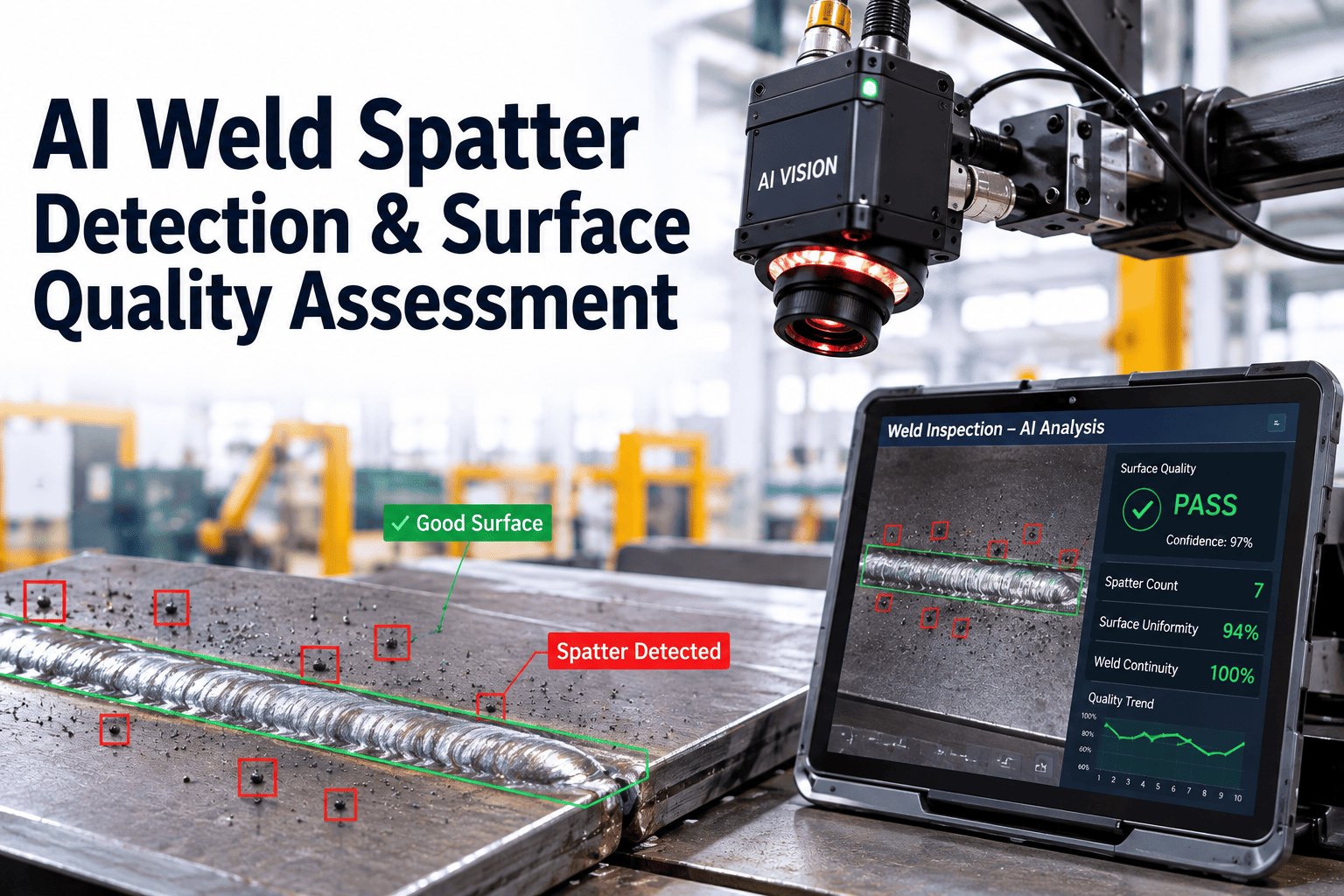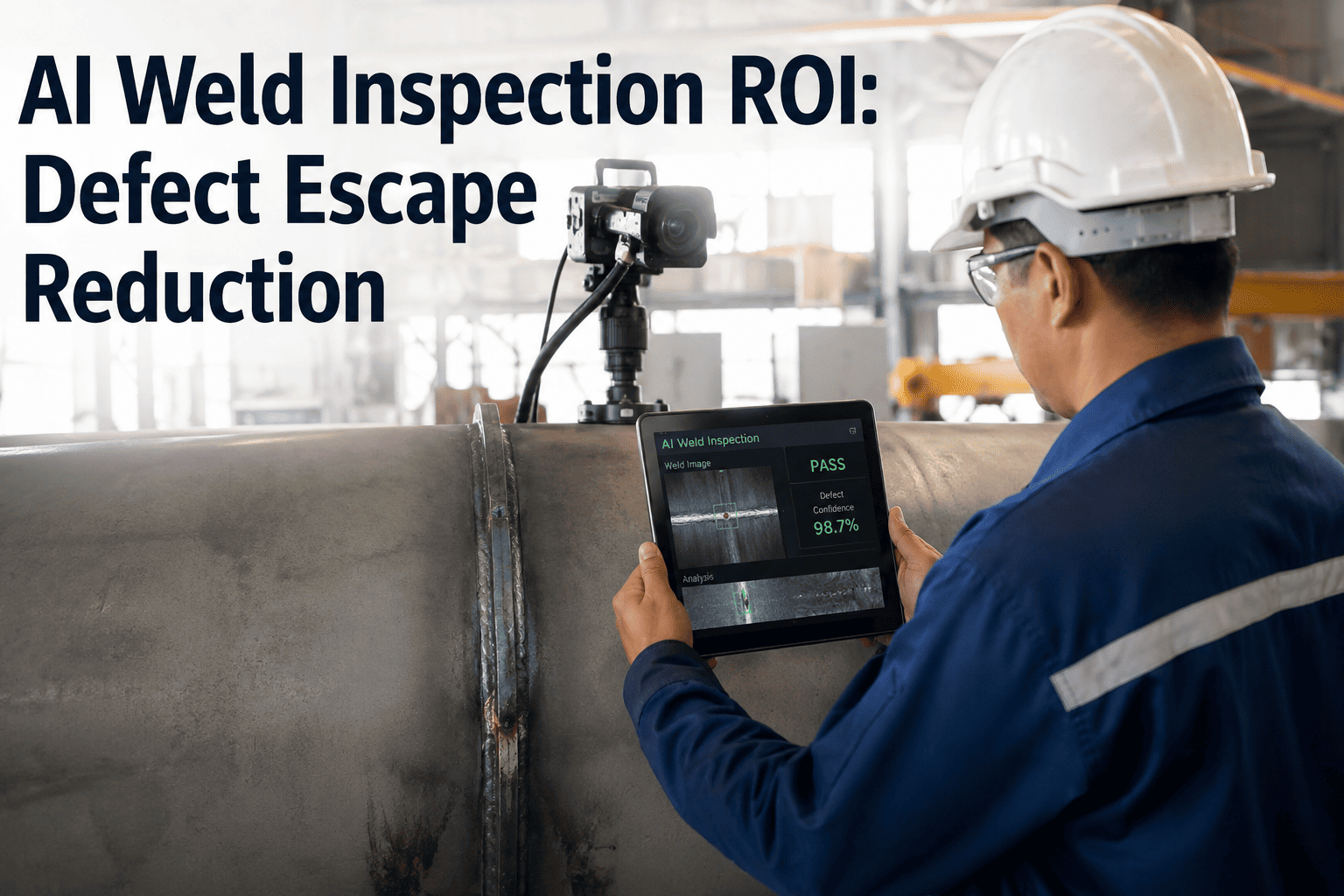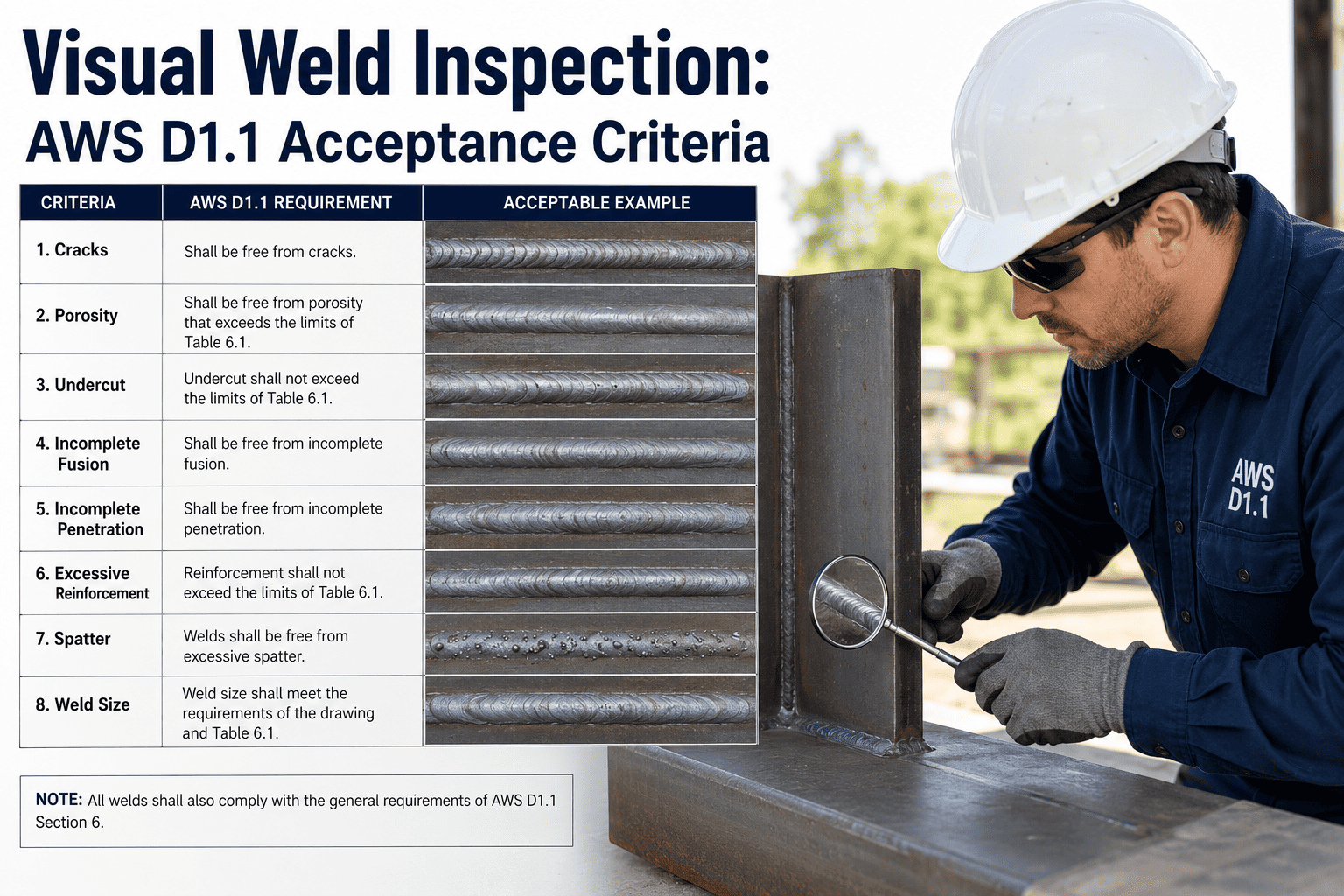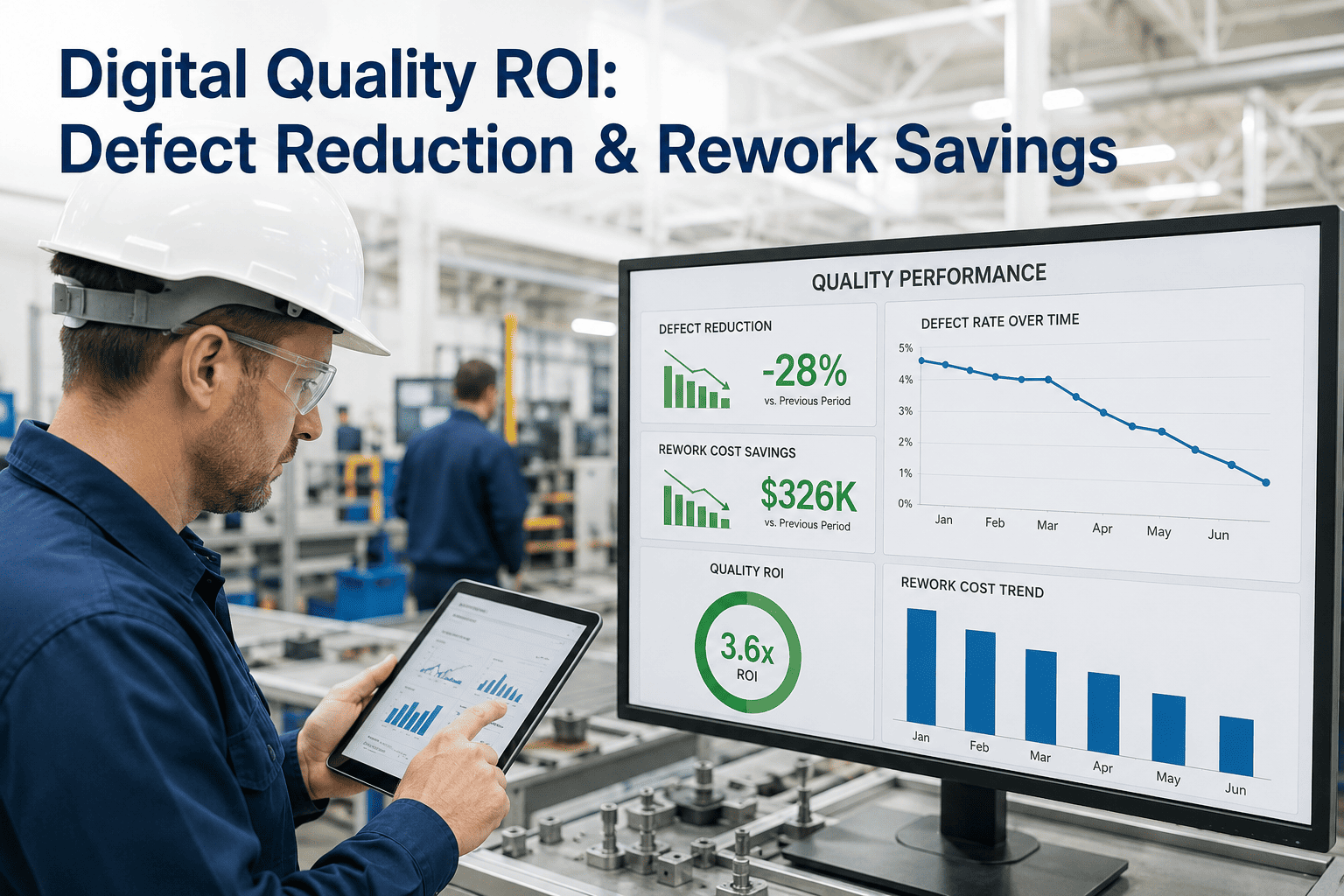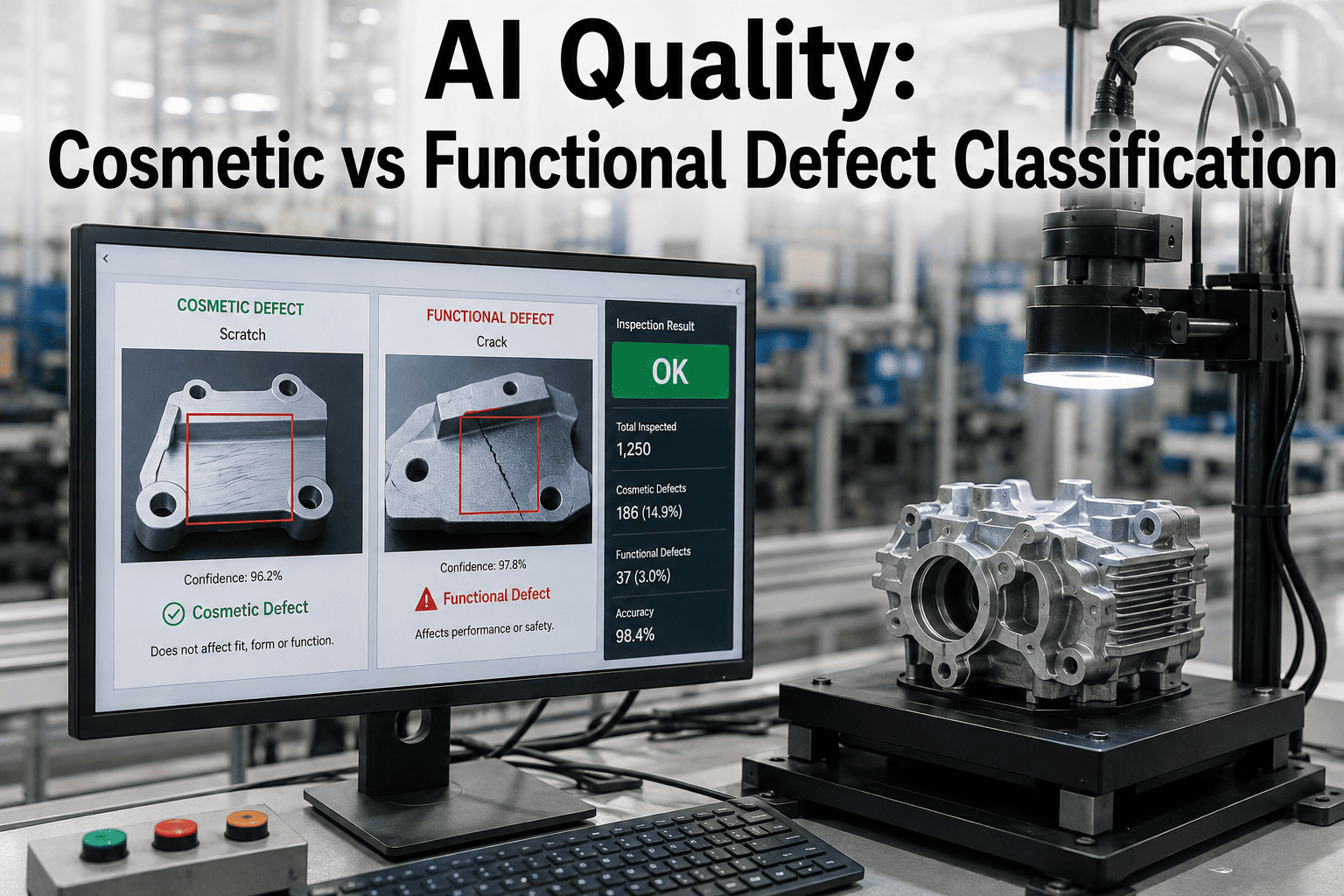
Two parts come off the same line with what looks like an identical mark near the same edge. One gets shipped without a second thought. The other should have been pulled, reworked, or scrapped, because underneath that mark is a crack that will fail under load within months. A human inspector working at line speed, glancing at thousands of units a shift, cannot reliably tell the two apart every single time, and that inconsistency is exactly where warranty claims, safety recalls, and unnecessary scrap both originate. iFactory's AI quality platform is trained to make that distinction automatically, and you can book a demo to see it classify severity against your own defect library.
Not Every Defect Deserves the Same Decision — Does Your Inspection Process Know That?
iFactory's AI distinguishes a harmless cosmetic mark from a genuine functional defect, grades severity against your customer-specific standard, and routes every unit automatically to accept, rework, or reject.
Cosmetic and Functional Defects Can Look Identical and Mean Completely Different Things
A minor blemish on a surface finish might be completely inconsequential to a product's function or safety, yet it can still trigger batch rejections, customer complaints, or costly rework if inspectors treat every visible mark the same way. On the other hand, a seemingly trivial-looking flaw might conceal a deeper structural issue that compromises performance or safety. The challenge is telling the difference consistently, accurately, and at production speed, which is exactly the problem AI severity classification is built to solve.
Five Situations Where Cosmetic and Functional Defects Get Confused
Most classification errors are not random; they cluster around a predictable set of situations where a defect's appearance does not clearly signal its actual consequence. Expand each scenario below to see why these specific cases trip up manual inspection and how AI severity grading resolves them using more than a single visual glance.
A shallow surface scratch and a deep scratch that has compromised a protective coating can appear nearly identical under standard lighting to a human eye moving quickly down the line. AI vision models trained on depth-labeled examples and multiple lighting angles can distinguish the two based on subtle reflection and shadow patterns that a single glance cannot reliably catch.
A mark on an internal, non-visible component is often cosmetically irrelevant, while the same mark on a customer-facing surface, a sealing face, or a load-bearing edge can be a genuine functional or safety concern. Location-aware classification maps every detected defect against a zone model of the part, so severity is graded differently depending on exactly where the defect occurred.
The same imperfection can look dramatically more or less severe depending on the angle of ambient light or the reflectivity of the surrounding surface, which is a major source of inconsistency between inspectors and even between shifts. AI models trained across a range of lighting conditions normalize for this variation instead of grading severity based on how the defect happens to catch the light at that particular moment.
A small surface crack or discoloration can sometimes be the only visible sign of a subsurface defect, such as porosity in a casting or a delamination in a composite layup, that will only fully manifest as a functional failure after the product is in service. Classification models trained specifically to recognize these precursor patterns flag them for deeper inspection rather than letting them pass as a harmless cosmetic mark.
A mark that one customer's specification treats as an acceptable cosmetic variation can be an automatic reject under a stricter customer's contract, particularly in premium consumer electronics, automotive trim, and medical device packaging. Without a customer-specific tolerance profile built into the classification logic, a single inspection standard inevitably either over-rejects for lenient customers or under-catches for strict ones.
How Defect Type and Consequence Combine Into a Routing Decision
A useful classification system does not stop at labeling a defect cosmetic or functional. It combines that categorization with a severity level to decide what actually happens to the unit. The matrix below shows how the four resulting combinations typically map to a routing decision once both dimensions are known.
Accept
A small blemish within tolerance that does not affect function, appearance grade, or the customer's stated specification. The unit ships as-is.
Rework or Downgrade
A visible mark on a customer-facing surface that breaches the appearance grade but does not affect function. Routed to touch-up, polish, or a lower-grade sale.
Rework
A defect that measurably affects fit, tolerance, or performance but is correctable through a standard rework process without scrapping the unit.
Reject
A defect that compromises safety, regulatory compliance, or core function beyond an economical rework. The unit is scrapped and the source investigated.
From Camera Capture to Routing Decision — The Classification Pipeline
iFactory's classification pipeline runs the same four steps on every unit inspected, whether the defect turns out to be a harmless cosmetic mark or a genuine functional problem, so the routing decision is consistent regardless of shift, inspector, or lighting conditions on any given day.
High-Resolution Capture
Multi-angle cameras and controlled lighting capture every unit at full production speed, eliminating the variability a moving human inspector introduces.
Defect Detection and Type Classification
Deep learning models identify anomalies and classify each one as cosmetic, functional, or a precursor pattern requiring deeper evaluation.
Severity Grading Against Customer Standard
Each defect is scored for severity and matched against the specific tolerance profile configured for that customer or product line.
Automated Routing
The unit is automatically routed to accept, rework, or reject, with the classification and evidence image logged for traceability.
Every Misclassified Defect Costs You Either a Warranty Claim or an Unnecessary Scrap
iFactory's AI grades severity against your specific standard and routes every unit automatically, so good product stops getting rejected and real defects stop escaping. Book a demo and see the model classify defects from your own product line.
Manual Visual Inspection vs AI Severity Classification
Quality leaders evaluating a move from manual visual grading to AI-based severity classification need to see the operational difference in concrete terms. The table below compares the two approaches across the capabilities that most directly affect classification consistency, throughput, and customer-specific compliance.
| Capability | Manual Visual Inspection | iFactory AI Severity Classification |
|---|---|---|
| Consistency Across Inspectors | Varies by individual and by shift | Identical criteria applied every time |
| Cosmetic vs Functional Distinction | Judgment call, prone to error | Trained on depth, location, and lighting data |
| Customer-Specific Standards | Requires memorizing multiple specs | Configured tolerance profile per customer |
| Inspection Speed | Limited by human visual processing rate | Full production line speed, every unit |
| Routing Decision Traceability | Rarely documented with evidence | Logged with image and severity score per unit |
| False Positive Rate | Highly variable, often 10 percent or higher | Below 2 percent once calibrated |
Quantified Results From AI Severity Classification Deployments
The figures below reflect measured outcomes from AI defect classification deployments across discrete manufacturing sites, each tracked over a minimum six-month period following implementation and validated against production and quality records.
Why One Fixed Inspection Standard Does Not Work Across Your Customer Base
Manufacturers supplying multiple customers or serving both premium and value product tiers face a problem a single, fixed inspection standard cannot solve. A mark that a value-tier customer's specification explicitly tolerates as normal cosmetic variation can be an automatic reject under a premium customer's stricter contract, and grading every unit to the strictest possible standard means scrapping or reworking product that would have shipped perfectly well to a more lenient buyer. This is the single most common source of unnecessary cost in facilities running one blanket inspection standard across a diverse customer book.
iFactory's platform solves this by attaching a configurable tolerance profile to each customer, product line, or even individual purchase order, so the same physical defect can be graded and routed differently depending on which specification actually applies to that production run. A scratch that triggers an automatic rework under an automotive OEM's paint standard might pass without comment under a general industrial customer's specification for the identical part geometry, and the classification system applies the correct rule automatically rather than relying on an operator to remember which standard is active on a given shift.
This configurability also makes it far easier to respond when a customer tightens or loosens their specification, which happens more often than most quality teams would like. Updating a tolerance profile takes a fraction of the time required to retrain an entire inspection team on a revised written standard, and the change takes effect immediately and consistently across every shift rather than depending on how thoroughly the update was communicated during a shift handover.
Your Path From Inconsistent Grading to Automated Severity Classification
Standing up a reliable severity classification system does not require replacing your entire inspection process on day one. iFactory's deployment model is structured in five stages so the first measurable improvement in classification consistency typically appears within the initial pilot on a single high-value inspection point.
Defect Library and Standard Audit
Existing defect types, customer specifications, and current accept or reject decisions are catalogued to build the initial training dataset.
Model Training on Product-Specific Defects
Deep learning models are trained on your actual defect examples, including depth, location, and lighting variation specific to your product.
Customer Tolerance Profile Configuration
Severity thresholds are configured per customer or product line, so the same defect routes correctly under every applicable specification.
Pilot Deployment and Agreement Validation
The model runs alongside existing manual inspection to validate classification agreement before routing decisions are fully automated.
Full Line Rollout and Continuous Refinement
Automated routing extends across the full line, with the model continuously refined as new defect types or specification changes emerge.
Common Questions About AI Cosmetic vs Functional Defect Classification
Stop Letting Identical-Looking Defects Get Identical Treatment
iFactory's AI grades every defect by severity against your exact customer standard and routes each unit automatically to accept, rework, or reject. Book a demo and see the classification model running against your own product line.