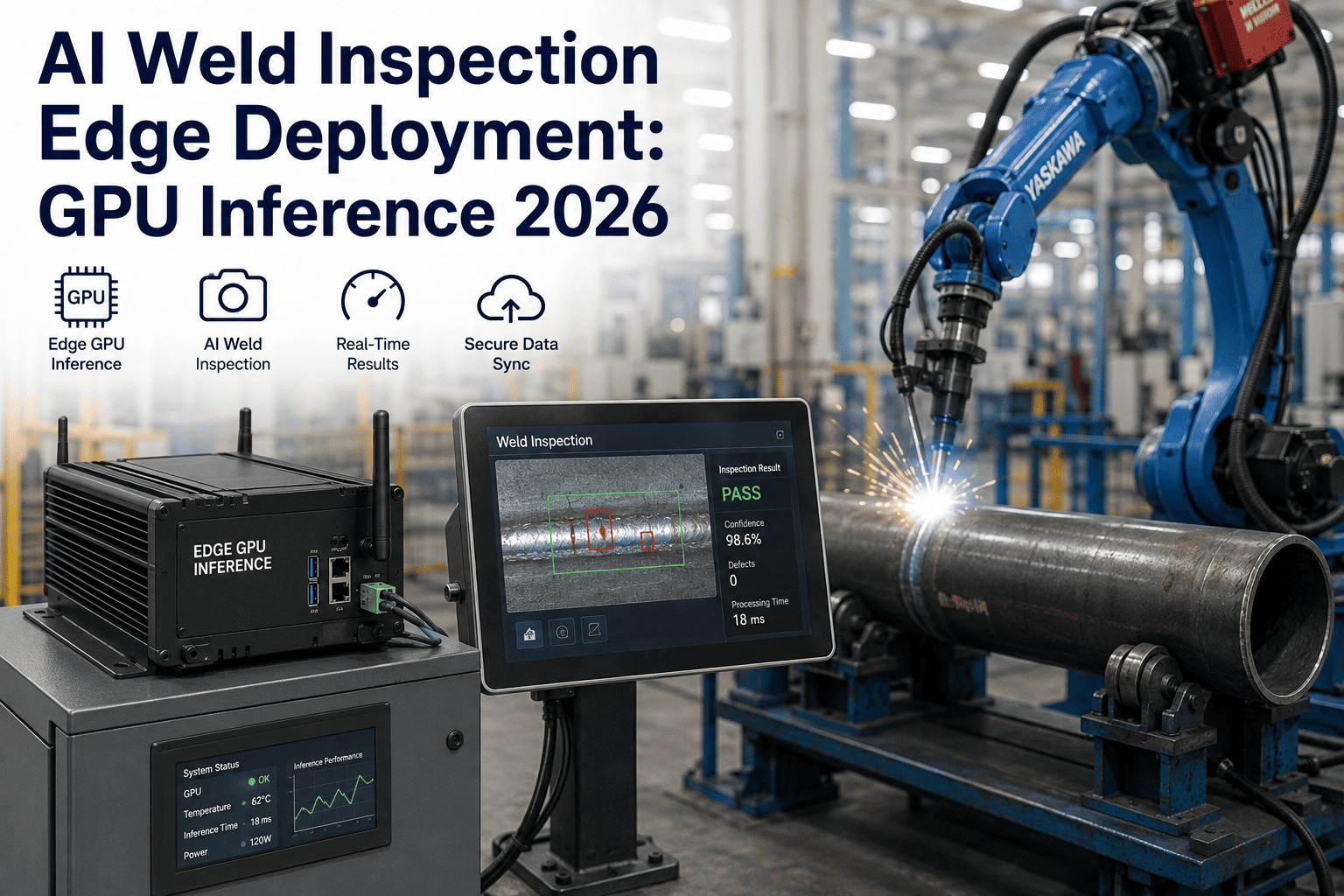
A weld inspection model that runs beautifully in a cloud notebook and takes two seconds to return a result is not an in-line inspection system — it's a research demo. Robotic welding cells move fast, and a defect classification that arrives after the part has already moved to the next station is functionally too late to stop rework from compounding. Getting inference down to the speed a weld cell actually needs means running the model at the edge, on hardware sized correctly for the throughput, not in a data center three network hops away. iFactory's edge deployment architecture is built around that constraint from the start.
Cloud Inference Is Too Slow for a Weld Cell Running at Full Cycle Time
Round-trip latency to a remote server is the wrong architecture for in-line weld inspection. Edge GPU deployment keeps classification inside the cycle time the weld cell actually runs at.
Why Cloud-Only Inference Doesn't Fit In-Line Weld Inspection
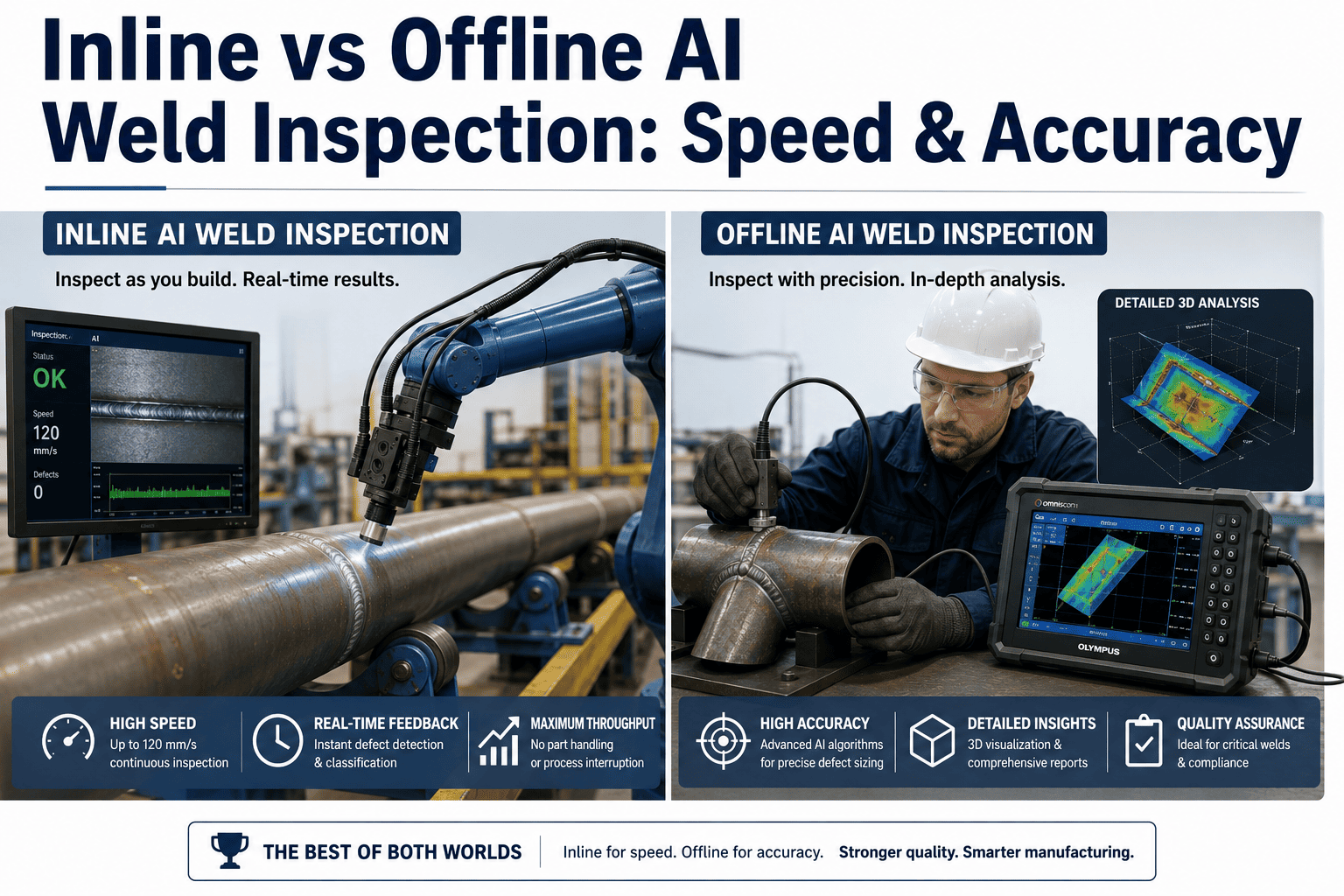
Cloud inference works fine for workloads that can tolerate a second or two of round-trip latency and a stable internet connection. In-line weld inspection is not that workload. A robotic weld cell producing parts on a fixed cycle time needs a classification result fast enough to gate the part before it physically moves to the next station — and it needs that result whether or not the plant's internet connection is having a good day. Sending every frame to a remote server and waiting on a response introduces a dependency the process line can't tolerate.
Round-trip time to a cloud endpoint, even under good conditions, adds delay that can exceed the available window before a part physically advances past the inspection point.
A plant network outage or degraded connection shouldn't take quality inspection offline along with it — production can't pause every time IT has a bad day.
Continuously streaming high-resolution weld imagery to the cloud for every part, across every cell on a line, adds up to meaningful bandwidth cost at scale.
Some facilities have policy or contractual constraints on sending production imagery outside the plant network, which edge processing sidesteps by keeping inference local.
Sizing the Edge Hardware to the Actual Workload
Not every weld cell needs the same GPU. A single robotic cell running one camera at moderate frame rate has a very different compute profile than a multi-camera inspection station covering several joints simultaneously on a high-speed line. Over-provisioning wastes capital; under-provisioning means dropped frames or inference that can't keep pace with the line — sizing correctly starts with the actual throughput requirement, not a generic recommendation.
| Deployment Profile | Typical Camera Count | Compute Consideration |
|---|---|---|
| Single-cell, standard cycle time | 1–2 cameras | Entry-level edge GPU sufficient for standard classification models |
| Multi-joint inspection station | 3–6 cameras | Mid-tier GPU with sufficient VRAM to run parallel model instances |
| High-speed multi-cell line | 6+ cameras | Higher-tier GPU or distributed edge nodes to sustain frame rate under load |
| Mixed model workload | Varies | Additional VRAM headroom needed when running defect classification alongside other vision tasks concurrently |
Model Optimization: Getting Inference Speed Without Losing Accuracy
Raw hardware selection is only half the equation — the model itself has to be optimized to actually take advantage of edge compute constraints. A model trained and validated at full precision in a research environment typically needs deliberate optimization work before it's ready to run reliably at production line speed on edge hardware.
Precision reduction
Converting a model from full precision to a lower-precision format reduces compute and memory demand substantially, with accuracy impact validated carefully against the specific defect classes that matter most.
Model compilation for target hardware
Compiling the model specifically for the deployed GPU architecture extracts inference speed that a generic, uncompiled model leaves on the table.
Batching & pipeline tuning
For multi-camera stations, tuning how frames are batched and queued through the inference pipeline avoids bottlenecks that a single-camera-first design would introduce.
Validation against production line speed
The optimized model is validated under actual line cycle time and camera frame rate, not just benchmarked in isolation, before it goes live on the floor.
Inspection Accuracy Doesn't Matter If the Result Arrives After the Part Moved On
iFactory sizes and optimizes edge GPU deployment around your actual line speed and camera count — not a generic reference architecture.
A Composite Scenario: Fixing a Bottleneck at a Six-Camera Station
Consider a heavy equipment manufacturer running a multi-joint weld inspection station covering six weld points on a single chassis assembly, initially deployed with a single mid-tier edge GPU processing all six camera feeds sequentially. Under normal line speed, inference started falling behind the actual cycle time by a small but growing margin, creating an intermittent backlog that occasionally forced the line to slow down to let inspection catch up — the opposite of what the system was installed to achieve.
Rather than defaulting to a larger single GPU, the fix in this case was restructuring the inference pipeline to batch camera feeds more efficiently and moving two of the six camera streams to a second, smaller edge node running in parallel. Total compute cost came in lower than a brute-force single-GPU upgrade would have, and inference time per part came back within the line's cycle time with margin to spare. The lesson carried forward from that deployment: the right fix is often architecture and batching, not just a bigger card.
Common Deployment Mistakes to Avoid
Most edge deployment problems trace back to a handful of recurring planning gaps rather than exotic hardware failures. Getting these right ahead of time avoids a costly re-architecture after the system is already live on a production line.
Sizing for Today's Line Speed Only
Selecting hardware exactly for current cycle time leaves no headroom if line speed increases or camera count expands, forcing a premature hardware refresh.
Skipping Production-Speed Validation
Benchmarking a model in isolation instead of under actual line cycle time and camera load can mask a bottleneck that only appears once the system is fully live.
No Fallback Plan
Treating edge hardware as infallible without a documented fallback path leaves quality inspection exposed the first time a node fails during a production run.
Ignoring Thermal & Dust Conditions
Edge GPU hardware placed near a weld cell needs enclosure and cooling considerations suited to heat and particulate exposure, not a standard server-room assumption.
Metrics for Evaluating Edge Inference Performance
Once a deployment is live, the metrics that matter shift from theoretical GPU specs to how the system actually performs against real line conditions, shift after shift. These are the numbers worth tracking to confirm the architecture is holding up as expected.
Measured under actual production line speed rather than in a benchmark environment, this is the clearest indicator of whether the edge node is keeping pace with cycle time.
Frames the inference pipeline can't process in time signal an under-provisioned node or a batching configuration that needs tuning before it becomes a coverage gap.
Sustained utilization near capacity during the busiest production periods indicates limited headroom for future line speed increases or added camera coverage.
Confirming inspection continues uninterrupted during a plant network outage validates that the edge architecture is actually delivering the resilience it was designed for.
Frequently Asked Questions
How do we know which GPU tier is right for our specific weld cell?
Sizing depends on camera count, resolution, frame rate, line cycle time, and whether the model needs to run alongside other vision workloads on the same hardware — there isn't a single correct answer independent of those specifics. A site assessment against your actual line parameters is the reliable way to size hardware rather than guessing from a generic spec sheet. Visit support for a sizing walkthrough.
Does reducing model precision for speed meaningfully hurt defect detection accuracy?
Precision reduction is validated specifically against the defect classes the model needs to catch before it's deployed to production, and in most weld defect classification workloads the accuracy impact is small relative to the inference speed gained — but this is confirmed through testing on your specific model and defect set rather than assumed as a universal outcome.
What happens to inspection if the edge hardware itself fails?
Deployment architecture for critical inspection points typically includes redundancy planning — whether that's a failover node, a documented fallback to manual inspection, or both — sized to the actual risk tolerance of the line in question, since a single point of hardware failure taking out quality inspection entirely is rarely acceptable on a high-value line.
Can edge inference results still feed into cloud-based analytics and reporting?
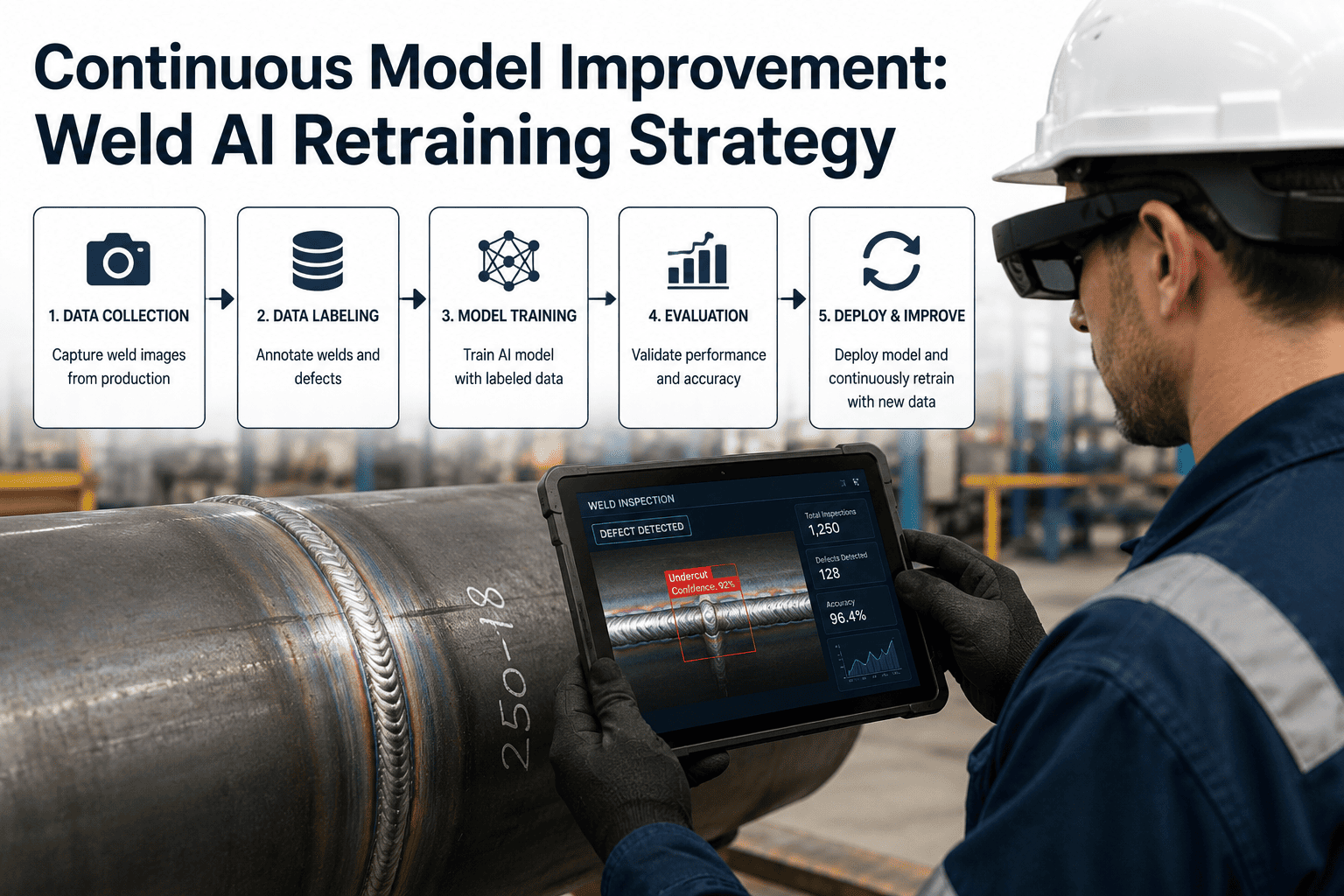
Yes — the inference itself runs locally for speed and resilience, while classification results, images, and trend data can still sync to a central system for cross-site reporting, model retraining, and longer-term analytics without requiring every raw frame to travel over the network in real time.
How often does the edge deployment need hardware or model updates?
Hardware typically has a multi-year useful life once correctly sized for the workload, while the model itself may be updated periodically as new defect data accumulates or new weld joint types are introduced to the line. Book a demo to discuss an update cadence that fits your production schedule.
Real-Time Inspection Only Works If the Inference Actually Is Real-Time
iFactory designs edge GPU deployments around your line's actual cycle time and camera load, so weld inspection keeps pace with production instead of becoming the bottleneck.