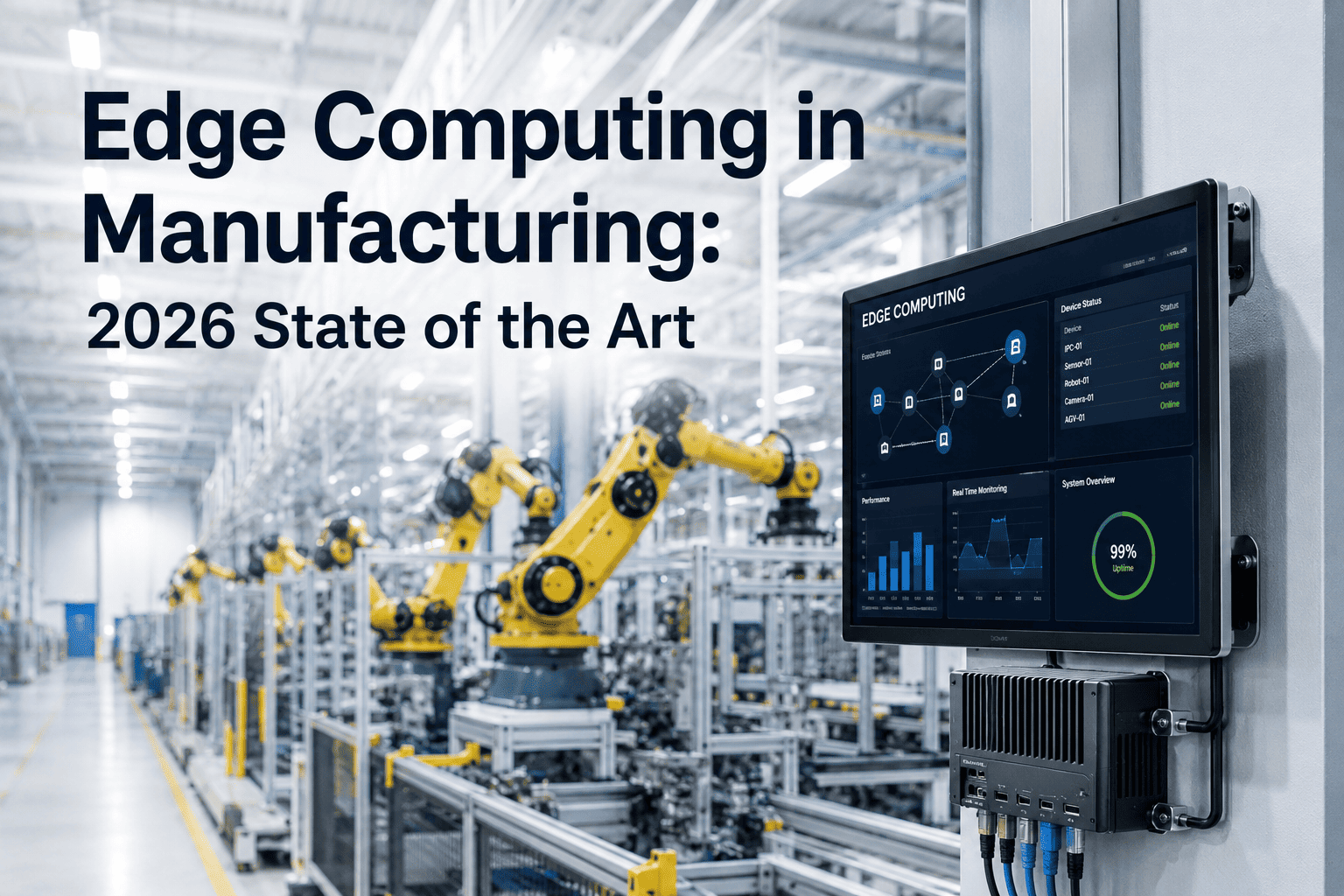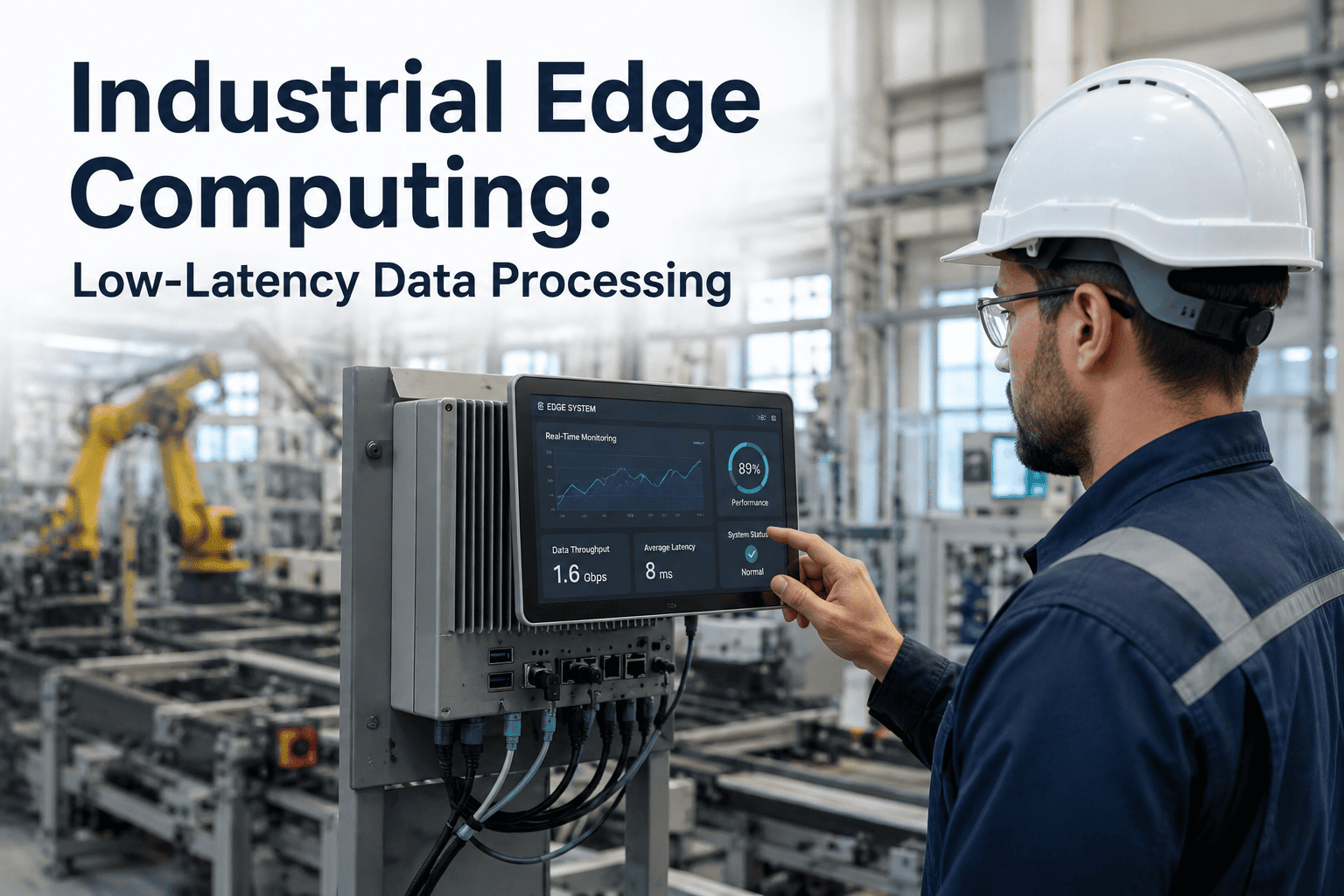
A vibration sensor on a critical bearing can detect the earliest signature of a failure milliseconds before it happens — but only if the system analyzing that signal doesn't have to send it to a data center three states away and wait for a response. Round-trip cloud latency, even on a good connection, can run into hundreds of milliseconds. For a safety interlock or a quality reject decision on a line moving parts every second, that delay is the difference between catching a defect and shipping it. Industrial edge computing keeps the decision where the data is born. Book a demo with iFactory's edge deployment team to see sub-10ms inference running on your own floor.
Edge Computing · Industrial IT 2026
Industrial Edge Computing: Processing Data Where Milliseconds Actually Matter
Sub-10ms inference, local bandwidth optimization, and data sovereignty for the time-critical decisions that can't afford a round trip to the cloud — vibration analysis, vision-based quality inspection, and safety interlocks.
Why Latency Is a Production Variable
What Happens in the Milliseconds Between Sensor and Decision
200-400ms
Typical round-trip latency to a distant cloud region under normal network conditions
Under 10ms
Inference time achievable with on-premises edge hardware for vision and vibration models
1 part/sec
Typical throughput on a high-speed line where a slow reject decision means a bad part ships
60-80%
Bandwidth reduction possible when raw sensor data is processed locally and only summaries are sent upstream
Architecture Comparison
Cloud-Only vs. Edge-First Processing
| Factor | Cloud-Only | Edge-First |
|---|---|---|
| Inference latency | Hundreds of milliseconds typical | Single-digit to low double-digit milliseconds |
| Network dependency | Full dependency, outage stops processing | Local processing continues during outages |
| Bandwidth cost | All raw data transmitted continuously | Only summarized results and exceptions sent |
| Data sovereignty | Raw data leaves the site by default | Sensitive data can stay on-premises |
| Model updates | Centralized, simpler to manage | Requires a deployment pipeline to edge devices |
Most production deployments land on a hybrid model: time-critical inference runs at the edge, while aggregated results, model retraining, and long-horizon analytics still flow to the cloud where compute is cheaper and less time-sensitive.
Where It Matters Most
Use Cases That Genuinely Need Edge Processing
Vision-Based Quality Inspection
A camera flagging a surface defect has to make the reject decision before the part moves past the ejection point — often a window measured in tens of milliseconds on a fast line.
Vibration and Acoustic Monitoring
Early bearing failure signatures appear as brief spikes in high-frequency vibration data; streaming raw signal to the cloud for analysis introduces delay and consumes bandwidth that local processing avoids entirely.
Safety Interlocks
A light curtain or proximity sensor triggering an emergency stop cannot tolerate any network dependency; the decision has to be made and acted on locally, with the cloud connection treated as informational only.
Closed-Loop Process Control
Adjusting a process parameter in response to a sensor reading, such as tightening a weld parameter mid-cycle, requires a control loop tight enough that any cloud round trip would destabilize the process.
Bring the Decision to the Floor
iFactory Deploys Edge Inference Alongside Your Existing Equipment
iFactory's edge platform runs vision, vibration, and process models directly on-premises, keeping the millisecond-critical decisions local while still syncing aggregated results and trends to your central dashboard.
How It's Built
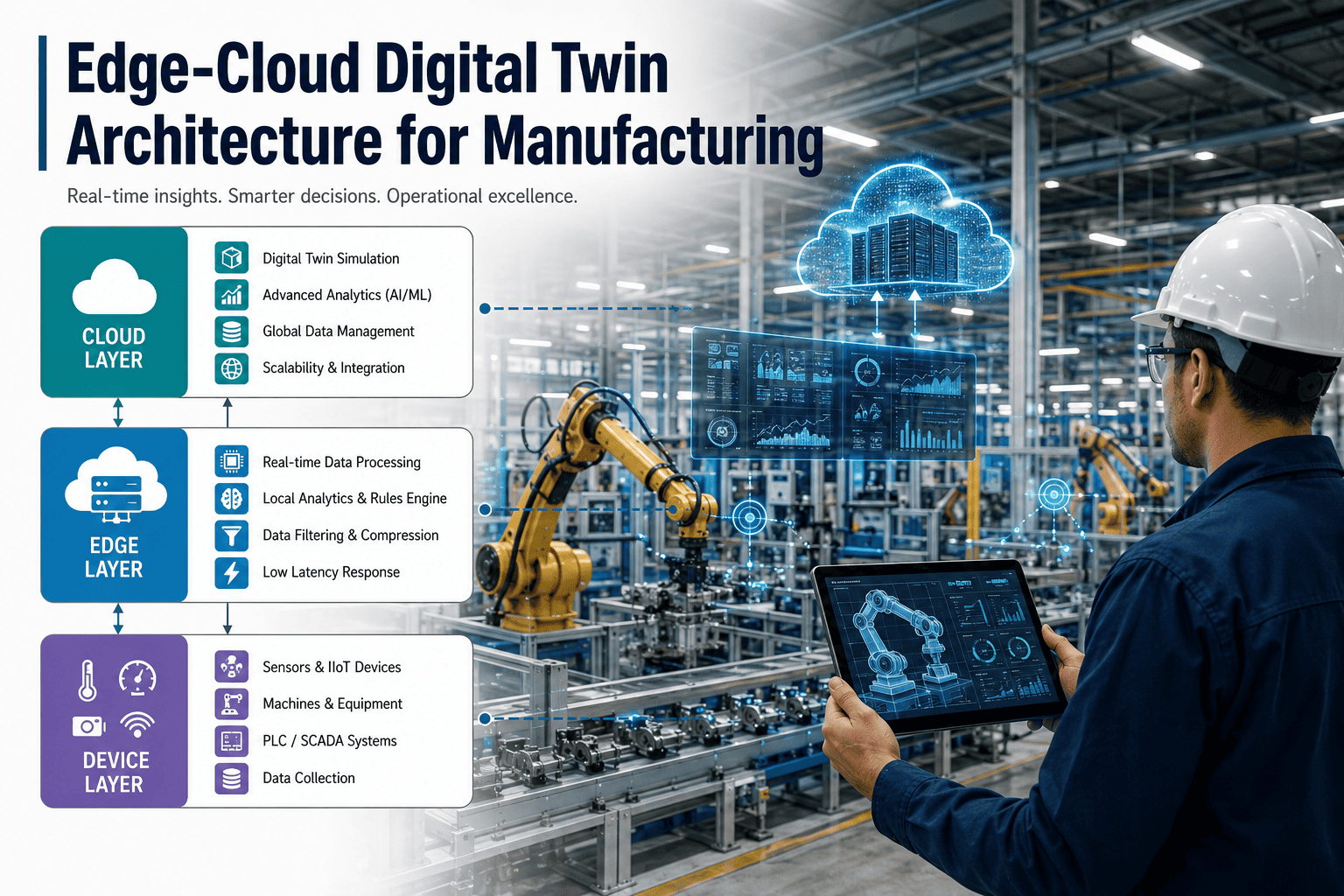
The Three Layers of an Industrial Edge Deployment
Layer 1
Device-Level Processing
Compute embedded directly on or near the sensor itself, handling the simplest, fastest decisions like threshold-based alerts with the lowest possible latency.
Layer 2
Local Edge Gateway
A more capable on-site server or industrial PC running the heavier models — vision inference, vibration pattern recognition — aggregating multiple sensor streams before any data leaves the plant.
Layer 3
Cloud Coordination
Centralized model training, fleet-wide trend analysis, and long-term storage, receiving summarized results and periodic model updates from the edge layer rather than a continuous raw data firehose.
Before You Deploy
A Readiness Checklist for an Edge Pilot
1
Identify the single latency-sensitive decision causing the most pain today, rather than trying to solve every workload at once
2
Confirm the sensor or camera hardware already installed can supply data at the resolution and frequency the model needs
3
Size the gateway hardware against the specific workload rather than a generic specification sheet
4
Define the network segmentation the edge device will sit behind before it goes live, not after
5
Plan how model updates will reach the device once deployed, including rollback if a new version underperforms
Cost Considerations
Where the Budget Actually Goes
Hardware
The gateway or industrial PC running inference locally, sized to the specific workload rather than over-provisioned for hypothetical future use cases.
Integration
Connecting the edge layer to existing sensors, cameras, and control systems, plus building the pipeline that pushes summarized results upstream.
Ongoing Management
Model retraining, version deployment, and monitoring across the device fleet as it grows beyond the initial pilot line.
The bandwidth and cloud compute savings from processing locally typically offset a meaningful share of the hardware investment over time, particularly for high-frequency sensor data like vibration monitoring that would otherwise be streamed continuously.
The mistake I see most often is treating edge computing as an all-or-nothing decision. Plants either push everything to the cloud and accept the latency, or they try to run every workload locally and end up managing a fleet of edge devices with no central visibility. Neither extreme works well. The right approach asks a specific question for each workload: does this decision need to happen in single-digit milliseconds, or can it tolerate a few hundred? That question alone sorts most manufacturing data into the right tier without much debate.
Priyansh Feldkirchner-Osei
Industrial IoT Architect · 12 years deploying edge inference systems across automotive, electronics, and food processing plants
Edge Deployment Questions
Industrial Edge Computing — Frequently Asked
What kind of hardware does edge computing actually require?
Requirements scale with the workload. Simple threshold monitoring can run on inexpensive industrial controllers with minimal compute. Vision inference and vibration pattern models typically need a ruggedized edge server or industrial PC with a dedicated inference accelerator, sized to handle the specific camera resolution and frame rate or sensor sampling rate involved. Most deployments start with a pilot on one line to right-size hardware before committing to a plant-wide rollout, since over-provisioning wastes budget and under-provisioning creates the exact latency problem edge computing is meant to solve.
Does adding edge devices increase the cybersecurity attack surface?
It changes the attack surface rather than simply increasing it, and the change needs to be managed deliberately. Edge devices need the same patching discipline, network segmentation, and access controls as any other OT asset, arguably more so since they often have more general-purpose compute than a traditional PLC. Properly deployed, edge devices live behind the same OT network segmentation used for other plant floor systems, with the gateway layer acting as the only point of contact with broader IT and cloud networks.
How do you keep edge models up to date without constant on-site visits?
A model deployment pipeline pushes updated models to edge devices over the network during scheduled maintenance windows, rather than requiring a technician to physically visit each device. This mirrors how software updates are managed on any fleet of distributed devices — centralized version control, staged rollouts to catch issues on a small subset before wide deployment, and rollback capability if a new model performs worse than the one it replaced. Contact our support team to see how model versioning works across a multi-line deployment.
Is edge computing worth it for a single-line pilot, or only at scale?
A single-line pilot is actually the recommended starting point rather than a compromise. It lets a plant validate latency improvements, measure bandwidth savings, and work out the model deployment and monitoring process on a contained scope before expanding. The infrastructure investment in the gateway layer does have some fixed cost that becomes more efficient at scale, but the architectural patterns and lessons learned from a well-run pilot transfer directly to a broader rollout, which is generally faster and lower-risk than attempting a plant-wide deployment from the start.
How does edge computing interact with existing cloud-based analytics platforms?
Edge and cloud are complementary rather than competing layers in a well-designed architecture. The edge layer handles the time-critical inference and sends summarized results, exceptions, and periodic aggregates upstream to the cloud, where they feed longer-horizon analytics, cross-site benchmarking, and model retraining that don't have the same latency constraints. Cloud platforms remain the right place for workloads that benefit from larger compute resources and don't need millisecond response times. Book a demo to see how iFactory coordinates edge and cloud processing in one platform.
Don't Let Network Latency Slow Your Line
Deploy Edge Inference Where the Milliseconds Actually Count
iFactory's edge platform brings sub-10ms inference to your quality, vibration, and safety workflows while keeping your central dashboard fully connected to the bigger picture.