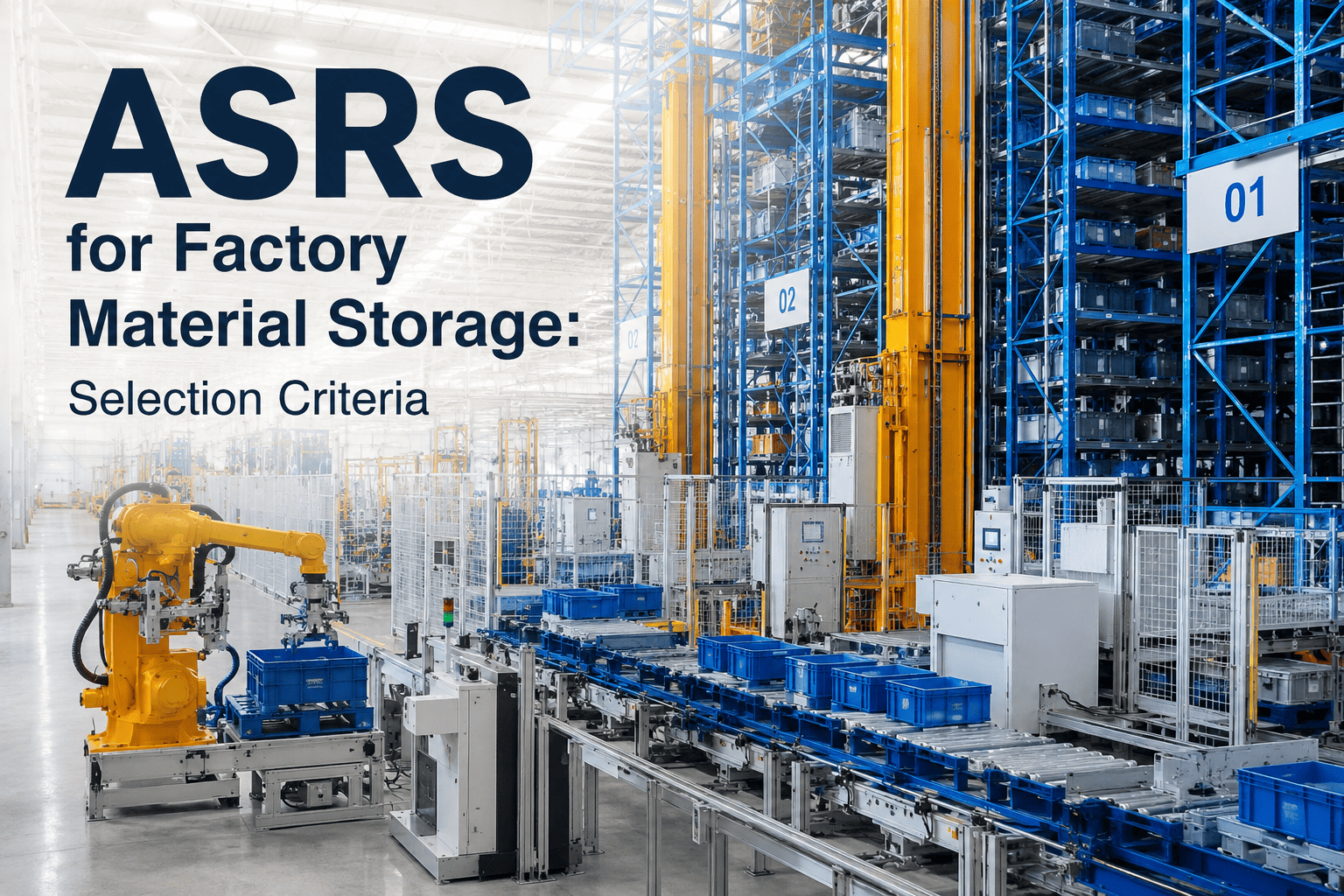
A forklift operator hunting for a single SKU in a dense, poorly organized rack aisle can burn ten minutes or more on a task that should take thirty seconds, and that time gets paid for on every single pick, every single shift. Automated storage and retrieval systems exist to remove that search entirely, delivering the exact item to the operator instead of sending the operator out to find it. Book a demo to see how the right ASRS format gets matched to your specific pick profile and storage density needs.
Not All Automated Storage Systems Solve the Same Problem
ASRS is not a single technology, it is a category covering several fundamentally different formats, each suited to a different combination of storage density, pick speed, and item size. Choosing the wrong format for your actual material profile is the most common reason ASRS projects underdeliver on their promised return.
Four ASRS Formats and What Each One Is Actually Built For
Understanding the differences between formats up front prevents a costly mismatch between the system purchased and the material handling problem it needs to solve.
The Questions That Actually Determine the Right Format
Vendors will show demos of every format looking impressive, but the right choice for your facility comes down to a small set of concrete questions about your actual material and order profile.
Matching Format to Profile Is Where Most ASRS Decisions Go Wrong
A system that looks impressive in a vendor demo can still be the wrong fit for your actual pick profile and building constraints. iFactory helps facilities model their real material profile against the ASRS formats that genuinely fit.
What Actually Changes When Manual Storage Becomes Automated
The appeal of ASRS is not automation for its own sake, it is the combination of specific, measurable improvements that manual storage and retrieval cannot match at scale.
| Metric | Manual Storage | Automated Storage |
|---|---|---|
| Storage density per square foot | Baseline | Significantly higher |
| Pick accuracy | Dependent on operator diligence | Consistently high |
| Search and travel time per pick | Variable, often substantial | Near zero, item comes to operator |
| Inventory visibility | Periodic manual counts | Continuous, system-tracked |
ASRS Rarely Works in Isolation From Everything Else
A storage and retrieval system delivers its full value only when it talks to the systems already managing inventory and orders. Before selecting hardware, it is worth mapping out how the system will connect to the software already running the operation.
Warehouse management and enterprise resource planning systems typically need to exchange real-time data with the ASRS controller so that pick instructions, inventory counts, and order priorities stay synchronized. Facilities that treat this integration as an afterthought often end up with a fast, accurate storage system that still requires manual reconciliation against the rest of the operation, undermining much of the automation's value.
How a Typical ASRS Project Moves From Decision to Live Operation
Once a format is selected, the project moves through a fairly predictable sequence. Understanding the stages ahead of time helps set realistic internal expectations for timeline and disruption.
What Actually Drives ASRS Pricing Beyond the Hardware
The storage machine itself is only one line item in a full ASRS project budget, and facilities that only budget for hardware are frequently surprised by the total project cost.
Structural modifications, software integration work, operator training, and ongoing maintenance contracts all add to the total cost of ownership beyond the sticker price of the storage unit itself. Facilities that request a full project cost breakdown from the outset, rather than just an equipment quote, make better-informed comparisons between formats and vendors.
Common Questions About ASRS Selection
How do I know if my facility has enough volume to justify ASRS?
Justification typically comes down to comparing the fully loaded cost of current manual storage and retrieval labor against the capital and operating cost of an automated system over its useful life, factoring in error reduction and space savings alongside labor. Facilities with high SKU counts, tight labor availability, or significant search and travel time in their current process tend to see faster payback than those with low SKU counts and already-efficient manual layouts. A detailed volume and labor analysis is the only reliable way to answer this for your specific operation rather than relying on industry rules of thumb. Book a demo to model the volume threshold that makes sense for your facility.
Can a mini-load and a vertical lift module be used together in the same facility?
Yes, and combining formats is actually common in facilities with a diverse material profile, since a single format rarely handles the full range of item sizes, weights, and pick velocities a plant deals with. A typical combination might use vertical lift modules for high-mix small parts near an assembly line while a mini-load system handles higher-volume tote-based storage elsewhere in the same building. The key is making sure both systems integrate with the same warehouse management layer so inventory visibility stays unified across formats.
What happens to ASRS operations during a power outage or system failure?
Most modern ASRS installations include backup power provisions for critical controls and safe shutdown procedures, along with manual access protocols that allow trained staff to retrieve priority items during an extended outage, though this process is slower and more limited than normal automated operation. Facilities with continuous operation requirements often build redundancy into the broader material handling plan rather than relying solely on the ASRS vendor's built-in contingencies. Contact support to discuss contingency planning appropriate for your operation's uptime requirements.
How long does ASRS installation typically take once a format is selected?
Installation timelines vary significantly by format and scale, but a mini-load or vertical lift module system typically installs within a few months of order placement, while larger unit-load systems with extensive structural requirements can take considerably longer. The timeline also depends on how much building modification is needed, whether existing floor conditions can support the new structure, and how complex the integration with warehouse management software turns out to be. Book a demo to get a realistic installation timeline for the format that fits your needs.
Does ASRS require a dedicated maintenance team to keep it running reliably?
Most systems require a level of preventive maintenance beyond what a typical manual racking system needs, since mechanical components like lifts, shuttles, and conveyors experience wear that has to be monitored and addressed proactively to avoid unplanned downtime. Facilities generally either train internal maintenance staff on the specific system or contract with the vendor for ongoing service, and the right choice depends on internal technical capability and how critical continuous uptime is to overall operations. Contact support to understand typical maintenance requirements for different ASRS formats.
Stop Letting Storage Format Get Chosen by Demo Instead of Data
iFactory helps facilities match ASRS format to actual material profile, pick volume, and building constraints, so the system installed is the one that actually fits.