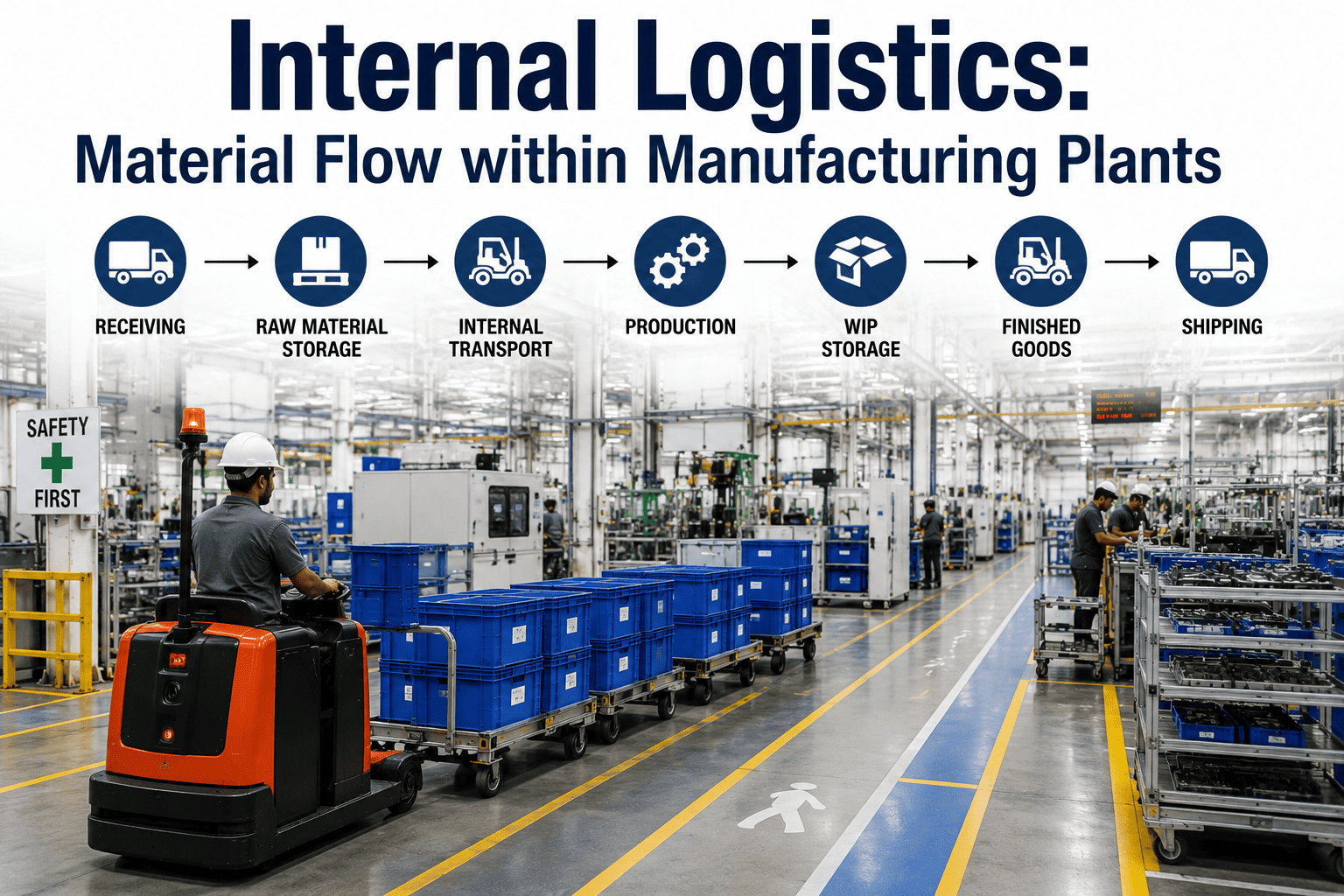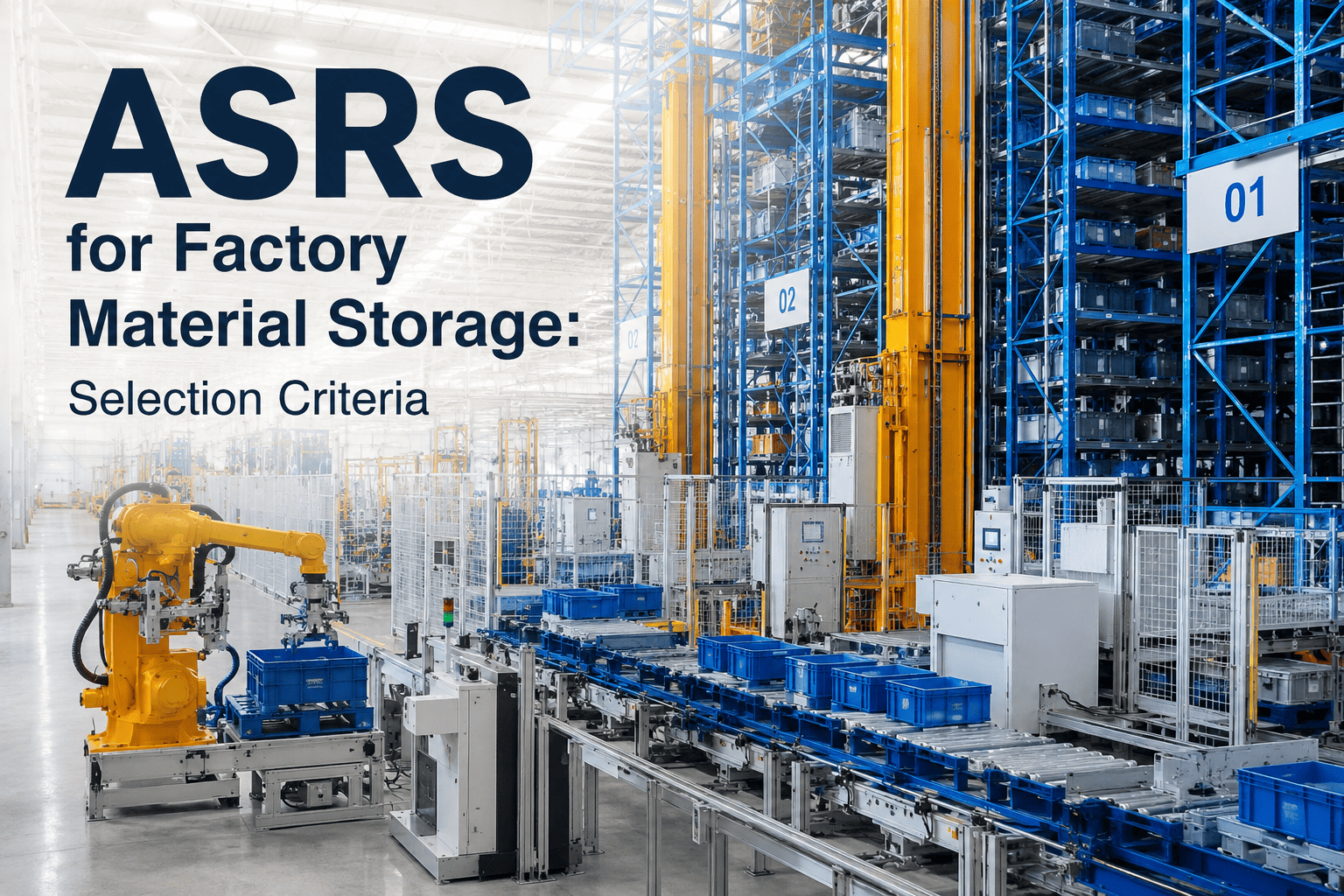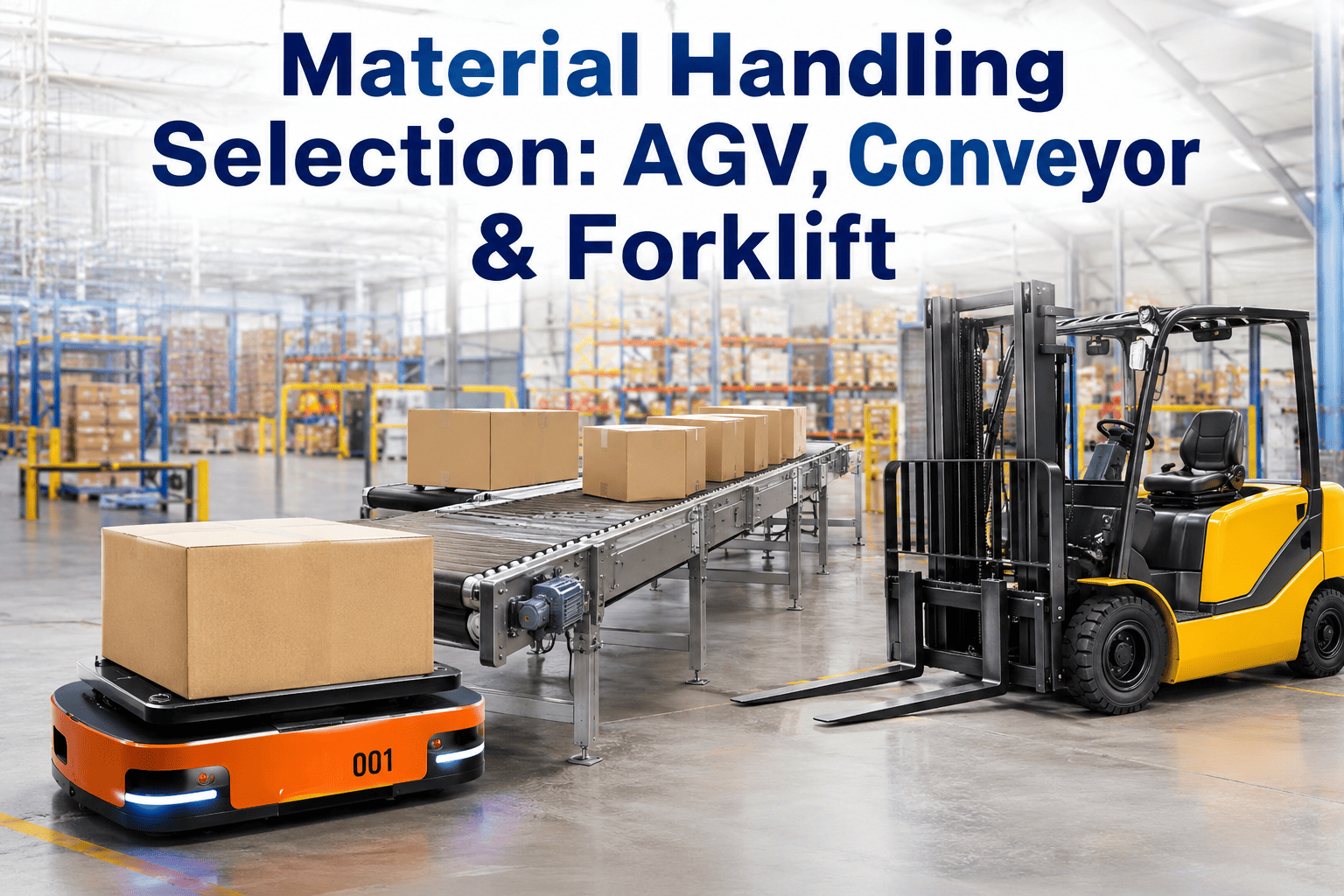
Most plants pick a material handling system based on what the last plant used, not on what their own throughput, layout, and SKU mix actually require — and the mismatch shows up months later as bottlenecked aisles, idle AGVs, or a conveyor line that can't handle a product changeover. Choosing between AGVs, conveyors, forklifts, AMRs, and cranes is a structured decision with measurable inputs, not a preference call. This breaks down exactly how to make that call for your floor, and where to get a second opinion once you've narrowed the options.
Plant Layout · Material Handling
Choosing Between AGV, Conveyor, Forklift, and AMR for Your Plant Floor
A throughput-first framework for selecting the right material handling mix — matched to your product volume, layout flexibility needs, and capital constraints.
Foundations
Why This Decision Gets Made Wrong So Often
Material handling selection typically happens once, early, and under time pressure — during a new line launch or a facility move — and rarely gets revisited even as product mix and volume shift. The result is plants running conveyors sized for a product line that changed two years ago, or forklift fleets doing repetitive point-to-point moves that an AGV would handle at lower cost per cycle. The right choice depends on four variables that actually change over time: throughput volume, path variability, load characteristics, and floor layout flexibility requirements. Getting the inputs right before comparing equipment options is what separates a system that scales with the plant from one that becomes next year's bottleneck.
Side-by-Side
AGV, Conveyor, Forklift, and AMR Compared by the Metrics That Matter
| System | Best Fit | Layout Flexibility | Relative Cost per Unit Moved |
|---|---|---|---|
| Conveyor | High-volume, fixed-path repetitive flow | Low — fixed infrastructure | Lowest at high volume |
| AGV (wire/magnetic guided) | Predictable repeat routes, medium volume | Moderate — route changes need reconfiguration | Moderate |
| AMR (vision/SLAM guided) | Variable routes, frequent layout changes | High — reprograms without floor changes | Moderate to higher upfront |
| Forklift | Irregular, heavy, or oversized loads | Highest — goes anywhere | Highest labor cost per cycle |
| Overhead Crane | Very heavy or oversized loads, fixed bay | Low — fixed rail or bridge span | Low per cycle, high fixed cost |
Selection Process
Five Steps to Matching Equipment to Your Actual Floor
1
Map Current Material Flow
Document every move on the floor today — origin, destination, frequency, and load weight — before evaluating any equipment category, since most selection mistakes trace back to skipping this step.
2
Classify Routes by Variability
Separate fixed, repeat routes from variable, on-demand ones — the former favors conveyor or fixed-route AGV, the latter favors AMR or forklift.
3
Size for Peak, Not Average Throughput
Equipment sized to average volume fails during peak runs; model capacity against your highest sustained hourly throughput, not a yearly average.
4
Model Total Cost, Not Just Equipment Price
Include labor, maintenance, floor reconfiguration, and downtime risk in the comparison — forklifts often win on sticker price and lose on fully loaded cost per cycle.
5
Pilot Before Fleet-Wide Commitment
Run a scoped pilot on the highest-value route before committing capital across the floor, validating cycle time and uptime assumptions against real conditions.
Not Sure Which Mix Fits Your Floor
Get a Data-Backed Material Handling Recommendation
Our team reviews your throughput data, layout constraints, and product mix to recommend a handling system mix — not a single vendor's product line — matched to how your plant actually runs.
Cost Breakdown
Where the Real Cost Difference Shows Up
Labor
Forklifts carry the highest ongoing labor cost per cycle since every move needs an operator; AGVs and AMRs shift that cost to a smaller supervisory and maintenance headcount instead.
Infrastructure
Conveyors and cranes carry the highest fixed infrastructure cost, since the path or span is built once and is expensive to relocate if the layout changes later.
Flexibility Premium
AMRs cost more per unit upfront than wire-guided AGVs but avoid the reconfiguration cost every time a route or cell layout changes, which matters most in high-mix plants.
Downtime Risk
A single conveyor jam can stop an entire line, while a fleet of AGVs or forklifts degrades gracefully if one unit goes down, which changes the risk profile significantly.
Applied Example
A Mixed-Fleet Decision in Practice
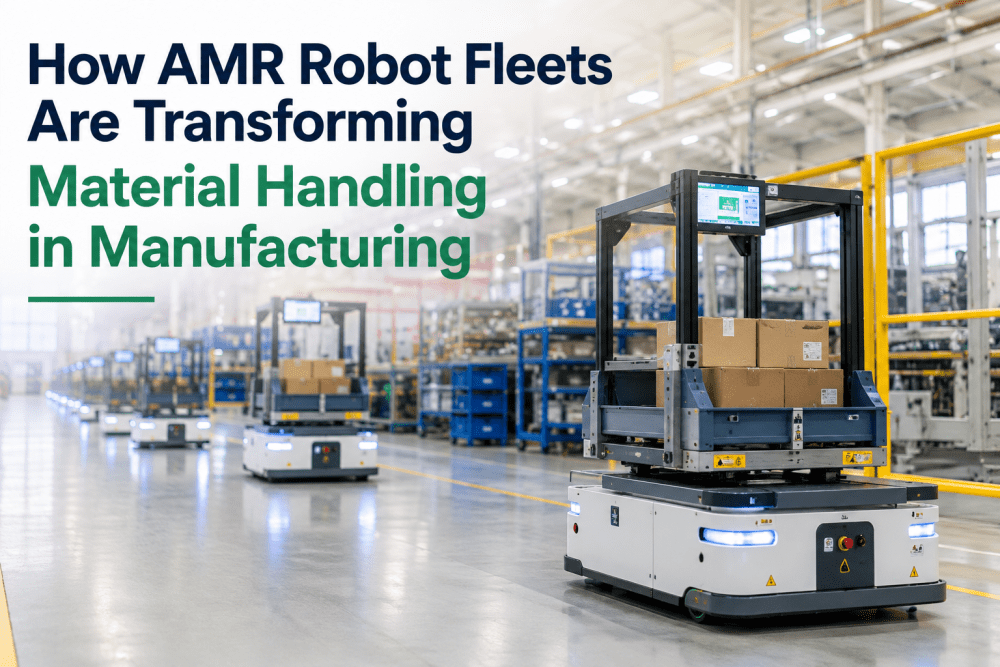
A mid-size automotive parts plant running three product families on one floor faced a common problem: conveyors sized for the highest-volume line left the other two families waiting on manual forklift moves during changeovers. Rather than replacing the conveyor entirely, the plant added a small AMR fleet to handle the variable-route moves for the lower-volume families, keeping the conveyor for its original high-volume line. The mixed approach cut manual forklift trips by more than half on the affected lines and avoided a full conveyor redesign that would have required a multi-week shutdown. The lesson that generalizes: the right answer is rarely one system for the whole floor — it is matching each flow pattern to the equipment built for it.
"
The plants that get this wrong almost always chose equipment before they measured their own material flow. A forklift fleet feels flexible because it can go anywhere, but that flexibility is exactly what makes it expensive at scale. Once a plant has real flow data — routes, frequency, load weight — the equipment choice usually becomes obvious rather than a debate.
Desmond Achterberg
Manufacturing Operations Consultant · 16 years in plant material flow and layout design
Integration Planning
Integration Effort by System Type
| System | Typical Integration Effort | Common Software Interface |
|---|---|---|
| Conveyor | Low — PLC-level control, rarely needs WMS integration | PLC / SCADA |
| AGV (fixed route) | Moderate — route programming and traffic control setup | Fleet management software |
| AMR (dynamic route) | Moderate to high — mapping, WMS/MES integration for task assignment | WMS / MES API |
| Forklift | Low — optional telematics for tracking only | Fleet telematics (optional) |
| Overhead Crane | Low to moderate — load monitoring and safety interlocks | PLC / crane control system |
Warning Signs
Signs Your Current Handling Mix Needs Reassessment
Rising Overtime on Manual Moves
A steady increase in overtime hours tied to material transport rather than production itself usually signals that manual handling has outgrown its original volume and a mechanized or automated option would pay back quickly.
Increasing Near-Miss Reports in Aisles
A rising trend in near-miss or safety incidents involving forklifts or foot traffic in the same aisles often points to a traffic density problem that equipment segregation or AMR routing can resolve.
Changeover Time Creeping Up
If changeovers are taking longer each quarter partly because material staging can't keep pace, that is a material flow symptom, not just a scheduling one, and usually traces back to handling capacity.
New Product Lines Don't Fit Existing Paths
When a new SKU or product family requires manual workarounds because it doesn't fit the current conveyor or fixed-route AGV path, that is a strong signal the handling mix needs to add flexible capacity.
Safety Planning
Safety and Compliance Considerations by System
| System | Primary Safety Concern | Common Mitigation |
|---|---|---|
| Forklift | Pedestrian and cross-traffic collisions | Marked lanes, proximity sensors, spotter protocols |
| AGV / AMR | Unexpected stops disrupting flow, minor collisions | Safety-rated LIDAR, geofenced zones, speed limiting |
| Conveyor | Pinch points and entanglement | Guarding, emergency stops at intervals |
| Overhead Crane | Load drop and overhead swing risk | Load limiters, rated rigging, restricted zones below |
Change Management
Steps to Roll Out a New Handling System Without Disrupting Production
1
Run the New System Alongside the Old
Operate the new equipment in parallel with existing handling on the pilot route for a defined period rather than switching over all at once, so any gaps are caught before the old method is removed.
2
Train Operators on Exception Handling
Most rollout friction comes from operators not knowing what to do when the new system stops or flags an error, not from the normal operating case, so exception training matters more than basic operation training.
3
Set a Clear Cutover Date
An open-ended parallel run tends to drag on indefinitely; committing to a specific cutover date once performance criteria are met keeps the transition on schedule.
4
Monitor Performance for 30 to 60 Days Post-Cutover
Throughput and error rates often shift again after the parallel run ends and full volume shifts to the new system, so continued monitoring catches issues that a limited pilot didn't surface.
Material Handling Questions
Frequently Asked
How do I know if AGVs or AMRs fit my plant better than conveyors?
Conveyors fit high-volume, fixed-path flow where the route rarely changes, while AGVs and AMRs fit plants with variable routing, frequent product changeovers, or layout changes that would be too costly to rebuild into fixed conveyor infrastructure. The deciding factor is usually how often your routes change relative to your volume. Book a review to model this against your own flow data.
Is it worth replacing an existing forklift fleet with AGVs?
It depends on route repeatability — high-frequency, predictable routes typically pay back an AGV investment faster than irregular ones, since the labor savings compound with volume. A partial fleet conversion covering only the highest-frequency routes is usually the better starting point than a full replacement. Contact support to scope which routes qualify.
What throughput level justifies a conveyor investment?
Conveyors generally become cost-effective once a single route sustains high enough repeat volume that the fixed infrastructure cost is offset by labor savings over its operating life, which varies by product weight and cycle speed. Below that threshold, AGVs or forklifts are usually the lower-cost option. Book a call to run the numbers for your line.
Can different handling systems run on the same floor without conflict?
Yes — mixed fleets are common and often optimal, with conveyors handling fixed high-volume flow and AGVs or forklifts covering variable routes, provided traffic zones and handoff points are planned rather than left to develop informally. Talk to our team about zone planning for mixed fleets.
How long does a material handling system change typically take to implement?
A scoped pilot on a single route can usually be validated within a few weeks, while a full floor-wide conversion depends heavily on infrastructure changes required, ranging from a few weeks for AGV or AMR rollouts to several months for conveyor or crane installations. Book a timeline scoping call for your specific project.
Stop Guessing on Equipment Choice
Get a Handling System Recommendation Built on Your Own Floor Data
iFactory analyzes your actual material flow, throughput, and layout constraints to recommend the right mix of AGV, conveyor, forklift, and AMR — not a one-size answer.