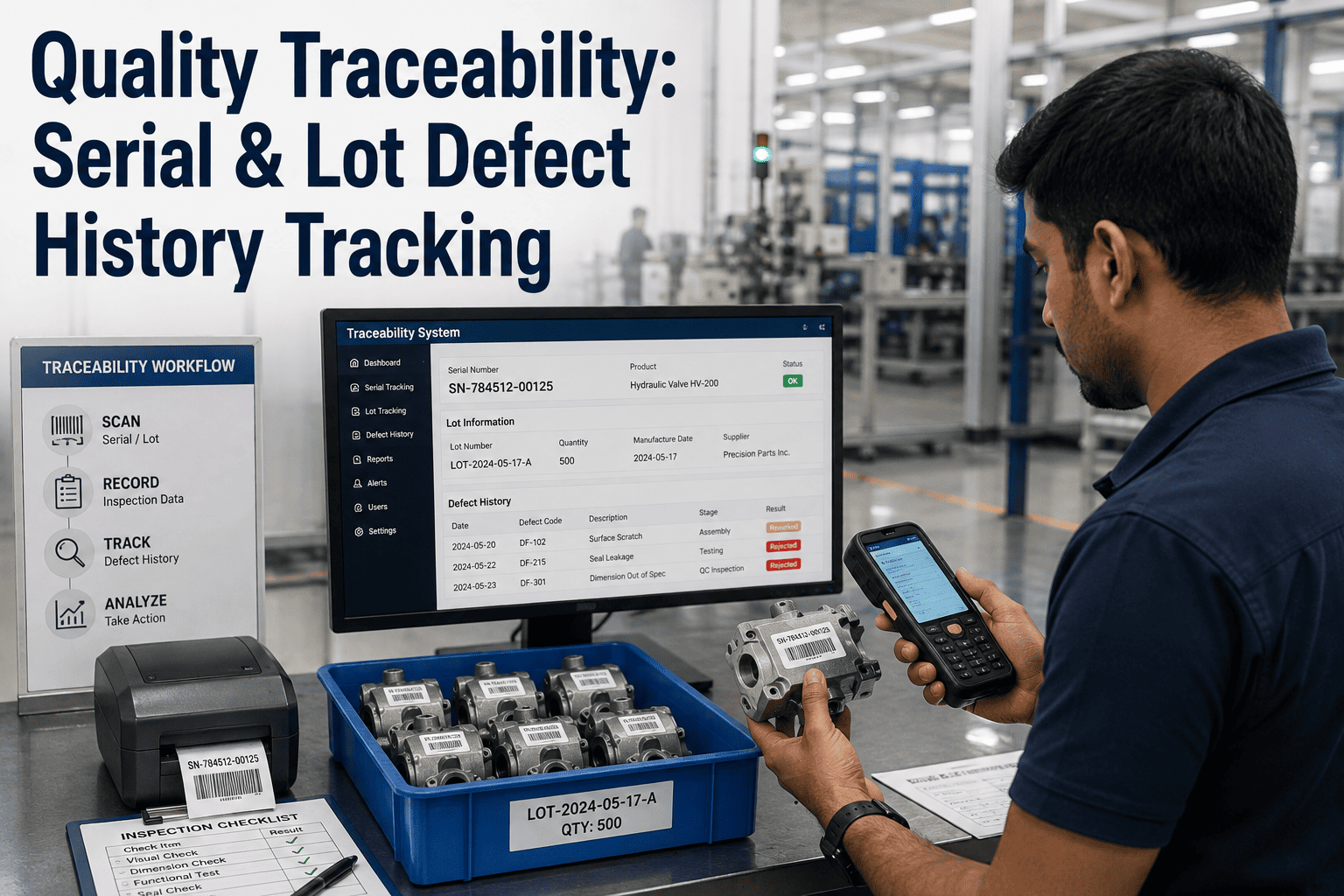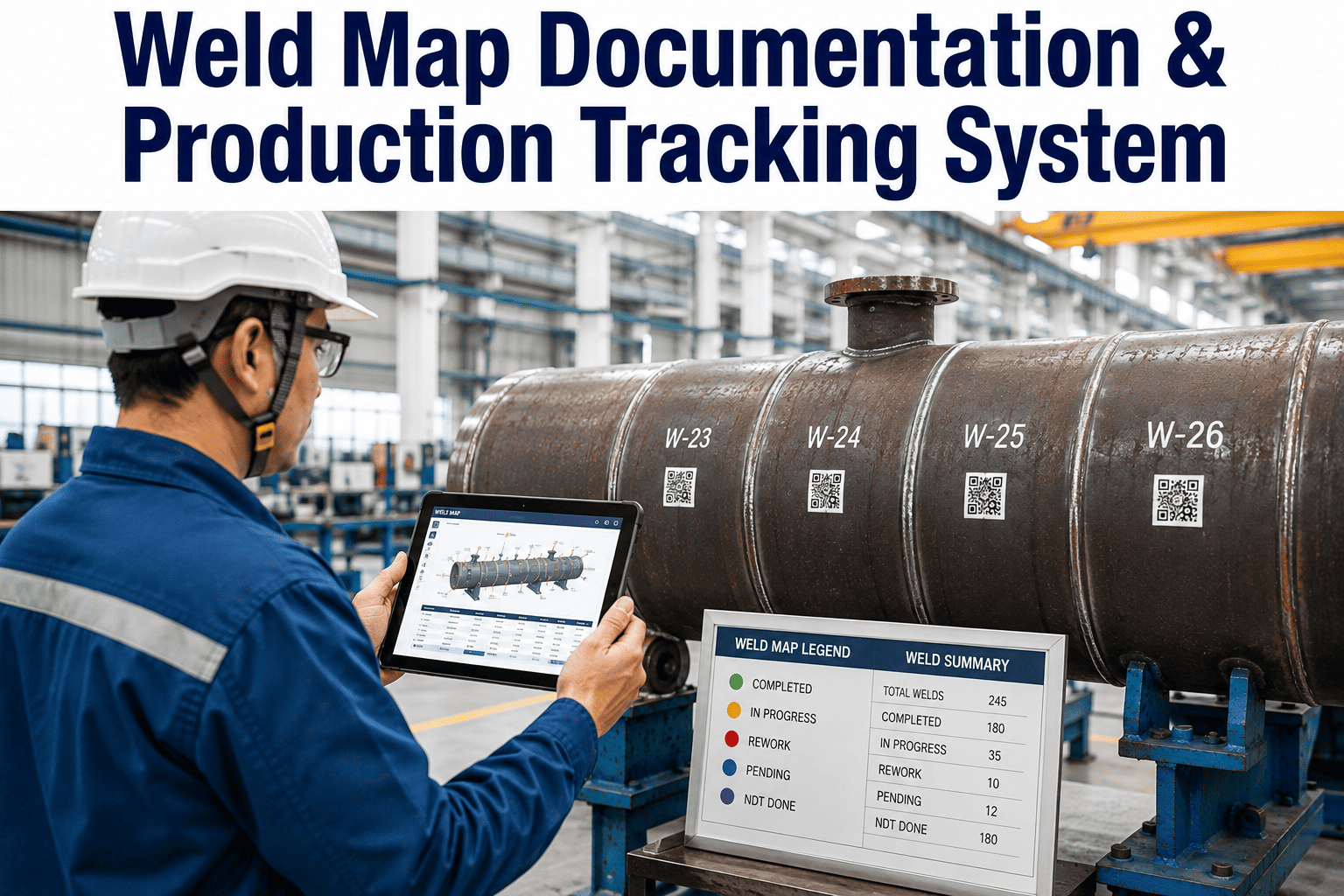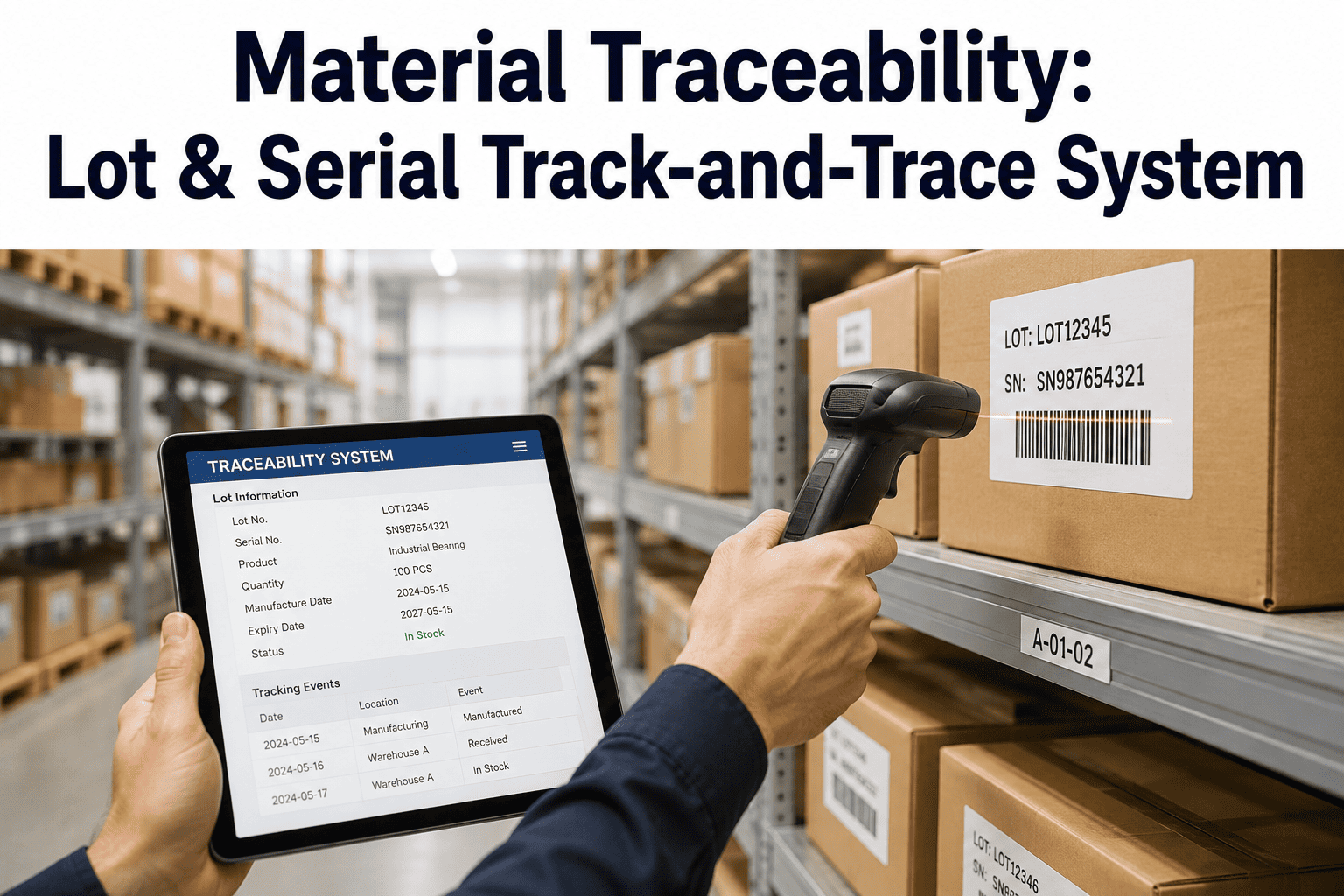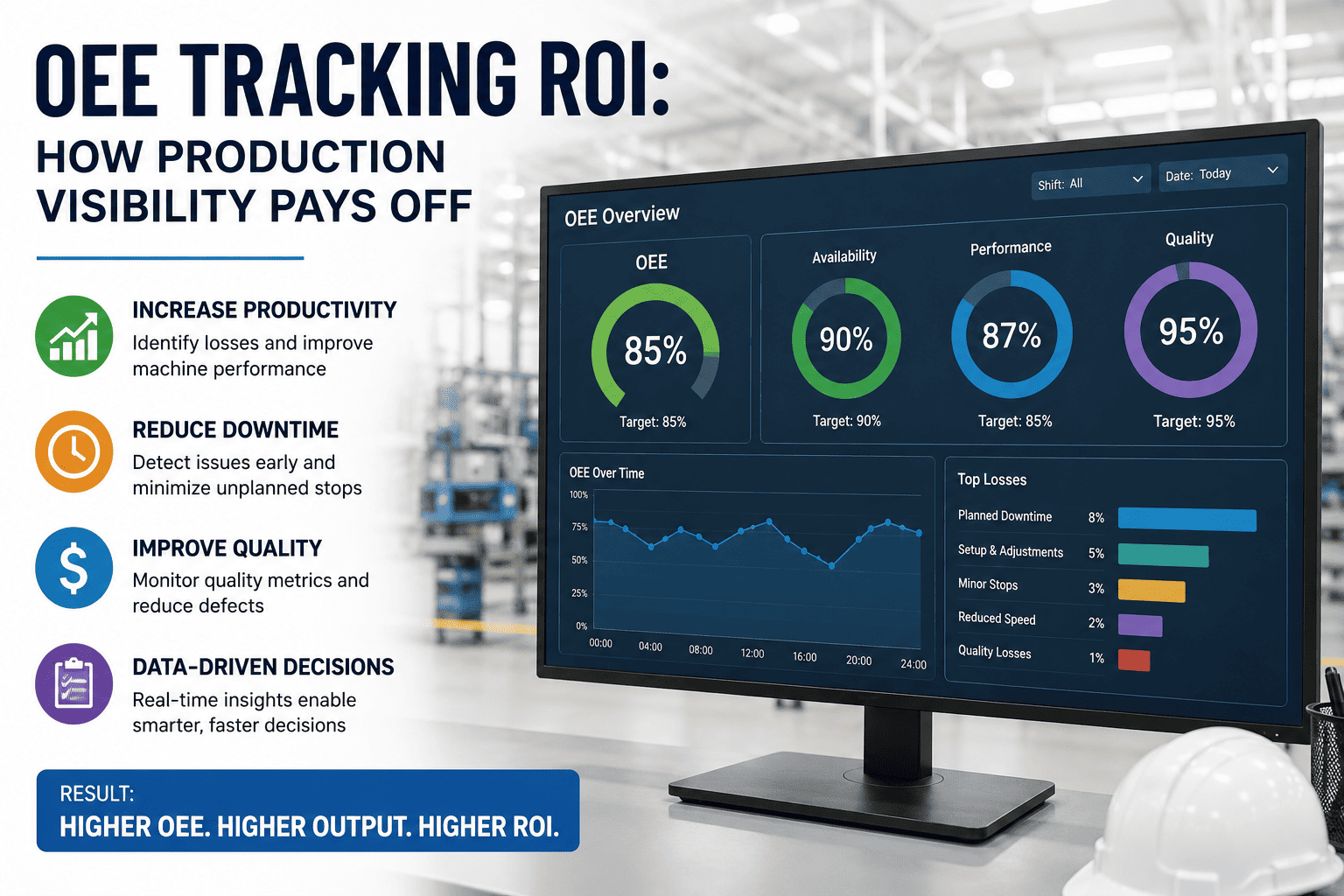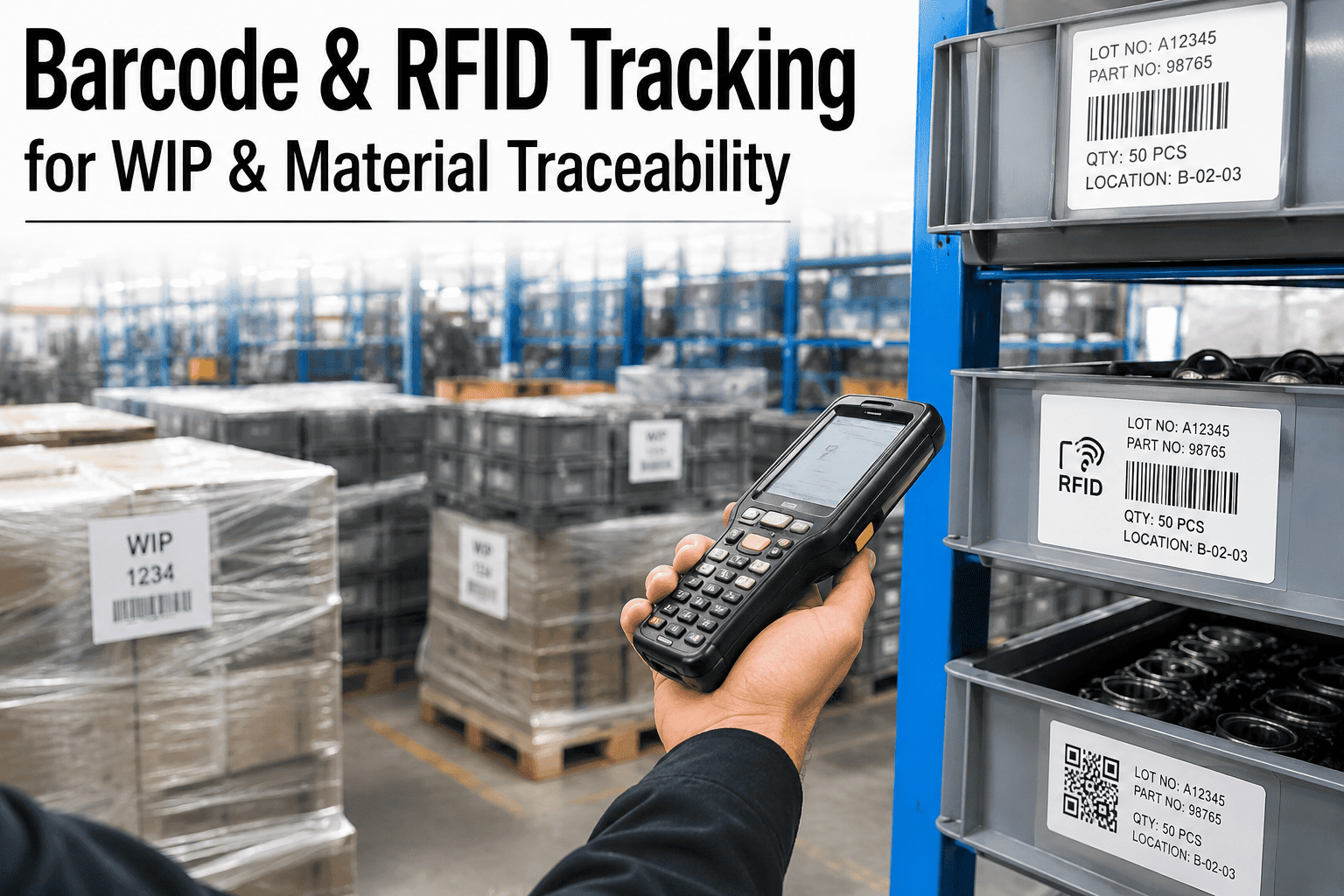
Ask a plant manager where a specific batch of raw material is right now, and the honest answer is often "somewhere between receiving and the line, we think." Work-in-process has a way of becoming invisible the moment it leaves a scanning station, and that invisibility is expensive: misplaced lots, duplicate rework, recalls that sweep up far more product than necessary because nobody can prove which batches actually touched the suspect material. Barcode and RFID tracking exist to close exactly that gap, turning WIP from a guess into a fact. The two technologies solve the same problem in different ways, and choosing between them, or blending them, is a decision worth getting right before the first tag goes on a pallet. See how ifactory support helps plants make that call.
Know Where Every Batch, Bin, and Component Actually Is
Barcode and RFID scanning infrastructure wired directly into MES, giving work-in-process and material traceability a single, continuously updated source of truth instead of a paper trail reconstructed after the fact.
Why Traceability Gaps Are More Expensive Than They Look
A traceability gap rarely announces itself as a single dramatic failure. It shows up as a quality engineer spending an afternoon paging through paper travelers to reconstruct which lot fed which order, or a recall that has to pull three weeks of finished goods because nobody can narrow the exposure window to three days. Every one of those situations traces back to the same root cause: material identity gets lost somewhere between one process step and the next, and once it is lost, the only way to recover it is manual detective work. Barcode and RFID tracking exist specifically to prevent that loss, capturing identity at every handoff so the record never goes cold.
Where Each Technology Actually Fits on the Floor
The mistake most plants make is treating this as an either-or decision when the real answer usually depends on where in the process the tracking event happens. A workstation where an operator is already handling the part benefits from a deliberate barcode scan, because the human is present anyway and the scan doubles as a checkpoint. A dock door, a high-speed conveyor junction, or a bulk staging area benefits from RFID, because nobody is standing there to scan items one at a time and the value comes from automatic, ambient detection.
How Scanning Data Actually Becomes Traceability
A scan by itself is just a timestamp and an identifier sitting in a local database. It becomes traceability only once it is linked to the work order, the operator, the machine, and the material lot that were all present at that moment, and pushed into a system that can answer questions later. That linking work is where most DIY scanning projects fall short: the hardware captures data correctly, but the software layer that stitches scans into a coherent genealogy either does not exist or lives in a spreadsheet that nobody trusts. An integration layer that feeds scan events directly into MES closes that gap, turning each scan into a permanent link in the batch record rather than an isolated data point.
The Hybrid Approach Most Manufacturers Actually Land On
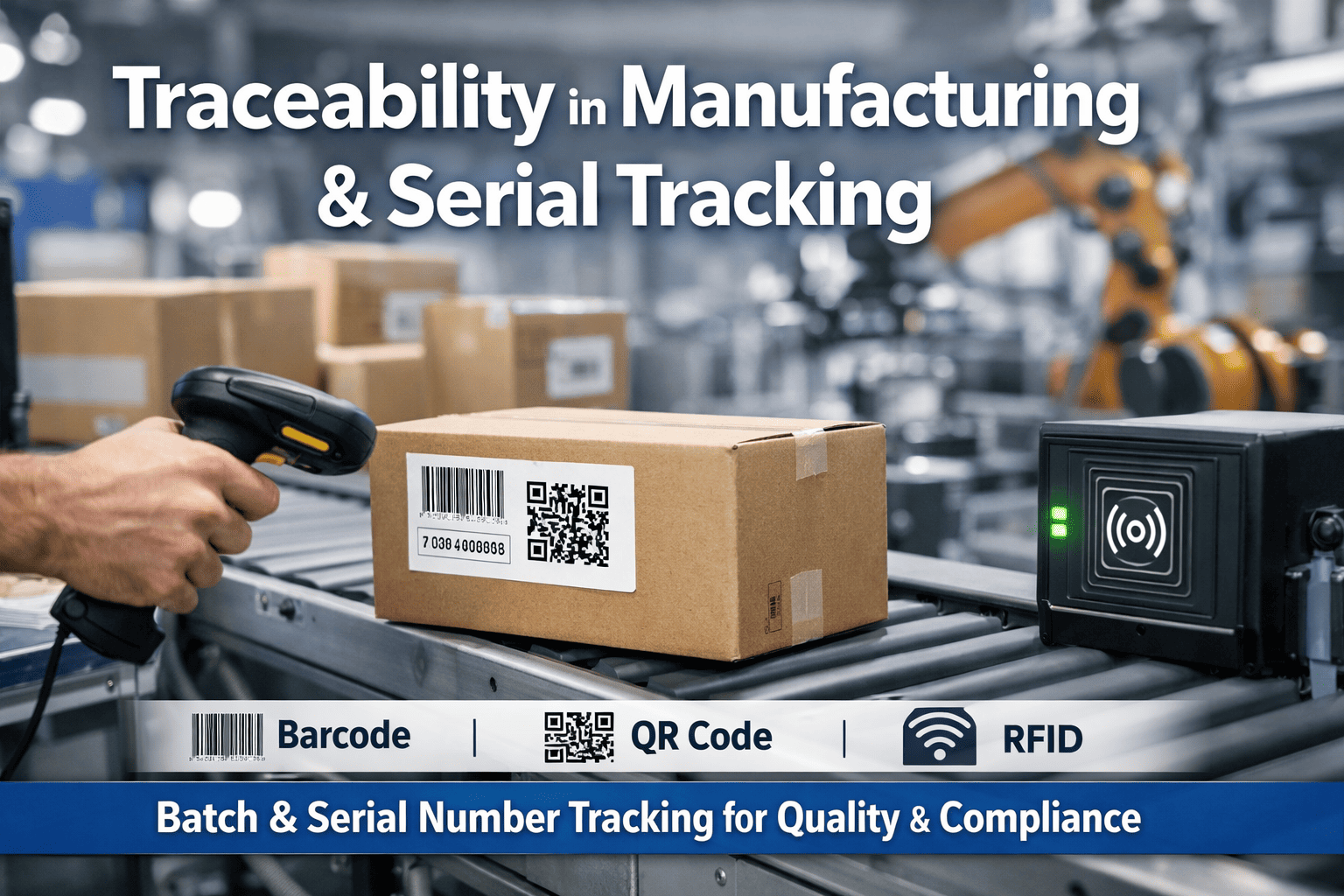
Very few plants end up purely barcode or purely RFID once they get past the pilot stage. The pattern that shows up again and again is a hybrid deployment: RFID at receiving docks, between major production stages, and at shipping to automatically track bulk movements without slowing operations, combined with barcode scanning at individual workstations and inspection points where operators are already handling the material. This split leverages the strengths of each technology rather than forcing one to do a job it is not suited for, and it typically costs meaningfully less than a pure RFID rollout while still delivering most of the automation benefit. It also reduces the risk of a full-scale RFID deployment, letting a plant phase in tag readers around existing barcode infrastructure instead of ripping out what already works.
| Factor | Barcode Only | RFID Only | Hybrid Deployment |
|---|---|---|---|
| Per-unit tagging cost | Lowest | Highest | Moderate, concentrated at bulk points |
| Labor for scanning | Highest, manual at every point | Lowest, largely automated | Reduced at bulk transfer points |
| Implementation risk | Low, familiar technology | Higher, more infrastructure planning | Lower, phased around existing barcode setup |
| Best fit | Workstations, inspection, low volume | Docks, bulk transfer, high volume | Most FMCG and discrete plants with mixed flow |
Not sure which mix makes sense for your product mix and floor layout? Send us your current process map and we will help you size a realistic hybrid rollout.
Find Out Which Stations Need Barcode and Which Need RFID
Share your process flow and we will walk through where each technology delivers the most value for your specific WIP and material movement patterns.
A Phased Rollout That Does Not Stall the Line
Traceability projects fail most often when a plant tries to tag every station on every line in one push. A phased sequence lets the team prove the data model works before scaling it, and it keeps production running while the rollout happens around it rather than in place of it.
Selecting the Right Technology Without Guessing
Technology selection for WIP and material traceability comes down to a small set of practical questions rather than a generic preference for the newer technology. What does the material or container look like at each tracking point, and does it contain metal or liquid that would interfere with a tag antenna? Is a human already present at that point to perform a deliberate scan, or does the material move too fast and in too much bulk for anyone to scan it by hand? What is the acceptable error rate for that step, given that a deliberate barcode scan tied to an inspection result carries less ambiguity than a bulk RFID read of a pallet that might contain mixed lots? Answering these questions station by station, rather than trying to pick one technology for the whole plant, is what produces a workable design instead of an expensive mismatch.
Common Mistakes That Undermine a Traceability Rollout
The most frequent mistake is tagging assets without a plan for what data model sits behind the tag, so the plant ends up with a pile of scan events and no way to reconstruct a genealogy from them. A second common mistake is choosing RFID everywhere because it looks more modern, then discovering that metal fixtures near the antenna are causing missed reads that nobody notices until a recall investigation comes up empty. A third mistake is treating the scanning infrastructure as a standalone system instead of wiring it into MES and ERP from day one, which recreates the exact reconciliation burden that traceability was supposed to eliminate. Avoiding all three comes down to designing the data model first, testing tag performance in the actual production environment before committing to a plant-wide order, and integrating scan data into existing systems rather than building a parallel one.
A fourth mistake shows up after the rollout rather than during it: nobody assigns ownership of the tag inventory itself, so labels run out at a station and operators quietly revert to writing lot numbers on a whiteboard until someone notices weeks later. Tag and label consumption should be tracked the same way any other production consumable is tracked, with reorder points built into the same system that manages the rest of plant materials. A fifth mistake is skipping a pilot validation step for read accuracy, assuming that because a vendor's tag works in a demo environment it will work identically on a specific product surface, packaging material, or conveyor speed. A short accuracy test on the actual line, measuring missed reads and duplicate reads before committing to a full order, prevents a costly reorder cycle once the real deployment exposes a mismatch the demo never surfaced.
Frequently Asked Questions
Build a Traceability System That Answers Questions Instantly
Bring your current tagging setup, or lack of one, to the call. We will map a phased barcode and RFID plan tied directly into your MES.