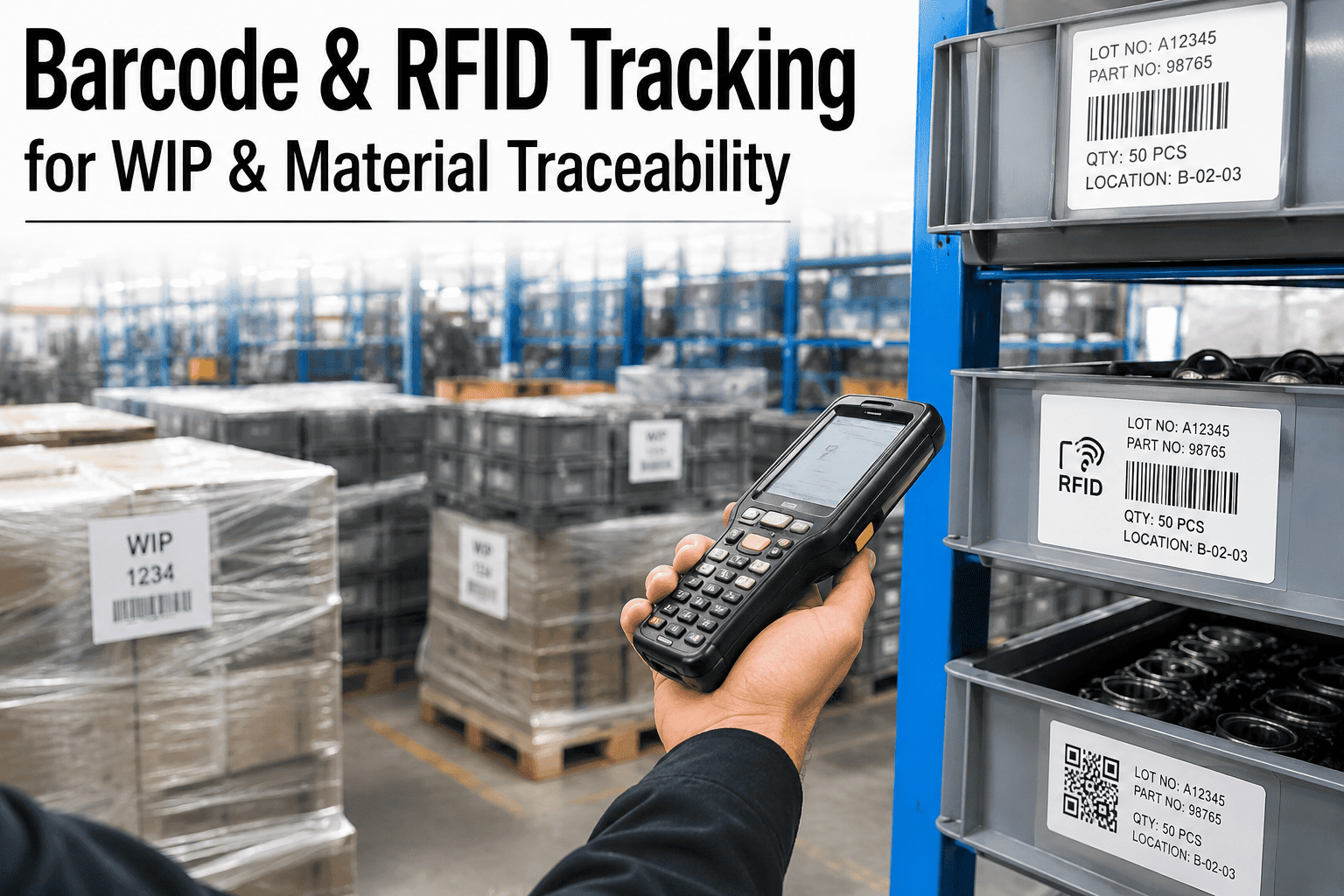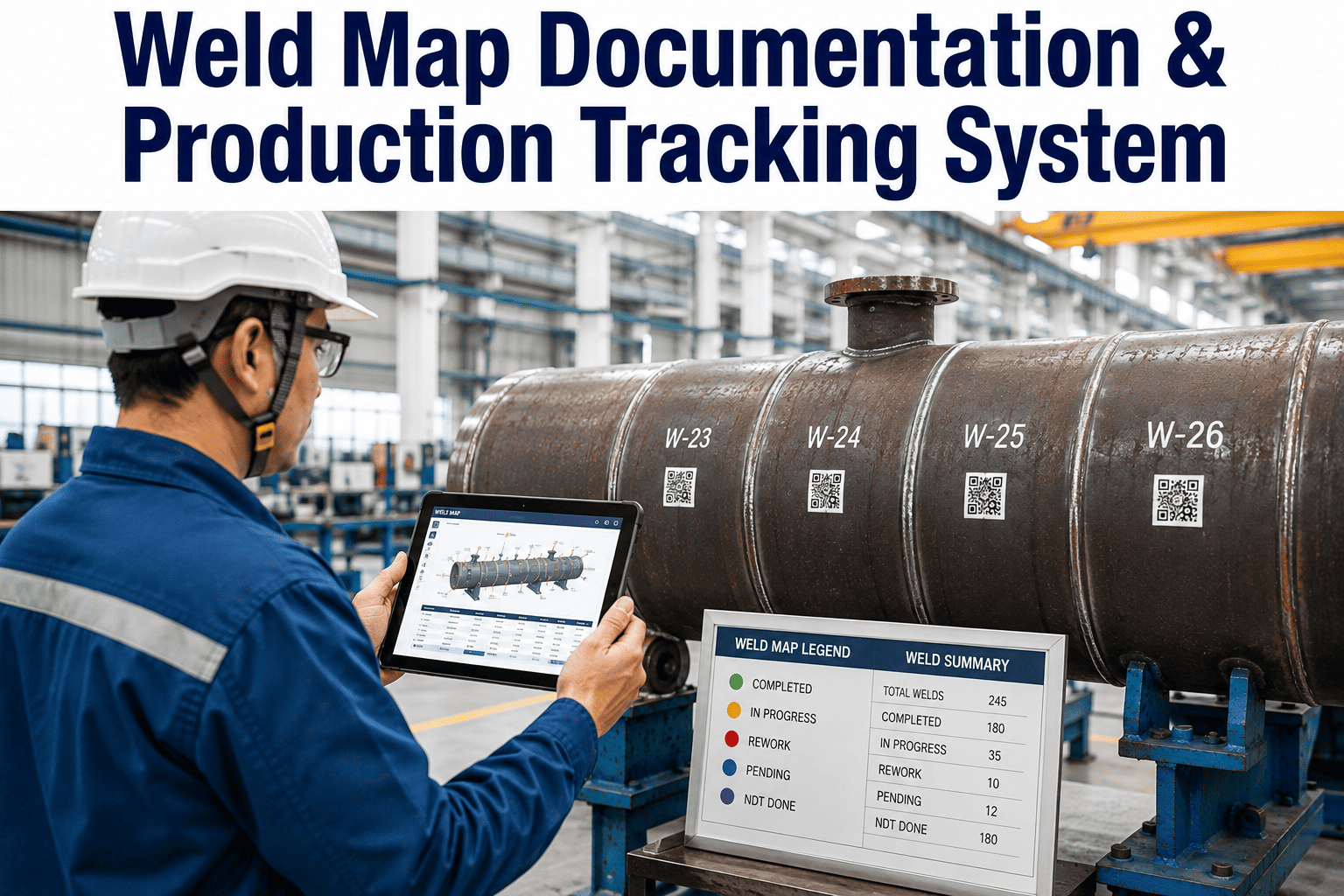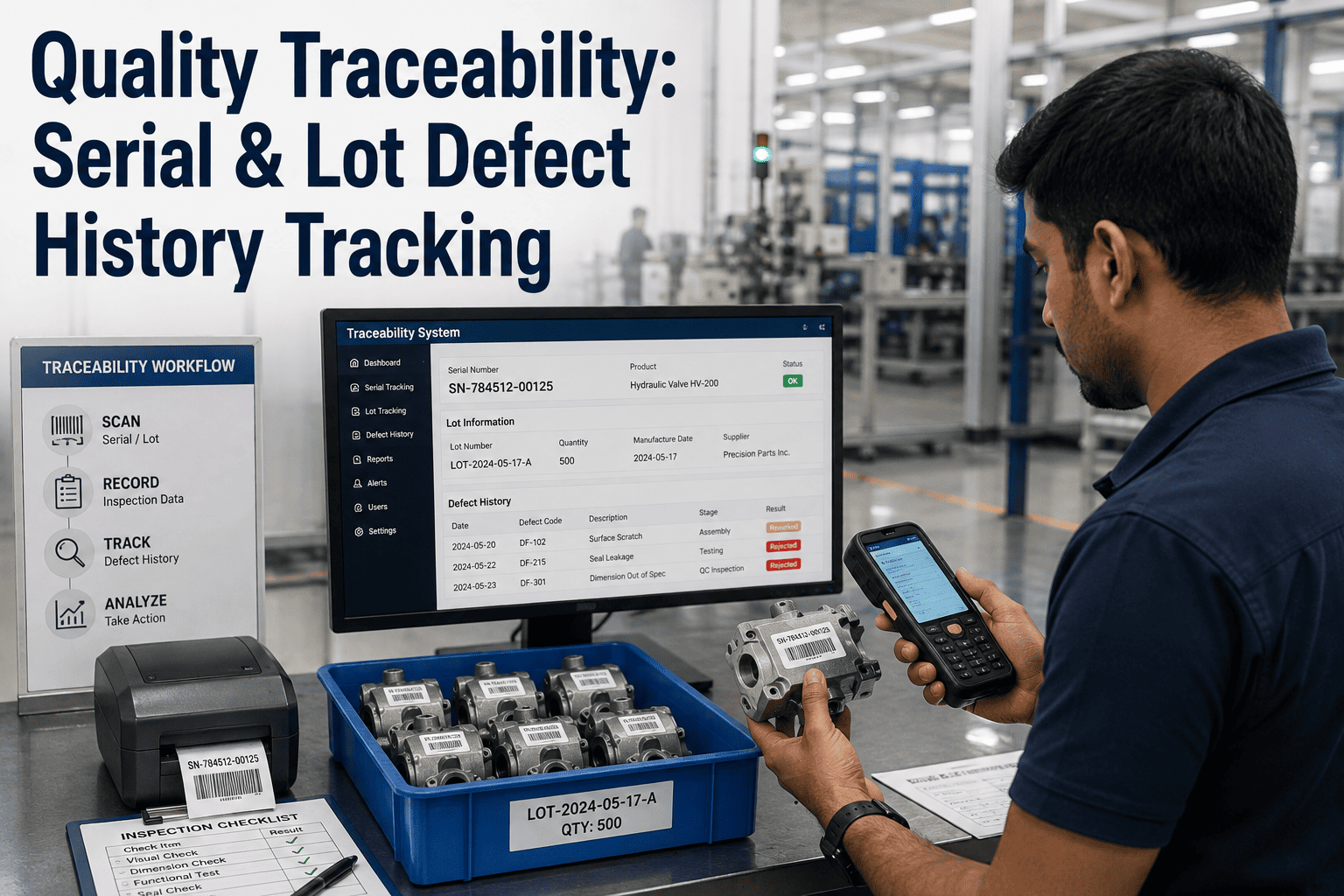
A customer reports a cracked bracket, a field failure lands on your desk, or an auditor asks a simple question: which other units share this problem? If the honest answer takes your quality team two days of digging through spreadsheets, paper travelers, and disconnected ERP screens, you already know the real cost of that gap — not the recall itself, but the size of it. Manufacturers with weak traceability cannot isolate the actual affected population, so they contain everything from the shift, the week, or the entire production run just to be safe. Quality traceability that links every serial and lot number to its complete defect history changes that math entirely. If your team is still reconstructing defect history by hand, book a demo to see how a connected traceability record narrows containment from days to minutes.
Every Part Has a Story. Can You Read It in Minutes?
ifactory links every serial and lot number to its full history — inspection results, process parameters, material genealogy, and operator records — so when a defect surfaces, you know exactly which units are affected and exactly who and what touched them.
What "Defect History" Should Actually Contain
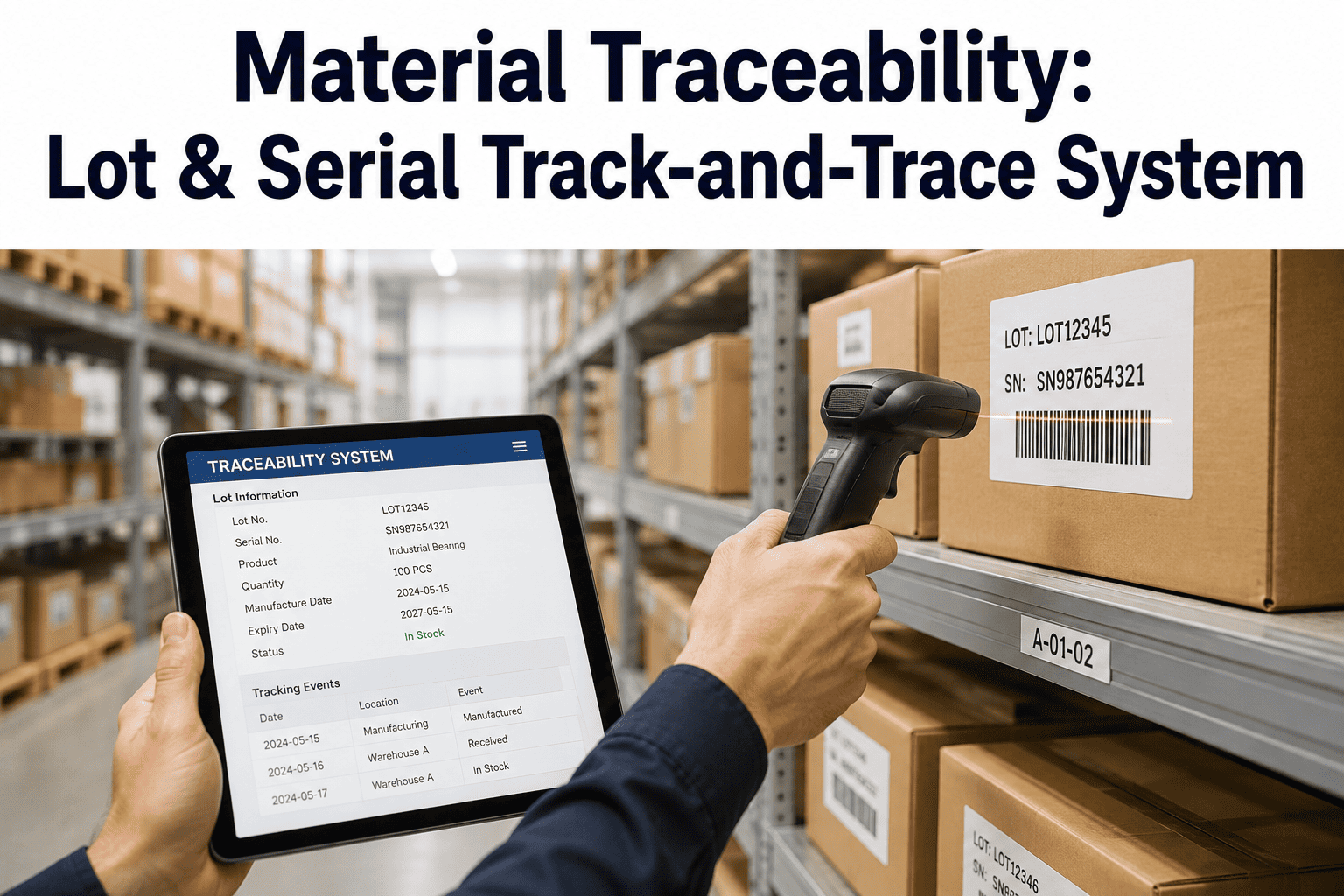
Most shops assign lot numbers and think that counts as traceability. It does not. Assigning an identifier tells you where a batch is right now — real traceability tells you everything that happened to it on the way there, and everywhere it went afterward. A defect history worth trusting during an audit or a recall connects the serial or lot number to the raw material lots consumed, the process parameters recorded at each station, every inspection result along the way, the machine and operator involved, and the final shipment or customer destination. Without that connective tissue, a lot number is just a label — it cannot answer the question that actually matters when something goes wrong.
This is the difference between backward and forward traceability, and a complete system needs both working together. Backward traceability starts from a finished product or a customer complaint and walks upstream to the raw materials, process conditions, and inspection results that produced it. Forward traceability starts from a supplier lot or a process deviation and walks downstream to every product, shipment, and customer it touched. A quality team that can only do one of these is still operating half-blind.
Serial-Level vs. Lot-Level Traceability: Which Does Your Product Need?
Not every product needs the same resolution of tracking, and choosing the wrong level either wastes effort or leaves you exposed. Serial traceability follows one individual unit through its entire production history, while lot traceability follows a defined group of units made under the same conditions. The right choice depends on your industry, your regulatory obligations, and how much a false-positive containment would cost you.
Serial-Level Tracking
Every individual unit carries its own unique identifier and its own complete production record, scanned at every station along the line.
Lot-Level Tracking
Groups of units produced from the same material, machine, and time window share a single lot identifier and history record.
What a Complete Defect History Record Looks Like
| Record Type | What It Captures | Why It Matters in a Recall |
|---|---|---|
| Material Genealogy | Supplier, lot number, receipt date, certification | Isolates whether a raw material lot caused the defect |
| Process Parameters | Machine settings, speeds, temperatures, cycle data | Confirms whether a process deviation is the root cause |
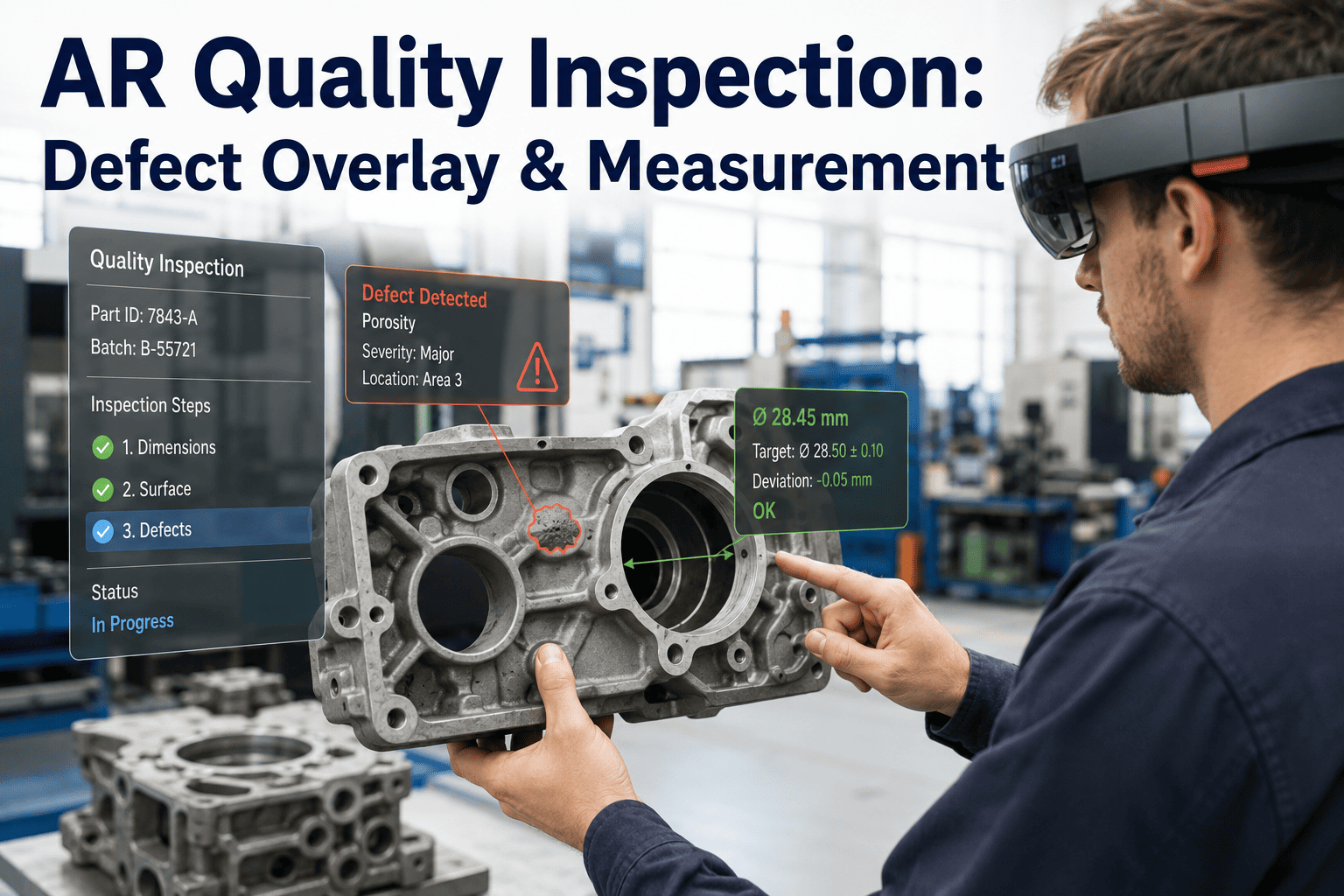
| Inspection Results | Pass/fail data, measurements, operator sign-off | Shows exactly when a defect first appeared in the process |
| Machine and Operator Log | Equipment ID, shift, operator, timestamp | Narrows containment to a specific line, shift, or machine |
| Shipment and Customer Record | Ship date, destination, quantity, order reference | Identifies exactly who received the affected units |
Stop Reconstructing History From Six Different Systems
ifactory automatically links material receipts, process data, inspection results, and shipment records to every serial and lot number as production happens — so the full defect history already exists the moment someone needs to pull it.
From Trigger to Containment: How a Traceable Defect Gets Isolated
The value of a connected traceability record shows up the moment something goes wrong. Whether the trigger is a customer complaint, a failed inspection, or a supplier notification, the path from "we have a problem" to "here is exactly what is affected" should be a lookup, not an investigation.
Defect Trigger Identified
A customer complaint, an out-of-spec inspection reading, or a supplier notice of a defective material lot enters the system as the starting point for the investigation.
Serial or Lot Number Pulled
The affected unit's serial or lot number is identified, whether that comes from a returned product label, a shipment record, or a batch reference from the supplier notice.
Full History Retrieved in One Query
Material genealogy, process parameters, inspection results, and machine and operator records tied to that serial or lot number are pulled together instantly instead of hunted down across separate systems.
Affected Population Bounded
Forward traceability from the same material lot, machine window, or process deviation identifies every other unit that shares the same risk profile, without pulling in unrelated production.
Targeted Containment and Notification
Only the units and customers actually connected to the affected lot or serial range are quarantined or notified, instead of a broad, costly hold across everything produced in the surrounding window.
Building a Traceability Program That Survives a Real Recall
Documentation on paper is not the same as a system that performs under pressure. The checklist below reflects what separates a traceability program that looks complete from one that has actually been tested against a real scenario.
Capture Data at the Point of Work, Not After the Fact
Inspection results and process parameters logged after the shift ends are reconstructed memory, not records. Data captured at the station, in real time, is the only version an auditor or investigation can actually trust.
Never Mix Lots Without Recording the Combination
When remnants from multiple material lots get combined in a bin without a record, traceability breaks silently. Either keep lots physically separated or log the combination as a new composite lot with both parent lots referenced.
Make Traceability Everyone's Job, Not Just Quality's
Traceability data is captured on the floor by operators, in the warehouse by material handlers, and in shipping by logistics staff. A program that only quality department understands has gaps everywhere else touches the product.
Run a Mock Recall on a Regular Cadence
Pick a random lot or serial number and trace it forward to every customer who received it. Time the exercise. If it takes longer than a few hours, the gap is in the system, not the people running the drill.
Frequently Asked Questions on Quality Traceability
What is the difference between traceability and basic lot tracking?
Lot tracking tells you where a batch of material or product is right now — which warehouse, which shelf, which order. Traceability goes further: it reconstructs the complete history of that batch, including which raw materials went into it, what process conditions it experienced, what inspection results it produced, and which customers ultimately received it. A company can have lot numbers on every product and still fail a recall drill if those numbers are not connected to the rest of the production record. Teams that want to see the difference on their own data can book a demo to walk through a live traceability lookup.
Should we use serial-level or lot-level tracking for our products?
The right level depends on your industry and the cost of an imprecise recall. Products with strict safety requirements, such as automotive components or medical devices, generally warrant serial-level tracking because it narrows containment to the exact unit involved. Products manufactured in large batches under uniform conditions, such as food or bulk chemicals, are typically tracked at the lot level, since serializing every individual unit would add cost without a proportional benefit. Many manufacturers use both, applying serial tracking only to the specific components where precision genuinely matters.
How do process parameters get linked to a specific serial or lot number?
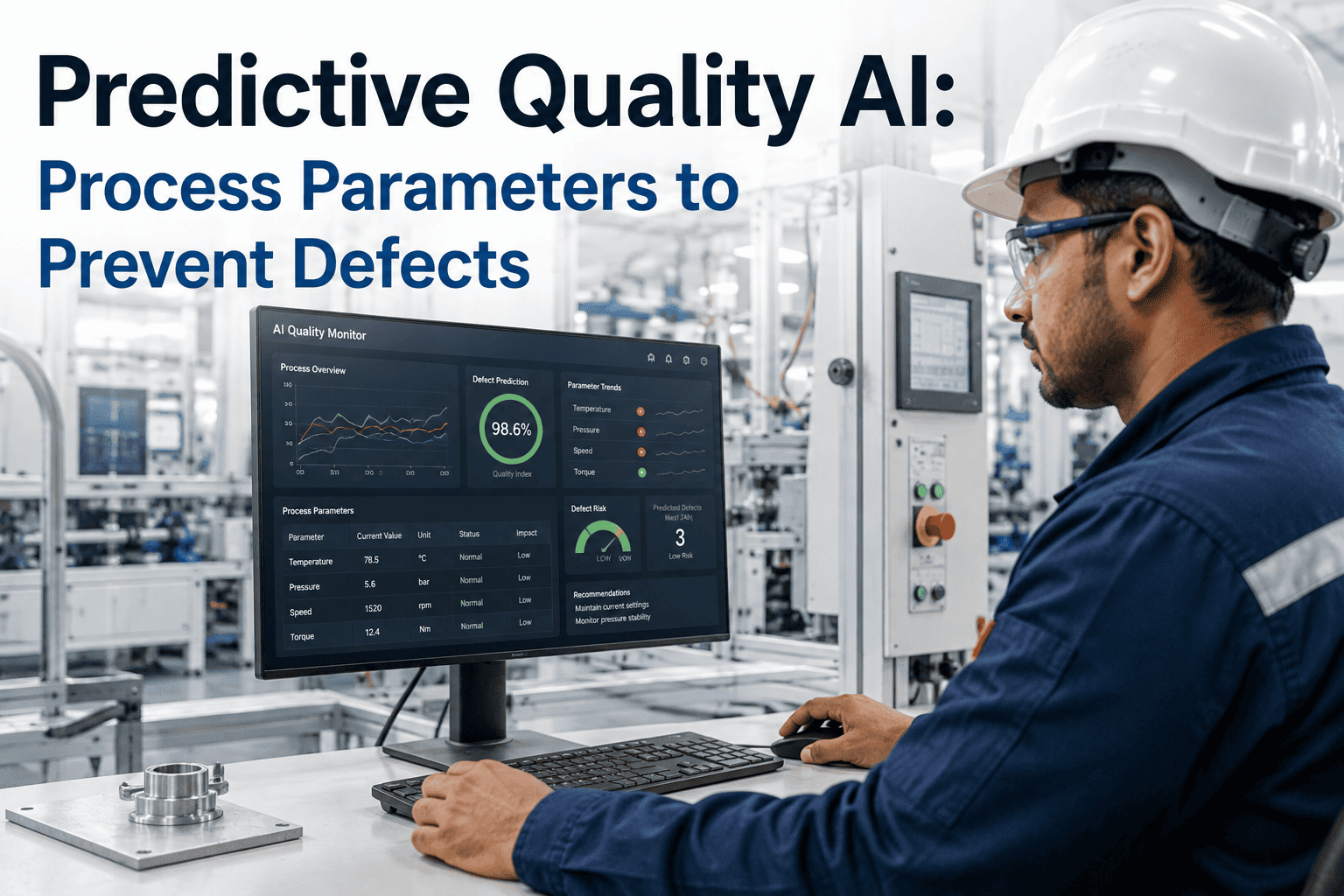
In a connected system, machine controllers, sensors, and inspection stations record their readings against the active work order or serial number automatically as the part moves through production, rather than relying on an operator to manually transcribe values onto a paper traveler. This real-time linkage is what makes it possible to answer a root-cause question in minutes: the process data was captured and connected the moment it was generated, not reconstructed afterward from memory or disconnected log files.
What happens if traceability data is incomplete for older production runs?
Incomplete historical data does not have to block a modern traceability program going forward, but it does mean older runs may need to be contained more broadly if a defect is later traced back to that period, since the precision to narrow the scope simply was not captured at the time. This is one of the strongest arguments for implementing connected, real-time data capture now — every day without it is another batch of production where a future investigation will be forced to guess rather than know.
How often should we test our traceability system with a mock recall?
A quarterly mock recall is a common benchmark among manufacturers with mature quality systems. The exercise should pick a real lot or serial number at random, trace it forward to every customer or downstream location that received it, and time how long the process takes from start to finish. If the answer takes days instead of hours, the gap needs to be closed before a real recall forces the issue under much worse conditions. Teams that want help structuring a mock recall against a connected traceability system can contact support for guidance.
Turn Every Serial and Lot Number Into a Complete Story
ifactory connects material genealogy, process parameters, inspection results, and shipment records to every unit you produce, so the next time a defect surfaces, containment is a lookup — not an investigation.