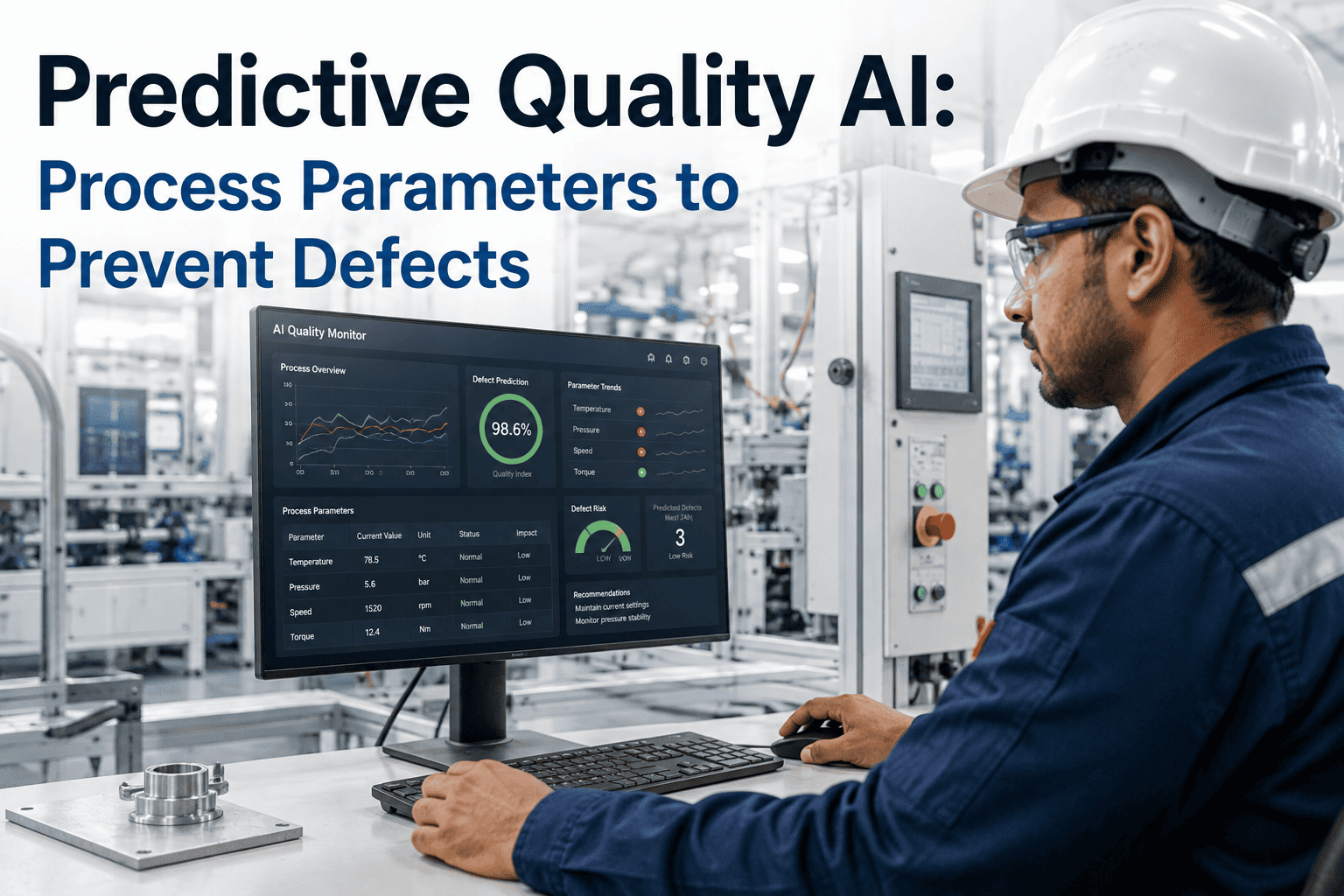
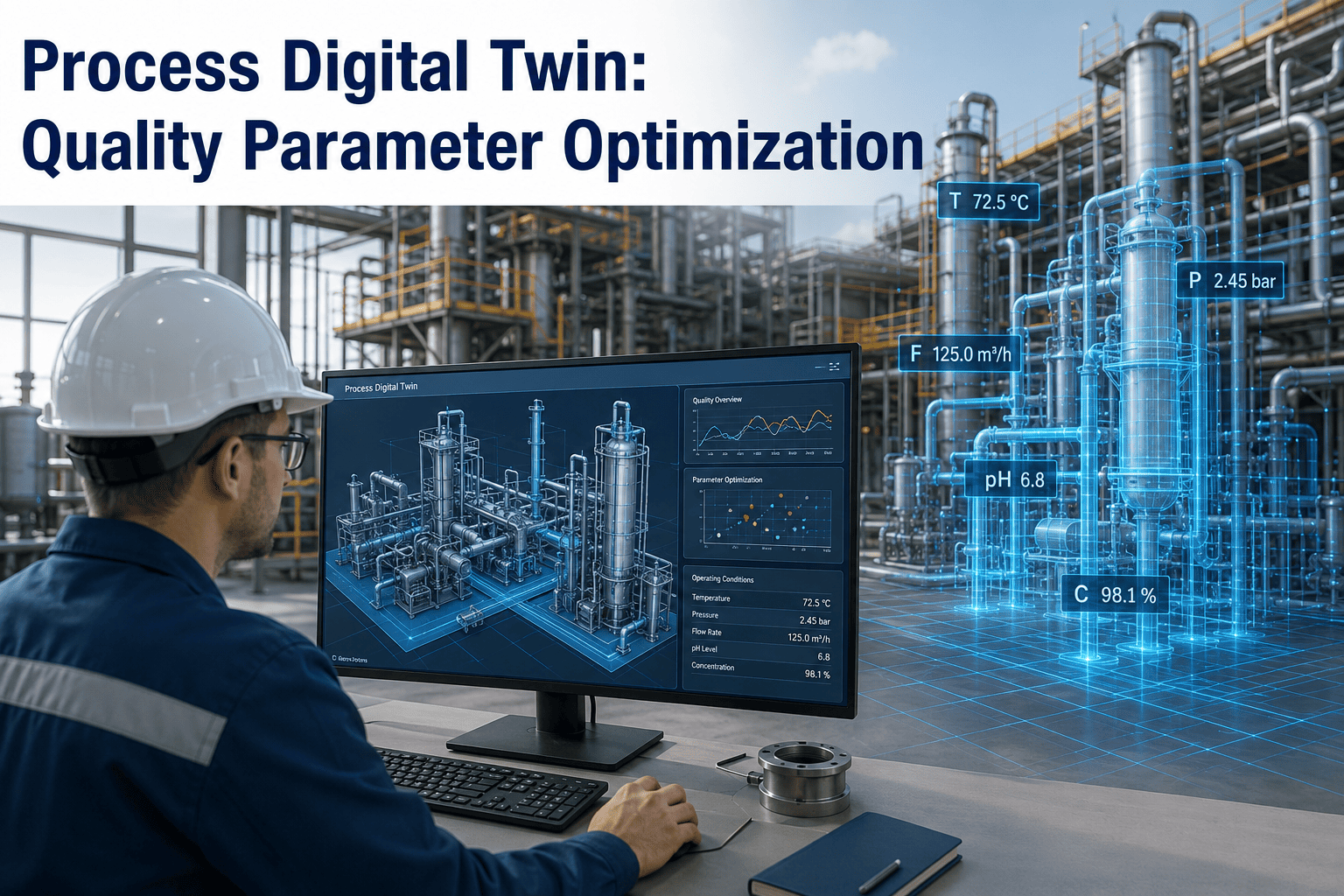
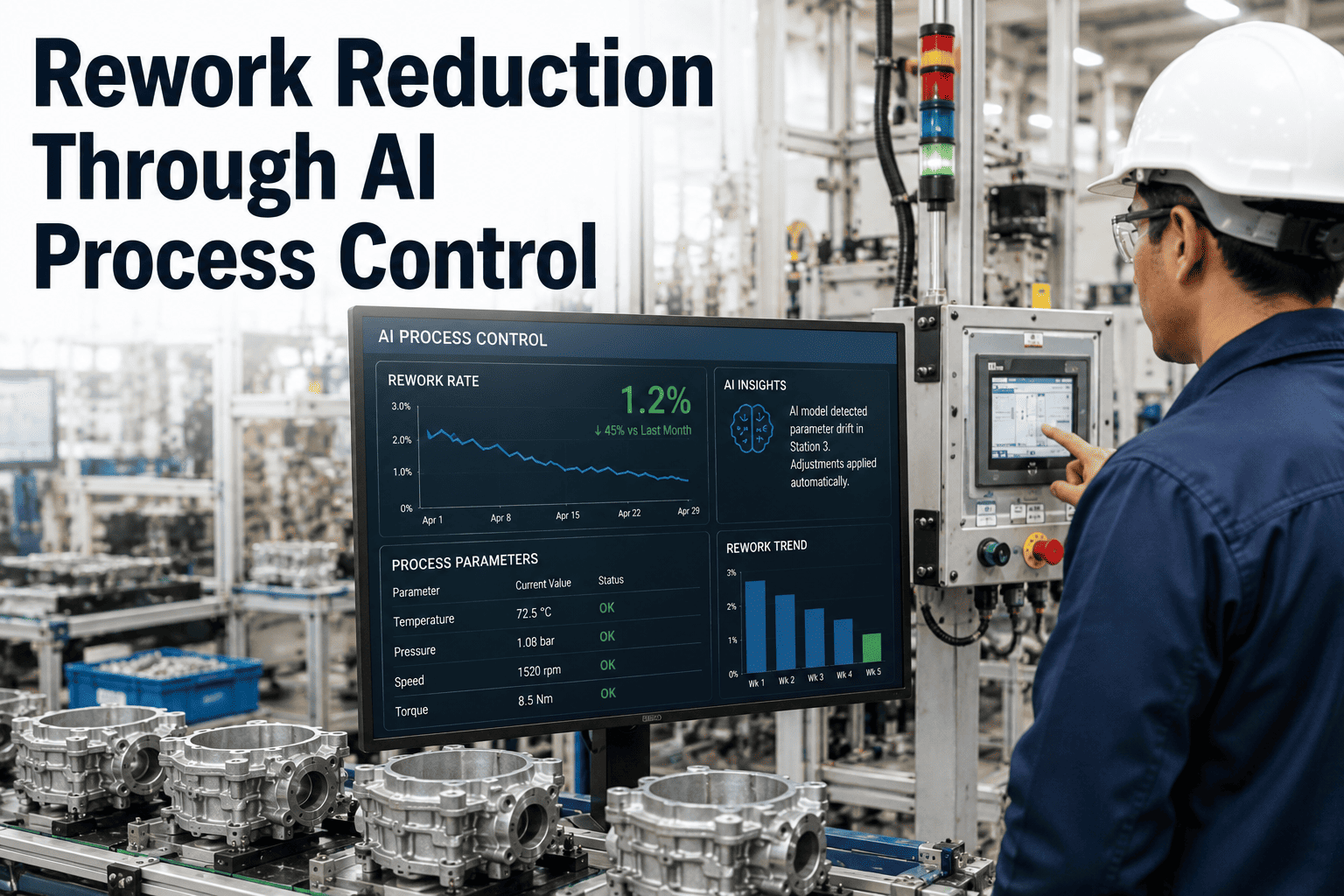
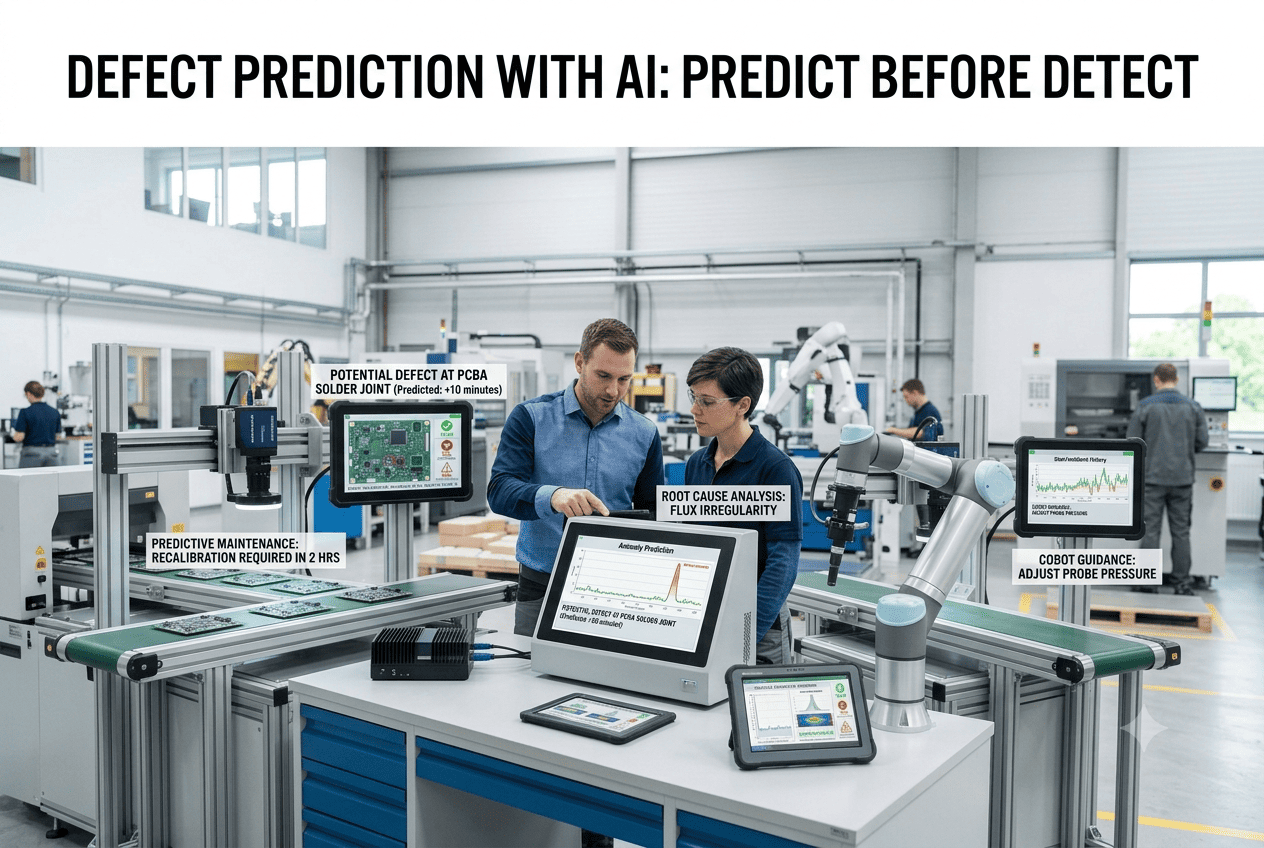
By the time a statistical process control chart flags a parameter that has drifted out of range, the equipment causing that drift has usually been degrading for hours, sometimes days, and every part made during that window is already a quality risk. This is not a flaw in SPC itself, it is a limit of any system built to react to a threshold after it has already been crossed. Predictive quality AI works differently: instead of waiting for a control limit breach, it correlates live process parameters against the patterns that historically preceded a defect, catching the drift while it is still forming rather than after it has already produced scrap. That shift from reacting to a defect to preventing one is what iFactory's quality intelligence platform is built around, turning process data into a warning instead of a postmortem.
REAL-TIME QUALITY MONITORING · PREDICTIVE QUALITY AI · 2026
Predictive Quality AI: Using Process Parameters to Stop Defects Before They Happen
Temperature, pressure, vibration, and tool wear all move before a defective part ever comes off the line. See how correlation, drift detection, and automatic parameter correction turn that early movement into prevention instead of a scrap report.
The Shift
Reacting to Defects vs. Preventing Them: Two Very Different Timelines
Traditional quality control and predictive quality AI are not just different tools, they operate on entirely different timelines relative to the moment a defect actually forms. Seeing both side by side makes clear why "predictive" is not just a marketing word.
The Old Way: React After the Fact
Parameter drifts slowly
Drift exceeds control limit
SPC chart flags the breach
Defective parts already made
The Predictive Way: Prevent Before It Forms
Parameter starts to shift
AI correlates against defect patterns
Drift flagged before threshold
Parameters corrected, zero scrap
How It Works
The Closed Loop Behind Predictive Quality AI
Predictive quality AI is not a single alert system, it is a continuous loop that runs for as long as the line is producing. Each stage feeds the next, and the correction step feeds straight back into live process data, which is what makes the loop self-correcting rather than a one-time fix.
1
Collect Live Process Data
Temperature, pressure, vibration, speed, and tool wear are sampled at millisecond intervals rather than the five-minute checks of legacy SPC.
→
2
Correlate Against Defect History
The model compares current parameter behavior against the exact combinations that preceded past defects, not just isolated thresholds.
→
3
Detect Drift Before the Limit
Subtle, multi-variable shifts that traditional control charts miss are flagged days before they would cross a fixed control limit.
→
4
Auto-Correct the Process
On closed-loop lines, corrected setpoints for temperature, pressure, or tool offset are sent straight back to the controller, closing the loop.
Stop Finding Out About Defects After the Part Is Already Made
iFactory correlates your live process parameters against historical defect patterns and flags drift before it turns into scrap, rework, or a customer return.
Side by Side
Traditional SPC vs. Predictive Quality AI
Quality Control Approach Comparison — 2026
The Inputs
What Process Parameters Actually Feed the Model
A predictive quality model is only as good as the process data flowing into it. These are the parameter categories that carry the strongest correlation to downstream defects across most discrete and continuous manufacturing processes.
Temperature
Barrel, mold, or furnace temperature drift is one of the earliest indicators of a coming defect in molding, casting, and welding processes.
Pressure
Injection, hydraulic, or pneumatic pressure variation directly correlates with dimensional and fill defects long before they are visible.
Vibration
Abnormal vibration signatures on rotating equipment often precede the exact dimensional drift that later shows up as a quality escape.
Speed and Feed Rate
Line speed and feed rate changes shift cycle timing just enough to affect fill, cure, or weld quality without tripping a single fixed limit.
Tool Wear
Gradual tool degradation changes surface finish and dimensional accuracy slowly enough that manual sampling regularly misses it.
Material Lot and Humidity
Incoming material variation and ambient humidity are frequently the hidden variable behind defects that appear to come from the machine itself.
Getting Started
How to Roll Out Predictive Quality Without Disrupting Production
1
Start With Your Highest-Scrap Line
Pick the process with the clearest, most costly defect pattern first, so the correlation model has strong historical signal to learn from and the ROI case is obvious early.
2
Connect Existing Sensors First
Most plants already have the temperature, pressure, and speed sensors needed to start; the priority is streaming that data continuously rather than buying new hardware.
3
Link Every Defect Back to Its Process Window
Tying each defective unit to the exact timestamp, machine cycle, operator, and material lot that produced it is what turns raw process data into a model that actually learns.
4
Start With Alerts, Move Toward Auto-Correction
Run the model in advisory mode first so operators trust its recommendations, then graduate to closed-loop automatic correction once accuracy is proven on that line.
5
Expand Line by Line
Reuse the same correlation and labeling pipeline on each additional line, so the model gets stronger with every new process it covers instead of restarting from scratch.
Why It's Worth Doing
What Predictive Quality Actually Changes on the Balance Sheet
5–20%
of annual revenue is what poor quality costs manufacturers who rely on end-of-line inspection alone
30–50%
earlier fault and drift detection compared to fixed-threshold monitoring in documented deployments
8–12%
reduction in quality-related operating costs reported after predictive quality deployment
3.4x
higher likelihood of a major recall event for manufacturers relying on reactive, end-of-line inspection alone
Frequently Asked Questions
Predictive Quality AI — Common Questions
Does predictive quality AI replace statistical process control, or work alongside it?
Predictive quality AI works alongside SPC rather than replacing it, since SPC still provides the real-time, auditable control charts that compliance and quality teams require. The AI layer analyzes the same data streams to catch subtler, multi-variable drift patterns that a single fixed control limit was never designed to detect.
How much historical defect data do we need before the model becomes useful?
The model becomes directionally useful once a few months of process data can be reliably linked back to specific defective units, though accuracy improves steadily as more defect-to-process correlations accumulate. Lines with an existing MES or historian already collecting this data can often start seeing early alerts within weeks.
Can the system automatically correct process parameters, or only send alerts?
Both are possible, and most plants start in advisory mode where the system recommends a correction for an operator to approve, then move to closed-loop automatic correction once the model's accuracy has been validated on that specific line and parameter set.
Which manufacturing processes benefit most from predictive quality AI?
High-volume, continuous, or semi-continuous processes such as injection molding, stamping, extrusion, and welding see the strongest results, since parameter drift is the dominant cause of defects in these processes rather than one-off human error. Discrete assembly lines benefit too, particularly where torque, alignment, or cure time are tightly controlled.
How does iFactory help us set up predictive quality monitoring on our lines?
iFactory connects to your existing sensors, historian, and MES to build the correlation model on your own process and defect data, and
iFactory's support team works with your quality and process engineers to prioritize which line and parameters to start with for the fastest measurable impact.
REAL-TIME QUALITY MONITORING · PREDICTIVE QUALITY AI · 2026
Catch the Drift Before It Becomes a Defect
iFactory turns your process parameters into an early warning system, correcting quality issues before a single defective unit is made.