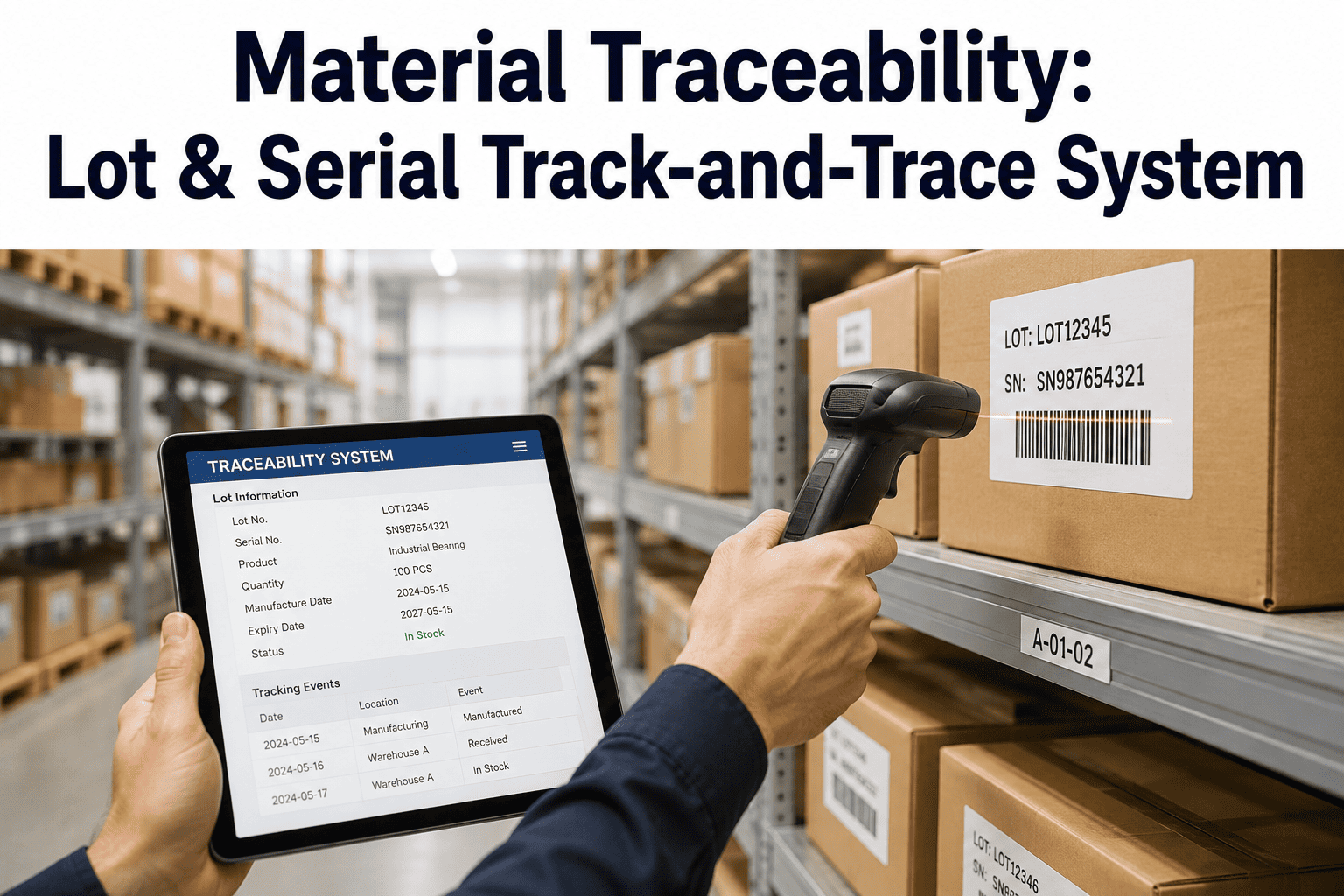
A recall is the moment every gap in a traceability system becomes visible at once, because the question a regulator or a customer asks is never vague — it is "which specific lots, which specific customers, and how fast can you tell us." Manufacturers without lot or serial-level tracking answer that question by recalling everything even remotely connected to the suspect material, which is slower, far more expensive, and damages trust with customers who never actually received an affected unit. A properly built track-and-trace system answers the same question in hours instead of days, and narrows the recall to exactly the units that matter. Our traceability implementation team can walk through what a lot and serial tracking rollout would look like across your specific production lines.
Track Every Lot and Serial From Receiving to Shipping
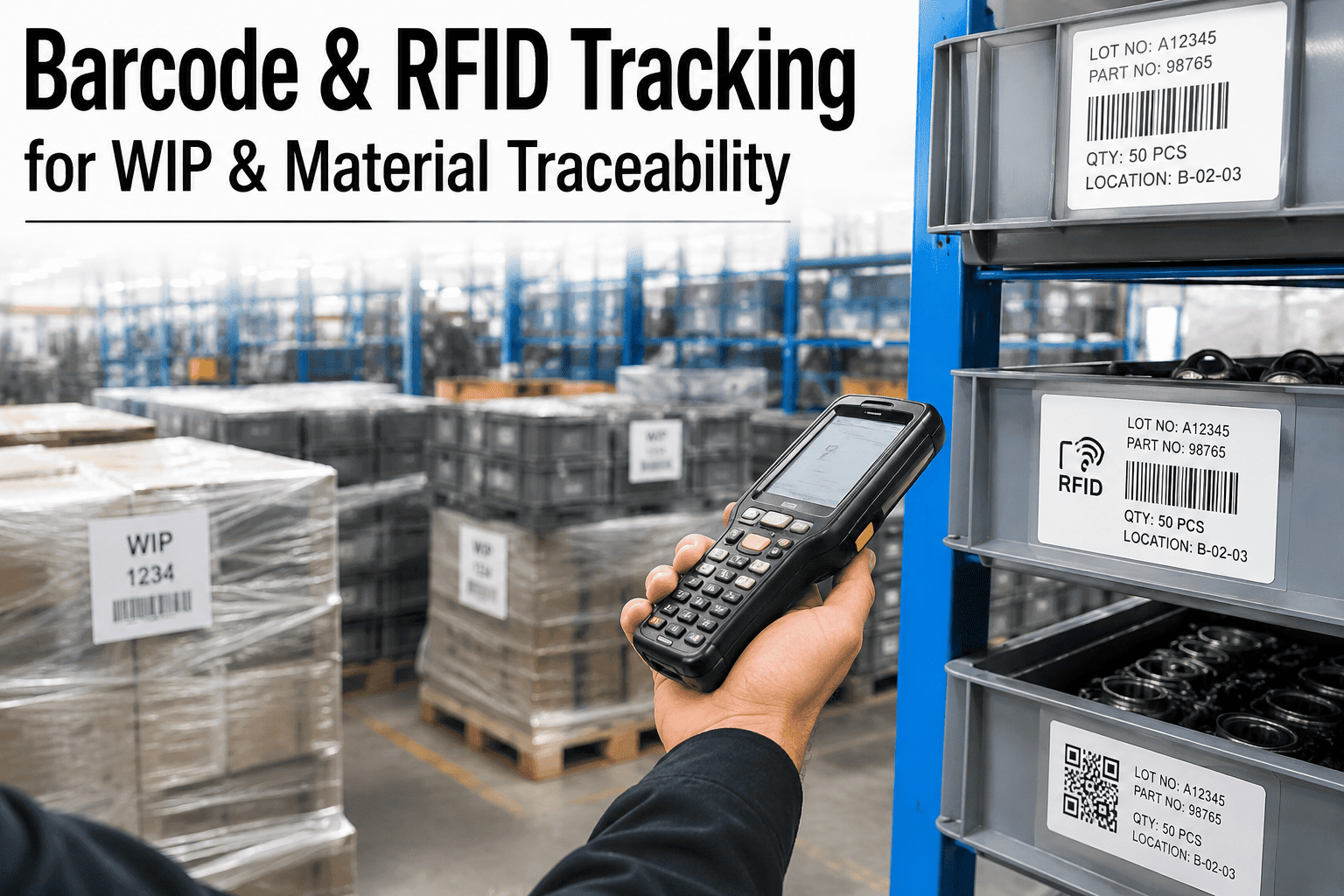
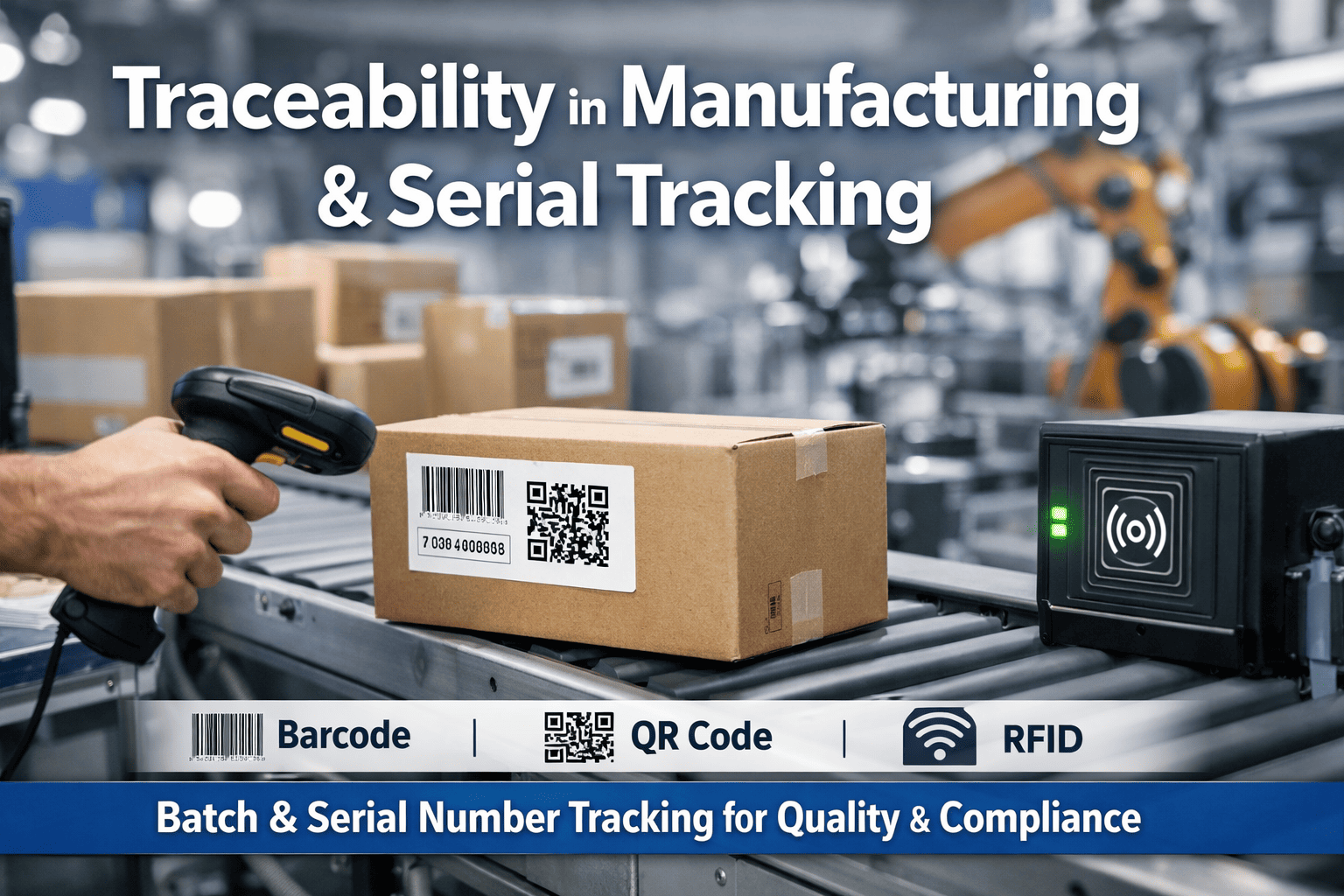
Barcode and RFID scanning at every handoff point, bidirectional trace queries that resolve in minutes, and a recall process built to isolate exactly the affected units instead of pulling entire product lines.
Why "We Know Roughly Where It Went" Is Not Traceability
Most manufacturers already have some record of where materials come from and where finished goods go, usually scattered across a purchasing system, a production log, and a shipping spreadsheet. The problem is not the absence of data, it is the absence of a connected chain linking a specific incoming material lot to the specific production run it fed into, and from that run to the specific finished units and the specific customers who received them. Without that chain, a quality issue found in one raw material lot forces a company to treat every product made anywhere near that time window as potentially affected, because there is no way to prove otherwise.
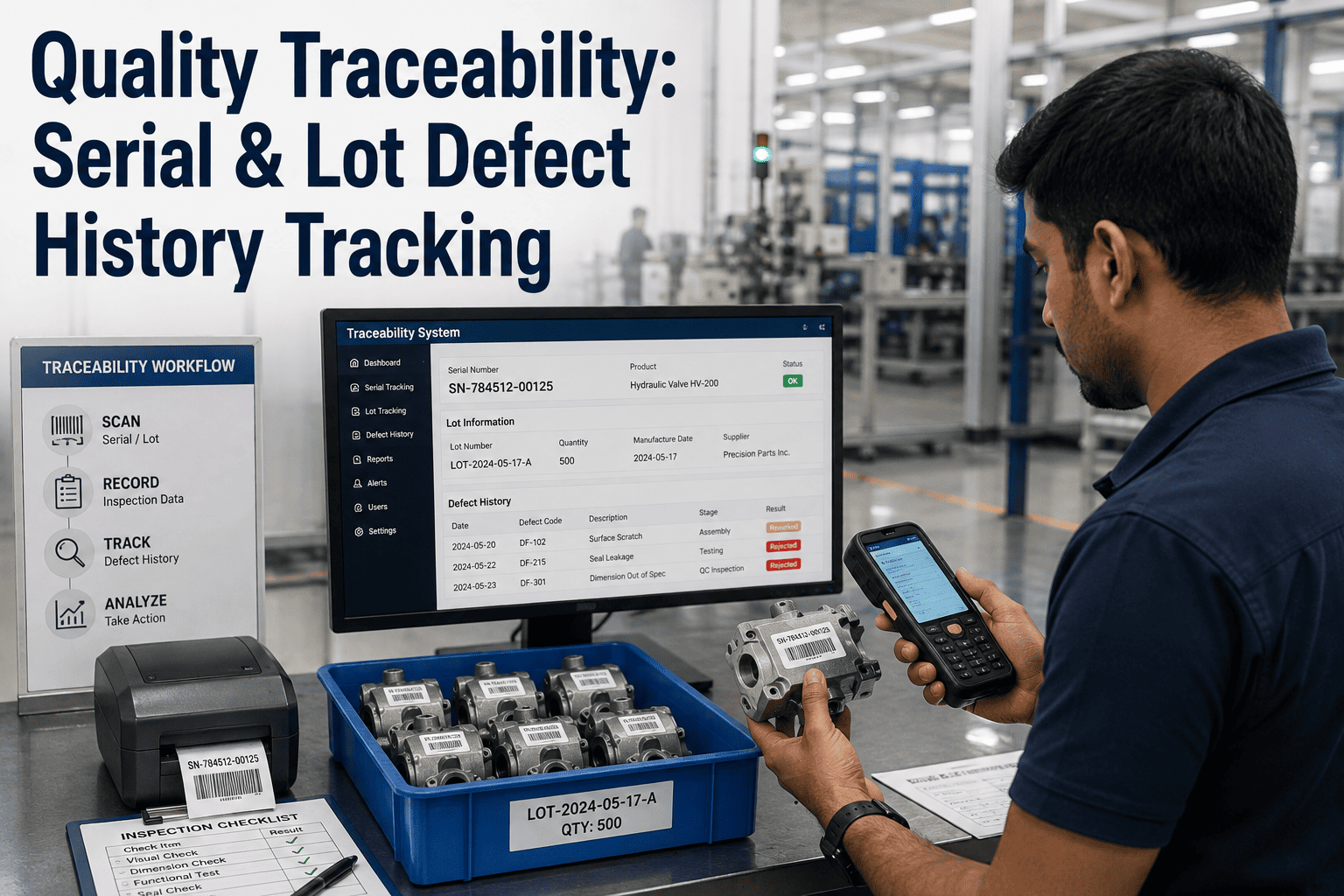
Genuine material traceability closes that gap by capturing a scan or a data event at every point where material changes hands or changes form — receiving inspection, staging, each production step, packaging, and shipping — so that a lot or serial number can be traced forward to every product it touched and backward to every input that went into a specific finished unit.
Lot Tracking Versus Serial Tracking: Choosing the Right Granularity
Not every product needs individual serialization, and applying it everywhere adds scanning overhead without a corresponding safety or quality benefit. The right granularity depends on whether units coming off the same production run are functionally identical or individually distinct in ways that matter for quality and compliance.
Many manufacturers end up running both approaches side by side rather than picking one globally, since a single facility often produces both high-volume commodity items and lower-volume, higher-complexity assemblies within the same building. Applying serialization uniformly across a product mix that does not need it tends to slow down high-speed lines for no real safety benefit, while applying only lot tracking to complex, safety-critical assemblies leaves a gap in exactly the products where an investigation is most likely to need unit-specific history. The practical approach is to make the granularity decision at the product family level during the traceability system design phase, rather than defaulting to whichever method the existing labeling equipment happens to support.
Barcode Versus RFID: Matching the Scanning Method to the Environment
The scanning technology chosen at each handoff point has a real effect on data completeness, since a technology that is inconvenient for operators to use in a given environment tends to get skipped under production pressure, which quietly breaks the chain it was meant to protect.
| Technology | Best Fit | Key Tradeoff |
|---|---|---|
| 1D/2D Barcode | Fixed scanning stations, packaging lines, low-cost high-volume labeling | Requires direct line of sight and a deliberate scan action per unit or lot |
| RFID Tags | Bulk read at dock doors, high-value or reusable containers, fast-moving lines | Higher tag cost, needs careful antenna placement to avoid missed or duplicate reads |
| Mobile Scanning | Variable or mobile production steps, receiving docks, shop floor spot checks | Depends on consistent operator discipline at each scan point |
| Vision-Based Capture | High-speed lines where manual scanning would slow throughput | Requires stable lighting and label placement, higher upfront setup cost |
The Five Handoff Points Where Traceability Chains Actually Break
A traceability system rarely fails because nobody thought about it. It fails at a small number of predictable handoff points where data capture is inconvenient, easy to skip under pressure, or not built into the process at all.
The common thread across all five points is that traceability data capture works best when it happens as a natural byproduct of a step operators already have to perform, rather than as an extra task competing with production pace. A scan built into the same motion as placing material into a staging bin gets done consistently; a separate logging step that requires stopping and opening a different screen tends to get skipped the first time a shift is running behind schedule. Designing the data capture method around the existing physical workflow, rather than around whatever reporting format is easiest to build, is usually the difference between a traceability system that holds up under real production pressure and one that only works cleanly during the initial pilot.
Running a Mock Recall: The Test That Actually Validates the System
A traceability system that has never been tested under recall-like conditions is an assumption, not a capability. The most reliable way to validate it is to run a mock recall on a regular schedule, picking a real lot at random and timing exactly how long it takes to trace it fully in both directions.
If a mock recall exercise takes noticeably longer than four hours to complete, that is a specific, actionable signal pointing to exactly where the chain is weak, whether that is a manual reconciliation step between two systems, a handoff point where data capture is inconsistent, or a report that has to be built by hand instead of generated on demand. Running this test quarterly, rather than treating traceability readiness as a one-time implementation milestone, keeps the system honest as production lines, suppliers, and product mixes change over time.
What a Connected Traceability System Actually Delivers
Beyond the direct recall and compliance benefits, a mature traceability system tends to surface operational improvements that were never the original goal of the project. Genealogy data collected for trace purposes often reveals which supplier lots correlate with higher defect rates, which production shifts or equipment show more variability in output quality, and where inventory is quietly aging past its usable window because nobody had visibility into lot-level shelf life. Facilities that treat traceability purely as a compliance obligation tend to miss this secondary value entirely, while those that route the same data into quality and inventory planning discussions get a return on the investment well beyond the recall scenario it was originally built to handle.
It is also worth planning for how traceability data ages over time, since regulatory retention requirements and practical investigation needs do not always align with default system settings. Many quality teams need to retrieve genealogy records for products manufactured several years earlier, whether in response to a long-tail warranty claim, a delayed regulatory inquiry, or a customer audit covering historical shipments, and a system that only retains detailed scan-level data for a short rolling window will not be able to answer that kind of question when it eventually comes. Deciding retention periods deliberately, based on the specific regulatory and product-liability exposure of each product line rather than a generic system default, avoids the uncomfortable situation of discovering a data gap only when a historical trace is actually needed.
Frequently Asked Questions
Build a Traceability Chain That Holds Up Under a Real Recall
Share your current production flow and we will show you where your traceability chain is strong, where it breaks, and what a connected lot and serial tracking system would look like across receiving, production, and shipping.