Somewhere on your shop floor right now, a machine is sitting idle while someone walks to a tool crib to find a die that should have been staged an hour ago. Changeover time is the most normalized form of waste in manufacturing — everyone budgets for it, plans around it, and rarely questions it, even though it is often the single biggest lever for unlocking capacity without buying new equipment. Shigeo Shingo's SMED methodology, built from decades of shop-floor observation at Toyota and beyond, offers a structured way to cut that time by half or more using the equipment you already own. Here is how the method actually works, and how ifactory helps teams track and sustain those gains once the first changeover audit is done.
Find Out How Much Changeover Time You're Losing
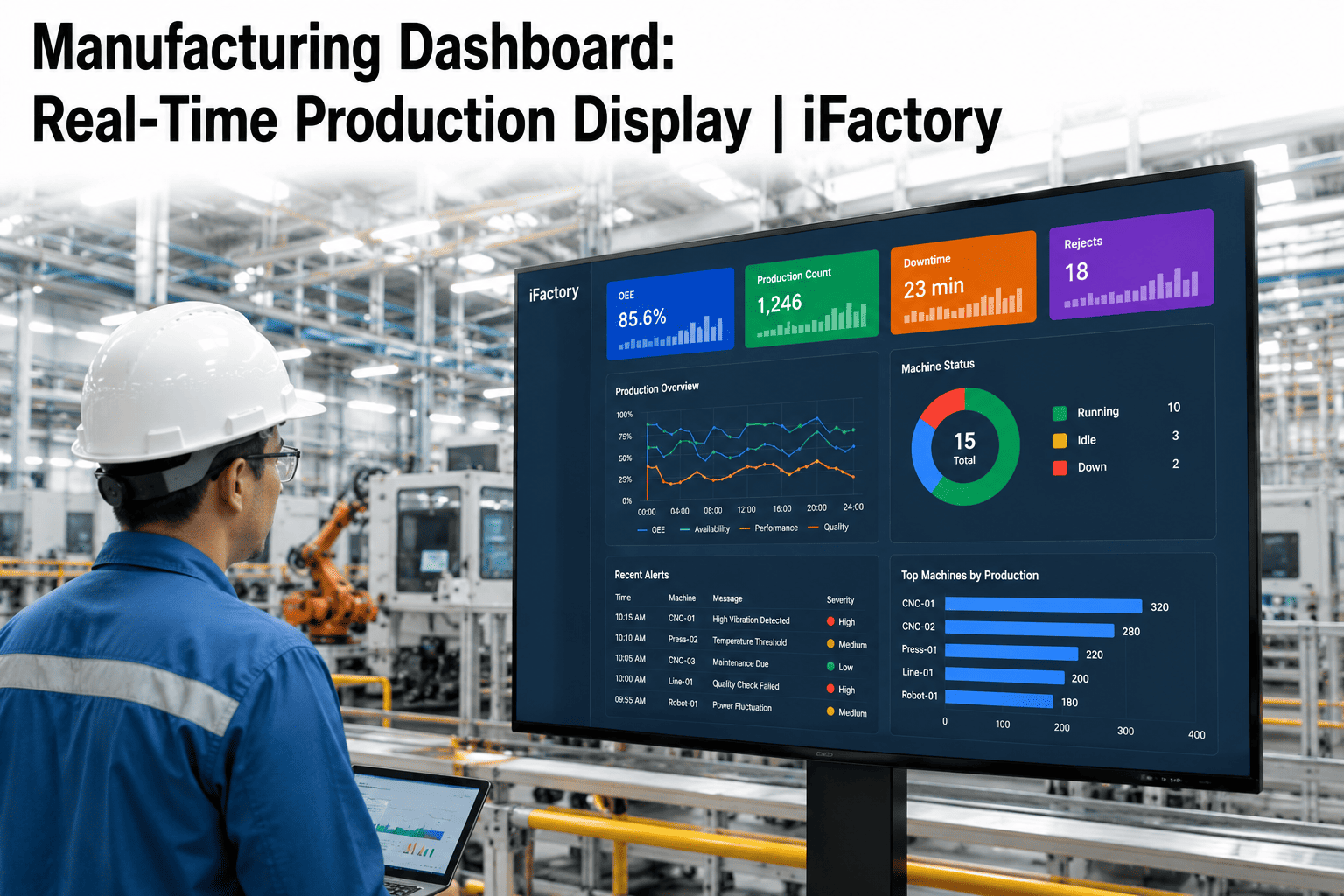
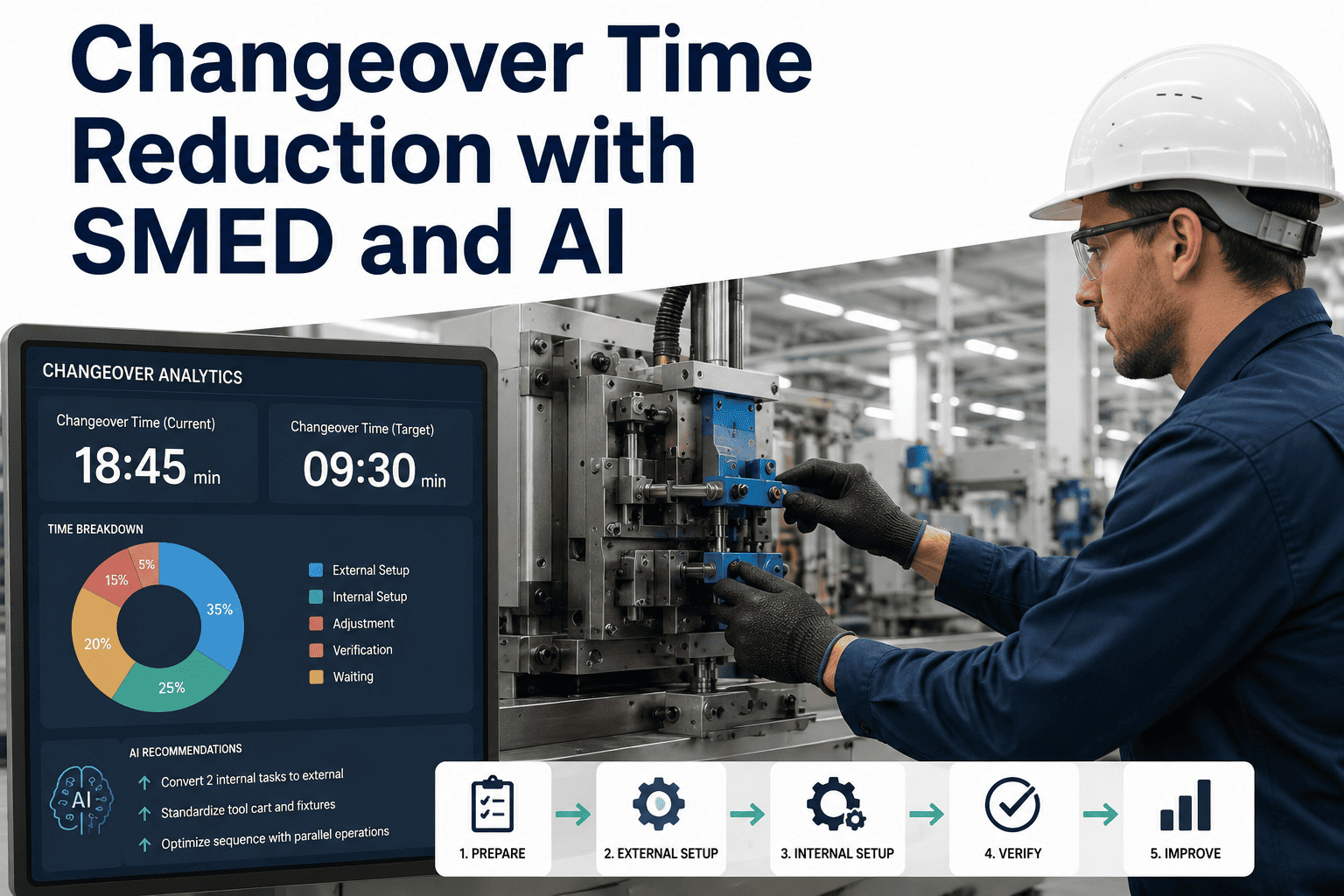
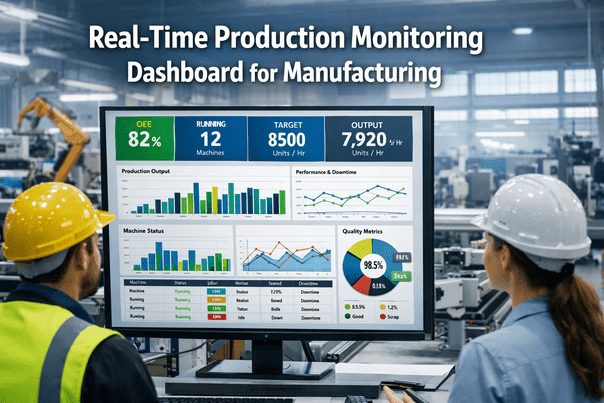
ifactory captures every changeover in real time — internal vs. external steps, actual vs. target duration, and where the next 20% of savings is hiding.
Why Changeover Time Is Worth Fixing Before Anything Else
High-mix, low-volume production is not going away. Customers want smaller batches, faster turnaround, and more product variants than they did a decade ago, and every one of those preferences adds another changeover to the schedule. When a die, mold, or tooling swap eats forty-five minutes to an hour, the natural response is to run bigger batches to spread that cost across more units — which is exactly the wrong direction if your customers are asking for flexibility. Long changeovers do not just cost the minutes on the clock; they quietly reshape your entire production strategy around avoiding them.
The uncomfortable part is that most of a typical changeover's duration is not technical difficulty — it is disorganization. Operators searching for the right fixture, waiting on a crane, or discovering a missing gasket after the machine has already been shut down are common, and none of it requires new capital to fix. That is the entire premise behind SMED: most changeover time is recoverable through sequencing and preparation, not new equipment.
There is also a scheduling cost that rarely appears on a changeover report but shapes almost every other decision on the floor. When a setup takes an hour, planners naturally protect it by batching more units per run, which pushes lot sizes upward and ties up working capital in finished goods that are not yet sold. It also means that when a rush order comes in for a product that is not currently running, the honest answer is often "not until the next scheduled changeover," even if the machine has open capacity. Shrinking changeover time does not just save minutes — it gives scheduling teams options they did not have before.
What SMED Actually Is
SMED stands for Single-Minute Exchange of Die, a methodology developed by Japanese industrial engineer Shigeo Shingo after years of studying press and stamping operations. The name is aspirational rather than literal — the goal is not that every changeover finishes in sixty seconds, but that setup time is driven down into single-digit minutes wherever realistically achievable. The method's core insight is deceptively simple: every changeover activity is either internal, meaning it can only happen while the machine is stopped, or external, meaning it could happen while the machine is still running the previous job. Most plants have never formally separated the two, so a huge share of "downtime" activity turns out to be work that never needed the machine to be off in the first place.
Shingo's original research also introduced eight underlying techniques that support the four core stages — separating setup functions, converting internal to external, standardizing function rather than shape, using functional clamps instead of bolts, adopting parallel operations, eliminating adjustments, and mechanizing where it genuinely helps. Modern SMED programs rarely apply all eight in sequence; instead, they treat them as a toolbox to pull from once the initial internal/external split reveals where the real friction is hiding on a specific machine.
The Four Stages of SMED, Visualized
SMED is applied as a sequence, not a checklist you can jump around in. Each stage builds directly on the findings of the one before it, which is why skipping straight to "buy quick-release fixtures" without first mapping the process usually disappoints. The flow below shows how a changeover moves through the method, stage by stage.
Observe and Document
Time and video the current changeover exactly as it happens today, without changing anything yet. Break it into individual elements — every walk, wait, search, and adjustment. Most teams are surprised by how much of the recorded time has nothing to do with the actual tool exchange.
Separate Internal from External
Sort every documented element into two buckets: internal (machine must be stopped) and external (can happen before or after, while the machine keeps running). This single step alone typically cuts recorded downtime substantially, simply by moving preparation work off the clock.
Convert Internal to External
Challenge every remaining internal step and ask whether it truly requires the machine to be stopped. Pre-heating a die, pre-staging fixtures, pre-assembling tool kits, and running quality checks in advance are classic conversions that shift work into the external bucket.
Streamline What Remains
Attack whatever is still internal with quick-fastening hardware, standardized fixture heights, one-touch clamps, and elimination of adjustment altogether wherever possible. This is where changeovers move from "faster" to genuinely single-digit-minute territory.
Where SMED Rollouts Typically Go Wrong
SMED is a simple methodology on paper, which is exactly why teams underestimate how easy it is to execute poorly. Consultants and lean literature make the four stages sound like a checklist, but each one requires genuine cross-functional coordination between production, maintenance, and tooling teams to actually stick. These are the mistakes that show up most often in plants attempting their first structured changeover reduction effort, and each one has a straightforward fix once it is named.
Skipping the Baseline Time Study
Jumping straight to quick-change fixtures without first documenting the current process means you cannot prove the improvement, and you often end up solving the wrong bottleneck entirely.
Leaving Operators Out of the Analysis
The people who perform the changeover every day know where the real friction is. Improvement plans built without their input tend to fix the visible problems and miss the ones operators have quietly worked around for years.
Trying to Fix Every Machine at Once
Spreading a SMED effort thin across the entire plant simultaneously dilutes attention and slows momentum. A single high-impact pilot builds the proof and the playbook needed to scale faster afterward.
Declaring Victory After One Successful Run
A fast changeover during a scheduled improvement event does not guarantee the same result three months later on a different shift. Without ongoing measurement, the standard drifts and the gain disappears quietly.
Map Your Own Changeover in Minutes, Not Weeks
ifactory's changeover tracking turns a manual time study into a live, ongoing dataset — so every internal-to-external conversion is measured, not guessed.
Internal vs. External: Where the Time Actually Hides
The internal/external split sounds obvious once explained, but plants almost never sort their own changeover activities correctly until someone forces the exercise. Operators who have run the same changeover for years tend to treat every step as inevitable, simply because that is the order they have always done it in. The comparison below shows the pattern that shows up again and again across die, mold, and tooling changes, and it is usually the single most eye-opening moment in a first SMED workshop.
- Removing the outgoing die, mold, or fixture
- Installing and aligning the incoming tooling
- Final centering, torque, and clamping
- First-piece verification before restart
- Staging the next die or mold at the machine
- Pre-heating, pre-assembling, or kitting fixtures
- Gathering tools, gauges, and paperwork in advance
- Returning the previous job's tooling to storage
Changeover Reduction Tactics by Category
Once internal steps are converted and separated, the remaining work is optimization. These are the tactics that consistently move the needle in high-mix production environments, organized by the type of problem they solve. None of them require replacing a machine — they require rethinking how the changeover is physically executed and who does what, in what order.
| Tactic | What It Targets | Typical Impact |
|---|---|---|
| Parallel operations (two-person changeover) | Sequential motion waste | Cuts elapsed time roughly in half for multi-point setups |
| Quick-release clamps and cam locks | Bolt tightening and loosening | Seconds instead of minutes per fastening point |
| Standardized fixture heights and datums | Manual alignment and centering | Eliminates trial-and-error positioning |
| Pre-staged tool carts and shadow boards | Searching for tools and components | Removes walking and search time entirely |
| Digital changeover checklists and work instructions | Skipped steps and rework | Reduces variation between shifts and operators |
A Realistic SMED Rollout Timeline
SMED does not require a plant shutdown or a six-figure capital project to start. Most successful rollouts follow a phased approach that proves value on one machine before scaling — and the biggest risk to a rollout is not technical, it is losing momentum after week two because no one scheduled the follow-up. Treating the timeline below as a real project, with an owner and a checkpoint at each phase, is what separates plants that sustain the gain from plants that run one good pilot and quietly move on.
Baseline and Observe
Pick one high-frequency, high-impact changeover. Time and video it as-is. Resist the urge to fix anything yet — you need an honest baseline first.
Sort and Convert
Classify every element as internal or external with the operators who actually do the work. Move as many steps as possible off the clock.
Streamline and Pilot
Introduce quick-change hardware and standardized procedures for the remaining internal steps. Re-time the changeover and compare against baseline.
Standardize and Scale
Document the new procedure, train every shift, and repeat the process on the next-highest-impact changeover across the plant.
What Changes Once Changeovers Get Fast
The financial case for SMED usually starts with reclaimed machine hours, but the more interesting shift happens in how a plant can actually operate once changeovers stop being a scheduling constraint. Batch sizes that once had to be padded to justify the setup cost can shrink toward true customer demand, which pulls inventory and floor space out of the system at the same time. Production schedulers stop building buffers around "changeover days" and start sequencing based on what customers actually ordered. Quoting teams can say yes to smaller, faster-turnaround orders that used to get quietly declined because the changeover math never worked.
There is a compounding effect worth naming directly: every machine hour recovered from changeover is a machine hour available for either more output or shorter lead times, without a single dollar spent on new capacity. A press that used to run four changeovers a week at fifty minutes each and now runs the same four changeovers at fifteen minutes has effectively added over two hours of production capacity weekly on that one asset alone — multiplied across a fleet of machines, that adds up to a meaningful capacity increase hiding inside your existing footprint.
None of this holds, though, if the gains from a successful pilot quietly erode over the following year. The most common failure pattern in SMED programs is not a bad first changeover audit — it is the absence of any ongoing measurement after the initial win. Once the video cameras and stopwatches disappear, the standard drifts back toward whatever is convenient for that shift, and six months later the "improved" changeover is right back where it started. Sustaining the gain requires the same visibility that found it in the first place, just applied continuously instead of once. Teams using a connected changeover tracking workflow with ifactory keep that visibility live across every shift instead of relying on a single audit that fades from memory.
Frequently Asked Questions: SMED and Changeover Reduction
What does SMED stand for and who created it?
SMED stands for Single-Minute Exchange of Die, a lean manufacturing methodology developed by Japanese industrial engineer Shigeo Shingo through decades of work studying press and stamping operations, most notably at Toyota. The goal is to reduce setup and changeover time into single-digit minutes wherever practically achievable, not necessarily under sixty seconds. Reach out to our team if you want help scoping which of your changeovers has the strongest SMED opportunity.
What is the difference between internal and external setup?
Internal setup refers to any activity that can only be performed while the machine is completely stopped, such as removing the outgoing die and installing the incoming one. External setup covers everything that can be done before or after the stoppage while the machine continues running the previous job, such as staging tooling, gathering fixtures, or pre-heating a mold. The core of SMED is systematically converting as many internal steps into external ones as possible.
How much changeover time reduction is realistic with SMED?
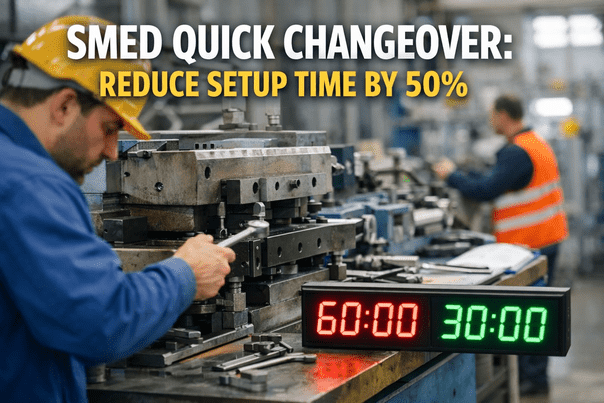
Reductions in the range of 50 to 70 percent are commonly reported after a structured SMED implementation, though the exact figure depends heavily on how disorganized the original process was and how much internal work can genuinely be converted to external. Simply separating internal from external activities, without any new tooling investment, is often enough to cut recorded downtime substantially on its own. Facilities that already run a fairly disciplined changeover will see smaller percentage gains than one starting from an undocumented, ad hoc process, simply because there is less low-hanging fruit left to convert.
Does SMED require buying new equipment or tooling?
No. The first two stages of SMED — observing the process and separating internal from external activities — require no capital investment at all, only structured analysis and reorganization of existing steps. Quick-change hardware, standardized fixtures, and other physical upgrades belong to the later "streamline" stage and are optional accelerators rather than a prerequisite for getting started.
How do we keep changeover gains from slipping back over time?
The most common reason SMED gains erode is that measurement stops once the initial pilot is declared a success, and the standard procedure quietly drifts as shifts, operators, and tooling change. Sustaining the improvement requires ongoing, not one-time, visibility into actual changeover duration versus target. Book a demo to see how ifactory keeps that data live across every shift and every machine.
Turn Your Next Changeover Audit Into a Permanent Gain
ifactory tracks internal and external changeover steps in real time, flags drift from your standard, and gives every shift the same visibility that made your first SMED pilot work.