Electronics Manufacturer Reduces Unplanned Downtime by 62% Across 6 Plants
By Hannah Baker on June 9, 2026
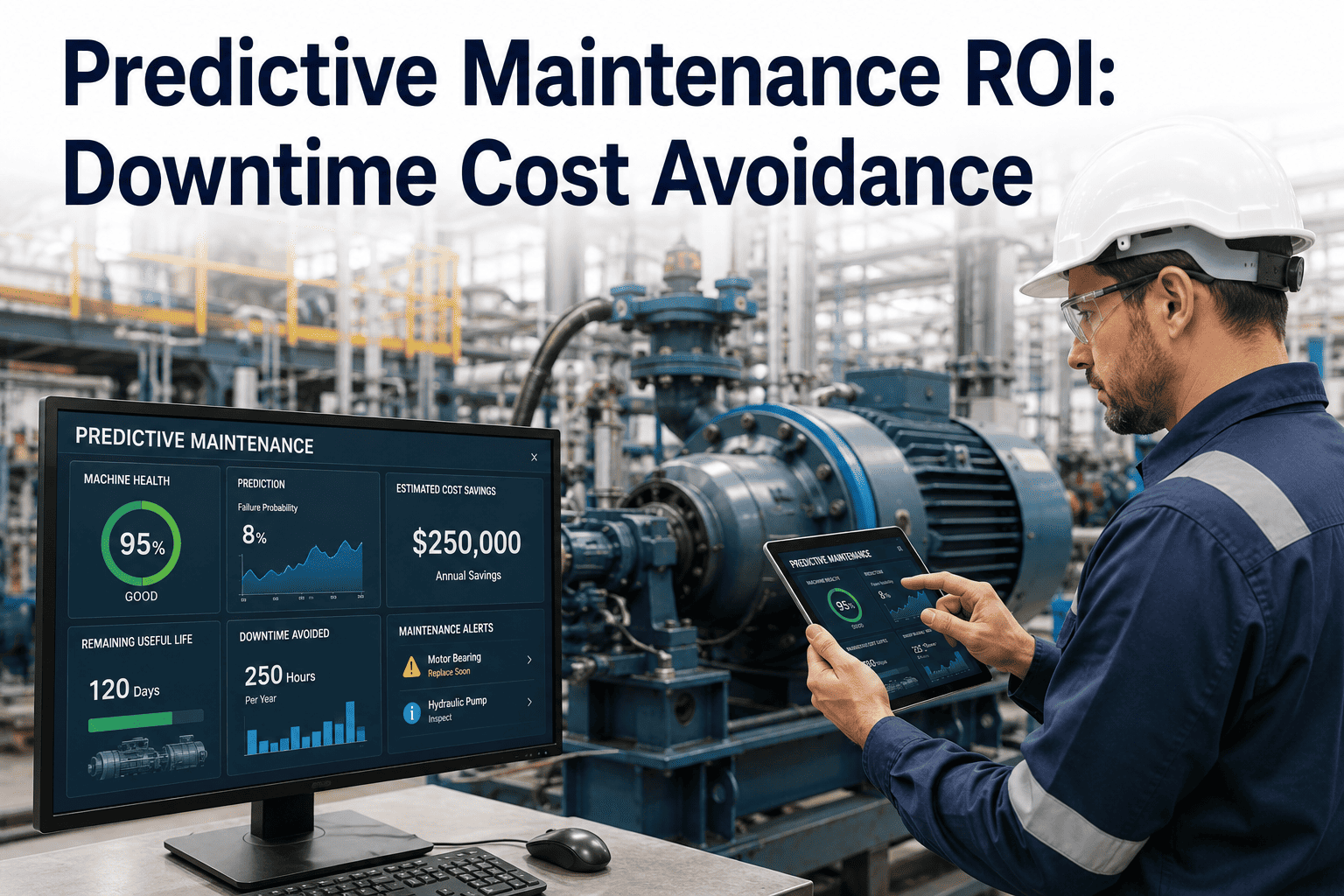
Six plants. Three countries. One unified platform. And $5.8 million in avoided production losses in the first twelve months. That is the headline from a global electronics manufacturer that deployed iFactory AI's AI-powered predictive maintenance platform across six facilities producing printed circuit board assemblies, power modules, and precision electronic components for the automotive and industrial automation sectors. Before deployment, unplanned downtime across the six plants totaled 847 hours per year — equipment failures that cascaded through tightly sequenced production lines, delayed customer shipments, and forced premium freight charges to recover missed delivery windows. Each plant operated its own maintenance program with its own spare parts inventory and its own criteria for deciding when to repair equipment. Some ran calendar-based PM programs that generated work orders on schedule regardless of actual equipment condition. Others repaired equipment only after failure. None had a unified view of asset health across the enterprise. The question that drove the deployment was simple: how much downtime was the organization accepting simply because it could not see what was about to break?
Cut Unplanned Downtime by 62% Across Your Plants
See how iFactory AI's predictive maintenance platform connects sensor data, CMMS work orders, and analytics across multi-site operations — reducing unplanned downtime, improving MTBF, and delivering measurable ROI within the first quarter of deployment.
The Problem: Six Plants, Six Approaches, One Uncontrolled Cost
The company manufactured electronic components at six facilities in the United States, Mexico, and China. Each plant operated independently with respect to maintenance strategy. Plant A ran a rigid calendar-based PM program that generated work orders on a fixed schedule regardless of whether equipment needed service. Plant B maintained equipment reactively, replacing components only after failure. Plants C through F operated somewhere between the two extremes, each with its own spare parts inventory, its own work order templates, and its own definition of what constituted a critical asset. The result was a maintenance organization that consumed significant resources without producing predictable equipment reliability. Unplanned downtime across the six plants totaled 847 hours in the year before deployment, and the cost of that downtime — lost production output, overtime to recover schedules, and expedited freight charges — exceeded $5.8 million annually.
Metric
Before iFactory AI
After iFactory AI
Improvement
Annual unplanned downtime Across six plants combined
847 hours
322 hours
-62%
Mean time between failure Per critical asset
412 hours
1,087 hours
+164%
Mean time to repair From alert to line restart
6.2 hours
3.1 hours
-50%
Emergency work orders Per month across all sites
187
41
-78%
Annual downtime cost Production losses + recovery
$5.8M
$2.2M
$3.6M saved
Spare parts inventory Total stocked value
$4.2M
$3.1M
-26%
Why Calendar-Based PM Could Not Close the Gap
The plants had invested in a CMMS for work order tracking and an ERP system for parts procurement, but neither tool addressed the core problem: maintenance decisions were based on schedules and history rather than actual equipment condition. Calendar-based PM programs generated work orders for equipment that did not need service while equipment that was developing faults went undetected until failure occurred. The maintenance teams were busy but not effective — they replaced belts, filters, and bearings on schedule while driveshafts developed cracks and motor windings degraded unmonitored. The missing piece was a real-time analytics layer that could connect sensor data across all six plants, learn the normal operating signature of each critical asset, and alert maintenance teams when deviation patterns indicated developing failure — days or weeks before the equipment stopped production. Book a Demo to see how the platform connects to your existing sensors and CMMS.
"We had six plants each spending their maintenance budgets differently, and none of them could tell me whether a given machine was going to make it through the next production run. We were funding a maintenance program that produced a reactive outcome. We needed a system that could look at the machine data and tell us what was actually happening — not what the calendar said should happen."
Maintenance DirectorGlobal Electronics Manufacturer · Six-facility deployment program
How iFactory AI Deployed Across Six Plants
The deployment followed a structured four-phase plan designed to standardize maintenance operations across all six sites while respecting each plant's unique equipment mix and production schedules. The rollout from first site assessment to enterprise-wide predictive operation was completed in 16 weeks.
PHASE 1
Asset Criticality and Sensor Gap Assessment
iFactory's engineering team conducted a cross-plant assessment of 1,240 production assets, classifying each by criticality to throughput, failure history, and existing instrumentation. The assessment identified 412 critical assets across the six plants for predictive monitoring in the initial deployment wave. Sensor gaps were documented and a standardized retrofittable sensor kit was developed for equipment that lacked instrumentation.
Typical duration: 3 weeks
PHASE 2
Unified CMMS Configuration and Data Layer
iFactory AI's platform was configured with a unified asset hierarchy spanning all six plants, standardizing work order types, priority levels, root cause categories, and maintenance procedures across sites for the first time. The data integration layer connected to each plant's existing PLCs, vibration sensors, and thermal monitoring systems, ingesting more than 8,000 data points per second into the predictive analytics engine.
Typical duration: 3 weeks
PHASE 3
Predictive Model Training and Calibration
For each critical asset category, the AI models were trained on 18 months of historical failure data combined with live sensor streams. The system learned normal operating signatures — vibration envelopes, thermal profiles, current draw patterns — and established deviation thresholds calibrated to achieve a false positive rate below 3 percent across all asset types before any alert was sent to a maintenance team.
Typical duration: 6 weeks
PHASE 4
Enterprise Rollout and Continuous Optimization
The platform went live across all six plants in a staggered 4-week deployment with on-site support during each site's transition. Within 60 days, the predictive models had identified 17 developing failure conditions that were invisible to existing PM programs — including bearing degradation on a critical oven conveyor and winding insulation breakdown on a pick-and-place robot. The system has continued to improve as additional failure data refines model accuracy.
First predictive alert: Day 14 of live operation
The 62% Downtime Reduction: What Changed
The reduction from 847 to 322 hours of annual unplanned downtime was not the result of a single fix but the cumulative effect of three shifts in how the maintenance organization operated. Each dimension of performance moved measurably after deployment.
Early Fault Detection
Predictive alerts gave maintenance teams an average of 18 days of warning before failure. Emergency work orders dropped from 187 to 41 per month, freeing maintenance capacity for preventive and improvement work. Repairs were planned during scheduled windows instead of causing emergency line stops.
Root Cause Elimination
Cross-plant data analysis identified failure patterns that no single site had enough data to detect. A spindle bearing specification issue causing repeat failures on three assembly machines was identified and corrected across all plants, eliminating a recurring failure mode that had generated 14 emergency work orders in the previous year.
Inventory Optimization
With predictive visibility into developing failures, maintenance teams ordered parts just in time for planned repairs rather than stocking spares for every conceivable failure mode. Slow-moving inventory was reduced by 26 percent, freeing $1.1 million in working capital, while stockout events for critical spares decreased by 40 percent.
See Predictive Maintenance Applied to Your Plant's Data
We will build a live model against your actual equipment history and show where hidden failure risks are costing production time. Single plant or enterprise-wide deployment. Free assessment deliverables within two weeks.
Expert Review: What Made the Multi-Plant Deployment Work
Maintenance and operations leaders who have deployed predictive maintenance programs across multi-site manufacturing environments consistently emphasize that the technology's primary value is not in the alert itself — it is in the standardized operating framework that a unified platform forces across previously independent sites. The insights below reflect perspectives from the maintenance director and plant engineers who led the deployment across the six facilities.
"The most impressive result was not the 62 percent downtime reduction — it was that the improvement was consistent across all six plants within four months. In multi-site deployments, one plant typically adopts quickly and the others lag for a year or more. iFactory's platform forced a common operating standard without requiring each plant to redesign its maintenance program from scratch. The predictive models trained on data from all six plants performed better than any single-plant model could, because the system learned failure patterns from five times as many assets. That is the advantage of an enterprise deployment done right."
VP of Global Manufacturing Operations28 years in electronics manufacturing · Six-facility deployment
Key Success Factors for Multi-Plant Predictive Maintenance
Standardized Asset Hierarchy
A unified asset taxonomy across all sites enabled cross-plant failure pattern analysis and allowed the predictive models to learn from the combined dataset. Plants that had classified assets differently could suddenly compare reliability data on identical equipment types.
Calibrated False Positive Thresholds
Predictive alerts achieve adoption only when maintenance teams trust the accuracy. Calibrating models to below 3 percent false positives before any alert reaches the floor ensured that every notification was actionable and that the system was not ignored as a noise generator.
Existing Infrastructure Utilization
The platform connected to sensors and control systems already installed across the six plants, adding a predictive analytics layer without requiring new hardware procurement. This accelerated deployment and eliminated the capital expenditure delays that typically slow multi-plant rollouts.
Phased Rollout with Quick Wins
Deploying in phases — starting with the most critical assets at each site — allowed each plant to see measurable improvement within the first 30 days. Those early wins built cross-site momentum and ensured that the enterprise rollout had champions at every facility before full deployment.
Conclusion: Unplanned Downtime Is a Choice, Not a Given
Before iFactory AI, the electronics manufacturer accepted 847 hours of unplanned downtime per year as an unavoidable cost of operating six plants across three countries. After deployment, that number dropped to 322 hours — and the trend continues to improve as the predictive models ingest more data and the maintenance organization shifts further from reactive to preventive operations. The $5.8 million in avoided production losses in the first year validated the business case, but the operations team points to a different metric as the real win: for the first time, the maintenance department can tell production exactly which assets are at risk and when they need attention. The relationship between maintenance and production shifted from reaction to collaboration. Book a Demo to see how much unplanned downtime your plants are accepting without knowing it.
Frequently Asked Questions
The predictive models begin generating useful alerts within 30 days of connection to your asset data. Initial calibration uses your historical failure records combined with live sensor streams to establish baseline operating signatures. In the electronics manufacturer case study, the models identified 17 developing failure conditions within 60 days of full deployment, including bearing degradation and motor winding breakdown that existing PM programs had missed. Accuracy improves continuously as the models ingest additional operating data from your specific equipment.
No. iFactory AI connects to your existing PLCs, vibration sensors, thermal monitoring systems, and CMMS. The platform is designed as a data integration and analytics layer that works with the infrastructure you already have. In cases where critical assets lack instrumentation, low-cost retrofittable sensors can be added, but the majority of electronics manufacturing plants already have sufficient data sources — the gap is in connecting and analyzing them. Standard CMMS integrations are available for major platforms including SAP, Maximo, and Maintenance Connection.
The predictive models are calibrated to achieve a false positive rate below 3 percent before any alert reaches the maintenance team. The calibration process uses anomaly severity scoring combined with confirmation logic — a single sensor reading outside the normal range generates a low-severity alert for the system only, while sustained deviation across multiple sensor channels over a defined time window generates a work order. Maintenance teams can provide feedback on each alert through the CMMS interface, which the system uses to refine detection thresholds for each specific asset. In the electronics manufacturer deployment, the false positive rate stabilized below 2 percent within 90 days of operation.
Yes — the platform is designed for enterprise-scale deployments. Each plant's equipment, sensor configuration, and maintenance procedures are configured within a unified asset hierarchy that allows centralized visibility while respecting local operational autonomy. Predictive models trained on data from multiple plants perform better than single-plant models because they learn from a larger set of failure patterns. In the electronics manufacturer deployment, the cross-plant model identified a spindle bearing specification issue that was causing repeat failures on three assembly machines across different sites — a pattern no single plant had enough data to detect on its own.
In the electronics manufacturer case study, the platform paid for itself within the first quarter of full operation through avoided production losses alone. Most multi-plant deployments achieve full ROI within 6 to 9 months. The payback comes from three primary sources: reduced unplanned downtime (the largest contributor), lower emergency repair costs and overtime, and optimized spare parts inventory. The exact timeline depends on the number of critical assets, current downtime levels, and the cost of production losses per hour. A free assessment can quantify the expected ROI for your specific plants within two weeks.
Stop Fixing. Start Predicting.
iFactory AI's predictive maintenance platform connects your existing sensors and CMMS data to AI-powered analytics that detect developing failures before they stop production. Single plant or multi-site deployment. No new hardware required.