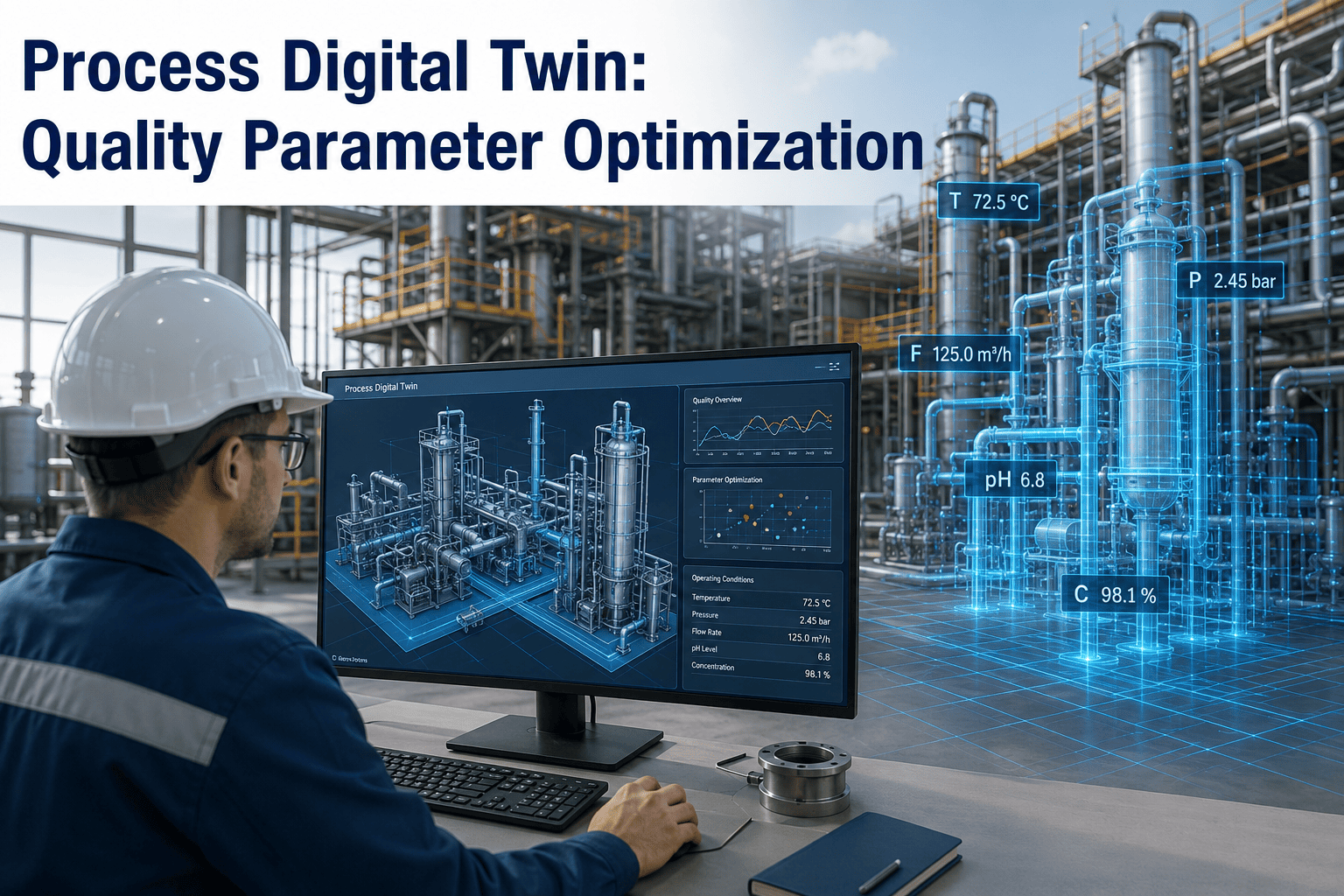
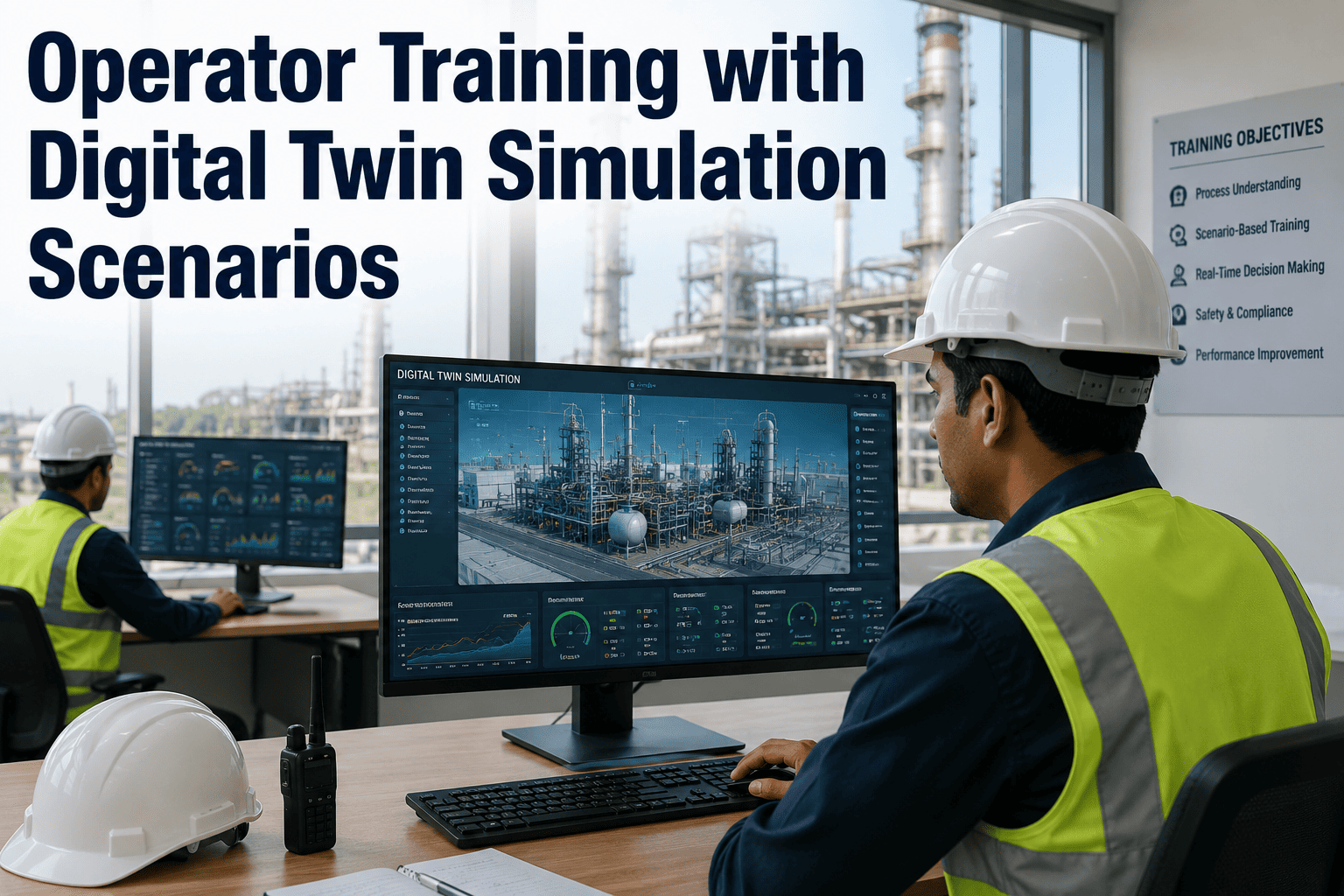
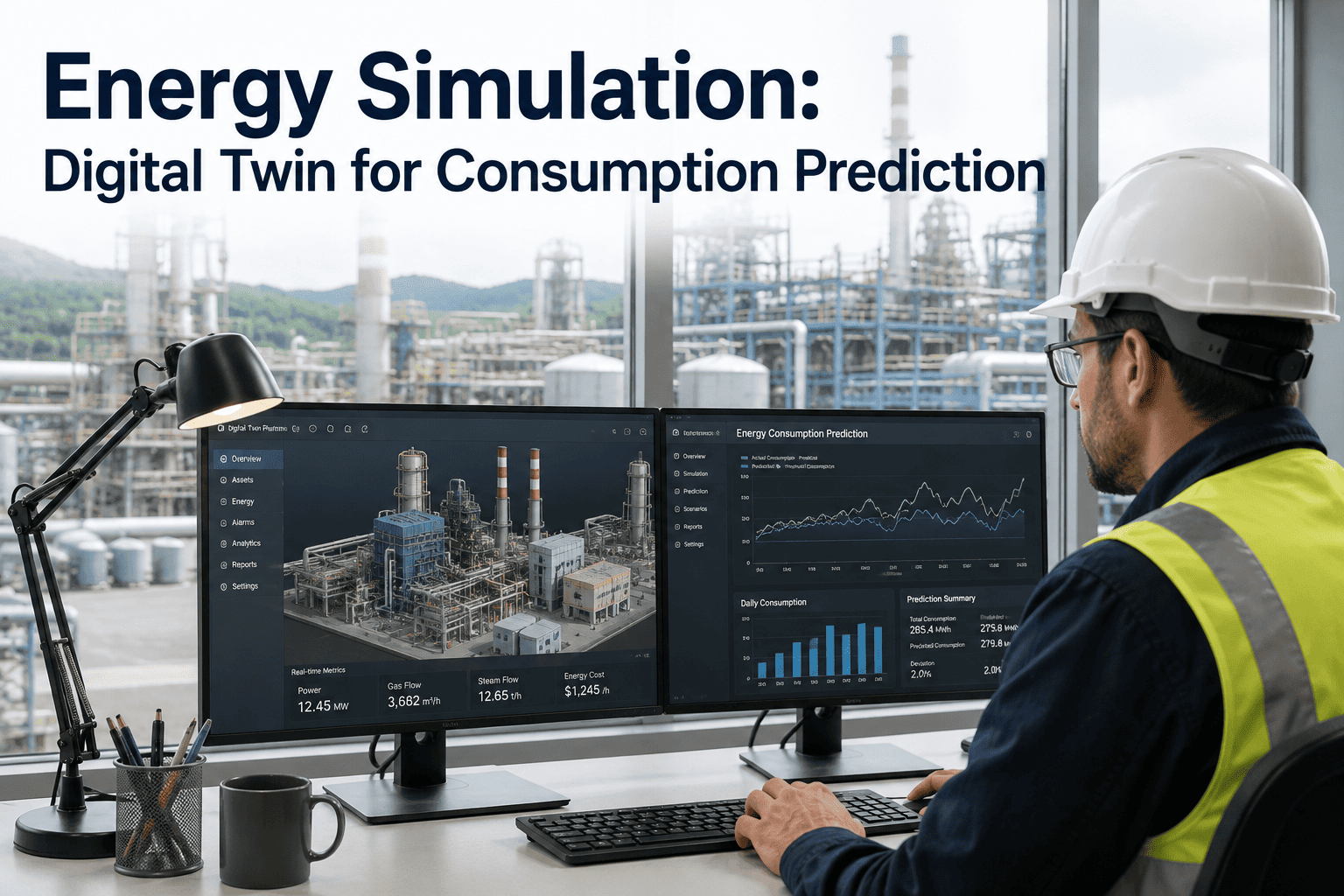
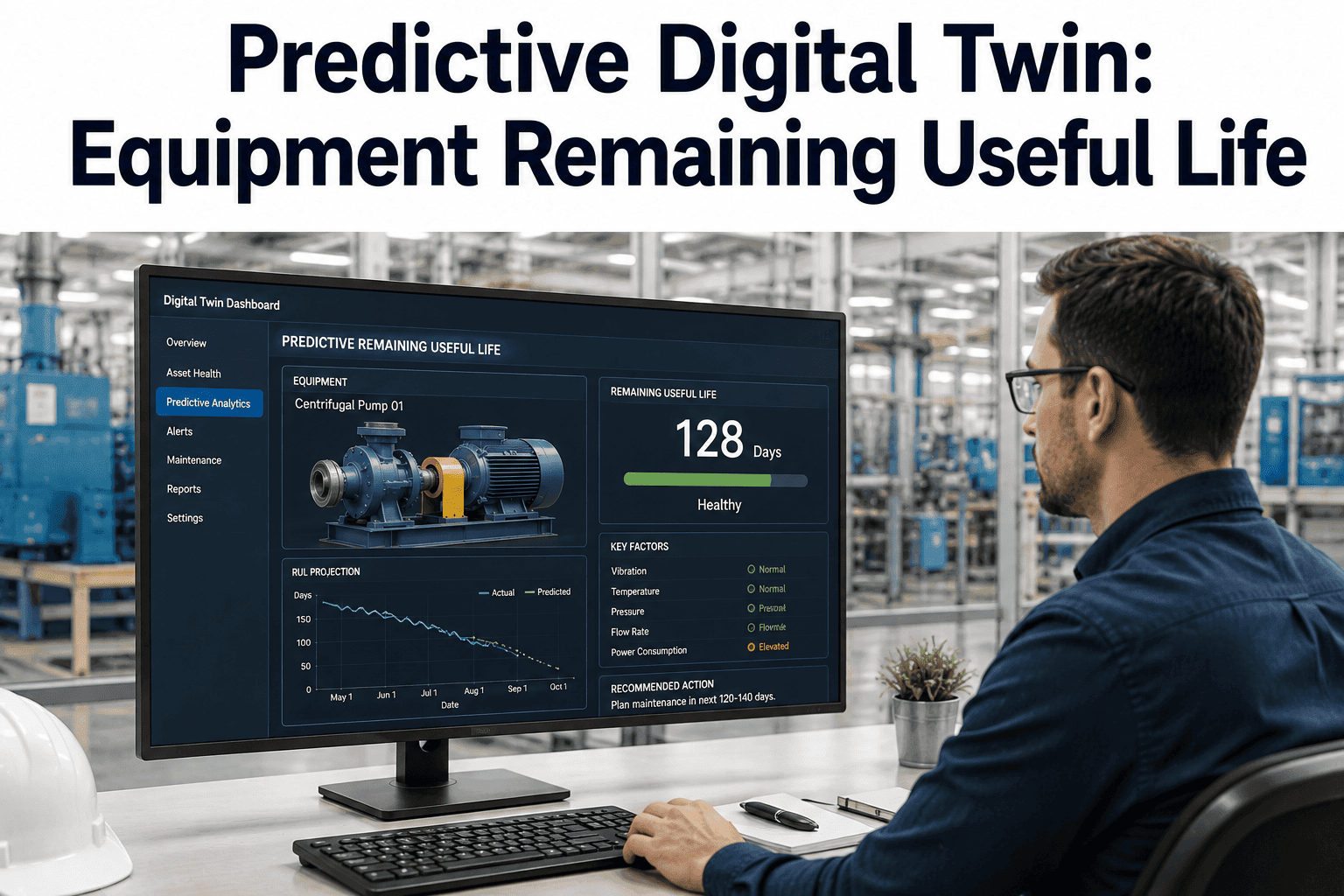
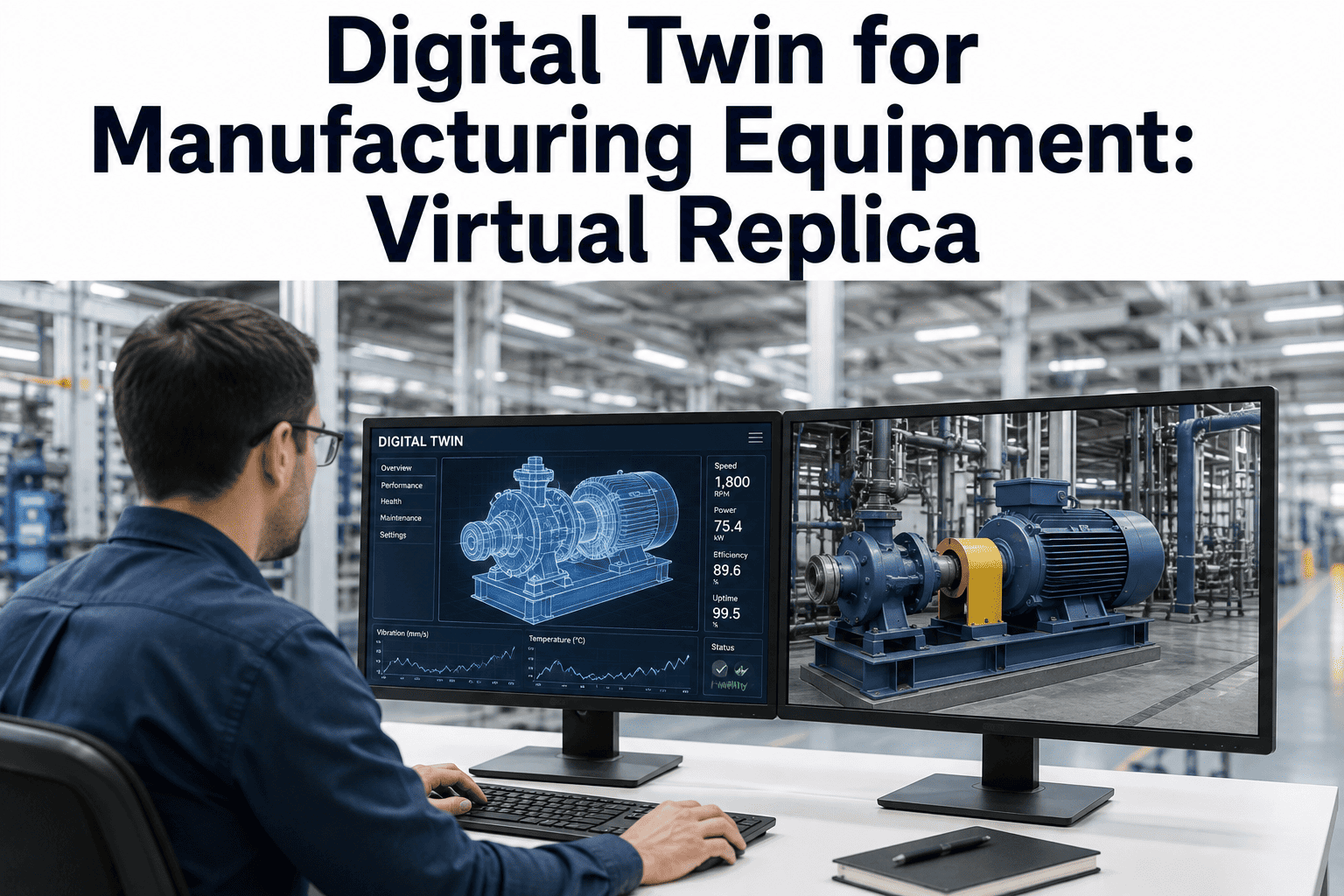
A pump fails on a Tuesday afternoon, and the maintenance log shows nothing unusual as recently as Monday's inspection round. That's the pattern behind most unplanned downtime — the failure wasn't invisible, it just wasn't being watched in a way that could catch it early enough to matter. A maintenance digital twin changes what "watching" actually means, turning scattered sensor readings into a live model that flags degradation weeks before a technician would ever notice it on a walk-through. See how iFactory builds this into your existing maintenance workflow.
Your Equipment Already Tells You It's About to Fail. A Digital Twin Is What Finally Listens.
A maintenance digital twin is a continuously updated virtual model of a physical asset, built from live sensor data, maintenance history, and failure physics — used to predict when something will break and schedule the fix before it does.
The Five Layers That Turn Raw Sensor Data Into a Failure Prediction
A digital twin isn't a single piece of software — it's a stack of connected layers, and a weak link anywhere in that stack quietly degrades the accuracy of every prediction built on top of it. Understanding the stack is the fastest way to evaluate whether a vendor's "digital twin" is a real predictive model or a dashboard wearing the name.
Physical Layer
The actual equipment — motors, pumps, bearings, gearboxes, compressors — instrumented with the sensors that generate the raw signal the entire model depends on.
Data Layer
Vibration, temperature, pressure, current draw, and acoustic readings streamed continuously and cleaned of sensor noise, dropouts, and calibration drift before anything downstream ever sees them.
Model Layer
Physics-based degradation models combined with machine learning trained on historical failure data, together representing how this specific asset actually behaves as it wears rather than a generic equipment profile.
Prediction Layer
The model continuously scores remaining useful life and failure probability against live data, converting raw signal drift into a specific, dated forecast rather than a vague health score.
Action Layer
The prediction is converted into a scheduled work order, parts reservation, or technician assignment automatically — the step most vendors skip, leaving an accurate prediction sitting unused in a dashboard nobody checks daily.
Three Maturity Levels of Maintenance, and Where Most Plants Actually Sit
Reactive Maintenance
Equipment runs until it fails, then a repair crew responds. No prediction, no schedule, and downtime is discovered the moment production stops rather than days or weeks in advance.
Preventive Maintenance
Fixed time or usage-based intervals trigger inspections and part replacements regardless of actual equipment condition, which catches some failures early but also replaces plenty of parts that had useful life left.
Digital-Twin-Driven Maintenance
A live model tracks actual degradation for each specific asset and predicts the failure window directly, so work gets scheduled based on real condition rather than a calendar guess or an emergency call.
What Actually Improves When Prediction Replaces Guesswork
| Industry Application | Unplanned Downtime | Maintenance Cost | What the Twin Tracks |
|---|---|---|---|
| Discrete Manufacturing | Reduced 20-50% | Reduced 15-25% | Motor bearings, drive belts, spindle wear, hydraulic pressure |
| Power Generation | Reduced 20-50% | Reduced 15-25% | Turbine vibration, boiler tube thinning, generator winding temperature |
| Oil & Gas Processing | Reduced up to 35% | Reduced 18-28% | Pump cavitation, compressor seals, pipeline corrosion rate |
| Fleet & Mobile Assets | Reduced up to 85% | Reduced through fewer roadside failures | Battery degradation, brake wear, engine fault codes |
A Prediction Only Matters If It Turns Into a Scheduled Work Order
iFactory's digital twin connects failure prediction directly to your CMMS, so remaining useful life estimates become planned work orders automatically instead of sitting in a report nobody opens.
The Failure Modes a Maintenance Digital Twin Catches Earliest
Not every failure mode gives the same amount of warning, and a well-built digital twin is judged as much by how far in advance it can flag a problem as by whether it catches the problem at all. Some degradation patterns unfold over months; others give only days of usable notice even under ideal monitoring conditions.
Bearing Wear
Typical warning window: 3-6 weeks
Vibration signature changes are one of the most reliable early indicators available, giving teams enough lead time to order parts and schedule a planned swap.
Motor Winding Degradation
Typical warning window: 1-3 weeks
Insulation resistance and thermal trending catch winding breakdown before it becomes a short, though the window narrows faster once degradation accelerates.
Pump Cavitation
Typical warning window: 1-2 weeks
Pressure fluctuation patterns and acoustic signatures flag cavitation onset before impeller damage becomes severe enough to affect flow rate.
Hydraulic Seal Failure
Typical warning window: 3-7 days
Pressure drop and fluid contamination trends give a shorter but still actionable window to stage a replacement seal before a full failure and fluid loss event.
From Prediction to a Filled Calendar Slot: Closing the Scheduling Loop
Prediction without scheduling just moves the problem — a team that knows a failure is coming but still has to manually chase down parts, a technician, and an open maintenance window hasn't actually solved anything. The scheduling half of a maintenance digital twin is what converts foresight into an outcome you can see on the calendar.
Emergency repair consumes two full production days with no warning
Same repair moved to a planned four-hour weekend window with parts pre-staged
A Composite Scenario: The Gearbox Failure That Never Happened
A tier-one automotive parts plant had a history of gearbox failures on one particular conveyor drive, averaging one unplanned failure every seven to nine months, each costing roughly six hours of line downtime plus expedited parts freight. The plant instrumented the drive with vibration and temperature sensors and connected the readings to a digital twin trained on the gearbox's failure history and manufacturer degradation curves.
Fourteen days before what would have been the next failure, the twin flagged a gear mesh vibration pattern consistent with early-stage tooth wear, with a predicted failure window of nine to twenty-one days out. The maintenance team ordered the replacement gearbox that afternoon, scheduled the swap for the next planned weekend shutdown, and completed the repair in under three hours with zero unplanned production loss. The failed gearbox, once removed, showed tooth wear consistent with the model's prediction almost exactly.
The plant expanded the same monitoring approach to eleven additional drives across two lines over the following year, using the original gearbox model as a template rather than starting the modeling work from scratch each time.
Myths That Slow Down Digital Twin Adoption
A digital twin requires years of historical failure data before it can predict anything useful.
Physics-based degradation models can generate useful predictions from day one using manufacturer specifications and live sensor trends, with accuracy improving as plant-specific failure history accumulates over time.
Every asset in the plant needs to be instrumented before a digital twin program delivers value.
Starting with the highest-criticality assets — the ones responsible for the most downtime hours historically — delivers measurable ROI long before a full-plant rollout is complete.
A digital twin is just a fancier dashboard for viewing sensor data.
A true maintenance digital twin models degradation and predicts a specific failure window, then converts that prediction into a scheduled action — a dashboard only shows the data without doing either.
Is Your Plant Ready to Start With a Digital Twin
You can name your top five most disruptive failure points
If maintenance and operations already agree on which assets cause the most downtime, that list is the ideal starting scope for a first digital twin deployment.
Those assets already have some sensor data, even basic
Existing vibration, temperature, or current monitoring accelerates deployment significantly, though a twin can still be built around new instrumentation from scratch.
Your CMMS can accept automated work order triggers
The prediction-to-scheduling loop only closes if the twin can create or flag a work order directly, rather than requiring someone to manually translate a report into action.
Maintenance leadership is willing to act on early warnings
A digital twin's value depends entirely on whether the team actually schedules work off its predictions instead of waiting to see if the equipment fails anyway.
Frequently Asked Questions
How is a maintenance digital twin different from a general IoT dashboard?
A dashboard displays sensor readings for a human to interpret, while a digital twin runs a degradation model against that same data continuously and outputs a specific, dated failure prediction on its own. The dashboard requires someone watching it to catch a trend; the twin surfaces the trend and its consequence automatically. Visit support to see the distinction applied to your own equipment data.
How long does it take to see a working prediction after deployment?
Physics-based models can produce directionally useful predictions within the first few weeks of sensor connection, while accuracy continues improving as plant-specific failure history accumulates over the following months. Most teams see their first confirmed early-warning catch within the first quarter of deployment.
Does a digital twin replace the need for maintenance technicians?
No — it changes what technicians spend their time doing, shifting hours away from routine inspection walks and emergency repairs toward planned, scheduled work guided by the model's predictions. Book a demo to see how the workflow changes for a maintenance team day to day.
What kind of sensors are needed to build a digital twin for rotating equipment?
Vibration, temperature, and current draw sensors cover the majority of rotating equipment failure modes, with acoustic and pressure sensors adding value for specific asset types like pumps and compressors. Existing sensors already installed for other purposes can often be repurposed as a starting data source.
How many assets should a first digital twin deployment cover?
Most successful deployments start with somewhere between three and ten of the highest-criticality assets rather than attempting a full-plant rollout immediately, since a focused scope proves the model's accuracy and scheduling workflow before expanding further. Contact support for help scoping the right starting list for your plant.
Stop Finding Out About Failures the Hard Way
iFactory builds maintenance digital twins around your highest-impact assets first, connecting live condition data to failure prediction and automatic work order scheduling in one workflow.