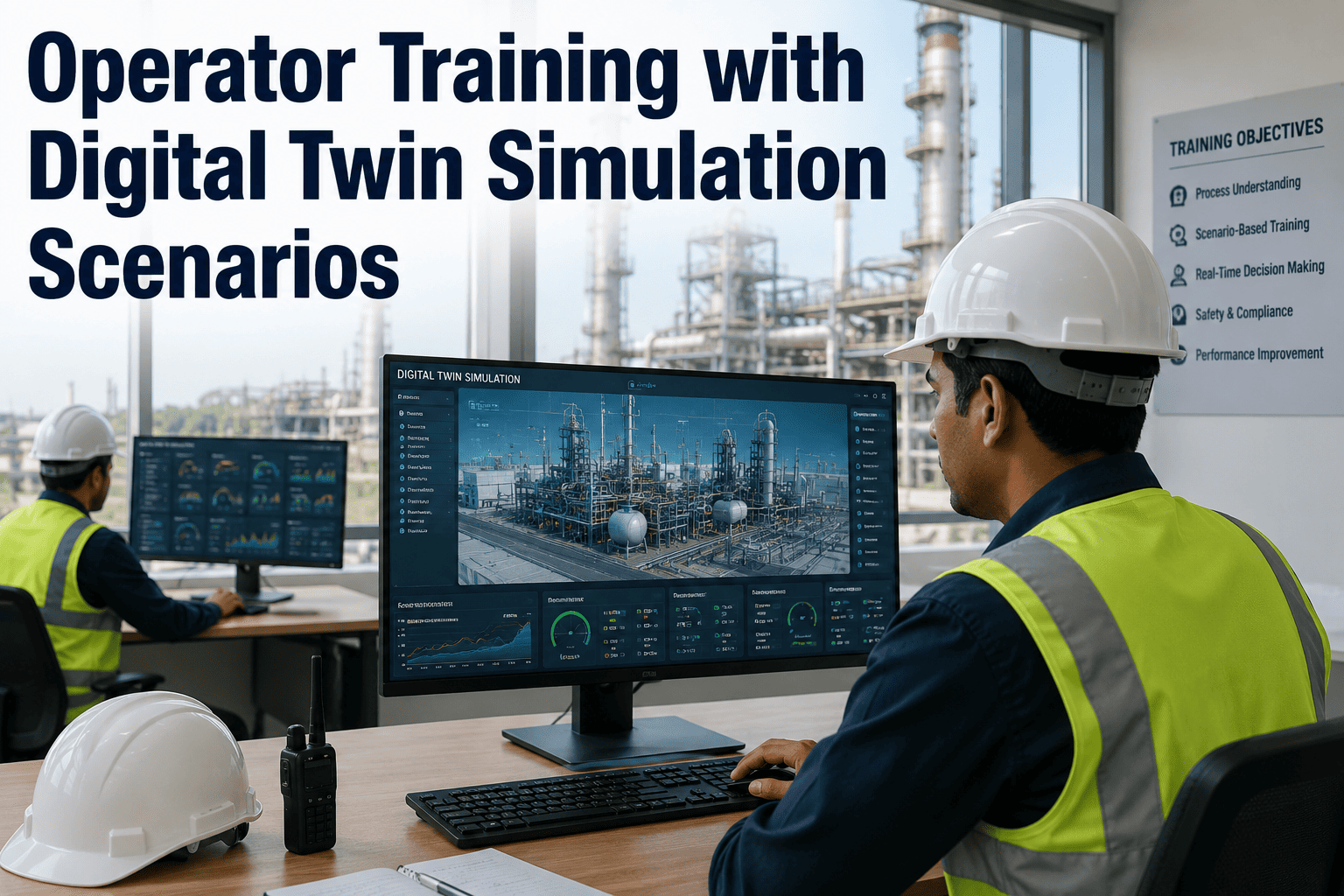
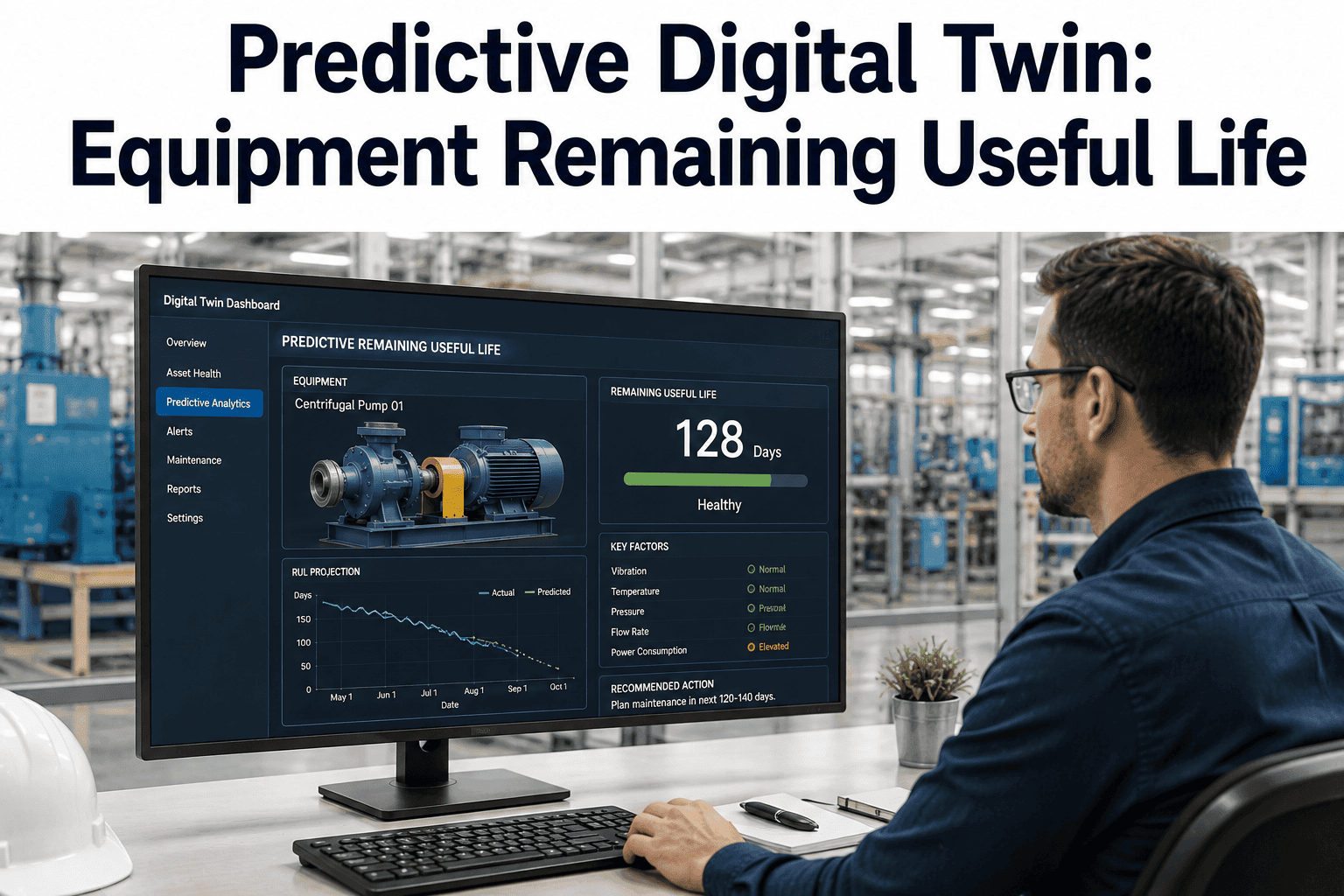
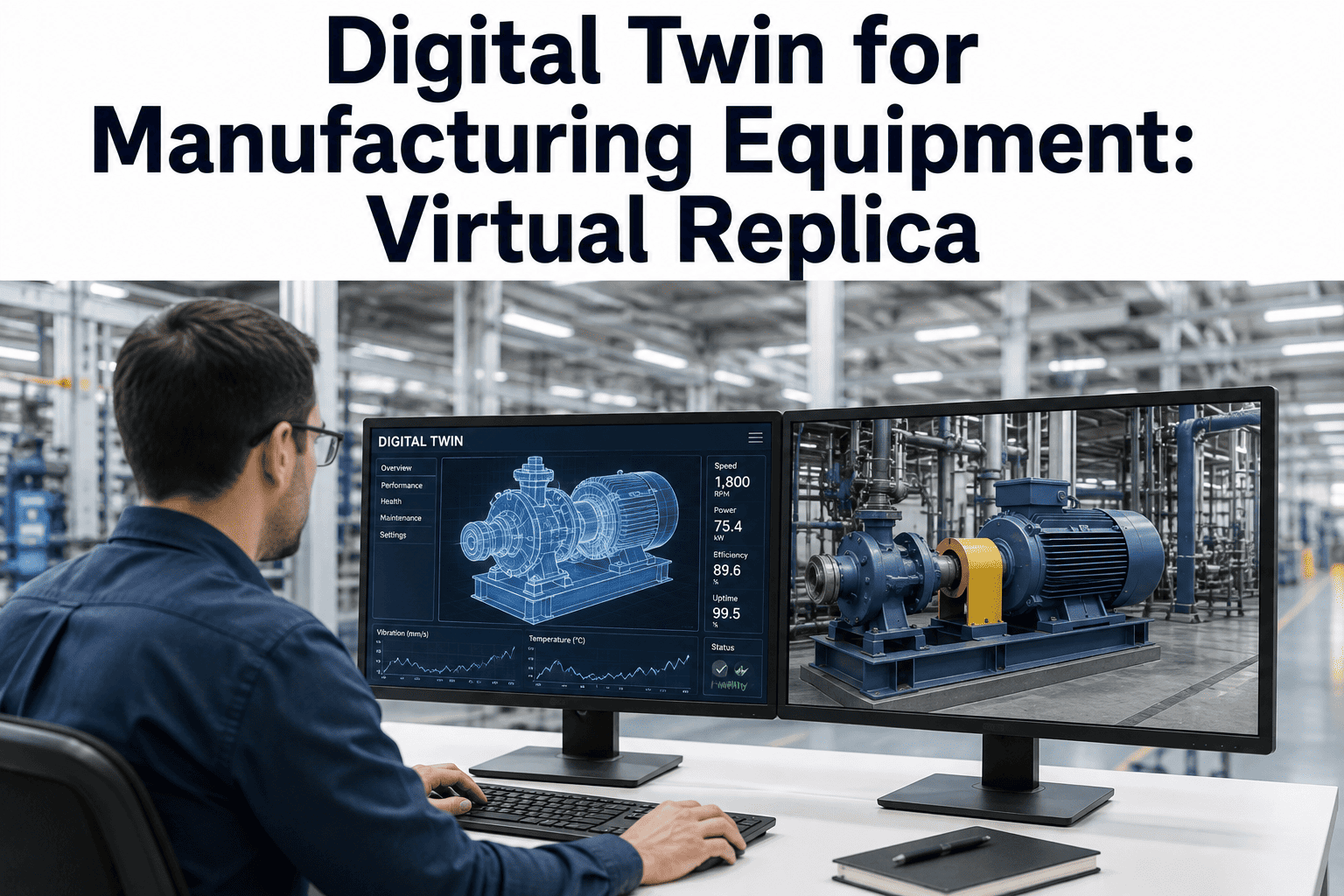
A new operator's first encounter with a runaway temperature spike or a sudden pressure excursion should never be the actual event happening live on the actual line, yet for most plants that is exactly how it works. Procedures get read, shadowing happens for a few shifts, and then the operator is on their own until something rare and dangerous finally occurs, often years into the job. iFactory's digital twin lets operators live through that exact failure, over and over, inside a simulation that behaves like the real process without ever touching real product or real risk. You can book a demo to see scenario-based operator training running against a twin of your own line.
DIGITAL TWIN · OPERATOR TRAINING · SIMULATION SCENARIOS
Let Operators Fail Safely in the Twin, Long Before They Ever Could on the Floor
iFactory turns your process digital twin into a training ground where operators face equipment failures, abnormal situations, and emergency scenarios as many times as it takes to build real competency, scored and certified without a single hour of lost production or real risk.
1
Assign Scenario
Twin loaded with a fault condition
›
2
Operator Responds
Works the upset inside the simulation
›
3
System Scores It
Response time and actions measured
›
4
Certify or Retrain
Competency record updated
WHY THIS SEGMENT OF TRAINING IS GROWING SO FAST
Abnormal Situations Are the Hardest Thing to Train For, and the Most Important
Routine operation is easy to teach because it happens every shift. Abnormal situations and emergency response are the opposite, they are rare by definition, which means most operators reach a real one with little more than a procedure they read once and a memory of a classroom scenario. Industry research on digital twin training platforms consistently points to abnormal situation and emergency response training as the single largest category of demand, precisely because these are the volatile, edge-case events that simply cannot be safely rehearsed on a live production asset.
Largest Share
Abnormal situation and emergency response scenarios represent the single biggest category of demand across digital twin training platforms
Zero Downtime
Every scenario runs against the twin, so training never requires stopping a real line or risking real product or equipment
Repeatable
The same fault can be run again and again with identical conditions until every operator on every shift has faced it
SCENARIO SEVERITY TIERS
Training Builds in Layers, from Routine Deviation to Full Emergency Response
Not every scenario needs to feel like a crisis, and not every operator is ready for one on day one. iFactory structures scenarios into escalating tiers so new hires build confidence on manageable deviations before they ever face the highest-stakes events, with the twin tracking exactly which tier each operator has cleared.
Tier 1
Routine Deviation
Minor parameter drift, a sensor reading trending out of range, or a setpoint adjustment an operator should catch and correct without escalation.
Tier 2
Equipment Failure
A pump trips, a valve sticks, or a motor overheats mid-run, requiring the operator to diagnose the failure and follow the correct isolation steps.
Tier 3
Abnormal Process Situation
A runaway reaction, a pressure excursion, or a temperature spike that compounds quickly and tests whether the operator recognizes the pattern in time.
Tier 4
Emergency Shutdown Response
A full safety-critical event requiring correct sequencing under time pressure, the same conditions a live emergency would demand with none of the actual risk.
MANUAL ON-THE-JOB TRAINING VS DIGITAL TWIN SIMULATION
What Actually Changes When Training Moves Into the Twin
Shadowing a senior operator and waiting for a rare event to occur naturally has been the default training model for decades, mostly because there was no safe alternative. A side-by-side look at how each approach handles the factors that actually determine competency shows why that default is shifting fast.
| Factor |
Manual On-the-Job Training |
Digital Twin Simulation |
| Exposure to Rare Events |
Depends entirely on chance and tenure |
On demand, any scenario, any time |
| Risk During Training |
Real equipment and real product at stake |
None, the twin absorbs every mistake |
| Consistency Across Operators |
Varies by shift, trainer, and timing |
Identical scenario and conditions for all |
| Assessment Objectivity |
Based on a trainer's subjective judgment |
Scored against measured response actions |
| Time to Competency |
Months to years for rare-event readiness |
Weeks, compressed through repetition |
Turn Your Process Twin Into a Training Ground, Not Just a Monitoring Tool
iFactory extends the same digital twin already modeling your line into a scenario library operators train and certify against. Book a demo and see how scenario scoring plugs into your existing competency records.
WHO GETS THE MOST OUT OF SIMULATION-BASED TRAINING
Any Operation Where a Wrong Response Carries a Real Cost
Simulation-based operator training earns its place fastest in operations where mistakes are expensive, rare events are dangerous, or new hires need to reach full competency before an experienced colleague can hand off responsibility entirely.
New Hire Onboarding
Get new operators through every critical failure scenario before their first unsupervised shift instead of hoping shadowing covered enough ground.
Continuous Process Operations
Rehearse the abnormal situations that can escalate fastest in continuous processes, where a slow response compounds into a much larger event.
Night and Weekend Shift Crews
Make sure crews with the least access to senior colleagues on shift have faced the same rare-event scenarios as the day shift veterans.
Cross-Training and Multi-Line Operators
Certify operators moving between lines or product changeovers against the specific failure modes of each line's twin before they run it live.
HOW THE TRAINING TWIN ACTUALLY WORKS
Behind Every Scenario Is the Same Model Already Watching Your Process
A training scenario is only as useful as the twin it runs on, which is why the same model already used for monitoring and prediction doubles as the training environment operators practice against.
Twin Fidelity Tied to Live Process Data
Scenarios run against a twin built from your actual process history and control logic, so operator behavior in training reflects how the real equipment actually responds.
Configurable Scenario Library
Fault conditions, severity tiers, and pass criteria are configured against your specific equipment and procedures rather than a generic industry template.
Automated Competency Scoring
Every response is scored on recognition time, correct sequencing, and outcome, feeding a certification record instead of a trainer's memory of how someone did.
Fault Injection Without Production Impact
Failures are injected entirely inside the twin, so training can run in parallel with live production without touching a single real setpoint or valve.
FREQUENTLY ASKED QUESTIONS
Questions Training and Operations Leaders Ask First
Do we need a full digital twin already built before we can start scenario-based training?
A working process twin makes scenarios most realistic, but most plants start with the model built around their highest-risk equipment or process area rather than a full facility twin from day one. iFactory can build the training scenario library incrementally as twin coverage expands, so early wins on the most critical failure modes do not have to wait for a complete digital model of every line. This phased approach also lets training and operations teams validate scenario accuracy before scaling further. You can
book a demo to review what twin coverage would be needed for your priority scenarios.
How realistic does the simulation actually feel to an experienced operator?
The twin reflects the actual process dynamics, control response, and timing behavior of your real equipment, so an experienced operator recognizes the same cues and pressure they would see on the floor rather than a simplified training exercise. Feedback from plants running this kind of scenario training generally points to operators treating the simulation seriously once they see how closely it tracks real process behavior. Scenario difficulty and pacing can also be tuned as operators progress through the severity tiers. Our
support team can walk through fidelity settings for your specific process.
Can we track competency across an entire crew or site rather than one operator at a time?
Yes, scenario results roll up into a competency record at the individual, crew, and site level, so a training manager can see exactly which scenarios have been cleared, which are pending, and where gaps concentrate across a shift or department. This makes it far easier to plan targeted retraining before an audit, a new certification cycle, or a staffing change rather than relying on informal knowledge of who has seen what. Book a demo to see how competency reporting is structured for multi-crew and multi-site operations.
Does running training scenarios in the twin interfere with the same twin monitoring live production?
No, training scenarios run in an isolated instance of the twin so operators can practice against realistic fault conditions without ever touching the live model that is monitoring and optimizing your actual process in real time. This separation means training can be scheduled at any point during a shift without any risk of a simulated fault leaking into live control logic or production data. Contact
our support team to understand how the training and live monitoring environments are kept separate.
How long does it typically take to see operators improve after adopting simulation-based training?
Most plants see measurable improvement in response time and correct sequencing within the first few scenario cycles, since repetition against a consistent scenario is what builds recognition speed rather than a single classroom pass. The exact timeline depends on how many severity tiers a crew is working through and how frequently sessions are scheduled around existing shift patterns. Ongoing scenario variation also helps prevent operators from simply memorizing a fixed sequence rather than genuinely recognizing the underlying fault pattern. Book a demo and we can map out a realistic rollout timeline for your crews.
Give Every Operator a Chance to Face the Worst Case Before It's Real
iFactory turns your digital twin into a scenario training and certification ground so no operator meets a critical failure for the first time on the live line. Book a demo and see it running against your own process.