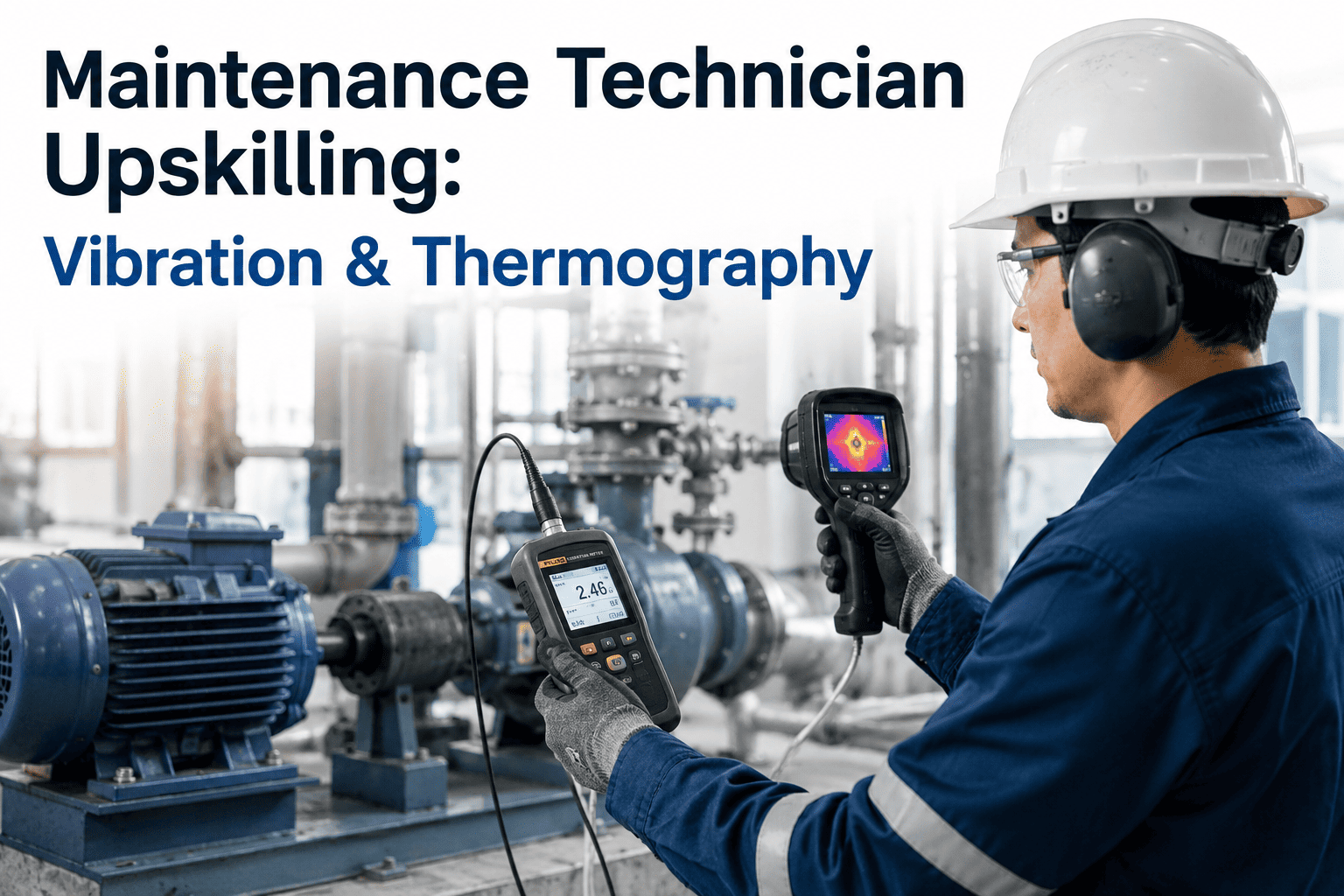
A technician who has spent fifteen years learning the sound and feel of a plant's equipment is retiring, and the replacement hired six months ago has never held a vibration probe or read an infrared image outside of a classroom slide. This handoff is happening across manufacturing plants everywhere right now, and it is the real reason predictive maintenance programs stall even after the sensors and software are already installed. Vibration analysis, infrared thermography, and oil analysis are learnable, certifiable skills with clear competency levels, not instincts that only come with decades on the floor. Building a structured path through those certifications is one of the highest-leverage investments a maintenance department can make, and it is exactly the kind of program iFactory's reliability team helps plants design around their own condition monitoring data.
WORKFORCE & ADOPTION · CONDITION MONITORING · 2026
Maintenance Technician Upskilling: Building Real Vibration, Thermography, and Oil Analysis Competency
Certified skill, not tribal knowledge, is what makes predictive maintenance programs survive retirements and turnover. See the certification pathways, what each discipline actually catches, and how to build an upskilling program your technicians will actually finish.
The Skills Gap
Why the Skills Gap Is the Real Bottleneck, Not the Sensors
Plants keep buying condition monitoring hardware faster than they build the people who can interpret it. A sensor collecting data nobody can accurately read is not a predictive maintenance program, it is an expensive activity log.
45%+
of skilled maintenance workers across manufacturing are eligible to retire within the next decade
6–18 mo
typical time for a technician to reach basic competency through structured, mentored certification training
3 disciplines
vibration, thermography, and oil analysis cover the majority of failure modes on rotating and electrical equipment
CAT I–IV
the ISO 18436 framework that defines internationally recognized competency levels for each discipline
The Certification Pathways
Three Disciplines, Three Ladders: What Certification Actually Looks Like
Vibration analysis, thermography, and oil analysis each follow an internationally recognized, tiered certification structure. None of them require a technician to already be an expert on day one, they are built to take someone from basic data collection to independent diagnosis over a defined path.
Vibration Analysis
ISO 18436-2, Vibration Institute / ISO CAT I–IV
CAT I
Data collection, recognizing operating modes, flagging predefined alarms — 6 months experience
CAT II
Fault diagnosis, spectral and waveform analysis, gearbox and resonance basics — 18 months experience
CAT III
Program direction, cross-channel and orbit analysis, complex machinery diagnostics — 36 months experience
CAT IV
Advanced signal processing, resonance testing, master-level diagnostics — 60 months experience
Infrared Thermography
ASNT SNT-TC-1A / ITC Level I–III
Level I
Camera operation, thermal science fundamentals, image capture and basic documentation
Level II
Advanced image analysis, accurate temperature measurement, electrical and mechanical inspection depth
Level III
Program management, writing inspection procedures, setting severity criteria and ROI tracking
Oil Analysis
ISO 18436-4, ICML Machine Lubricant Analyst I–III
MLA I
Proper sampling technique, basic contamination and wear indicators, lubricant selection fundamentals
MLA II
Greasing and lubrication methods, sample interpretation, setting up a lab or lab-provider relationship
MLA III
Full lubrication program design, root cause analysis of failures tied to contamination and wear
Certified Technicians Need a Platform That Keeps Up With Them
iFactory turns vibration, thermography, and oil analysis readings into a single prioritized work queue, so newly certified technicians can act on findings instead of chasing spreadsheets.
What Each Technology Catches
Vibration, Thermography, and Oil Analysis Are Not Interchangeable
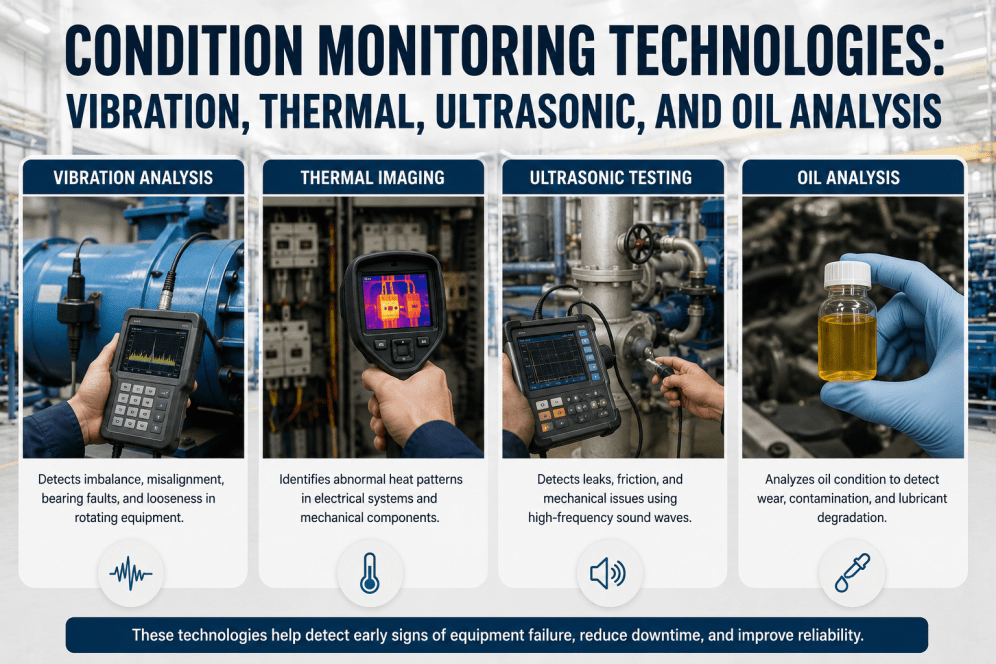
Each discipline is sensitive to a different physical failure signature, which is why the strongest condition monitoring programs train technicians across more than one rather than treating them as competing options.
Condition Monitoring Discipline Comparison — 2026
Building the Program
How to Build an Upskilling Program Technicians Actually Finish
Training budgets get approved every year, but completion rates for self-directed courses are consistently low when there is no structure around them. These are the elements that separate a certification program that sticks from one that quietly stalls after the first course.
1
Start With a Skills Inventory
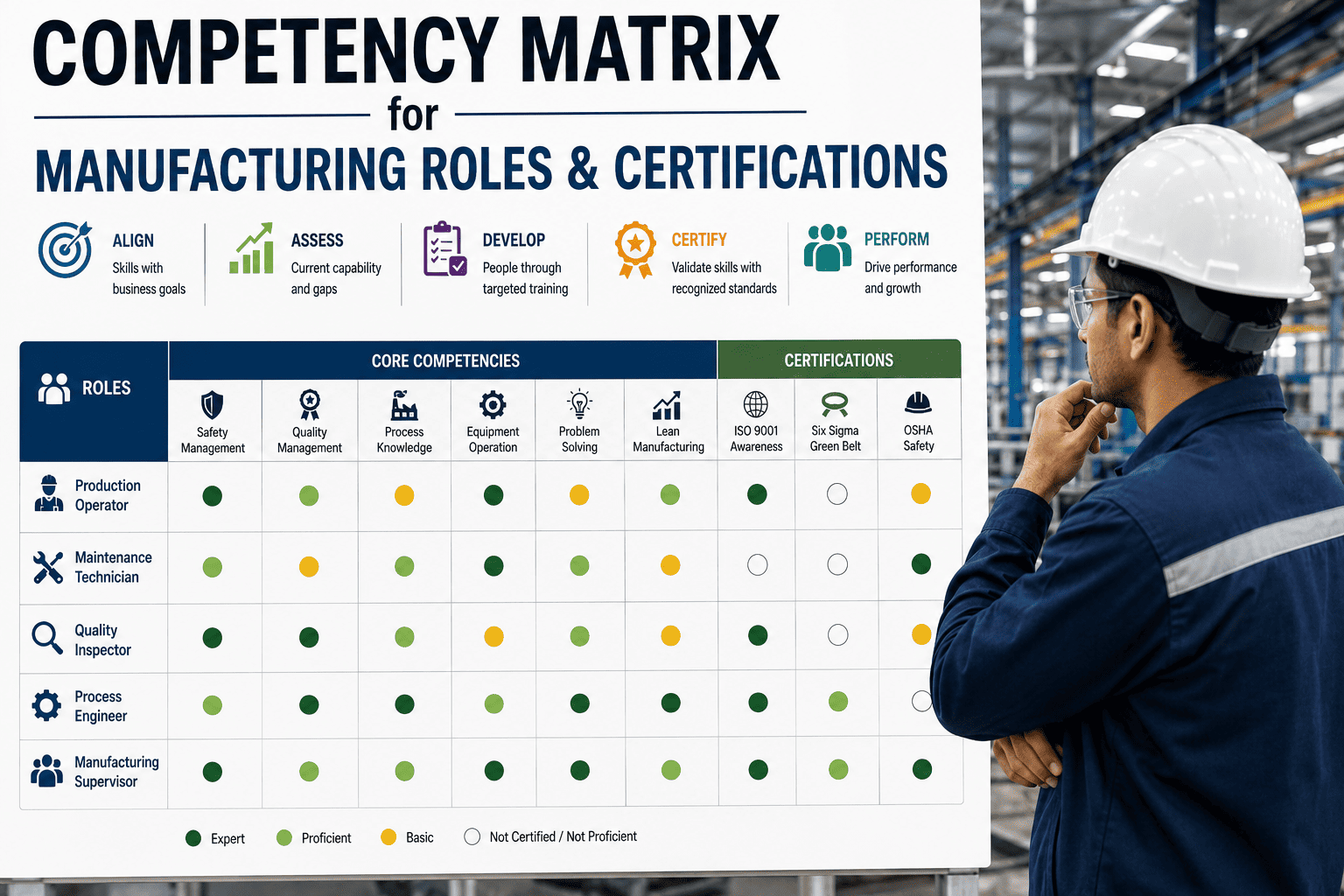
Map current certification levels against every technician on the team before choosing a single course, so training dollars go toward the actual gaps rather than the most popular class.
2
Pair Certification With Real Equipment
Technicians retain far more when they apply CAT I or Level I concepts on the plant's own motors and panels within weeks of the course, not months later when the material has gone cold.
3
Assign a Mentor for the First Year
Pairing a newly certified technician with an experienced analyst for their first readings dramatically shortens the gap between passing an exam and trusting their own diagnosis.
4
Give Technicians a Platform to Practice On
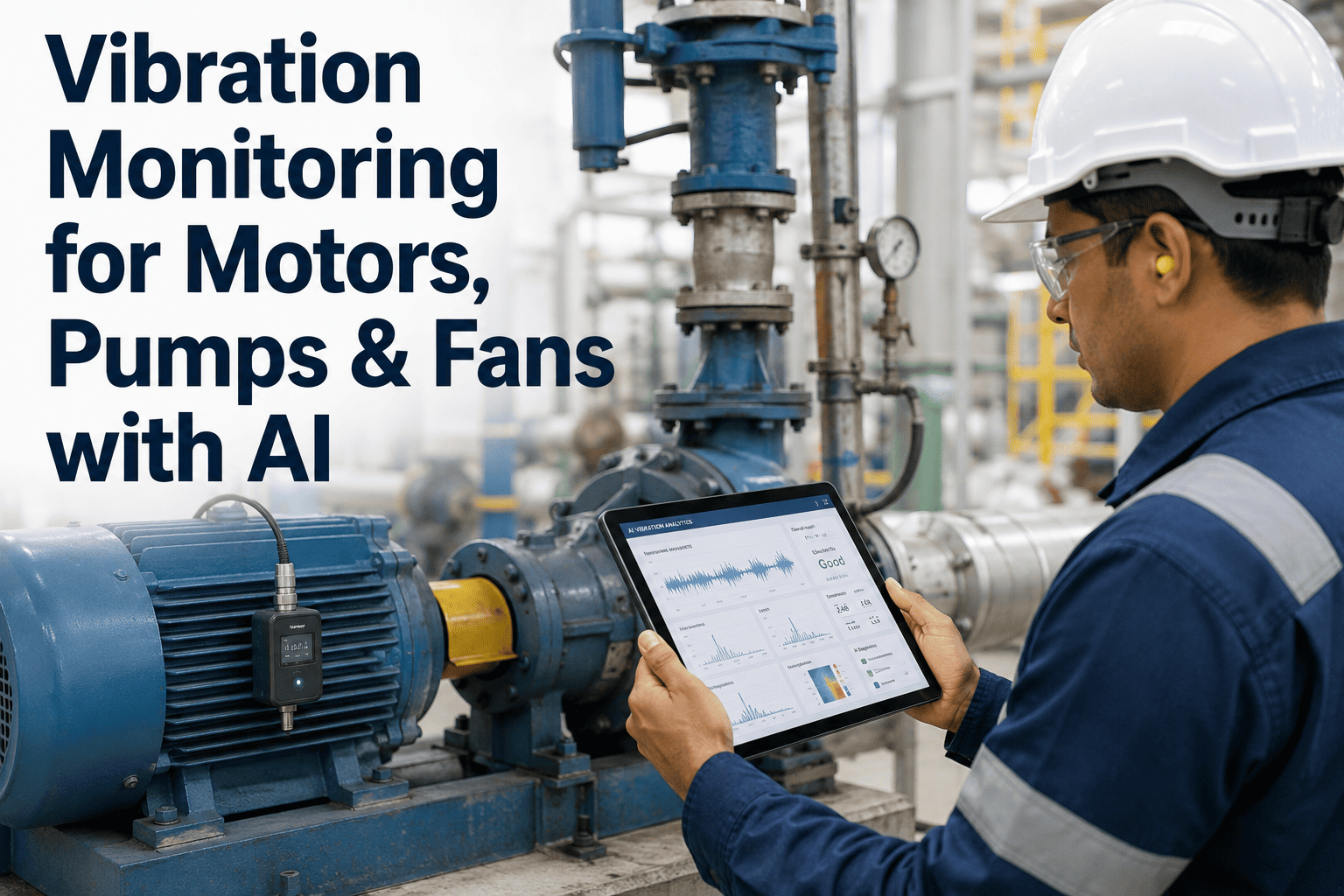
Certification without a live data feed to apply it to fades fast; connecting training directly to the plant's actual condition monitoring platform keeps the skill sharp.
5
Recertify and Cross-Train on a Schedule
Build renewal dates and a second-discipline goal into each technician's development plan so skills stay current and single points of failure never form around one certified expert.
6
Tie Certification to Career Progression
Technicians who see a clear line from CAT I to CAT III, with pay and title changes attached, complete their certification path at meaningfully higher rates than those without one.
The Business Case
What Certified Technicians Change on the Floor
Fewer False Alarms
A CAT I technician flags a threshold crossing; a CAT II or III analyst can tell you whether it is a bearing fault, a looseness issue, or a sensor mounting problem, cutting unnecessary work orders and wasted parts.
Earlier, More Confident Calls
Certified analysts are trusted to recommend a planned repair weeks ahead of failure instead of waiting for a second opinion, which is often the difference between a scheduled repair and an unplanned outage.
Resilience Against Turnover
When competency lives in a documented certification level rather than one veteran's memory, a retirement or resignation no longer means starting the condition monitoring program over from scratch.
A Career Path That Retains People
Technicians who see a funded path from CAT I to CAT III are measurably less likely to leave for a competitor, since the certification itself becomes a portable, recognized credential they helped build on your equipment.
Frequently Asked Questions
Technician Upskilling in Condition Monitoring — Common Questions
Which certification should a maintenance technician start with, vibration, thermography, or oil analysis?
Most programs start technicians with infrared thermography, since Level I training is shorter and produces useful findings within weeks, then layer in vibration analysis CAT I once the technician is comfortable collecting and reading routine data. Oil analysis typically comes third since it often depends on lab partnerships already being in place.
How long does it take a technician to reach CAT II or Level II competency?
Reaching CAT II vibration certification typically requires roughly 18 months of applied experience after CAT I, while Level II thermography certification can often be reached within a year of steady field practice following Level I. The exam itself is a few days, but the experience requirement is what determines the real timeline.
Do certified technicians need a software platform, or is the certification enough on its own?
Certification teaches the technician how to read the data correctly, but a platform is what turns that reading into a tracked trend, a prioritized work order, and a record other technicians can build on. Without one, even a highly certified analyst ends up rebuilding history from memory and disconnected reports each time.
Can iFactory help us build a technician certification and training roadmap?
Yes,
iFactory's reliability team works with plants to map current technician skill levels against equipment criticality, recommend which certifications to prioritize first, and connect training progress directly to the condition monitoring data technicians will use on the job.
What happens if we only train one technician per discipline?
A single certified expert per discipline creates a fragile program, since vacations, illness, or turnover leave a coverage gap exactly when a critical reading needs interpretation. Cross-training at least two technicians per discipline, even at different certification levels, keeps the program running continuously.
WORKFORCE & ADOPTION · CONDITION MONITORING · 2026
Give Certified Technicians a Platform Built for Their Work
iFactory connects vibration, thermography, and oil analysis data into one predictive maintenance workflow your team can act on from day one of certification.