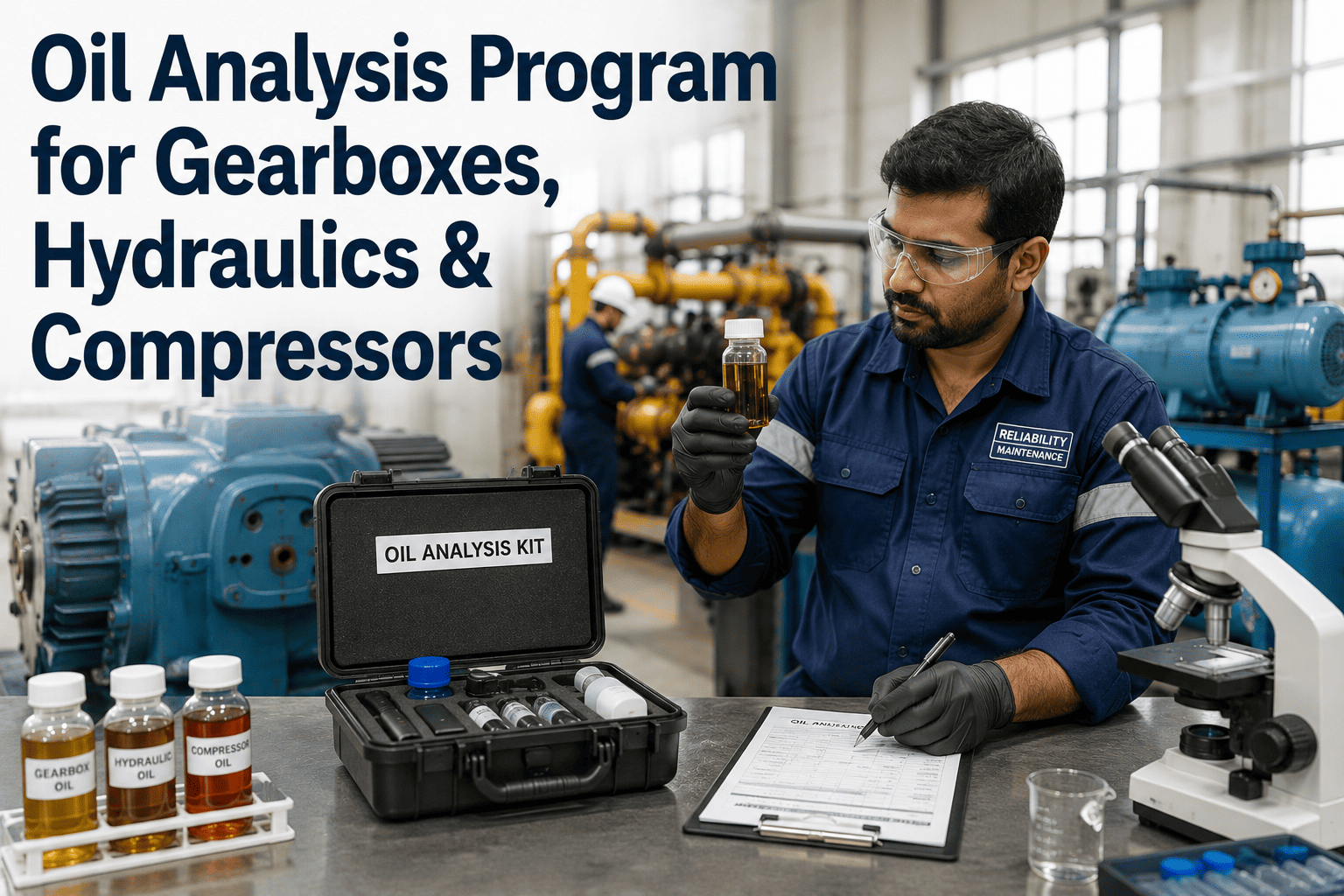
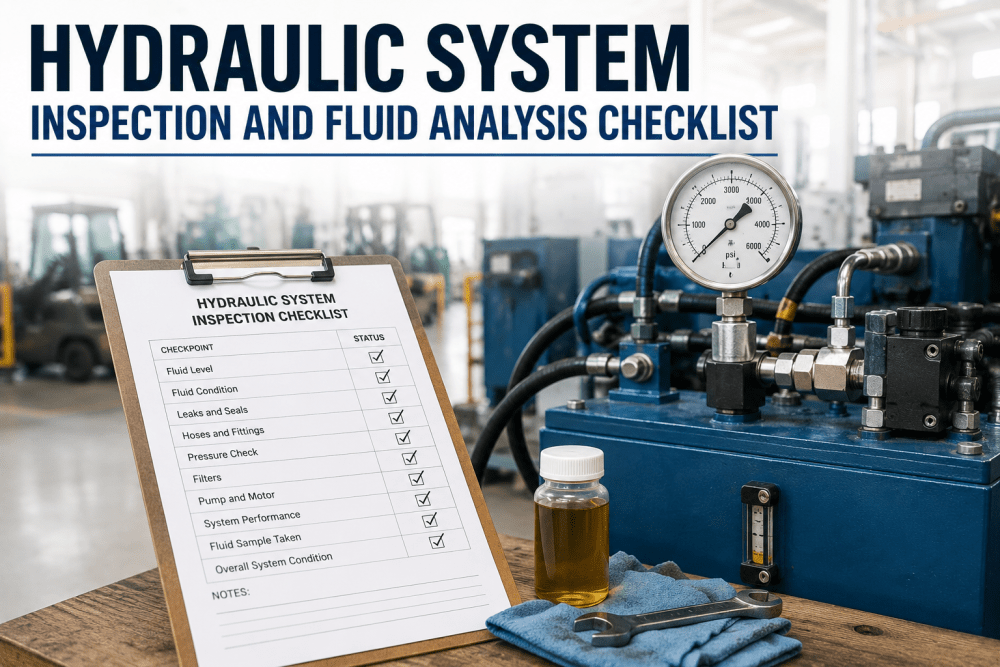
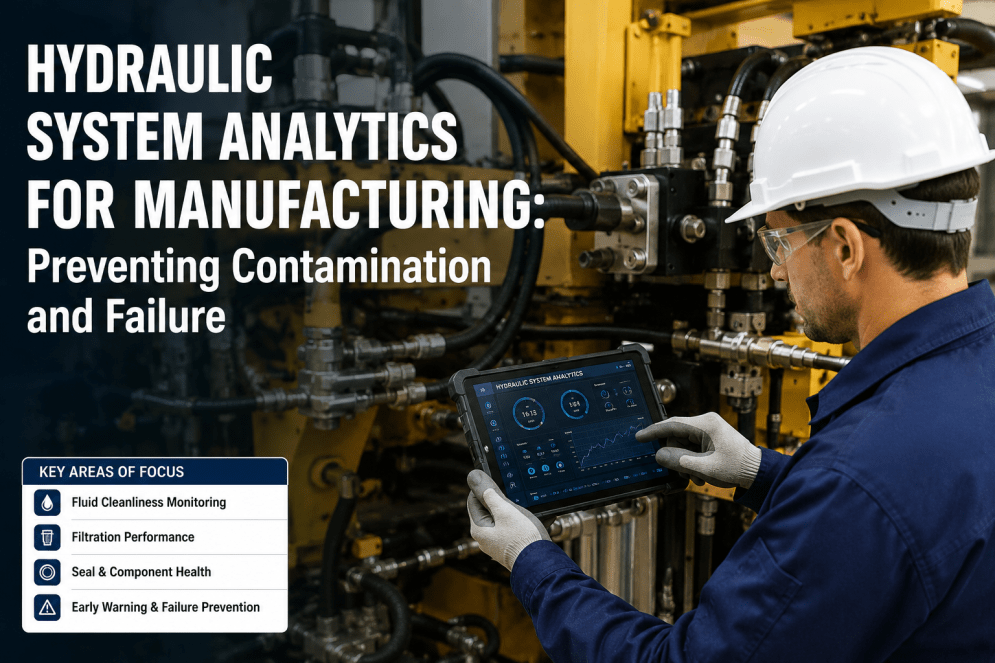
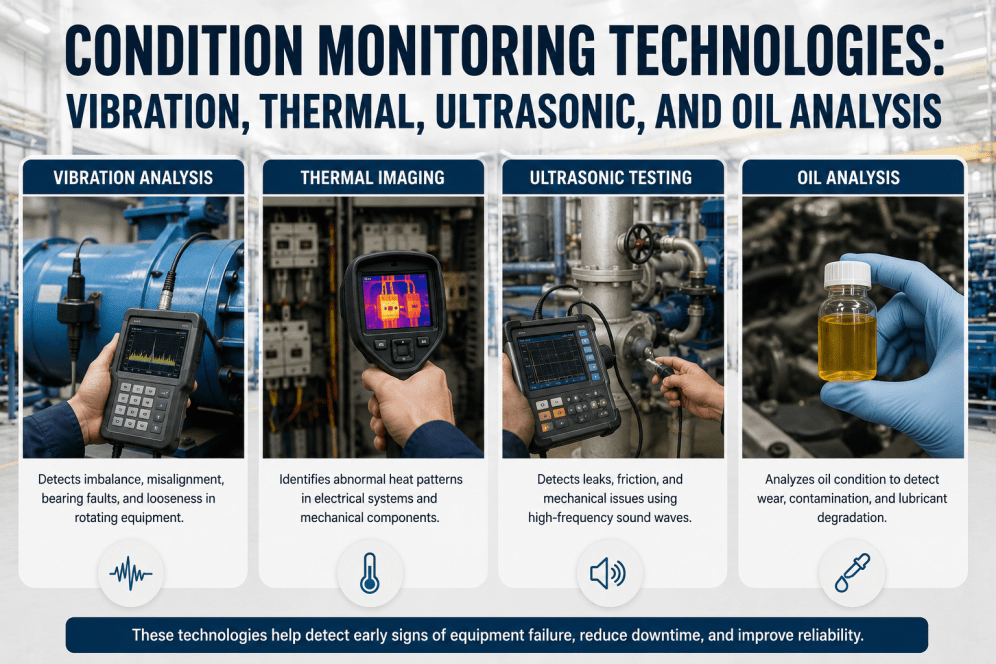
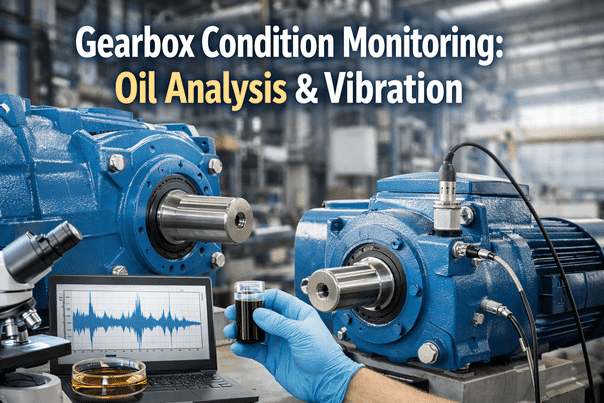
Oil is the only fluid in a gearbox, hydraulic system, or compressor that touches every moving surface inside the machine, which means it is also carrying physical evidence of exactly how that machine is wearing. A single oil sample analyzed correctly can reveal a bearing shedding metal, a seal letting in moisture, or a filter that has stopped doing its job, all before any of those problems show up as a vibration alarm or a temperature spike. Structured oil analysis programs turn that evidence into a trend line instead of a one-time snapshot, tracking wear metals, contamination, and additive depletion sample after sample. Reliability teams building a sampling program across their gearbox, hydraulic, and compressor fleet can book a demo to see trend-based wear scoring applied to real lab results.
PREDICTIVE MAINTENANCE · OIL ANALYSIS · 2026
Every Oil Sample Is a Wear Report
Structured oil analysis for gearboxes, hydraulic systems, and compressors, tracking wear metals, contamination, and oil condition sample after sample.
What a Sample Actually Catches Before Failure
4-6
Consecutive samples typically needed to establish a reliable wear-rate trend for a given component
3-6
Months of early warning oil analysis can provide ahead of a gearbox bearing or gear-tooth failure
10x
Higher wear rate on hydraulic components once particle contamination exceeds the target cleanliness code
50%+
Of hydraulic system failures are traced back to contamination that routine sampling would have flagged
The Layered Test Panel Behind Every Sample
A single sample is run through several distinct tests, each layered on top of the last to build a complete picture of the oil's condition and the machine it came from.
Wear Metals
Iron, copper, chromium, and aluminum concentrations point to which specific component, bearing, gear, or bushing, is shedding material and at what rate.
Contamination
Silicon indicates dirt ingression, while water content and fuel dilution reveal seal and combustion-related contamination pathways.
Oil Condition
Viscosity, total acid number, and oxidation levels show how much useful life remains in the oil itself, separate from the machine's condition.
Particle Count
ISO 4406 cleanliness codes quantify particle contamination by size range, the single strongest predictor of hydraulic component life.
Wear Metal Benchmarks by Component Type
| Component | Primary Wear Metal | Elevated Reading Indicates |
|---|
| Gearbox Bearings | Iron and chromium | Rolling element or race surface wear progressing |
| Bronze Bushings | Copper and tin | Bushing surface wear or additive-related copper corrosion |
| Hydraulic Pumps | Aluminum and iron | Pump housing or piston wear, often contamination-driven |
| Compressor Cylinders | Iron and silicon together | Cylinder wall wear accelerated by ingested dirt |
RELIABILITY ENGINEERING · LUBRICATION PROGRAM
Turn Lab Reports Into a Wear Trend Line
See how automated trending would have flagged your last gearbox or hydraulic pump wear event earlier.
Setting Up a Sampling Program in Four Steps
Step 1
Sample Point Selection
Sampling valves are installed at a live, turbulent zone in the circuit, away from the tank bottom where settled particles would skew results.
Step 2
Baseline Establishment
The first two to three samples on a machine establish its normal wear metal and contamination baseline before any trend judgment is made.
Step 3
Interval Sampling
Ongoing samples are pulled on a fixed interval, typically monthly for critical gearboxes and compressors, and compared automatically against the baseline.
Step 4
Trend-Based Action
A rising wear metal or contamination trend across consecutive samples, not a single reading, triggers inspection or maintenance scheduling.
Why a Single Sample Rarely Tells the Full Story
Wear metal concentrations in oil are typically reported in parts per million, and a common mistake in early-stage oil analysis programs is treating a single elevated reading as a definitive fault indicator on its own. In practice, absolute concentration matters far less than the rate of change between consecutive samples taken at consistent intervals, because a gearbox with naturally higher baseline iron content due to its size or gear geometry can run safely for years at a level that would be alarming on a smaller unit. What actually predicts an approaching failure is a wear metal concentration that keeps climbing sample over sample well beyond that unit's own established baseline, which is why programs that skip the baseline-establishment phase and simply compare every reading against a generic industry limit tend to generate both false alarms and missed detections in roughly equal measure.
Normalizing wear metal data against oil consumption and hours in service adds another layer of accuracy that raw concentration numbers alone cannot provide. A gearbox that has recently had a partial oil change will show artificially diluted wear metal readings compared to one running on the same fill for an extended period, and a compressor accumulating operating hours faster than its sampling interval assumes will show a wear trend that looks steeper than the underlying mechanical condition actually justifies. Mature programs track hours since last sample and hours since last oil change alongside the raw lab numbers, applying a normalization factor before comparing trend lines across different pieces of equipment or across different points in a single machine's service life.
Particle count and wear metal data also need to be read together rather than in isolation, since a rising particle count without a corresponding rise in wear metals often points toward external contamination ingress, a failed breather or seal letting in dirt, rather than internal component wear. Conversely, rising wear metals with a stable particle count more often indicate a specific component beginning to fail mechanically from fatigue or lubrication starvation rather than abrasive wear from contamination. This distinction changes the corrective action considerably: a contamination-driven finding points maintenance toward filtration and sealing, while a wear-driven finding points toward a targeted mechanical inspection of the specific component the metal signature identifies.
Seasoned lubrication engineers also watch for what is sometimes called a silent sample, a report that comes back with every parameter comfortably within normal range across several consecutive intervals. While reassuring, a sequence of unremarkable samples is also the moment to confirm that the sampling procedure itself, valve location, technician technique, and sample bottle cleanliness, is being followed consistently, since a program that never finds anything wrong is sometimes a program that is not sampling correctly rather than a program managing a genuinely healthy fleet.
Trended Oil Program vs One-Off Sampling
Consistent Trended Sampling
Wear rate changes flagged across consecutive samples
Contamination source identified before component damage
Oil change intervals set by condition, not calendar guess
Occasional One-Off Sampling
No baseline exists to judge whether a reading is abnormal
Contamination events go unnoticed between samples
Oil changed on a fixed calendar regardless of actual condition
Getting a New Sampling Program Off to a Reliable Start
The single most common failure point in a new oil analysis program has nothing to do with laboratory accuracy and everything to do with sample collection technique in the field. A sample pulled from the bottom of a static tank, from a dead-leg fitting with no flow through it, or into a bottle that was not properly cleaned before use will introduce contamination or dilution artifacts that no amount of laboratory sophistication can correct after the fact. Establishing a dedicated, live sampling point on each piece of equipment, positioned in a turbulent section of the circuit where the oil is actively circulating and representative of the bulk fluid, is worth the modest upfront cost of installing proper sampling valves rather than relying on drain plugs or dipstick tubes that were never designed for representative sampling.
Consistency in sampling interval matters nearly as much as consistency in collection technique. A program that samples a critical gearbox every thirty days without fail for six consecutive intervals builds a far more reliable trend line than a program that samples the same gearbox somewhere between two and eight weeks depending on staff availability, because irregular intervals make it difficult to distinguish a genuine acceleration in wear rate from simple noise introduced by inconsistent time gaps between data points. Facilities that struggle with staffing consistency for manual sampling rounds sometimes find it worthwhile to formalize sampling into the same route structure used for vibration data collection, treating both as a single combined round rather than two separate, independently scheduled activities.
Selecting the right laboratory test slate for each equipment type is the final decision that shapes program value from day one. A gearbox benefits most from a full wear metal panel plus viscosity and water content, a hydraulic system gains the most value from rigorous particle counting alongside its wear metal panel, and a compressor benefits from combining wear metals with acid number tracking given how oxidation tends to accelerate under the higher operating temperatures compressors often run. Facilities new to structured oil analysis sometimes default to running every available test on every sample regardless of equipment type, which drives up cost without necessarily improving diagnostic value, when a test slate matched to each equipment class's actual failure modes delivers the same or better insight at a lower ongoing cost.
Common Mistakes That Undermine an Oil Analysis Program
Sampling From the Wrong Point
Pulling a sample from a static drain plug or a dead-leg fitting instead of a live, turbulent sampling valve produces results that do not represent the bulk fluid actually circulating through the machine.
Inconsistent Sampling Intervals
Sampling on a variable schedule ranging anywhere from two to eight weeks makes it difficult to distinguish a genuine acceleration in wear rate from ordinary noise introduced by uneven time gaps between samples.
Reading Absolute Numbers, Not Trends
Reacting to a single elevated wear metal reading against a generic industry limit, rather than that specific machine's own established baseline, produces both false alarms and missed early detections.
Running the Same Test Slate on Everything
Applying an identical, exhaustive test panel to every sample regardless of equipment type drives up cost without necessarily improving diagnostic value compared to a slate matched to each asset's actual failure modes.
How Sampling Priorities Shift Across Equipment Categories
Gearboxes, hydraulic systems, and compressors each fail through different mechanisms, and a mature oil analysis program tunes its sampling frequency and test emphasis to the specific equipment category rather than running one generic program across the entire fleet.
Industrial Gearboxes
Wear metal trending on iron and chromium content is the primary signal here, since gear tooth and bearing surface wear inside an enclosed gearbox develops gradually and is otherwise difficult to observe directly.
Hydraulic Power Units
Particle counting against an ISO 4406 target takes priority, since hydraulic component clearances are tight enough that contamination control drives component life more than any other single factor.
Air & Gas Compressors
Oxidation and total acid number tracking matter more here than in other equipment categories, since compressors often run at higher operating temperatures that accelerate oil degradation.
Maintenance Teams Ask
How often should gearboxes, hydraulic systems, and compressors actually be sampled?
Critical gearboxes and compressors are typically sampled monthly, while hydraulic systems with a strong contamination control program can often move to a quarterly interval once particle counts have stabilized within target cleanliness codes for several consecutive samples. Less critical or standby equipment is commonly sampled quarterly to semi-annually, adjusted based on operating hours rather than calendar time alone. Facilities can work through interval planning for their specific asset mix through
support.
What is the difference between total acid number and wear metal analysis?
Total acid number measures the oil's own chemical condition, specifically how much oxidation and additive depletion has occurred, which determines whether the oil itself still provides adequate protection regardless of the machine's mechanical condition. Wear metal analysis measures the machine's condition instead, quantifying actual material being shed from bearings, gears, and other surfaces into the oil. A rising acid number calls for an oil change, while rising wear metals call for a mechanical inspection, and a well-run program tracks both independently rather than treating one as a proxy for the other.
How does particle counting relate to hydraulic component life specifically?
Hydraulic components operate with extremely tight clearances between moving parts, often measured in microns, which means even particles too small to see with the naked eye can accelerate wear on pump and valve surfaces dramatically once concentration exceeds the target ISO 4406 cleanliness code. Studies across hydraulic fleets consistently show that component life scales closely with achieved cleanliness level, making particle count one of the highest-value single measurements in the entire test panel. Teams can
book a demo to see cleanliness code trending against their own hydraulic fleet.
Can oil analysis replace vibration monitoring on gearboxes?
No, the two technologies typically catch different fault types at different stages, with oil analysis often detecting early surface wear and contamination issues while vibration monitoring is generally more sensitive to developing bearing defects and gear mesh problems once they progress mechanically. Running both on the same critical gearbox gives a stronger combined signal than either alone, since agreement between rising wear metals and a developing vibration signature substantially increases confidence in the diagnosis. Most mature reliability programs treat the two as complementary layers rather than substitutes.
What should a facility do when a sample comes back with an unexplained wear metal spike?
A single elevated reading without an established trend is treated as a flag for a confirmation resample first, since sampling technique errors or an isolated contamination event can produce a one-time anomaly that does not represent the machine's actual condition. If the confirmation sample shows the same elevated level or a continued rise, that becomes the trigger for a targeted inspection of the specific component the wear metal signature points toward. Facilities can review resample and escalation procedures through
support before building out their own workflow.
OIL ANALYSIS · GEARBOX · HYDRAULIC · COMPRESSOR
Stop Reading Reports in Isolation. Start Trending Them.
Give your reliability team a wear-rate view across every gearbox, hydraulic system, and compressor in the fleet.