AI for Hydraulic Fracture Design Optimization in Unconventional Wells
By Johnson on August 8, 2026
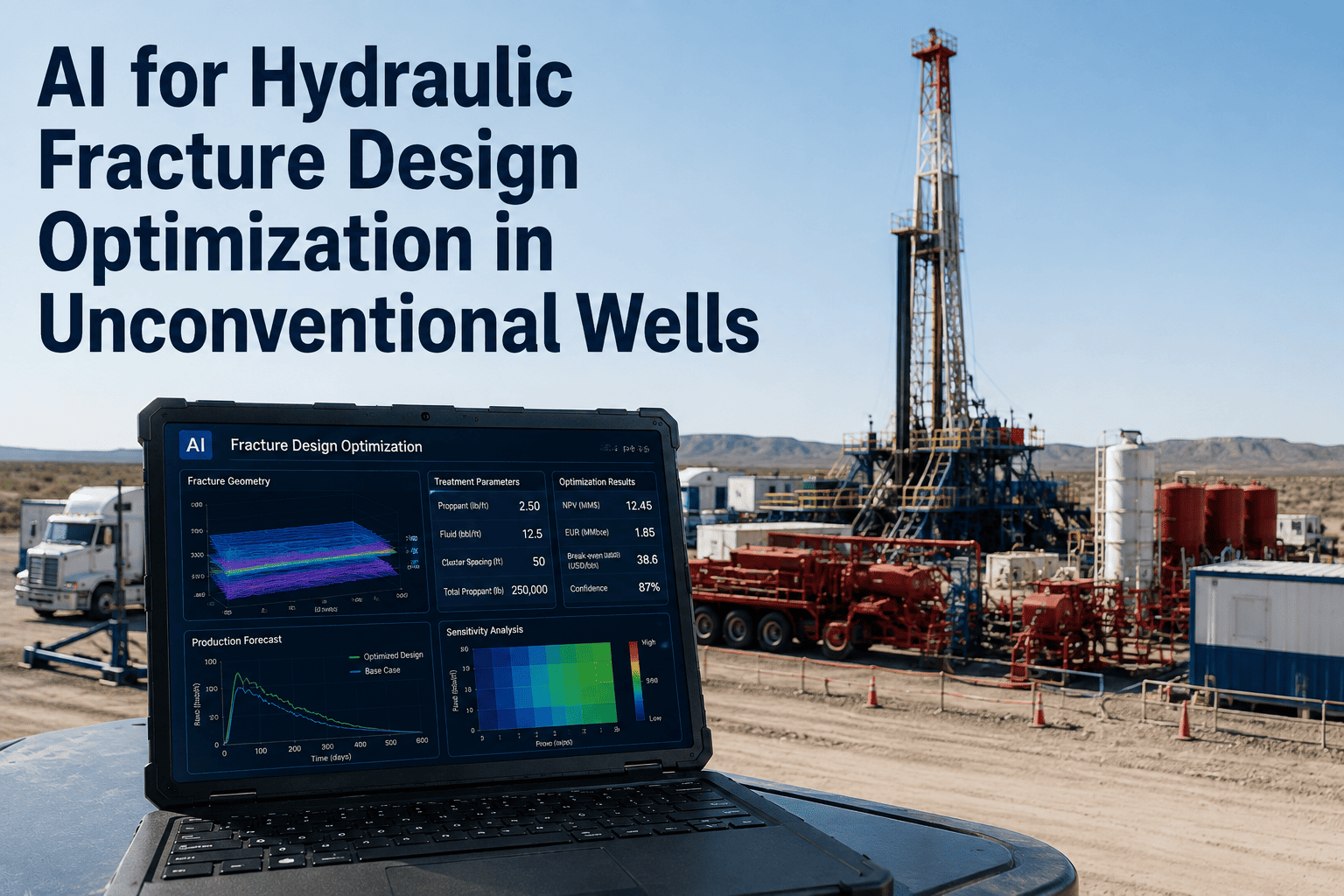
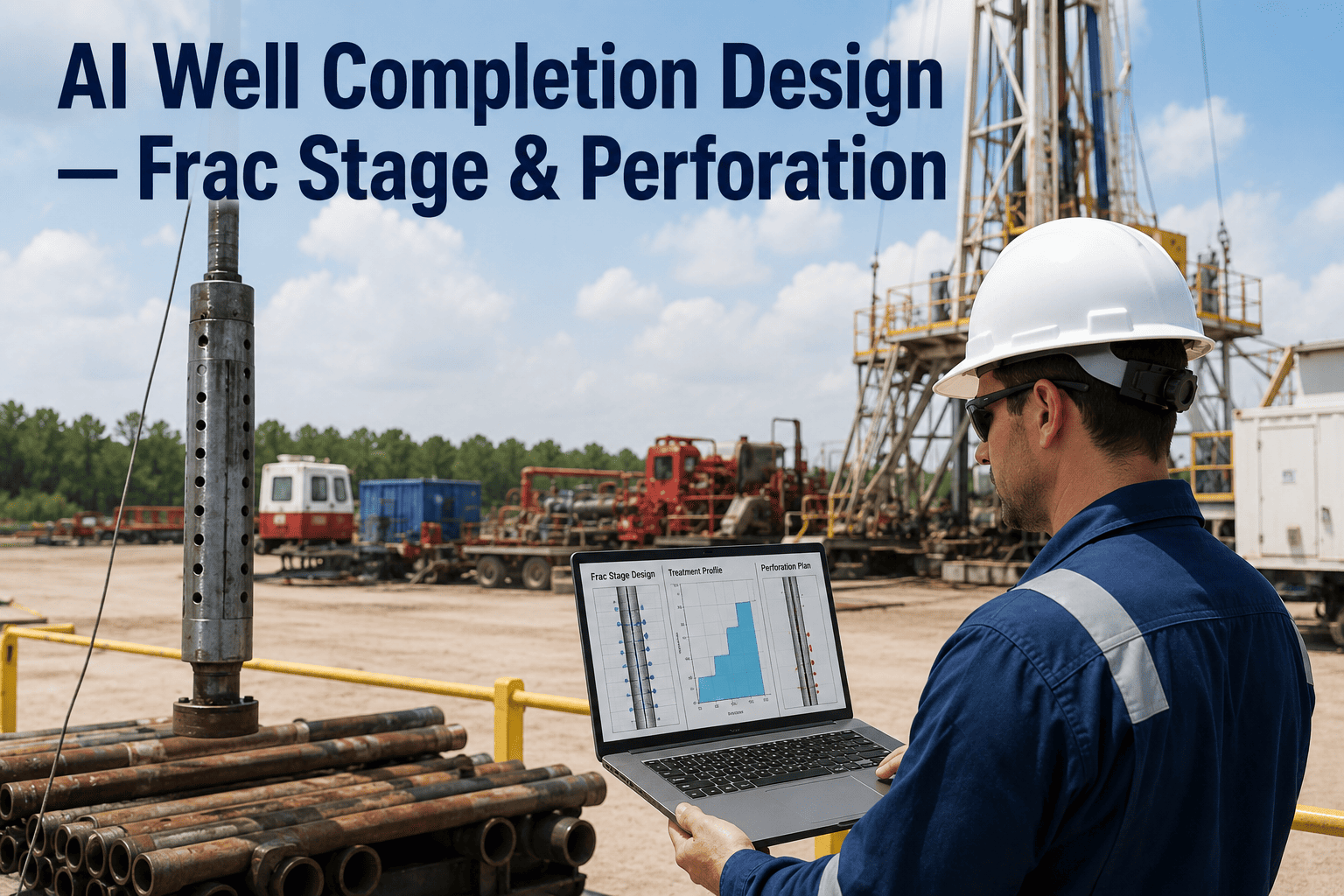
Two wells drilled a few hundred feet apart in the same formation can produce very different results from nearly identical frac designs, and the difference usually traces back to fluid volume, proppant concentration, pump rate, and stage spacing decisions made without fully accounting for what offset wells already revealed about the rock. AI-driven fracture design optimization closes that gap by learning from every completed well nearby before the next design is finalized, adjusting each parameter to the specific reservoir conditions rather than reusing a standard type-curve design across an entire pad. Below is how that optimization actually works, parameter by parameter, and how to book a design review with our completions team for your next pad.
Completions AI · Fracture Design
AI for Hydraulic Fracture Design Optimization in Unconventional Wells
Optimizing frac fluid volume, proppant concentration, pump rate, and stage spacing using offset well production history and real-time microseismic feedback — so every stage design reflects the rock it's actually treating.
Why a Standard Type-Curve Design Leaves Production on the Table
A type-curve frac design is built to perform reasonably well across an average well in a formation, which by definition means it is not optimized for any single well's actual rock properties, stress state, or proximity to depleted offset wells. AI-driven design optimization instead treats each well as its own optimization problem, weighing the specific geologic and completion history available for that exact location before recommending stage-by-stage parameters — closing the gap between "reasonable" and "reservoir-specific" without adding time to the design cycle.
Parameter-by-Parameter
The Four Variables AI Optimizes and What Drives Each One
Frac Fluid Volume
Sized against offset well fracture geometry results and formation permeability, avoiding both under-stimulation that limits contact area and over-pumping that grows fracture height into unwanted zones.
Proppant Concentration
Ramped based on near-wellbore stress data and screenout risk learned from prior stages on offset wells, balancing conductivity against the risk of a premature screenout mid-stage.
Pump Rate
Adjusted in real time against treating pressure response, since rate that generates efficient fracture propagation in one rock interval can cause near-wellbore friction issues in the next.
Stage Spacing
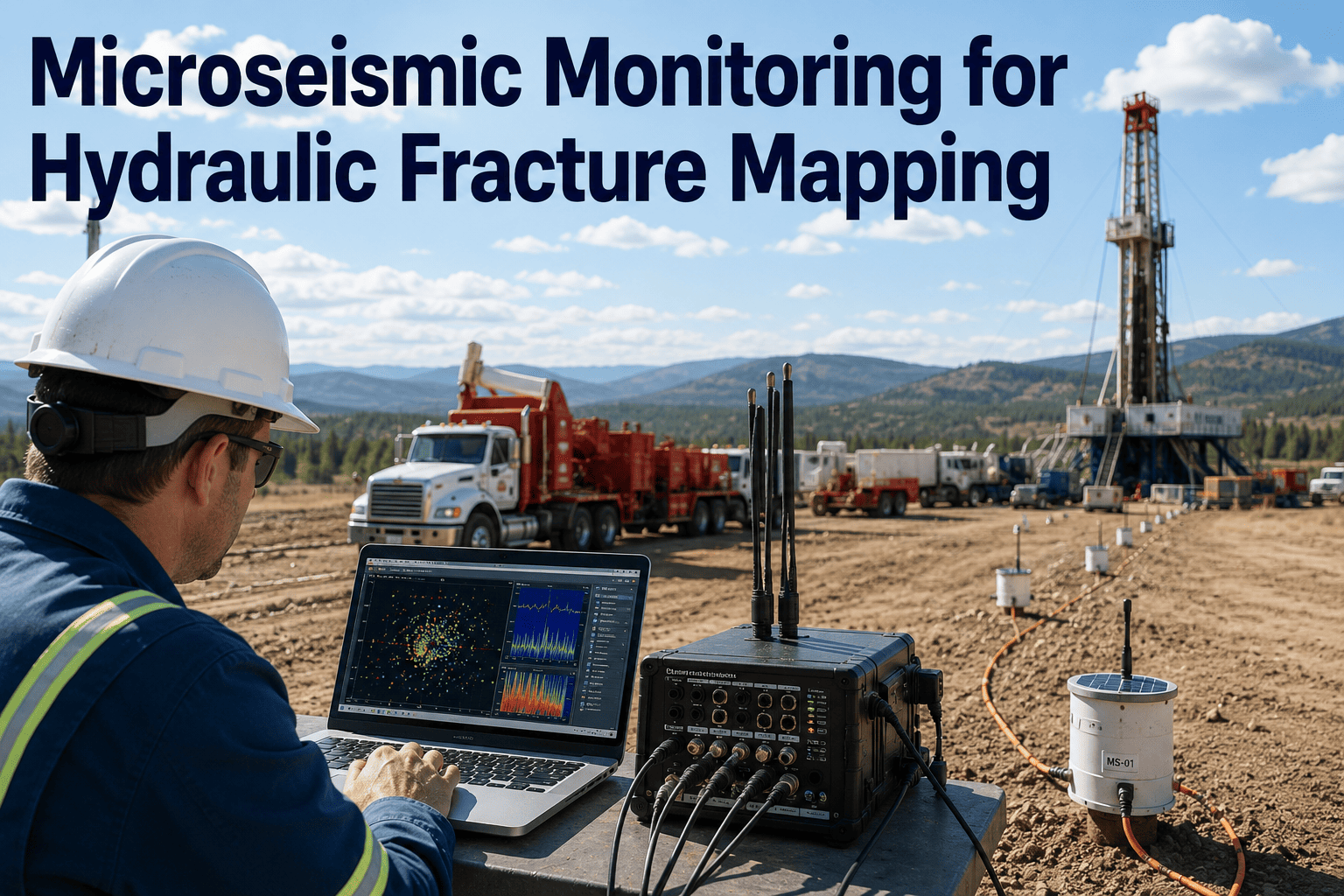
Set using microseismic-derived fracture geometry from offset wells to avoid both frac hits into adjacent wellbores and unstimulated rock left between stages spaced too far apart.
How the Model Learns
From Offset Well History to a Stage-by-Stage Design
See What Your Offset Well Data Could Be Telling You
Most operators already have the offset well production and treatment data needed for AI-optimized design — it just hasn't been connected to the next well's plan yet. A design review shows exactly what's available for your pad.
Real-Time Adjustment While the Stage Is Being Treated
Design optimization does not stop once pumping begins — treating pressure, rate, and any available microseismic feedback continue feeding the model during the stage itself, allowing pump rate or proppant concentration adjustments in response to how the rock is actually responding rather than committing entirely to the pre-job plan.
Signal Observed Mid-Stage
What It Indicates
Model Response
Rising treating pressure at constant rate
Possible near-wellbore restriction or screenout risk building
Recommend proppant concentration hold or rate reduction
Pressure drop with rate increase
Fracture extending into more permeable or lower-stress rock
Recommend fluid volume adjustment to maintain contact
Frac hit risk into a nearby producing or shut-in well
Recommend pump rate reduction or stage sequencing change
Data Requirements
What the Model Needs From Your Existing Well Files
Most operators are surprised by how much of the data an AI frac design model needs is already sitting in existing well files rather than requiring a new data collection program — completion reports, treating pressure logs, proppant and fluid volumes by stage, and post-frac production history are standard deliverables from any completed well, they simply have not been structured for a model to learn from systematically. The work at the front of a frac design optimization project is almost always data organization rather than new data acquisition: pulling stage-level treatment data and matching it against corresponding production results by well and by stage, so the model can learn which parameter combinations actually drove better outcomes rather than treating each well as an isolated case.
Completion Reports
Stage count, perforation intervals, and as-pumped fluid and proppant schedules from prior wells on the pad or in the formation.
Treating Pressure Logs
Stage-by-stage pressure and rate data, which reveals how each interval actually responded to the design pumped, not just what was planned.
Production History
Early-time production by well, ideally normalized for lateral length and reservoir quality, to close the loop between design and outcome.
Microseismic or Tiltmeter Files
Where available, adds fracture geometry detail that sharpens stage spacing and height growth recommendations beyond pressure data alone.
Why It Matters Financially
Connecting Design Decisions to Completion Cost and Production Outcome
Frac design decisions carry cost implications well beyond the pump job itself — a fluid volume set too high adds direct treatment cost without a corresponding production benefit, while a design that under-stimulates the interval trades a small upfront savings for meaningfully lower cumulative production over the life of the well. Because AI optimization is grounded in what offset wells actually produced rather than a general type-curve assumption, the resulting design decisions tend to concentrate spend where it has shown a production return in that specific formation and pull back where offset data shows diminishing return, rather than applying a uniform design across every stage regardless of what the rock is telling the model.
Applied Example
How a Design Recommendation Changes Across a Multi-Well Pad
Consider a four-well pad being completed sequentially, where the first two wells are pumped against a standard type-curve design and the third well's design is generated with AI optimization drawing on the first two wells' treating and early production data. If the offset data shows stages in a particular depth interval consistently screening out at a lower proppant concentration than the type curve called for, the model carries that lesson directly into the third well's design for the equivalent interval, recommending a more conservative ramp before the historical screenout threshold rather than repeating the same risk. At the same time, if intervals with strong ROP and clean pressure response show room for a slightly higher fluid volume without corresponding treating pressure issues, that gets reflected too — the fourth well's design then draws on three wells of history instead of two, compounding the benefit stage over stage as the pad progresses rather than resetting with every new well.
Completions engineers already know their offset well data matters — the gap has always been turning that history into a specific pump-rate or proppant-concentration decision fast enough to actually use it on the next well. What AI changes is the speed and consistency of that translation, so a lesson learned on well four of a pad genuinely shapes the design pumped on well five instead of surfacing only in the post-job report. The wells where I've seen the biggest production uplift weren't the ones with dramatically different designs — they were the ones where every stage's parameters were quietly right-sized to that specific interval instead of copied from a type curve.
Anselm Bracewell-Okafor
Completions Engineering Advisor · 16 years in unconventional completions design and microseismic interpretation
Frac Design Questions
Fracture Design Optimization — Frequently Asked
How much offset well history is needed before AI optimization becomes useful?
Even a single completed offset well with production and treatment data provides a meaningful starting point, and the model's recommendations improve as more wells on the same pad or formation are added to the history it draws on. Book a review to see what your existing data already supports.
Does this replace the completions engineer's judgment on the design?
No — the model produces a recommended parameter set that the completions engineer reviews and can adjust before it goes to the field, functioning as a data-informed starting point rather than an automated decision the team has no visibility into. Contact support to see a sample design output.
Can this work without real-time microseismic monitoring on every well?
Microseismic improves the precision of stage spacing and real-time adjustment recommendations, but the model still provides meaningful fluid volume, proppant, and pump rate optimization using treating pressure and offset production data alone where microseismic isn't available. Book a demo to discuss your available data sources.
How does the model account for frac hit risk into nearby wells?
Offset wellbore locations are incorporated directly into the stage spacing and sequencing recommendation, and real-time microseismic feedback during pumping is used to flag fracture growth trending toward a nearby wellbore before it becomes a communication event. Ask our team about frac hit mitigation specifically for your pad layout.
How quickly can this be applied to a pad that's already underway?
Because the optimization draws on data the operator typically already has, it can often be applied to the next unpumped well on an active pad without waiting for a full new project cycle to begin. Book a call to scope integration timing for a pad in progress.
Design the Next Stage Around What the Rock Already Told You
iFactory connects offset well production history and microseismic data to fluid volume, proppant, pump rate, and stage spacing decisions — so every design on the pad gets sharper than the last.