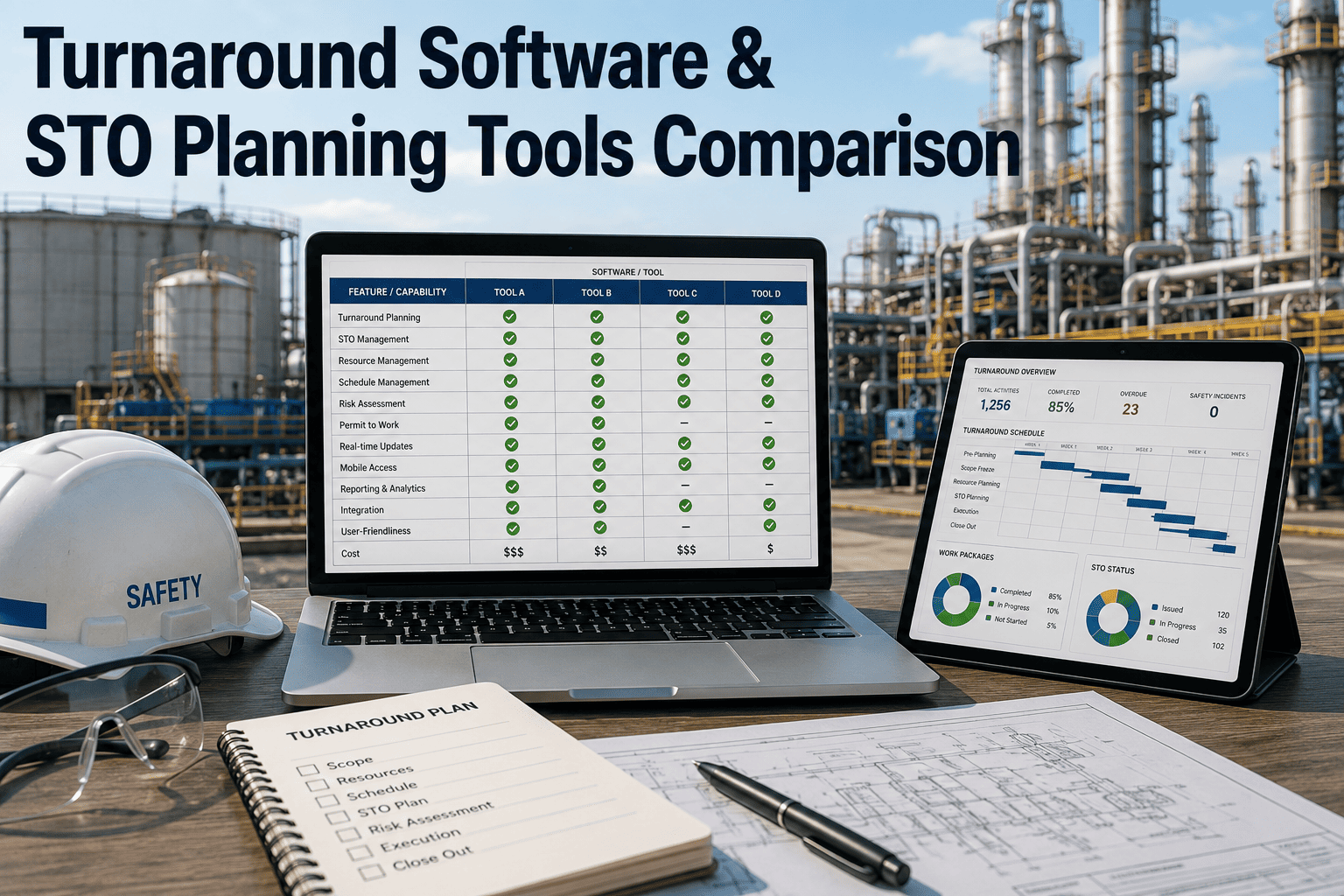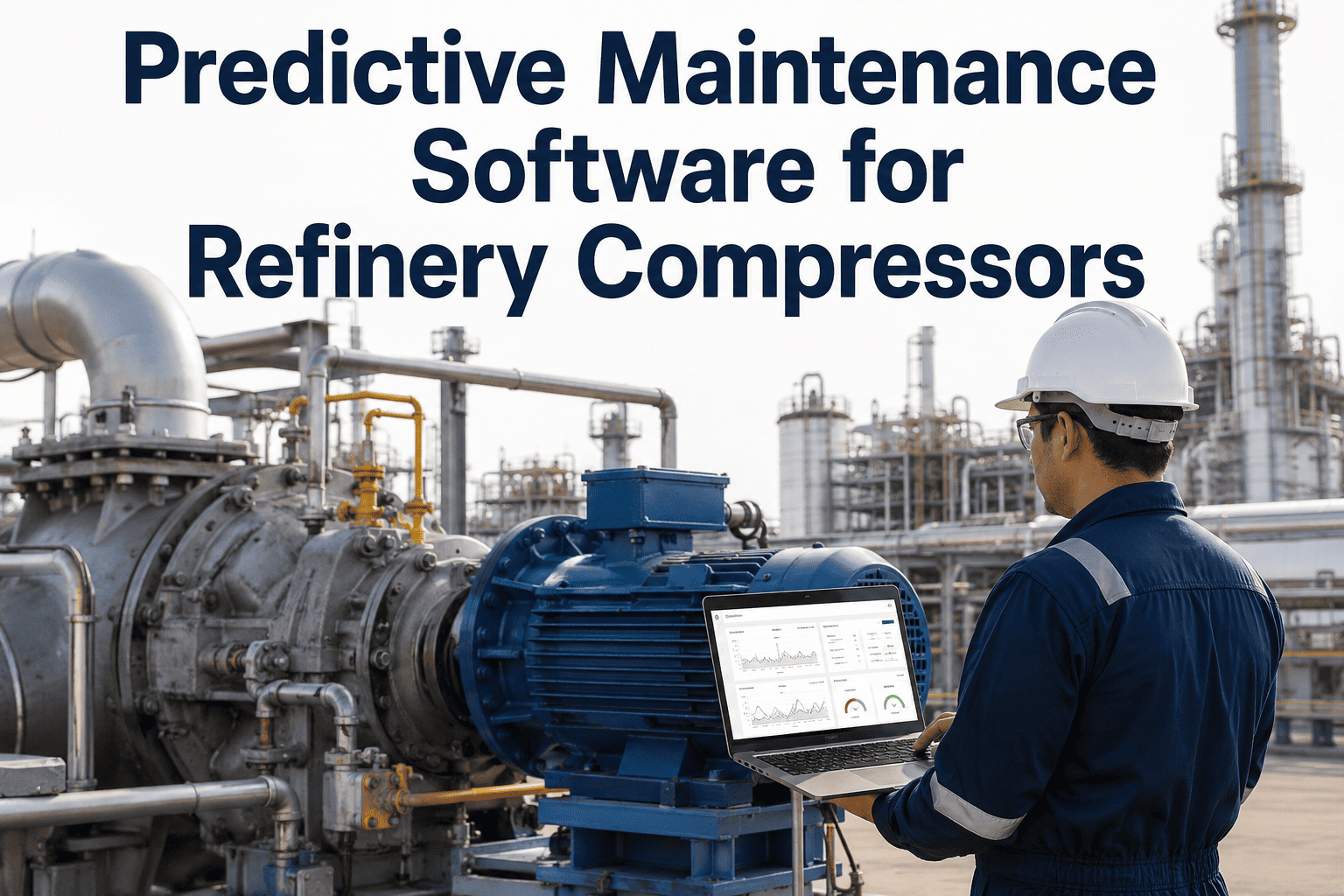
A turnaround planning team spends four months building a scope list from inspection history, OEM recommendations, and whatever the last outage report flagged as "monitor next time." Then the unit shuts down, technicians open equipment that was scoped as routine, and 20 to 30 percent of the actual work turns out to be scope no one planned for — while other equipment that made the list gets opened, inspected, and closed with nothing wrong. AI pre-turnaround condition assessment fixes this by reading the online condition monitoring data every asset has already been generating for months and using it to predict, before the shutdown starts, which equipment genuinely needs internal inspection and which can be safely deferred. Book a demo to see how it would reshape your next turnaround scope.
Stop Building Turnaround Scope From Guesswork — Let Condition Data Decide What Actually Needs to Open
AI models trained on vibration, thickness, temperature, and process history predict equipment condition ahead of the shutdown window, so planners commit inspection hours to the assets that need them instead of the assets that were simply due on the calendar.
Why Turnaround Scope Lists Are Wrong Before the Unit Even Shuts Down
Most turnaround scope lists are built from a mix of fixed inspection intervals, OEM-recommended maintenance cycles, and whatever the previous outage report noted as worth watching. None of these sources reflect how the equipment has actually behaved since the last shutdown. A pump that ran clean for eighteen months and a pump that has shown a slow vibration climb for the last six weeks end up on the same interval-based inspection list, treated identically, even though their real condition could not be more different.
The result shows up twice. First, during planning, when scope is padded conservatively because nobody wants to be the planner who deferred an inspection that later failed — driving cost and duration up before a single bolt is loosened. Second, during execution, when equipment that was scoped as low-risk turns out to have a genuine problem discovered only once it is opened, forcing an emergency scope addition mid-shutdown that competes for the same crews, cranes, and critical path days already committed elsewhere.
Neither failure mode is a people problem. Planners and inspection engineers are working with the best information a fixed-interval system can give them, which is fundamentally backward-looking — it tells you when an asset was last inspected, not how it has actually degraded since. Without a way to continuously trend condition against the full population of turnaround-eligible equipment, even an experienced planning team is left choosing between over-scoping out of caution and under-scoping out of budget pressure, with no third option that is both leaner and better justified.
From Raw Sensor History to a Ranked Inspection Priority List
Condition-Based Scoping vs Interval-Based Scoping
The difference is not just accuracy — it changes how planning hours, inspection crews, and contingency budget get allocated months before the shutdown begins.
| Planning Input | Interval-Based Scoping | Condition-Based Scoping |
|---|---|---|
| Basis for inspection decision | Fixed calendar interval or OEM cycle | Actual trended equipment condition |
| Handling of healthy equipment | Inspected regardless of condition | Deferred with documented justification |
| Handling of degrading equipment | May be missed until next cycle | Flagged early for priority inspection |
| Mid-shutdown scope additions | Common and disruptive to schedule | Reduced through earlier identification |
| Contingency budget accuracy | Padded conservatively | Sized against predicted findings |
A Realistic Rollout Path for the First Turnaround Cycle
Plants adopting condition-based scoping for the first time rarely start by handing the entire scope list over to the model. A more workable path runs the assessment alongside the existing scoping process for one full turnaround cycle, comparing the model's ranked recommendations against what the planning team decides independently, without changing any actual scope decisions yet. This builds a track record the team can review after the outage closes — which predictions matched actual findings, which didn't, and why — before anyone is asked to trust the tool with a real deferral decision.
By the second cycle, most teams are comfortable using the model's recommendations to guide the initial scope draft, still with full engineering review, and by the third cycle the ranked list has usually become the default starting point rather than a secondary check. This gradual path matters more than the technology itself for adoption — a planning team that has watched the model's predictions prove out against real inspection findings trusts it in a way that no accuracy statistic from a vendor ever could.
A Scope List Backed by Trend Data Is Easier to Defend and Cheaper to Execute
See how a ranked, evidence-based inspection list changes the planning conversation for your next turnaround.
Data Sources Feeding the Condition Assessment Model
The model does not require a new instrumentation program to start producing useful predictions — it works with whatever condition data the plant already has, then improves as more history accumulates.
Where the Time and Cost Savings Actually Come From
Condition-based scoping does not simply shrink the scope list for its own sake — it redirects effort toward the equipment where inspection actually changes an outcome. Deferring inspection on a healthy asset frees crew hours, scaffold, and crane time that would otherwise be spent confirming what the data already showed. Those freed resources go toward the assets flagged as genuinely degrading, where a thorough inspection and, if needed, repair prevents a future failure rather than simply documenting current condition.
The planning benefit compounds across the procurement cycle too. Long-lead materials for repairs identified months in advance through condition trending can be ordered well ahead of the shutdown, instead of being expedited at a premium once an unplanned finding surfaces mid-execution. A scope list that is 80 percent accurate before the unit goes down is worth more to a planning team than a scope list that is comprehensive but built on assumption rather than evidence.
There is also a less visible benefit in how contractor negotiations play out. A turnaround contract scoped around a defensible, data-backed equipment list gives the planning team a stronger negotiating position on crew size and duration commitments than a contract padded with conservative estimates to cover for scope uncertainty. Contractors price uncertainty into their bids just as plants do, and a tighter, better-justified scope tends to produce tighter, better-justified pricing on the other side of the table as well.
Condition-Based Scoping Applies Wherever a Fixed Shutdown Window Meets Variable Equipment Condition
The underlying logic — trend condition data against baseline, predict future state, rank inspection priority — does not change across industries, even though the equipment mix and the consequences of a missed finding do. A refinery, a cement plant, and a power generation facility all face the same structural problem: capital-intensive equipment gets inspected on a fixed calendar cadence regardless of how it has actually been performing since the last outage, and the gap between calendar-driven scope and condition-driven scope is where both wasted inspection hours and missed failures hide.
What to Bring to Leadership When Proposing Condition-Based Scoping
Turnaround budgets are usually the largest discretionary maintenance spend a plant approves in a given cycle, which makes leadership rightly cautious about changing how scope gets decided. The strongest business case does not ask leadership to trust a model blindly — it asks them to compare the cost of the current scoping process against a version that keeps every existing safeguard while adding an evidence layer on top. Framing the shift this way, as an addition rather than a replacement of engineering judgment, tends to get faster approval than framing it as a new system to adopt.
The numbers worth bringing to that conversation are specific to the plant, not generic industry averages: how many scope additions occurred mid-shutdown in the last two turnarounds, how many hours those additions consumed on the critical path, and how many inspections in the last cycle came back with no significant findings. Those three figures, pulled from the plant's own turnaround close-out reports, usually make the case for condition-based prioritization more convincingly than any external benchmark could.
Questions Turnaround Planners Ask About Condition-Based Scoping
Build Your Next Turnaround Scope Around Evidence, Not the Calendar
See how condition-based prediction reshapes the scope list for your next planned shutdown, with the trend data behind every recommendation.