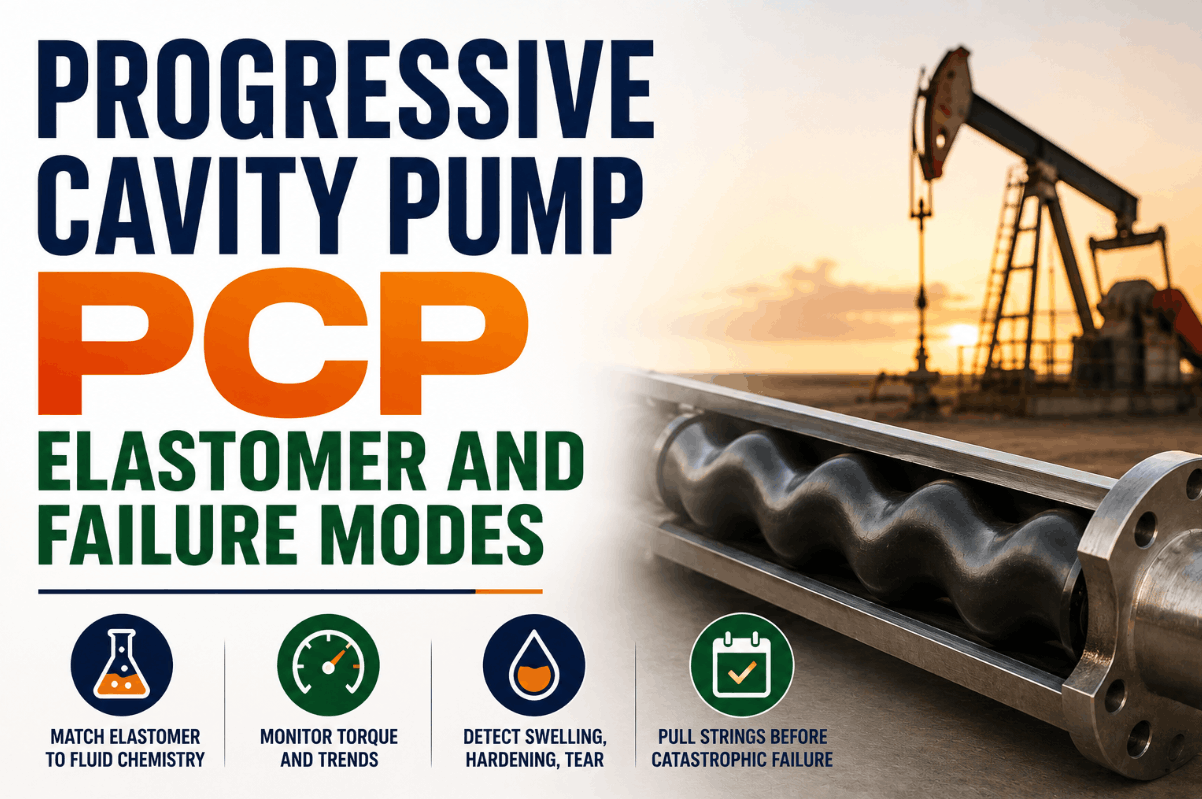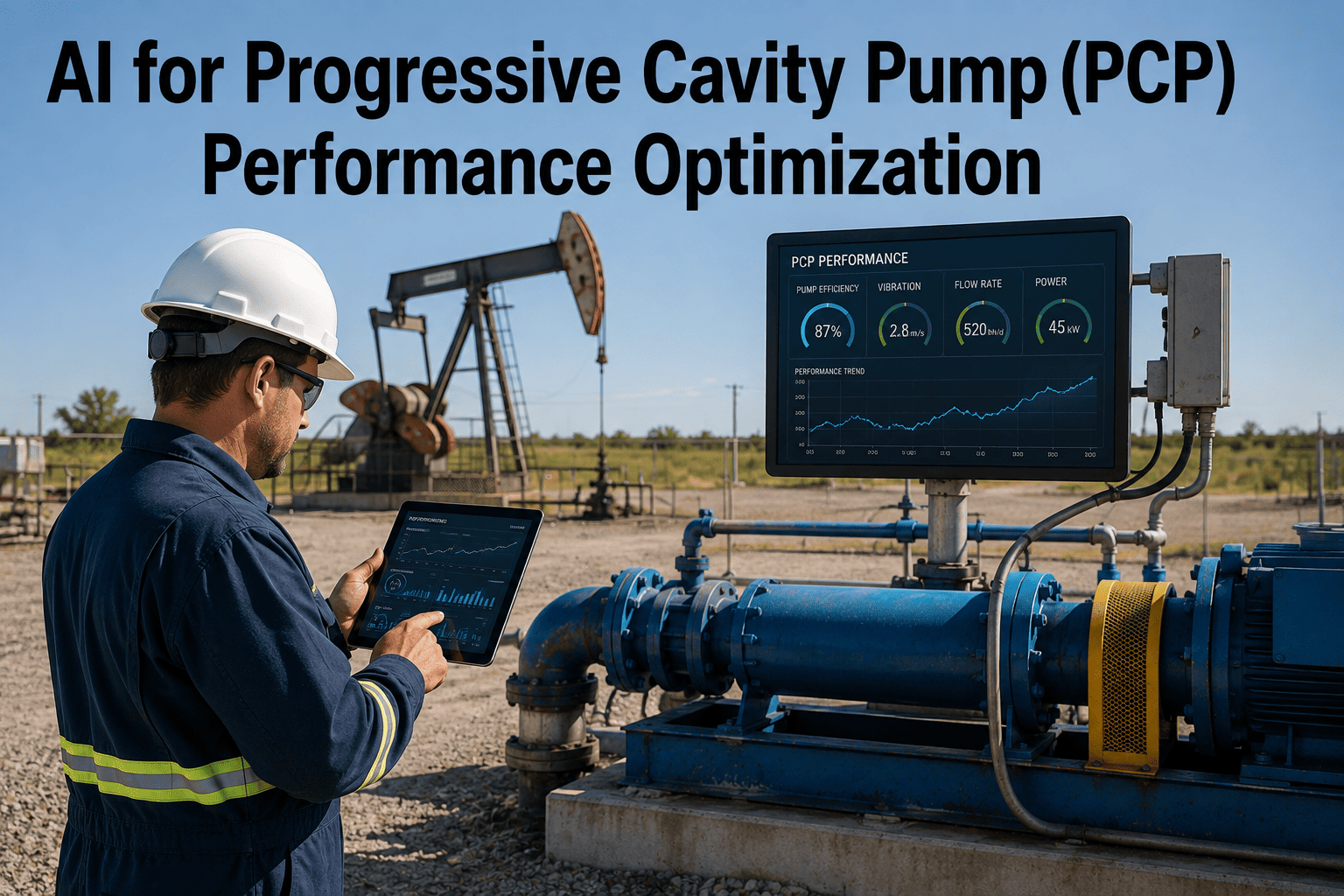
Progressive cavity pumps are a workhorse of artificial lift in heavy oil and high-viscosity wells, and their biggest advantage — a simple rotor-stator design that tolerates solids and viscous fluid — is also what makes their failure modes so easy to miss until the pump is already underperforming. Rotor-stator wear develops gradually, elastomer swelling changes pump behavior in ways that look like normal production variation, and gas interference can quietly cut into volumetric efficiency for weeks before anyone traces a production dip back to the pump itself. iFactory AI watches PCP torque, speed, and flow rate continuously so these failure modes surface early enough to act on, instead of after the pump has already lost significant run life — Book a Demo to see PCP monitoring running against your own well data.
Why PCP Problems Are Easy to Miss Until They're Costly
A progressive cavity pump's rotor turning inside its stator generates a fairly steady torque and flow signature under stable conditions, which is exactly why gradual changes are so easy to dismiss as noise. Rotor-stator wear increases the clearance between the two components a little at a time, so volumetric efficiency erodes slowly rather than dropping suddenly. Elastomer swelling from produced fluid chemistry or temperature can actually tighten the fit temporarily before wear takes over, producing a confusing pattern where torque rises even as underlying wear is progressing. Gas interference intermittently reduces effective pump displacement in a way that looks a lot like normal reservoir decline unless someone is specifically watching for the pattern.
Individually, none of these show up clearly on a single trend line. Torque alone can be explained by several different causes, and flow rate alone conflates pump condition with reservoir behavior. It's only when torque, speed, and flow are analyzed together, continuously, that the specific failure mode driving a change becomes distinguishable from ordinary production variation.
Three Failure Modes, Three Different Signal Patterns
Rotor-Stator Wear
Signature: gradual, sustained decline in flow rate relative to speed, with torque trending slightly downward as clearance increases and less fluid is displaced per rotation.
Elastomer Swelling
Signature: torque rising faster than speed or flow would explain, often following a change in produced fluid composition, temperature, or a workover involving new completion fluids.
Gas Interference
Signature: intermittent, cyclical dips in flow rate that don't correlate with torque or speed changes, often tracking with reservoir pressure or gas-oil ratio shifts.
From Detection to Speed Setpoint Optimization
Manual Monitoring vs Continuous AI Analysis
| Aspect | Manual Trend Review | Continuous AI Analysis |
|---|---|---|
| Review frequency | Periodic, often weekly or monthly | Continuous, every data cycle |
| Signal separation | Single-variable trends viewed in isolation | Torque, speed, and flow analyzed together |
| Failure mode identification | Inferred from experience and gut feel | Pattern-matched against known signatures |
| Setpoint adjustment basis | Reactive, after a problem is already visible | Proactive, balancing production against wear rate |
What Gets Missed When PCP Monitoring Stays Manual
Most heavy oil operations with dozens or hundreds of PCP wells simply do not have the staff to manually review torque, speed, and flow trends on every well every day, so review inevitably becomes exception-based — someone looks closely only after production has already dropped or an alarm has already fired. This reactive pattern means the pump has typically already been running in a degraded state for some time before anyone investigates, and the eventual root-cause diagnosis often happens after the fact rather than early enough to change the outcome.
The economic impact compounds across a field rather than showing up dramatically on any single well. A pump running with early-stage wear that goes unnoticed for weeks loses incremental production the entire time, and a pump that eventually fails outright triggers a workover cost that is typically far higher than the cost of the monitoring that could have caught the wear early enough to extend run life through a planned intervention. Multiplied across a field of PCP wells, these small, distributed losses tend to add up to a far larger number than operators expect until they see it quantified against continuous monitoring data.
Rolling Out Monitoring Across an Existing PCP Well Portfolio
Data Integration
Existing torque, speed, and flow data feeds from drive controllers and surface equipment are connected without new downhole hardware.
Baseline Learning
Each well's normal torque-speed-flow relationship is learned individually before any deviation alerts go live.
Pilot Wells
A representative subset of wells across different reservoir conditions validates detection accuracy before field-wide rollout.
Field-Wide Scaling
Once validated, monitoring and setpoint recommendations extend across the full well portfolio with field-level reporting.
What a Production Engineer Reported
Gas interference on a few of our heavy oil wells used to just look like the reservoir having a bad week, so we would leave the pump running at the same speed and lose production we didn't need to lose. Seeing the flow pattern flagged specifically as interference rather than decline changed how we react — we adjust speed instead of assuming the well is doing what it's going to do regardless. We've also caught elastomer swelling early on two pumps that would have otherwise run to a much more expensive failure.