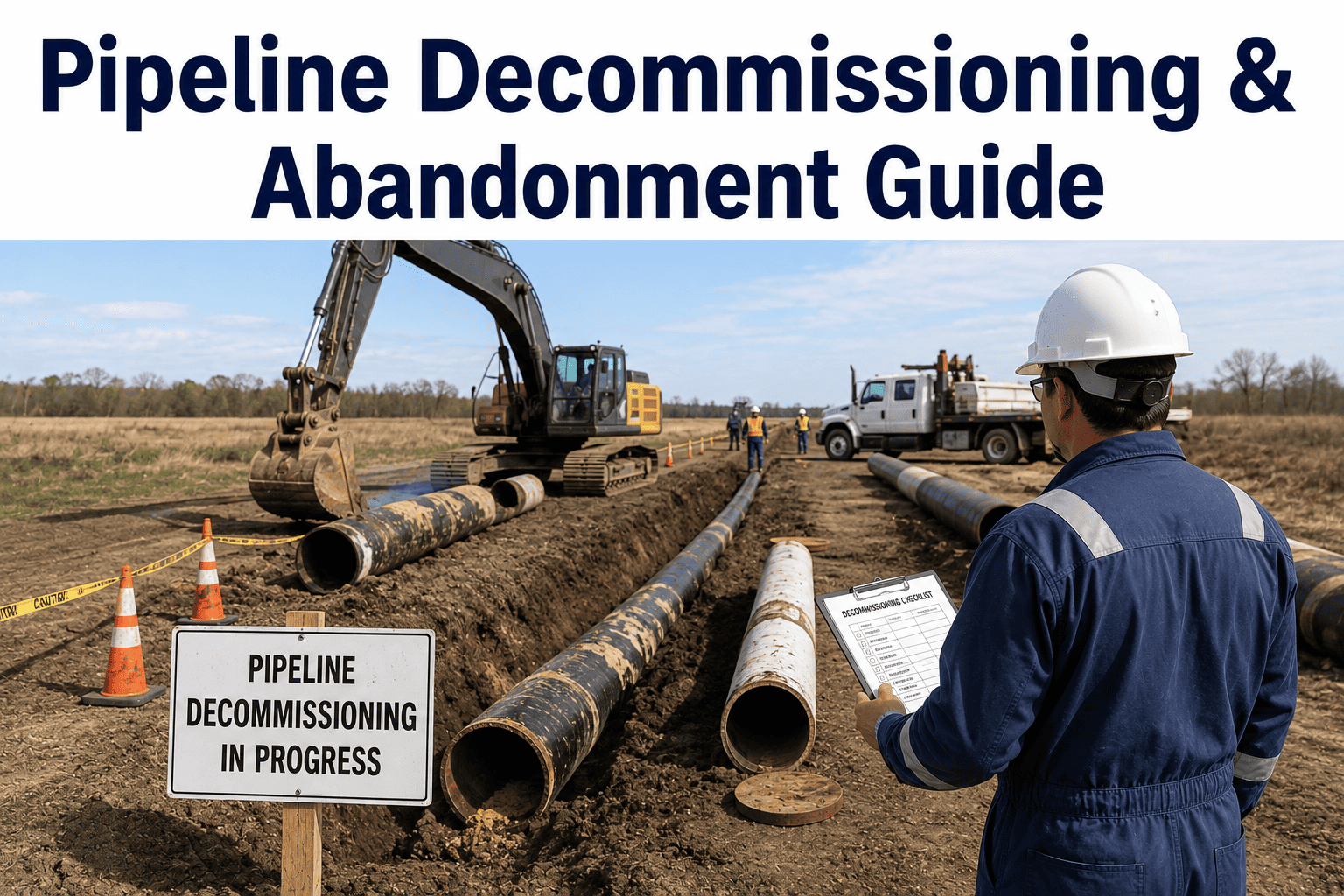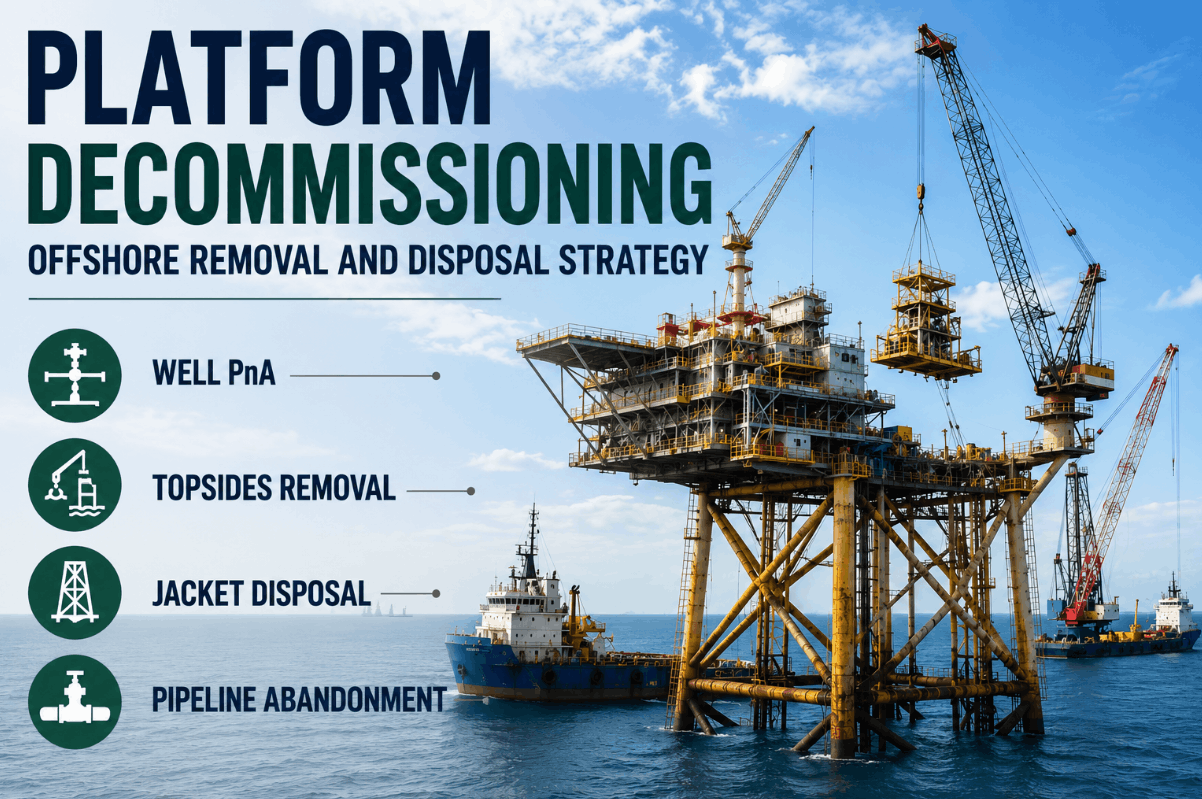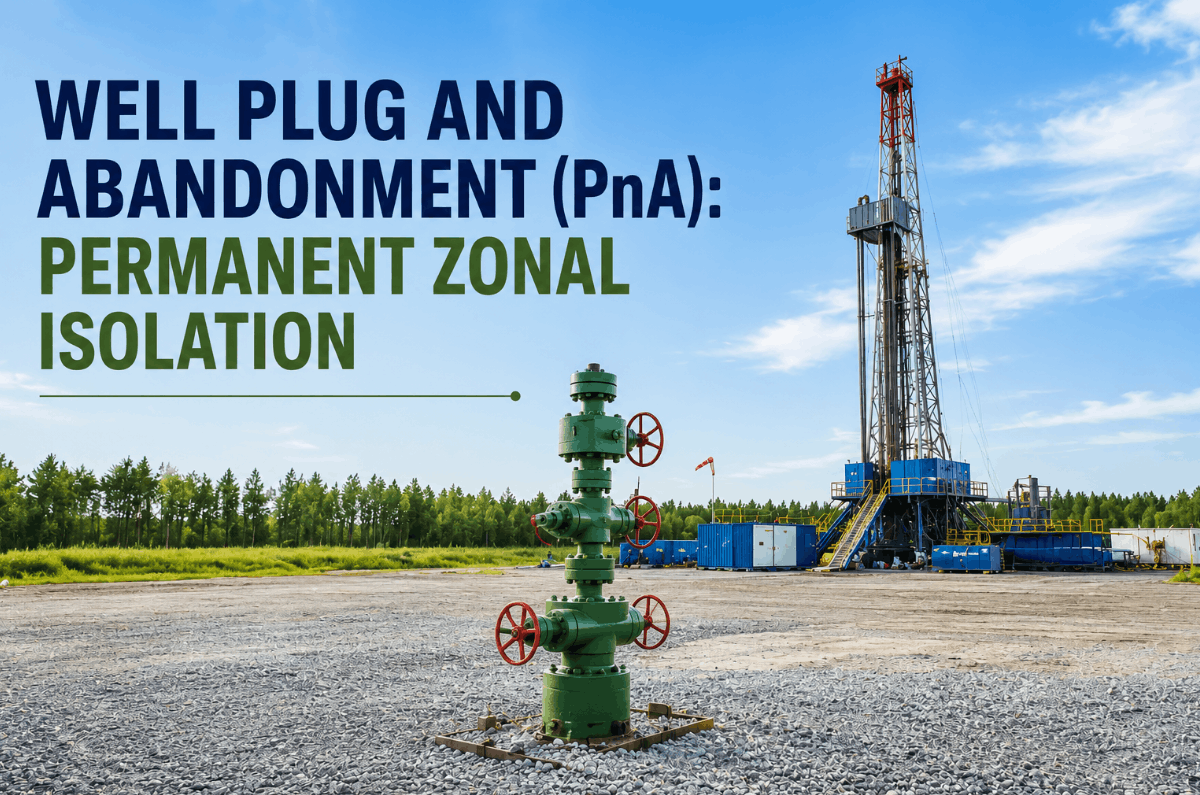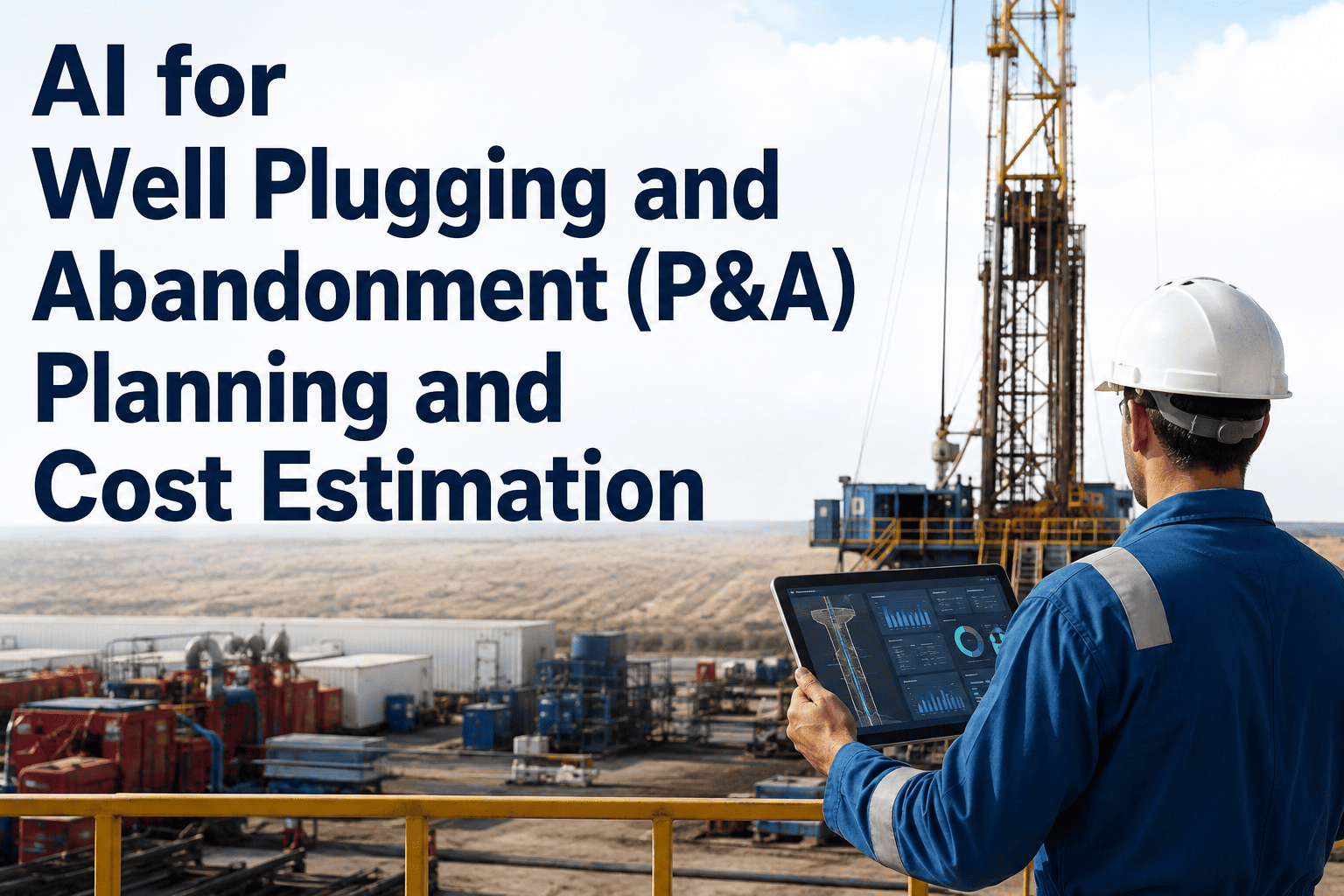
Plugging and abandonment used to be the line item operators budgeted for last and understood least. A single onshore well can run anywhere from roughly $20,000 for cement-only plugging past $300,000 once casing removal, surface reclamation, and regulatory documentation are added in, and the gap between a well's planning-stage estimate and its actual invoice routinely runs into six figures. Depth, the number of casing strings and cement plugs required, the specific state or federal regulator's documentation standard, and whether a rig has to be mobilized from three counties away all move that number independently of one another. Most teams still build these estimates well by well in a spreadsheet, discover the sequencing problem only after a rig is already under contract, and end up paying a full mobilization charge twice because two wells that could have shared one rig move were scheduled six weeks apart. That is the specific planning failure AI-assisted P&A cost estimation is built to close, and it is worth walking through exactly how before your next authorization for expenditure goes out for review.
Know the Real Cost of Every Well Before a Rig Ever Moves
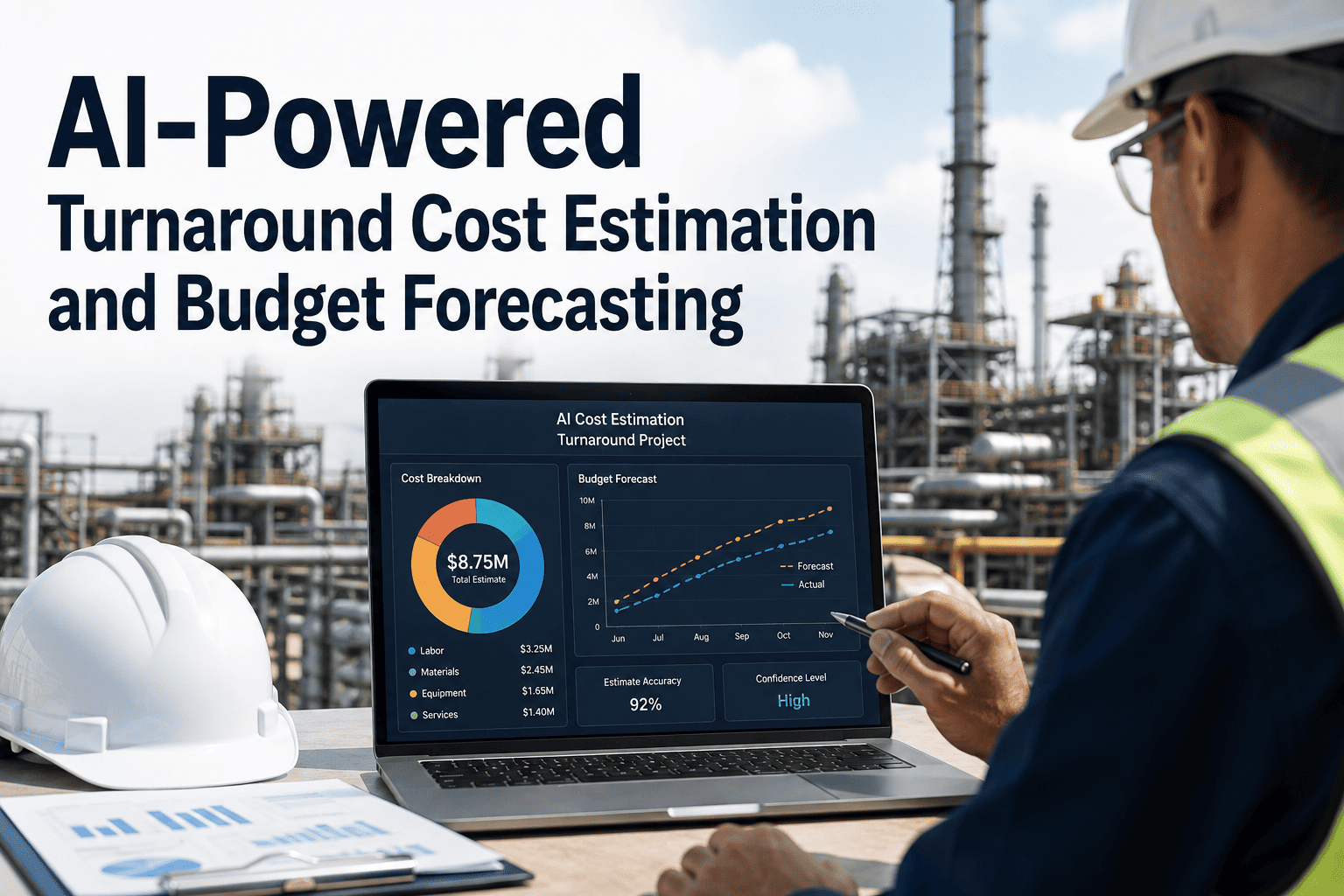
iFactory's decommissioning AI builds a defensible per-well P&A cost estimate from wellbore construction, depth, regulatory jurisdiction, and rig or vessel availability, then sequences your entire campaign to cut mobilization spend instead of repeating it well after well. It works from the well file you already have, scores every well against the same rule set, and hands your engineering team a ranked, AFE-ready budget instead of a spreadsheet built from scratch.
What P&A Actually Costs, Well by Well
Published cost-driver research on roughly 19,500 wells gives operators and regulators the closest thing the industry has to a baseline. It also shows how wide the range around that baseline really is — the same study found rare cases running past $1 million per well, driven almost entirely by depth, casing condition, and how much of the original wellbore record survived. AI planning starts from these same drivers, then narrows the range to your specific well file instead of a national median, so a budget owner sees a number tied to an actual wellbore rather than an industry-wide figure that may not reflect a single well in the portfolio.
Six Variables the AI Weighs for Every Well
A per-well estimate is only as good as the inputs behind it. iFactory's model pulls each of the following from your well file, your regulator's published standard, and your current rig or vessel market — the same variables a senior decommissioning engineer would check by hand, run automatically across the entire inventory instead of one well file at a time. None of these six variables move in isolation, which is exactly why a flat per-well average misses so much of the real cost spread across a portfolio.
Well Construction
Casing string count, cement plug requirements, and any documented mechanical integrity issues that add fishing or milling time.
Depth & Formation
Total depth, pressure zones, and the isolation intervals a regulator requires across freshwater and hydrocarbon-bearing formations.
Regulatory Jurisdiction
State or federal documentation standard, witnessing requirements, bonding status, and the specific plug-count rule that jurisdiction enforces.
Rig / Vessel Availability
Current day rate, contract windows, and transit distance from the nearest available rig, workover unit, or intervention vessel.
Site & Access
Onshore versus offshore access, surface reclamation scope, and any restoration standard tied to the land use or lease agreement.
Well Age & History
Completeness of legacy wellbore records and prior workover history — a major driver of both cost and estimate confidence on older wells.
How the AI Builds a Defensible Per-Well Estimate
This is the sequence the model runs for every well in the inventory, and the sequence iFactory's team walks through on every scoping engagement. It mirrors how an experienced decommissioning engineer would work a well file — it just does it for the whole portfolio at once, and it does it every time a rig market or regulation shifts. Where a manual review might get through a handful of wells a week, the same seven steps run continuously across hundreds of wells, so the estimate a budget owner sees on Monday still reflects Friday's rig-market and regulatory changes.
Pull casing and cement records, completion reports, and workover history from existing files, LAS logs, or scanned legacy documents.
Map the well's jurisdiction to its required plug count, isolation intervals, bonding status, and documentation standard automatically.
Compute cement volumes, plug placement depths, and casing removal scope directly from the wellbore diagram, not a generic average.
Match the well's requirements against the current rig or intervention vessel inventory, day rate, and transit distance.
Combine labor, equipment, mobilization share, site prep, and reclamation into a per-well figure with an explicit confidence range.
Group wells by rig type, jurisdiction, and geographic proximity so a single mobilization covers as many wells as possible.
Deliver a dashboard with cost breakdown and sequencing recommendation, refreshed automatically as records or rig data change.
Why Sequencing Moves the Number as Much as the Well Itself
Mobilization is the cost operators most consistently under-budget, because it is charged per rig move, not per well. Published multi-well campaign studies show mobilization costs follow economies of scale — the per-well share drops as more wells share the same rig or vessel move, and case data from a Halliburton platform P&A campaign documented roughly a 50% cost reduction against traditional well-by-well execution once an integrated intervention strategy replaced standalone mobilizations. Offshore, the same principle shows up at a larger scale: industry cost-driver research on the North Sea shelf puts well P&A at roughly half of all annual decommissioning spend, precisely because so much of that spend is tied up in rig and vessel time rather than the plugging work itself. Onshore campaigns follow the identical logic on a smaller footprint, which is why sequencing decisions belong in the cost estimate, not bolted on afterward as a scheduling exercise.
Not every well qualifies for a rigless approach, and the AI does not assume one — it scores each well against the same construction and integrity data used for the cost estimate, then recommends a rig or vessel path only where the well's condition supports it.
Turn Your Well Inventory Into a Ranked P&A Budget
Bring your well file, however complete it is, to a 30-minute design consult. iFactory's decommissioning engineers show you how the model scores your specific inventory and what a validated, jurisdiction-correct estimate looks like before you commit rig contracts.
Cost Varies by Well Type — the Estimate Should Too
A single blended average across your inventory hides more than it reveals. The model breaks the portfolio into the categories that actually drive different cost ranges, so budget owners see where the dollars concentrate before the rig contract is signed, rather than discovering after the fact that a handful of legacy wells consumed half the program's contingency budget.
Typical median: around $20,000 per well
Excludes surface restoration, site cleanup, and final regulatory sign-off costs
Typical median: around $76,000, with a documented range from roughly $10,000 to over $300,000
Range driven heavily by depth, casing condition, and site restoration standard
Costs can exceed $1 million where casing failures or unknown wellbore conditions require fishing or remedial work
Incomplete records lower the estimate's confidence until site verification confirms wellbore condition
P&A work commonly accounts for roughly half of total decommissioning spend in mature basins such as the North Sea
Vessel day rates and weather windows add a scheduling variable onshore estimates do not carry
Five Planning Mistakes That Blow Through the AFE
These are the patterns that show up repeatedly once a P&A program moves from paper estimate to executed campaign. Catching them during planning is far cheaper than discovering them mid-campaign, and every one of them is a planning-process failure rather than an execution failure — the crews on site are not the ones who priced the mobilization or missed a documentation requirement.
Estimating well-by-well in a spreadsheet
A spreadsheet built one row per well has no way to account for shared mobilization or a learning curve across a batch — every well gets priced as if it were the only one on the campaign.
Treating rig availability as a scheduling afterthought
Day rate and transit distance are cost inputs, not just a calendar problem. Locking a rig before checking which other wells it could reasonably reach locks in avoidable mobilization spend.
Underestimating regulatory documentation time
Witnessing requirements, bonding paperwork, and jurisdiction-specific sign-off standards vary widely and are frequently priced as a flat line item instead of scaled to the actual regulator.
Ignoring wellbore record gaps until the rig is on site
Legacy and orphaned wells with incomplete files carry cost uncertainty that should show up in the estimate's confidence range, not as a surprise change order once crews are mobilized.
Presenting a single number with no confidence range
A point estimate gets treated as a hard ceiling by budget owners. A defensible estimate carries a range tied to record completeness and construction certainty, and says so explicitly.
Frequently Asked Questions
How accurate can an AI-generated P&A estimate be before any field data is collected?
Accuracy tracks directly with how complete the underlying well file is. Where casing, cement, and completion records are intact, the model's estimate typically converges close to the eventual invoiced cost, because the same construction data a field engineer would use manually is driving the calculation. Where records are thin, the model still produces an estimate but widens the confidence range and flags the well for a site verification pass before it is locked into an AFE. Most operators find the biggest accuracy jump comes not from a smarter model but from simply having every well's construction data pulled into one place instead of split across drilling reports, workover files, and a regulator's own archive. The fastest way to see how this plays out against your own inventory is to book a design consult and run a sample batch of wells through the model together.
Can the model handle wells with incomplete or paper-only records?
Yes. Legacy and orphaned wells are common in most decommissioning inventories, and the model is built to ingest scanned completion reports and partial files alongside digital ones. Where a record gap exists, the estimate is generated with a wider confidence band rather than withheld, and the well is flagged for a targeted site check rather than a full manual review of the entire inventory. This matters most for older state and orphaned-well programs, where undocumented wells routinely outnumber the documented ones and a planning team cannot afford to wait for a full paper trail before producing a working budget. The goal is to give a program manager a usable number for every well on day one, with clear labeling of which numbers still need field confirmation.
How does AI sequencing decide which wells to batch into one campaign?
The model groups wells by the rig or vessel type each requires, their geographic proximity, and whether they share a regulatory jurisdiction with compatible documentation timelines. It weighs these against current rig contract windows so the recommended sequence is something you can actually book, not a theoretical optimum that ignores market availability. Where a well qualifies for a rigless or intervention-vessel phase, that path is scored separately, since a vessel-eligible well grouped with rig-only wells can still ride along on the rig's mobilization if the vessel route does not fit the broader campaign timeline. The result is a campaign order that minimizes total mobilizations while respecting the constraints your operations team already works within.
Does this replace our engineering team's review of the plugging program?
No. The model removes the manual, repetitive part of building per-well estimates and checking them against regulatory rules, but your engineers still review and finalize the plugging program before execution. What changes is how much of the inventory they can review in a given week, and how consistent the underlying cost logic is from well to well, since every well is scored against the same rule set instead of whichever engineer happened to be estimating that batch on a given day. Most teams that adopt it treat the AI output as the starting draft an engineer signs off on, not a replacement for that sign-off — reach out through support to see how a review workflow fits alongside your existing process.
How does the estimate stay current as regulations or rig markets change?
The dashboard refreshes automatically as rig day rates shift, as new bonding or documentation requirements are published by a jurisdiction, and as well records are updated with new inspection or workover data. This means a campaign scoped six months ago does not need a full manual re-estimate before execution — the affected wells update on their own, and the sequencing recommendation adjusts alongside them. A live walkthrough of how the refresh cycle applies to a specific state or basin is easiest to see on a scoping call.
Plan the Campaign, Not Just the Well
Every well in a decommissioning inventory has its own construction, its own regulator, and its own cost. What determines whether a P&A program stays on budget is whether those individual wells get planned as a campaign or priced one at a time. AI-assisted cost estimation does not change the physics of plugging a well — it changes how consistently the cost drivers are applied across hundreds of wells, and how deliberately mobilization is shared instead of repeated. That is the difference between a program that discovers its real cost after the rig is under contract and one that knows it going in. It also changes who the estimate is defensible to. A regulator asking why a bond amount was set where it was, a finance team asking why the AFE moved between quarters, or a new engineer picking up a legacy inventory all get the same answer: the number traces back to a specific well's construction, jurisdiction, and rig market at the time it was generated, not a rule of thumb carried over from the last program.
Ready to See Your Own Well Inventory Priced?
Book a 30-minute design consult with an iFactory decommissioning engineer. Bring a sample of your well file and leave with a validated per-well cost range and a sequencing recommendation for your next campaign.