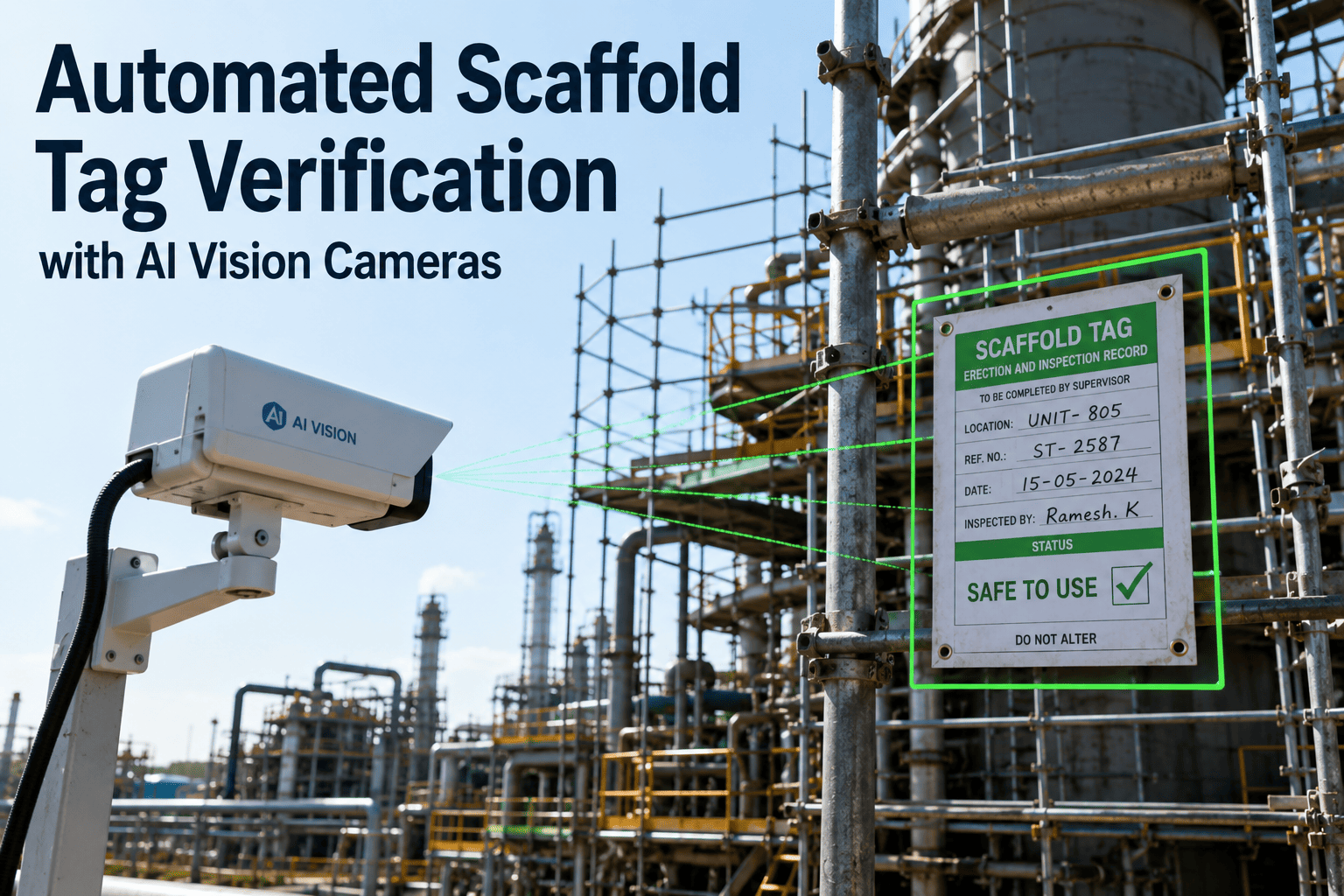
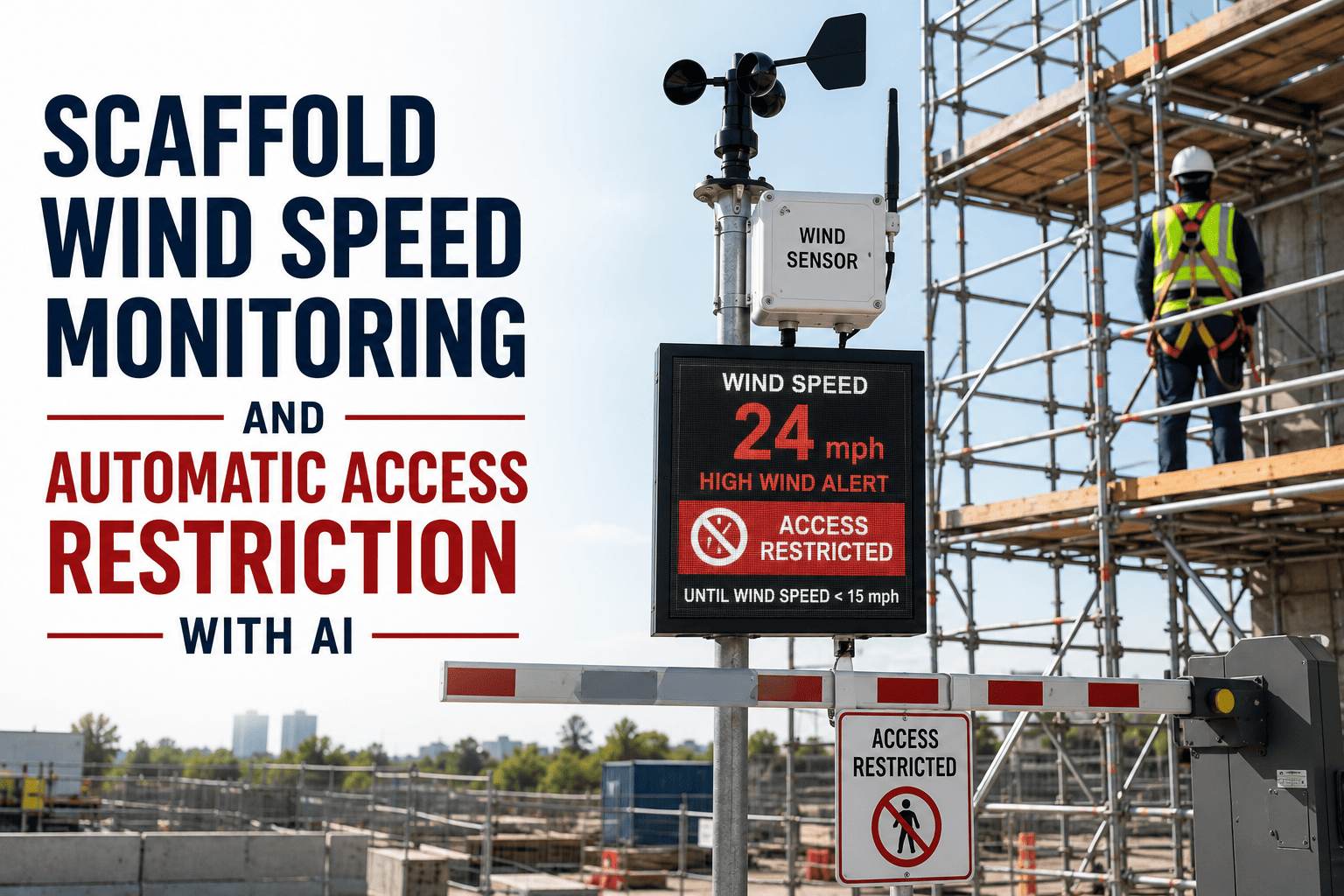
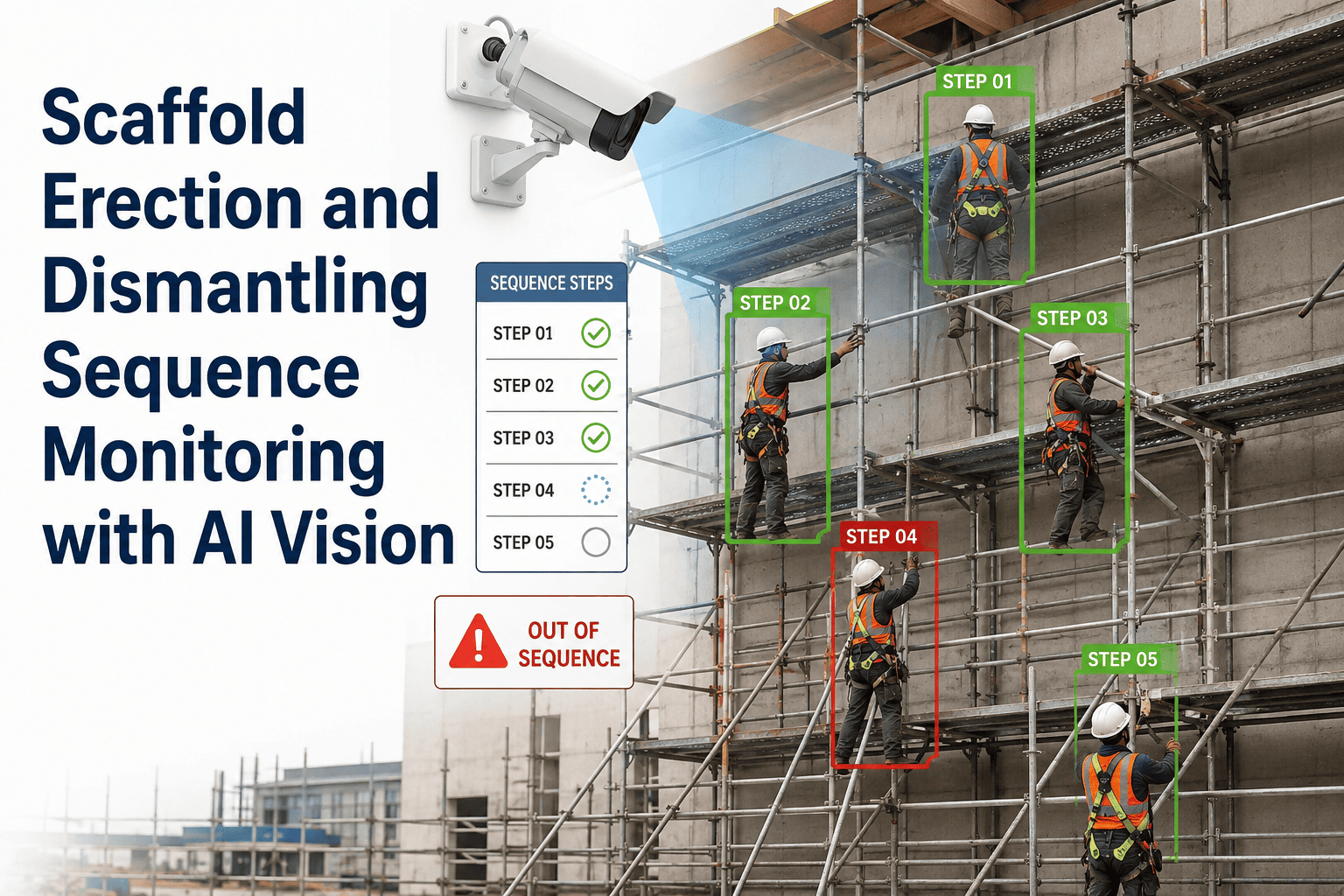
A green scaffold tag is a promise — that a competent person put eyes on the structure before the shift started, checked the planking and guardrails and base plates, and signed the tag holder to certify the scaffold is safe to work on. But the promise is only as good as the last worker who read the tag before climbing on, and the workers most likely to skip that check are the ones who most need the protection it offers: contractors from other trades passing through, night-shift crews who did not see the daytime inspection, and anyone treating "the scaffold was fine yesterday" as sufficient reason to skip today's tag verification. Turning the tag from a passive paper artifact into an actively enforced access control point is what iFactory does with AI cameras at every scaffold access ladder so no worker climbs an uninspected, red-tagged, or expired scaffold without the system knowing.
Scaffold Safety · Access Control and Compliance
Every Scaffold Access Point Should Verify the Tag Before It Verifies the Worker
AI cameras at scaffold access ladders continuously read tag color, competent person signature, inspection date, and load capacity — flagging red-tagged and expired scaffolds, alerting supervisors when workers attempt access, and turning a paper tag into an actively enforced compliance layer that catches the failure modes manual tag checks reliably miss on busy multi-trade sites.
The Compliance Reality
Why the Tag System Fails Even When Everyone Agrees It Matters
OSHA 29 CFR 1926.451(f)(3) requires a competent person to inspect scaffolds before each work shift and after any event that could affect structural integrity, and the color-coded tag system is the practical way that inspection result gets communicated to every worker who approaches the structure. The rule is well understood, the tag colors are well established, and the competent person requirement is written into the job scope of every serious site — so the question is not whether the system is defined. It is whether the system is actually working every time a worker sets foot on a ladder rung.
The gap between defined and actually working is where scaffold incidents happen. A tag can be present but expired from the previous shift. A tag can be signed but by someone who is not on shift today. A green tag can be sitting in the holder while the scaffold behind it was modified twenty minutes ago and never re-inspected. And a red tag can be displayed prominently while a worker in a hurry climbs past it because they saw the same scaffold running normally an hour earlier. Each of these represents a compliance failure invisible to a paper-only system and visible immediately to a camera reading the tag at the moment of access.
4,500
Scaffold-related injuries each year
Reported annually in construction, with a meaningful share tied to platform failures on scaffolds that were incomplete, damaged, modified without re-inspection, or accessed while carrying an active red tag.
Every
Work shift requires new inspection
OSHA 1926.451(f)(3) mandates inspection before each work shift and after any structural event, which on active sites means multiple inspections per day per scaffold — a load that manual checking is chronically behind on.
3
Tag colors, one enforcement gap
Green means safe, yellow means restricted use, red means do not use. All three depend on workers actually reading the tag before climbing, and physical enforcement of the red status is where the system routinely breaks down.
From Paper Tag to Enforced Access Control
Stop Assuming Every Worker Reads Every Tag Before Every Climb
iFactory reads scaffold tags continuously at the access point, verifies signature and expiration, and triggers alerts and access flags the moment a worker approaches a scaffold that is red-tagged, expired, or missing its competent person sign-off — closing the enforcement gap the paper tag alone was never able to close on its own.
Real Access Scenarios
What the System Does in Each Tag State
GREEN TAG
Worker Approaches an Approved Scaffold
Tag color confirmed green, signature and date within current shift.
Worker access logged with timestamp and identity if worker recognition is enabled.
No alert triggered; normal access flow proceeds.
Load capacity read is stored against the access record for later reference.
YELLOW TAG
Scaffold Has Documented Restrictions
Restriction text is captured and displayed at the access point.
Worker is prompted to acknowledge the restriction before proceeding.
Restricted-area entry attempts within the scaffold trigger supervisor alerts.
Restriction context is written to the shift compliance log.
RED TAG
Scaffold Is Not Safe for Use
Approach detection triggers immediate audible and visual alert.
Supervisor notification issued with scaffold ID and worker location.
Only erection or repair crew IDs recognized as authorized entry.
Every red-tag access attempt is logged for compliance review.
NO TAG OR EXPIRED
Scaffold Access Without Valid Inspection
Missing tag or tag with prior-shift date treated as uninspected.
Access blocked at the alert level pending competent person action.
Competent person notified to re-inspect and re-tag the scaffold.
Attempted entries logged as compliance events with full context.
A Day in the Life of a Tag
Tracking a Single Scaffold Across One Shift
The compliance value of continuous tag verification is easiest to see through the eyes of a single scaffold across a single working day. The scenario below reflects a common pattern on active construction sites — a scaffold that starts the morning approved, gets modified mid-shift, briefly falls into red-tag status, then returns to approved status after re-inspection. Each transition is a compliance event, and each is either caught in real time by vision or missed until an audit reveals it after the fact.
05:45
Competent Person Arrives
Inspector performs the pre-shift structural inspection, verifies planking, guardrails, base plates, and connection integrity, and prepares to sign off if all criteria pass.
06:12
Green Tag Installed and Signed
Green tag placed in the tag holder at the primary access ladder. Camera detects the color change, reads the fresh signature and date, and updates the scaffold status to approved.
06:30–11:45
Normal Access Flow
Workers approach the ladder. Each access is verified against the current tag state; all pass, all are logged. Supervisor dashboard shows scaffold status live throughout the morning.
13:20
Structural Modification
A section of guardrail is removed to allow a large panel to be lifted onto the platform. Tag rules require re-inspection after any structural modification.
13:22
Green Replaced by Red
Competent person swaps the green tag for a red tag pending re-inspection. Camera detects the color change instantly and updates system status to red across every access point on the structure.
13:47
Worker Approaches Red Scaffold
Worker from another trade approaches the ladder unaware of the mid-shift change. Camera detects approach, audible alert triggers at the ladder, supervisor phone alert issued with worker location.
14:05
Repair Complete, Re-Inspection Done
Guardrail replaced, competent person re-inspects and signs the fresh green tag with a new timestamp. Camera reads the update and access flow returns to normal.
Shift End
Compliance Log Written
Every tag change, every access, every alert, and every worker interaction with the scaffold is captured in a searchable log tied to the scaffold ID, date, and competent person of record.
Paper Versus Vision-Verified
The Compliance Difference in a Side-by-Side Comparison
| Compliance Aspect | Paper Tag Only | Vision-Verified Tag System |
| Tag reading enforcement |
Depends on worker checking the tag |
System reads the tag every time a worker approaches |
| Red-tag access prevention |
Physical barrier plus verbal enforcement |
Automatic alert with supervisor notification |
| Expired tag detection |
Requires manual comparison of date to shift |
Date validated against current shift automatically |
| Signature verification |
Assumed present, rarely audited |
Signature presence and pattern verified per access |
| Structural modification response |
Requires competent person to notice and re-tag |
Tag change detected instantly across all access points |
| Multi-scaffold visibility |
Supervisor walks site to check tags |
Dashboard shows all scaffold statuses in real time |
| Incident investigation evidence |
Reconstructed from statements after the fact |
Timestamped access log with tag state history |
The comparison is not meant to imply the paper tag is obsolete — the paper tag remains the primary artifact regulators, workers, and competent persons all interact with directly, and no vision system replaces the underlying inspection judgment call. What changes is that the paper tag stops being the only enforcement mechanism, gaining a continuously watching layer that catches the specific failure modes paper alone was never designed to catch. Sites that add vision keep everything about their existing tag program, add automated verification at the access point, and gain a searchable evidence trail that transforms both routine compliance reporting and post-incident investigation.
Who Benefits and How
Value Across Roles on the Site
Scaffold tag verification touches almost every role on a construction site, and the value proposition looks different to each of them. The competent person cares most about relief from constant enforcement demands, the safety manager cares most about live visibility, the general contractor cares most about defensible compliance evidence, and the trades care most about not having to guess whether shared equipment is safe today. What matters is that a single system serves all these different needs simultaneously without asking any role to compromise on what they actually care about.
Competent Person
Freed from acting as the sole enforcement mechanism for every access. The system carries the verification load while the competent person focuses on the actual inspection judgment work only they are qualified to do.
Site Safety Manager
Gains a live dashboard of every scaffold on site with current tag status, and receives immediate notification of red-tag access attempts, expired-tag scaffolds, and missing signatures — without walking the site to find them.
General Contractor
Gets objective compliance evidence for the project record showing that every scaffold was inspected before each shift and that access controls were enforced continuously — evidence that materially strengthens the compliance file.
Subcontractor Trades
Removes the ambiguity of whether a scaffold shared with other trades is safe today. The tag state is authoritative, the enforcement is consistent, and disputes between trades over unsafe access are resolved by the log.
OSHA Compliance Officer
During an inspection visit, the site produces a searchable log of every inspection, every tag state change, every access, and every alert — evidence of active compliance rather than assumed compliance based on the tags currently visible.
Owner or Client
Sees a project safety record that goes beyond zero-incident claims to include continuous compliance evidence, protecting the owner's own risk exposure on projects where the general contractor's safety record affects insurance and liability.
Regulatory Framework
How Vision Verification Supports the Existing OSHA Requirements
OSHA 29 CFR Subpart Q sets the framework for scaffold safety in construction, and none of what vision verification does replaces or contradicts the underlying rules. Instead, vision strengthens compliance at the exact points where the rules are most vulnerable to human error — pre-shift inspection completion, tag currency, and the audit trail that ties every access to a documented inspection. Each of the requirements below sits alongside vision naturally, with the automated evidence layer supporting rather than substituting for the competent person's role.
1926.451(f)(3)
Pre-Shift Inspection Requirement
OSHA requires scaffolds to be inspected by a competent person before each work shift and after any occurrence that could affect structural integrity. Vision continuously validates that a fresh signed tag exists for the current shift, catching missed re-inspections that would otherwise only be discovered on audit.
1926.451(f)(7)
Design and Erection Under Qualified Supervision
Scaffolds must be designed by a qualified person and erected under the supervision of a qualified person. The tag capture of scaffold ID, load capacity, and competent person identity supports the qualified-person audit trail this requirement expects.
1926.454
Scaffold Training Requirement
Both erectors and users of scaffolds must receive scaffold training. Access logs tied to worker identity provide evidence that only trained workers accessed scaffolds, supporting the training compliance program that this standard defines.
Subpart Q
Scaffold Standard Overall Framework
The scaffold tag system is the primary communication mechanism between the scaffold inspector and the workforce. Vision-based verification strengthens that mechanism at the exact point workers interact with it — the access ladder — rather than assuming the communication succeeded.
Common Questions
Frequently Asked Questions
Does OSHA specifically require the color-coded scaffold tag system used here?
OSHA does not mandate a specific tagging system, but 29 CFR 1926.451(f)(3) requires competent person inspection before each work shift and after any structural event. The color-coded tag system is the practical industry mechanism for communicating those inspection results, and general contractor requirements on major projects routinely make tag systems mandatory even where the federal rule is silent. Vision verification aligns with whatever tag system your site already uses, reading whichever tag design and color scheme is in service rather than requiring you to standardize.
Talk to support about matching your existing tag design.
What happens if a worker climbs a red-tagged scaffold anyway — does the system physically stop them?
The system's role at the ladder is detection, alerting, and evidence capture, not physical restraint. Audible and visual alerts trigger at the ladder, supervisor notifications issue immediately with scaffold ID and worker location, and the attempt is logged as a compliance event. On sites where physical stopping is required, the system can integrate with electronic locking gates at the ladder base, but the compliance value comes primarily from making unauthorized access impossible to hide rather than physically preventing every step onto every rung.
Does the camera reliably read handwritten signatures and tag date fields under real site conditions?
Yes, with the caveat that reliability depends on tag design and camera placement. Signature presence detection is more robust than signature identity matching, and most sites deploy in a mode where signature presence plus valid date plus expected competent person on shift is sufficient for pass, with identity matching used for higher-assurance environments. OCR for printed date and ID fields is well-established technology, and modern models handle the wear and lighting variability typical of active construction sites without requiring pristine conditions.
Can this system be installed on scaffolds that move or get relocated frequently during a project?
Yes — for mobile or frequently relocated scaffolds, the camera unit is designed to move with the scaffold rather than being installed at a fixed site location. Portable camera units with battery power and wireless connectivity attach to the scaffold structure near the primary access ladder, and reregister with the site network at each new position. This preserves the same access control and tag verification behavior across scaffold relocations without requiring reinstallation each time the structure moves to a new work area.
How does deployment scale across a large site with many scaffolds and multiple access points per scaffold?
Deployment scales one access point at a time rather than requiring full site coverage from day one. Sites typically start with the highest-risk scaffolds — those with the most trades passing through, the tallest structures, or the ones with active red-tag risk from ongoing modifications — and expand coverage in phases. The central dashboard handles any number of scaffolds and access points, and adding a new camera to an existing site is a matter of installation and enrollment rather than reconfiguration of the base system.
Book a demo to walk through a phased rollout plan for your site.
The Tag Should Be Enforced, Not Just Displayed
Turn Every Scaffold Access Ladder Into a Compliance Checkpoint
iFactory verifies scaffold tag color, signature, date, and load capacity at every access point continuously — protecting workers, strengthening compliance evidence, and giving competent persons and safety managers the enforcement layer the paper tag alone was never going to provide on its own across a busy site.