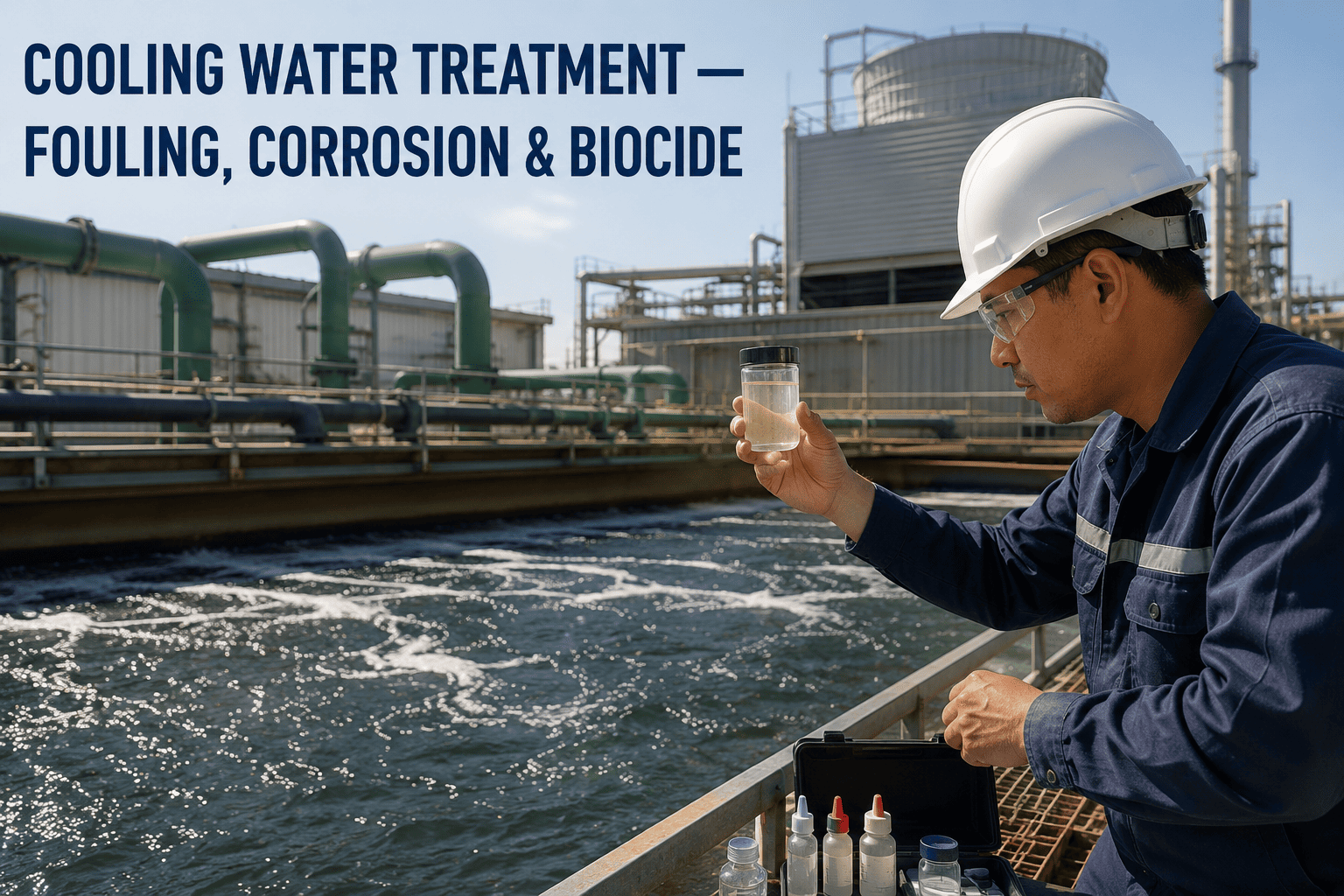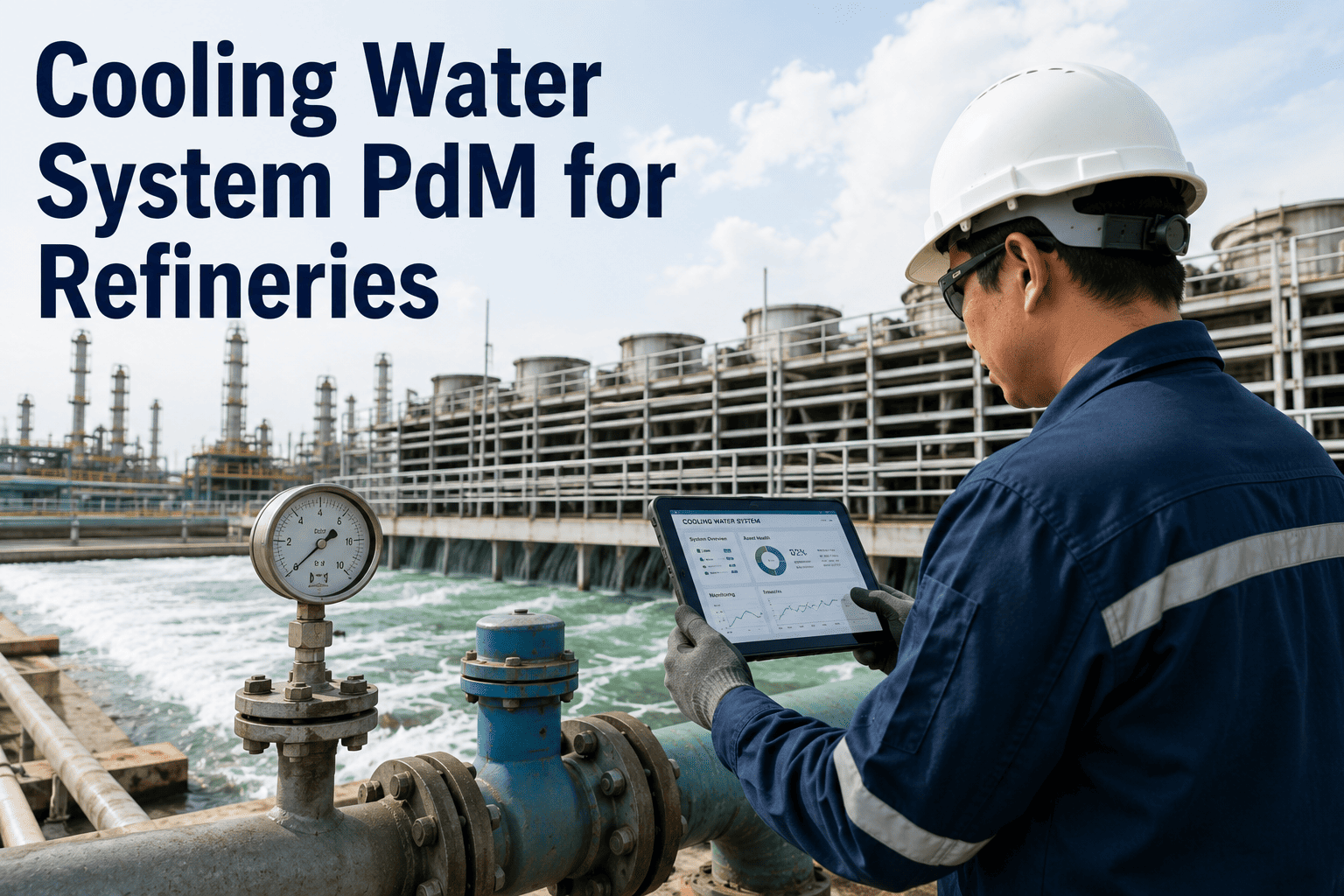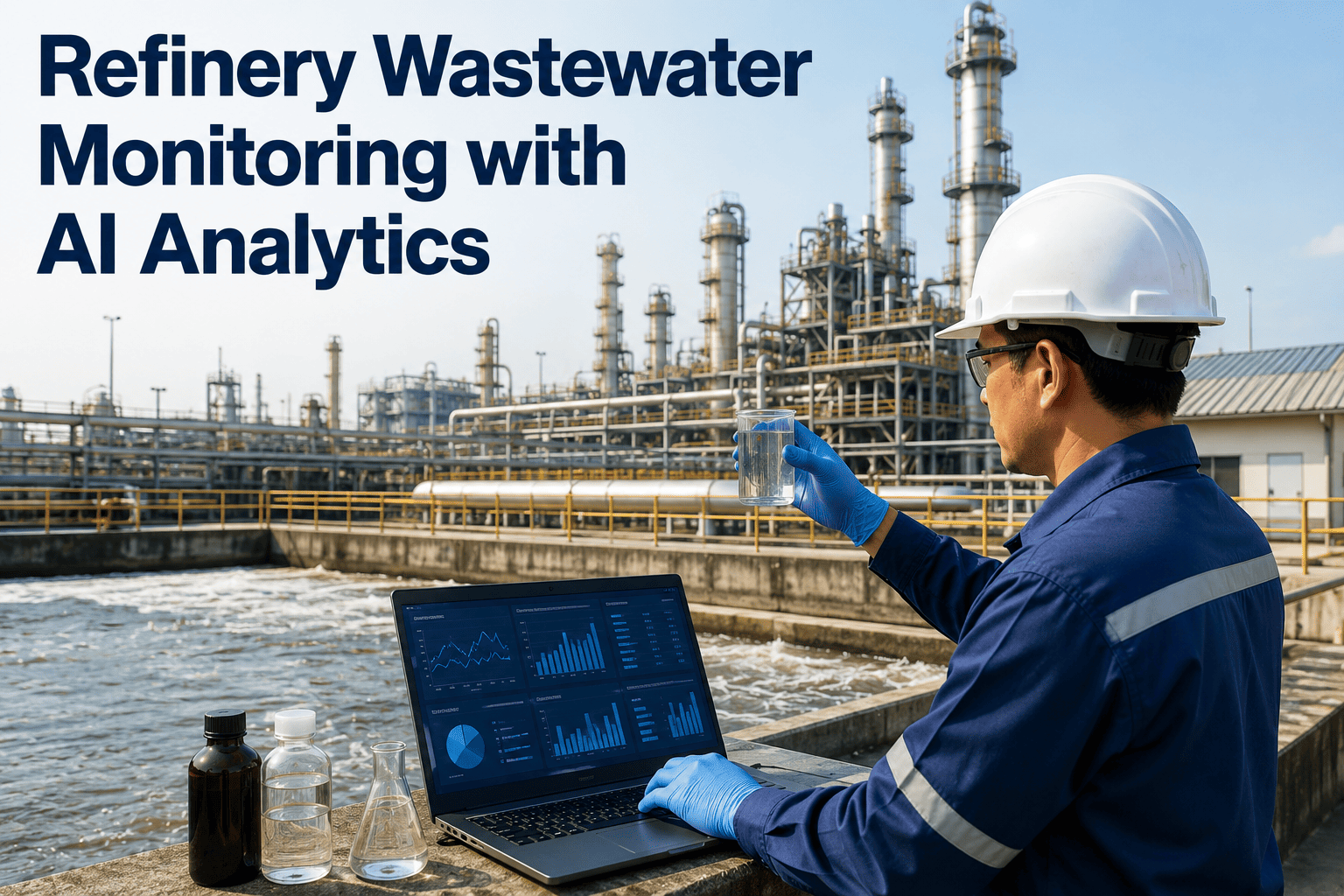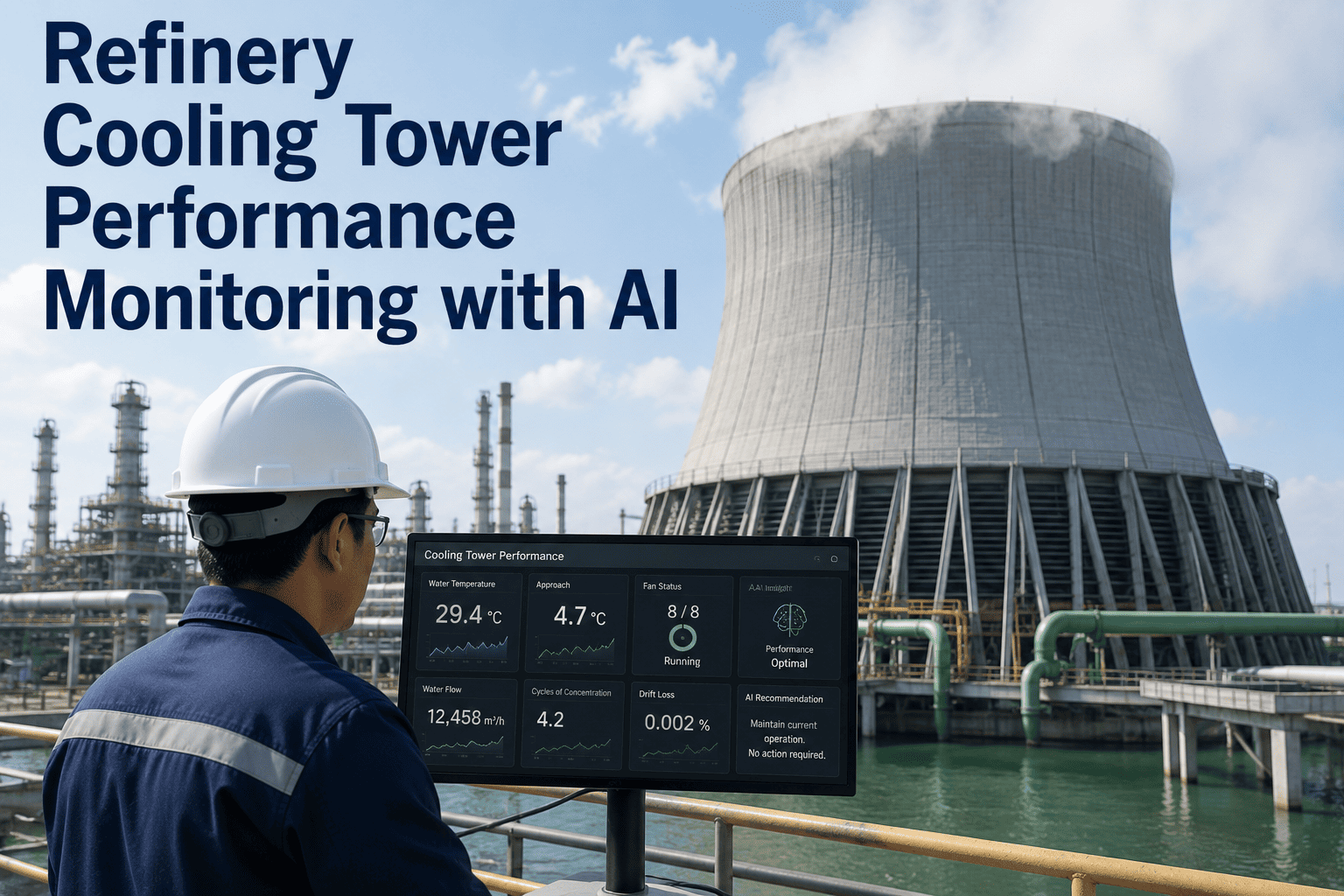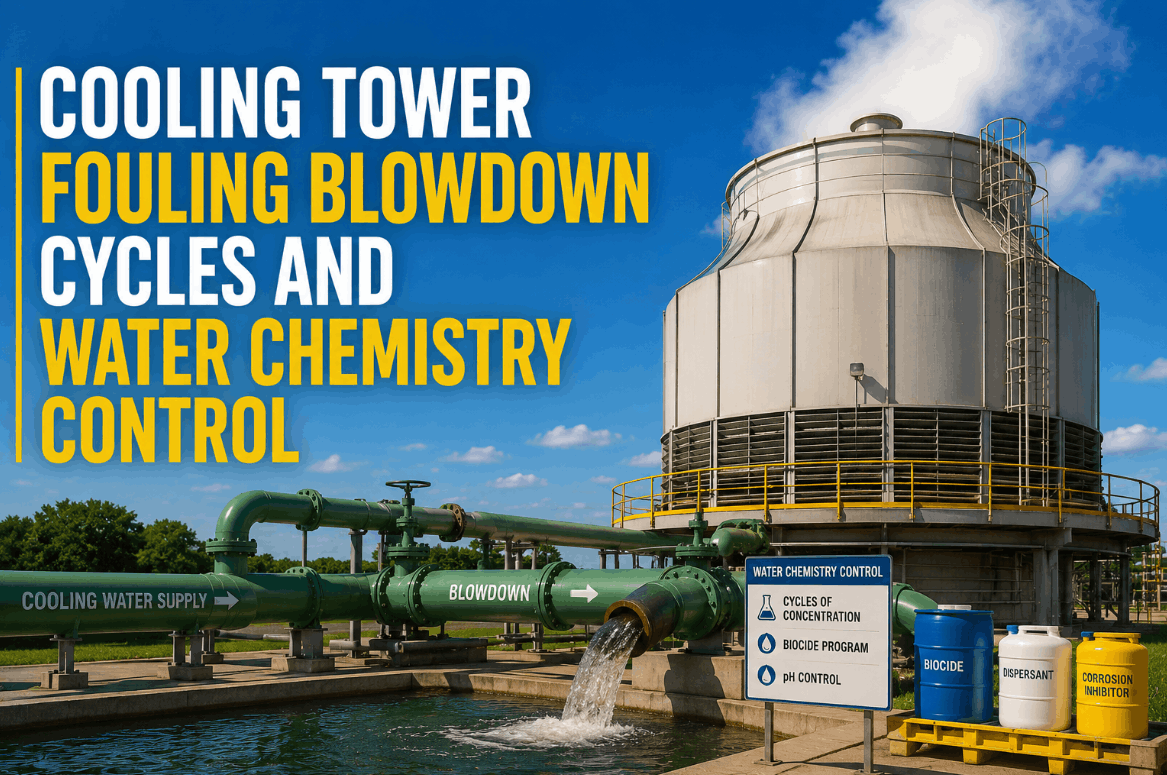
A fouled cooling tower rarely announces itself with an alarm — it shows up as a condenser that won't hold vacuum, an overhead exchanger that's lost approach temperature, and a maintenance team chasing symptoms instead of the root cause. Underneath nearly every one of those problems sits the same three variables: cycles of concentration pushed past what the water chemistry can handle, a biocide program that's been running the same chemistry so long that the biofilm has adapted to it, and blowdown control that's reacting to conductivity readings instead of anticipating where the tower is heading. For Utilities Engineers, Reliability Managers, and Water Treatment Coordinators, tightening this triangle is one of the most direct paths to recovered heat transfer efficiency on the plant. iFactory's AI-driven platform brings cycles of concentration, blowdown response, and biocide rotation history into one live view. Book a Demo to see your cooling water program tracked continuously.
Cycles of Concentration: The Lever Most Plants Mismanage
Cycles of concentration describe how many times dissolved solids in the tower have concentrated relative to makeup water — if makeup conductivity reads 500 µS/cm and tower conductivity is controlled at 2,000 µS/cm, the system is running at four cycles. Pushing cycles higher reduces both makeup water and blowdown volume, which is exactly why operations teams are tempted to chase the number upward. But the relationship isn't linear: moving from four to six cycles only trims blowdown by about five percentage points of evaporation rate, while biological and scaling risk rises sharply once cycles climb past the five-to-six range without a treatment program built to handle it. The ceiling on safe cycles is set by the Langelier Saturation Index of your specific water chemistry, not by an arbitrary target someone picked in a planning meeting.
Tower vs. Makeup Conductivity
Cycles are simply the ratio of tower conductivity to makeup conductivity — a number that should be checked, not assumed.
Saturation Limit Sets the Cap
The Langelier Saturation Index defines the maximum cycles your specific makeup water chemistry can tolerate before scale forms.
Higher Cycles, Smaller Gains
Each additional cycle saves progressively less blowdown volume while increasing scaling and biological risk disproportionately.
Automated Conductivity Control
A conductivity controller opens the blowdown valve once the setpoint is exceeded, then opens makeup to restore volume automatically.
Blowdown Math: What Raising Cycles Actually Saves
It helps to see the actual numbers before deciding how hard to push cycles, since the relationship between cycles and blowdown volume isn't intuitive. Book a Demo to model this against your own tower's evaporation rate.
| Cycles of Concentration | Relative Blowdown Volume | Operational Risk Level |
|---|---|---|
| 2 Cycles | 100% (baseline) | Low — wide safety margin on scaling |
| 3 Cycles | ~50% of baseline | Low to moderate — standard treatment sufficient |
| 4 Cycles | ~33% of baseline | Moderate — requires active inhibitor program |
| 6 Cycles | ~20% of baseline | Elevated — scaling and biological risk rise sharply |
The takeaway isn't to avoid higher cycles — it's to confirm the chemistry program is actually sized for the cycles being targeted before locking in a setpoint.
Why Biocide Rotation Beats a Single Fixed Program
Microbiological fouling is one of the fastest ways a cooling tower loses heat transfer surface, and it's also the threat most likely to develop resistance against a static treatment program. Book a Demo to walk through a rotation schedule built for your system. Rotating between biocide chemistries prevents biofilm populations from adapting to a single mode of action, while a bio-dispersant feed alongside the biocide breaks apart existing organic deposits so the suspended solids can actually be removed through blowdown rather than re-settling on heat exchange surfaces.
Baseline Microbiological Testing
Bacterial counts and biofilm presence are established before any chemistry change, giving a measurable starting point.
Dispersant-Assisted Cleanup
Bio-dispersant breaks apart existing organic film, exposing the underlying microbial population to biocide more effectively.
Rotated Biocide Application
Alternating biocide chemistries on a planned schedule prevents resistant biofilm populations from establishing dominance.
Blowdown-Assisted Removal
Suspended solids loosened by dispersant action are purged through controlled blowdown rather than recirculating in the system.
Where Fouling Risk Builds Before It's Visible
Cooling tower performance loss tends to accumulate quietly across a handful of recurring patterns long before a condenser shows measurable vacuum loss.
Most cooling tower fouling problems I've seen weren't caused by bad chemistry — they were caused by a program that was right for the system a year ago and never got revisited as cycles, makeup quality, or biocide effectiveness drifted. Treating cooling water as a static formula instead of a living system is where the trouble starts.
— Water Treatment Coordinator, Refinery Utilities
Keeping Cooling Water Chemistry in One View
Cycles of concentration, blowdown response, and biocide rotation are usually managed across separate logs — a controller trend here, a treatment vendor's rotation calendar there, a lab report somewhere else. iFactory's platform brings these together so utilities and reliability teams can see conductivity trends against biocide rotation timing and blowdown response in one place, catching drift before it shows up as condenser fouling. That visibility turns water chemistry from a periodic vendor checkup into an ongoing operating discipline. Book a Demo to see your cooling water program unified on one dashboard.
Frequently Asked Questions
What are cycles of concentration in a cooling tower?
It's the ratio of dissolved solids in tower water compared to makeup water, controlled through blowdown rate.
What sets the maximum safe cycles of concentration?
The Langelier Saturation Index of the makeup water chemistry sets the scaling limit, not a fixed industry number.
Why does biocide rotation matter if dosing is consistent?
A single biocide chemistry run indefinitely gives biofilm time to adapt, reducing effectiveness even at consistent dosing.
Does raising cycles always save significant water?
Gains shrink at higher cycles — moving from four to six cycles trims blowdown only modestly while raising scaling risk.
How does iFactory help manage cooling tower water chemistry?
iFactory unifies cycles of concentration, blowdown trends, and biocide rotation history in real time to catch fouling risk early.