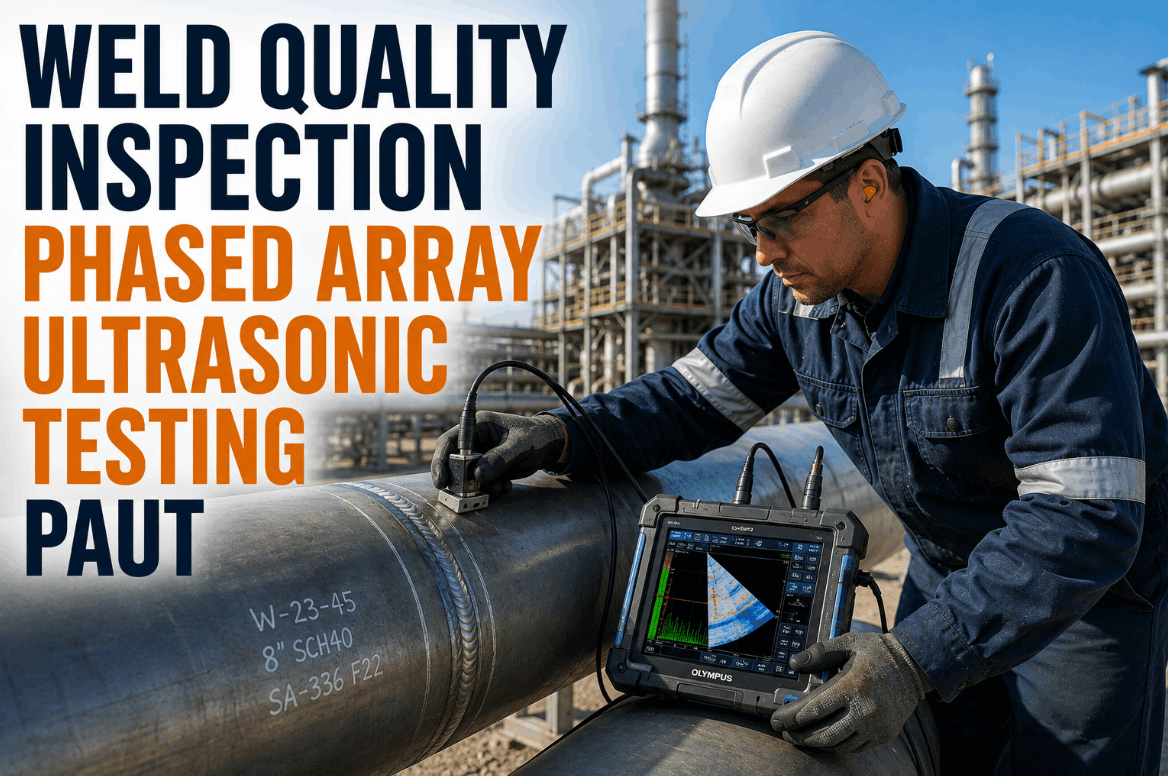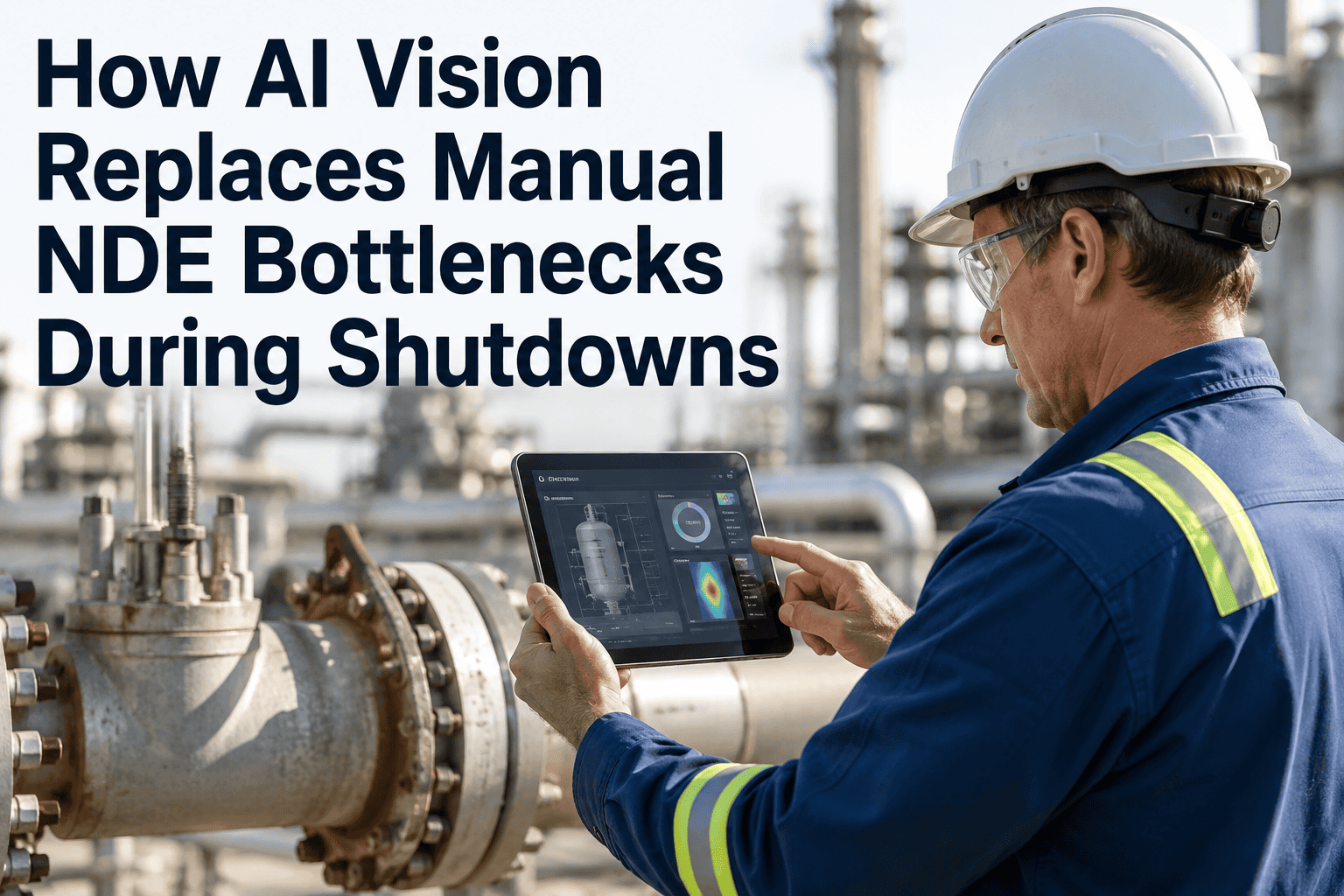
Every shutdown has one crew that everyone else is waiting on, and on most turnarounds it is the NDE crew. Ultrasonic thickness readings, visual weld inspection, and radiography all funnel through a small pool of certified technicians who can only cover so many joints, welds, and circuits per shift, no matter how many other trades are standing by ready to move to the next task once inspection clears them. AI-augmented NDE does not replace the certified inspector — it replaces the bottleneck, processing scan data at a pace no manual review queue can match while keeping every finding traceable back to a qualified reviewer. Book a demo to see how much faster your inspection queue could move.
The NDE Queue Is the Real Bottleneck on Most Shutdowns — AI Vision Clears It 10x Faster
AI-augmented ultrasonic and visual inspection processes scan data in a fraction of the time manual review takes, applying consistent interpretation criteria across every technician and every shift so the rest of the crew stops waiting on a data review backlog.
The Inspection Queue Problem No One Plans Around Until It's Already Delaying the Turnaround
Certified NDE technicians are one of the scarcest resources on any shutdown, and their output is capped by how fast a human can scan a joint, review the trace, and document a finding to auditable quality. When mechanical crews finish prepping fifty joints in a shift but the NDE team can only clear twenty, the other thirty sit idle waiting for clearance, and that wait time accumulates across every discipline downstream of inspection — welding, insulation, and final closeout all stack up behind the same queue.
The problem compounds under schedule pressure. As a turnaround runs long, the temptation to speed up inspection by adding less experienced technicians or compressing review time per joint introduces exactly the interpretation inconsistency that inspection programs exist to prevent. A finding that one technician flags as reportable and another reads as acceptable, purely because of experience level or fatigue late in a long shift, is a quality risk that shows up months later, not a scheduling inconvenience that resolves itself.
Contractor-supplied NDE crews add another layer of variability that most plants underestimate when scoping a turnaround. Different inspection contractors bring technicians trained under slightly different interpretive traditions, even when everyone is certified against the same code. A joint that one contractor's technician calls marginal and another calls clear is not necessarily a training failure on either side — it reflects the inherent variability of human interpretation applied to genuinely ambiguous data, which is precisely the kind of variability a consistent automated screening layer is built to reduce.
Manual NDE Review vs AI-Augmented NDE Review
AI Vision Sits Inside the Inspection Process, Not Around It
AI-augmented NDE is not a separate inspection method competing with certified ultrasonic and visual techniques — it is a processing layer applied to the same scan data those techniques already generate. A technician still performs the scan using standard equipment and standard procedures. What changes is what happens to that data afterward: instead of sitting in a review queue waiting for a human to interpret it, the scan is pre-screened by a model trained on thousands of prior inspection findings across similar equipment types.
This distinction matters when explaining the approach to a plant's inspection authority or third-party auditor, since the framing often determines how quickly the change gets approved for use on a live turnaround. The scanning method, the equipment calibration requirements, and the acceptance criteria written into the plant's inspection procedures do not change at all. What is being added is a triage step that happens between data capture and human review — conceptually similar to how a lab technician might sort samples by urgency before a pathologist reviews them, rather than a change to the diagnostic method itself.
Every Finding Still Gets a Certified Human Signature — It Just Gets There Faster
See how AI pre-screening compresses the inspection queue without changing who has final authority over a finding.
Building Interpretation Consistency From Historical Inspection Findings
The accuracy of any AI-augmented inspection system depends entirely on the quality and volume of historical findings it learns from — this is not a general-purpose vision model applied blindly to industrial scans, but one trained specifically on the equipment types, material grades, and defect patterns relevant to the plant's own inspection history and the broader industry data behind it. A model trained on refinery piping data will not automatically transfer its accuracy to cement kiln refractory inspection without retraining on the relevant equipment class, which is why the training data question is usually the first thing to establish before rolling the system out on a new asset population.
What Faster NDE Actually Buys the Turnaround Schedule
The value of faster inspection processing is not measured in hours saved within the NDE discipline itself — it is measured in how much less idle time accumulates across every trade waiting on inspection clearance. On a large turnaround with hundreds of joints requiring NDE before welding or insulation can proceed, even a modest reduction in average time-to-finding ripples through the schedule, because clearance delays on the critical path compound rather than average out.
There is a quality dimension too, often overlooked in the rush to talk about speed. A consistent interpretation standard applied by the same model logic across every shift removes one of the most persistent quality risks in manual NDE programs: a finding that would be flagged as reportable on the day shift getting missed on a fatigued night shift, purely due to human variability rather than any difference in the actual defect. Faster and more consistent are not competing goals here — they come from the same underlying change.
Schedule planners who have run turnarounds with and without AI-augmented review consistently point to one specific moment as the clearest sign of improvement: the point in the schedule, usually in the back half of the outage, where trades traditionally start queuing up behind a strained NDE crew working overtime to catch up. With scan review no longer the constraint, that queue simply does not form the same way, and the discipline sequencing that was built into the schedule months earlier holds up much closer to plan.
What Changes for the Technicians and Inspectors Doing the Work
Introducing AI pre-screening into an inspection program tends to raise two immediate concerns among the technicians who will actually use it: whether it changes their certification requirements, and whether it is being introduced to reduce headcount. Neither is typically the case in practice. Certification requirements for performing scans and issuing final determinations remain governed by the same codes and standards as before — API, ASME, and the plant's own procedures do not change because a pre-screening layer sits between scan capture and human review.
What does change is the shape of the workday. Instead of spending the bulk of a shift working through a backlog of scans captured hours or days earlier, inspectors spend more of their time on the findings that actually need judgment — the ambiguous cases, the borderline thickness readings, the welds where two reasonable inspectors might disagree. The routine, clearly-acceptable scans that make up the majority of any inspection population get cleared automatically, which most experienced inspectors describe as a relief from repetitive review rather than a threat to their role. Headcount decisions on a turnaround are still driven by total scan volume and schedule duration, not by how fast any individual scan gets reviewed.
Connecting AI Review to Existing Inspection Management Systems
Most plants already run some form of inspection data management system to track findings, schedule re-inspection intervals, and maintain the audit trail regulators expect during a facility review. AI-augmented NDE is designed to feed into that existing system rather than create a separate record-keeping process running in parallel, which would only add administrative overhead rather than removing it.
Questions Inspection Teams Ask About AI-Augmented NDE
Stop Letting the Inspection Queue Set the Pace of the Whole Turnaround
See how AI-augmented NDE clears the review backlog without changing who has final authority over a finding.