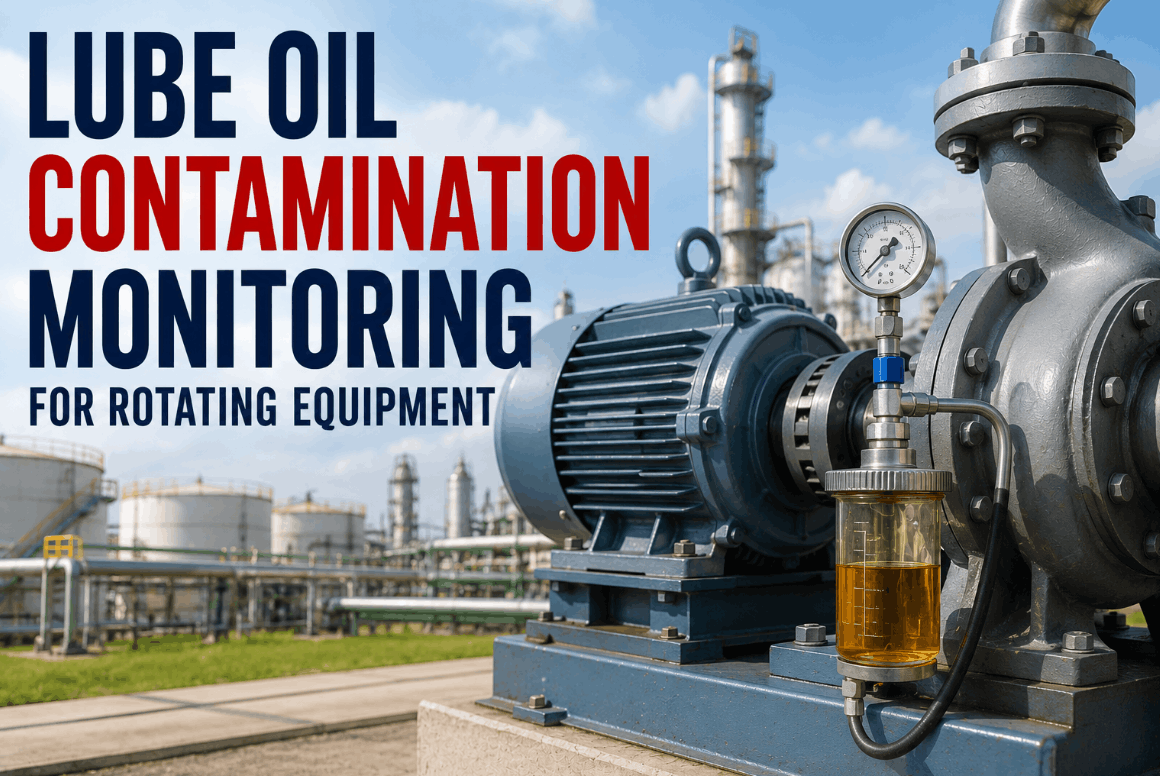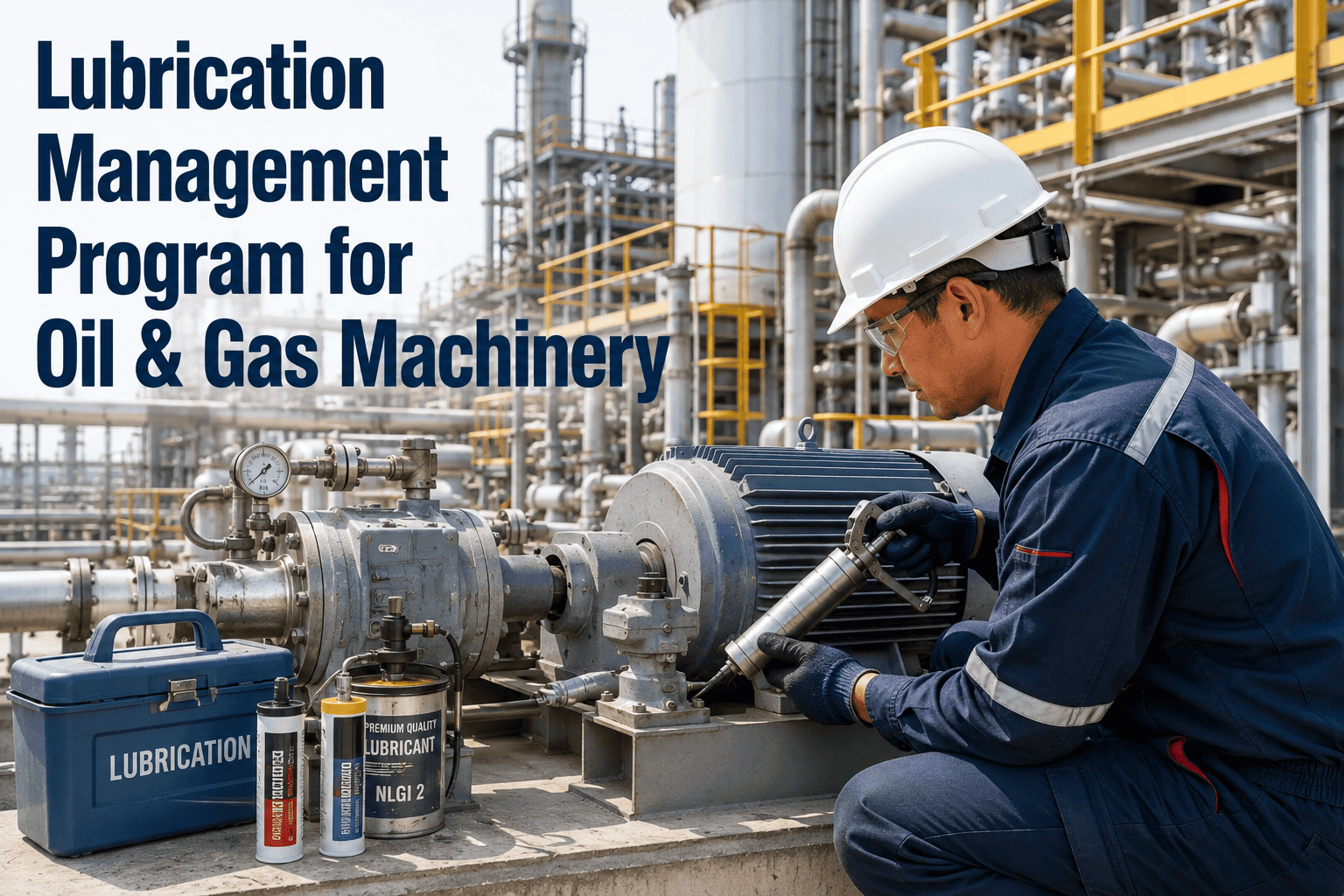
More than half of all rolling element bearing failures trace back to lubrication-related causes, and industry data consistently shows that as few as 10 percent of bearings ever reach their designed fatigue life before failing or being replaced — meaning the overwhelming majority of bearing failures in oil and gas machinery are premature, and therefore preventable. The uncomfortable part of this statistic is that it rarely comes down to using the wrong lubricant outright; it is contamination that entered during storage, handling, or transfer, a viscosity grade that was close enough rather than correct, or a route schedule that depended on someone remembering rather than a system that tracked it. A world-class lubrication management program addresses all of these points systematically rather than one at a time, and the plants that have built one are seeing bearing life extend by a factor of four or more. This article covers what that program actually looks like across selection, contamination control, storage, routing, and analysis, and how to see the same structure applied to your own equipment fleet.
Why Bearing Failure Is Rarely a Bearing Problem
When a bearing fails prematurely, the instinct is often to blame the bearing itself — a bad batch, a manufacturing defect, simple bad luck. The data tells a different story. Contamination, incorrect viscosity, over- or under-greasing, and lubricant degradation account for the large majority of premature failures, and every one of these causes is controllable through process rather than through better bearings. Water contamination alone is devastating: as little as 1,000 parts per million of water in oil can reduce bearing life by 75 percent, and moving fluid cleanliness up by a single ISO code can extend hydraulic component life by 50 percent. These are not marginal improvements available only to plants with unlimited budgets — they are the direct result of disciplined contamination control that most facilities have simply never systematized. The equipment is rarely the weak link; the process around the lubricant almost always is.
The Seven Elements of a World-Class Lubrication Program
A lubrication program is only as strong as its weakest element, and most facilities that struggle with recurring bearing and gearbox failures are missing at least two or three of these pillars entirely rather than executing all seven poorly. Building the program means addressing each one deliberately rather than assuming that buying good-quality oil alone will solve a problem that is actually rooted in storage, handling, or scheduling. It's common to find a plant with excellent lubricant selection on paper undone entirely by an open storage room and an unverified route schedule — the strongest link in the chain rarely matters if the weakest one is left unaddressed.
Lubricant Selection
Matching viscosity grade, base oil type, and additive package to each asset's actual speed, load, temperature, and environment rather than defaulting to a generic multi-purpose product.
Contamination Control
Preventing particulate and moisture ingress at every stage — storage, transfer, and the machine sump itself — since contamination is the leading cause of premature bearing and gear failure.
Storage & Handling
Sealed containers, desiccant breathers, dedicated filtration carts, and color-coded storage that keeps a facility's fluids clean and correctly identified from delivery through to application.
Lubricant Consolidation
Reducing an unnecessarily large product portfolio down to an approved products list, cutting cross-contamination risk and simplifying technician training without sacrificing protection.
Route-Based Lubrication
Grouping assets by physical location and lubricant type into structured routes, replacing memory-dependent grease-and-go rounds with consistent, verifiable coverage across every shift.
Oil Analysis Integration
Particle count, viscosity, water content, acid number, and wear metal analysis feeding condition-based decisions rather than acting on a calendar schedule regardless of actual oil health.
Technician Training & KPIs
Route compliance rate, lubrication-related failure trends, and consumption efficiency tracked and reviewed monthly, turning the program into a continuously improving system rather than a one-time setup.
Reading the ISO Cleanliness Code and What It Actually Means
ISO 4406 cleanliness codes translate particle contamination into a concrete, actionable number rather than a subjective impression of how clean the oil looks. A code such as 18/16/13 reports particle counts at three size thresholds per milliliter of fluid, and reliability engineers use that code to determine whether a hydraulic circuit, gearbox, or turbine lube reservoir falls within the tolerance the installed pumps, bearings, and servo valves actually require. New oil arriving from the supplier is rarely clean enough to use directly from the drum — which is exactly why a dedicated filtration and transfer process matters as much as the oil specification itself, and it is a step that gets skipped more often than most reliability teams would expect once they actually audit their own storeroom practices.
Incoming Filtration
New oil is filtered through a dedicated transfer cart before it ever reaches a machine sump, since factory-fresh oil is rarely clean enough to use as delivered.
Sealed Storage
Containers remain sealed and equipped with desiccant breathers throughout storage, preventing moisture and airborne particulate from entering before the oil is even used.
Clean Transfer & Application
Dedicated, color-coded transfer equipment prevents cross-contamination between lubricant types and keeps particulate out during the final application step.
In-Service Monitoring
Breathers, return filters, and offline filtration loops continue protecting the fluid once it is in the machine, with particle counts tracked against target ISO codes on an ongoing basis.
Why Most Plants Stock Far More Lubricants Than They Actually Need
A typical industrial facility stocks up to twenty different lubricant types, often more, accumulated over years of individual purchasing decisions rather than an engineered specification process. A structured consolidation audit frequently finds that number can be reduced by half or more without sacrificing protection on any single asset, because many of those products overlap almost entirely in viscosity and additive package. The value isn't just inventory savings — fewer products in the storeroom directly reduces the risk of an operator grabbing the wrong container, which is one of the most common and most preventable causes of cross-contamination on the plant floor. It is also one of the easiest wins to demonstrate to plant leadership, since the inventory savings show up on a purchasing report almost immediately, well before the longer-term reliability gains from better viscosity matching become visible in the failure data.
Reduced SKU Count
Consolidation audits typically cut the number of stocked lubricant products by 30 to 50 percent, simplifying purchasing, storage, and training in one motion.
Lower Cross-Contamination Risk
Fewer products in circulation means fewer opportunities for the wrong lubricant to end up in the wrong machine during a routine service call.
Corrected Viscosity Specifications
The consolidation process is also the natural opportunity to fix long-standing viscosity mismatches, since a single ISO grade step represents roughly a 50 percent viscosity difference.
Simplified Technician Training
A shorter, well-documented approved products list is dramatically easier for technicians to learn and apply correctly across every route than a sprawling, undocumented inventory.
What Changes When Lubrication Moves From Memory to a Managed System
Most oil and gas facilities are not without a lubrication program entirely — they have technicians who know their equipment well and a rough schedule that mostly gets followed. The gap between that informal approach and a genuinely structured program shows up clearly once you compare what each one actually delivers under real operating pressure.
- Schedules depend on technician memory or a shared whiteboard
- Calendar-based intervals regardless of actual oil condition
- New oil applied without dedicated filtration or contamination checks
- Lubricant portfolio grows unchecked as new products get added over time
- Failure trends rarely connected back to a specific lubrication root cause
- Route-based schedules with barcode or check-based verification per point
- Condition-based triggers from oil analysis data drive service decisions
- Dedicated filtration and sealed storage control contamination at every stage
- Consolidated approved products list with engineered viscosity specifications
- Route compliance and failure trends tracked as measurable program KPIs
How iFactory Builds a Lubrication Management Program on Your Site
A turnkey deployment means your reliability team is not left building routes, digitizing lubrication points, and manually cross-referencing oil analysis reports on their own. iFactory's approach starts with a plant-wide lubrication survey and moves through consolidation, route design, and analysis integration in a defined sequence, so the program is fully operational and trackable rather than a partial rollout that stalls after the initial setup.
Plant-Wide Lubrication Survey
Every lubrication point across the facility is cataloged with current lubricant type, interval, and condition, establishing the baseline the rest of the program builds on.
Consolidation & Specification Review
Existing lubricant products are reviewed against an engineered approved products list, correcting viscosity mismatches and cutting redundant SKUs.
Route Design & Digital Tracking
Lubrication points are grouped into structured routes by location and lubricant type, with completion tracked digitally rather than relying on a paper checklist.
Oil Analysis Integration & KPI Reporting
Analysis results feed directly into the asset record, triggering condition-based work orders automatically and generating the compliance and trend reports management actually reviews.
What This Looks Like in Practice
A processing facility running dozens of critical pumps and gearboxes had built its lubrication schedule around technician memory and a shared whiteboard, with oil analysis performed inconsistently and rarely reviewed against route compliance. Following a plant-wide lubrication survey and consolidation audit, the facility reduced its stocked lubricant portfolio by roughly a third, corrected several longstanding viscosity mismatches identified during the review, and moved every lubrication point onto a digitally tracked route with condition-based triggers replacing the previous calendar-driven schedule. Unscheduled downtime attributable to lubrication-related failures dropped meaningfully within the first year, and the reliability team reported that the consolidated approved products list alone significantly reduced the incidence of technicians grabbing the wrong container during routine service calls.
The facility's maintenance manager noted that the most valuable outcome was not any single failure avoided, but the shift in how lubrication was discussed internally — from an activity nobody tracked closely to a program with measurable compliance rates and trend data that got reviewed in the same monthly meetings as vibration analysis and other established reliability metrics.
Reduced Unplanned Downtime
Lubrication-related failure events dropped measurably within the first year of the structured program going live.
Lower Inventory Cost
A roughly one-third reduction in stocked lubricant products cut both purchasing cost and storage footprint.
Frequently Asked Questions
Turn Grease-and-Go Into a Program You Can Measure
iFactory connects lubricant selection, contamination control, route scheduling, and oil analysis into one system — extending bearing life, cutting unplanned failures, and giving your reliability team a program with real KPIs instead of a whiteboard.