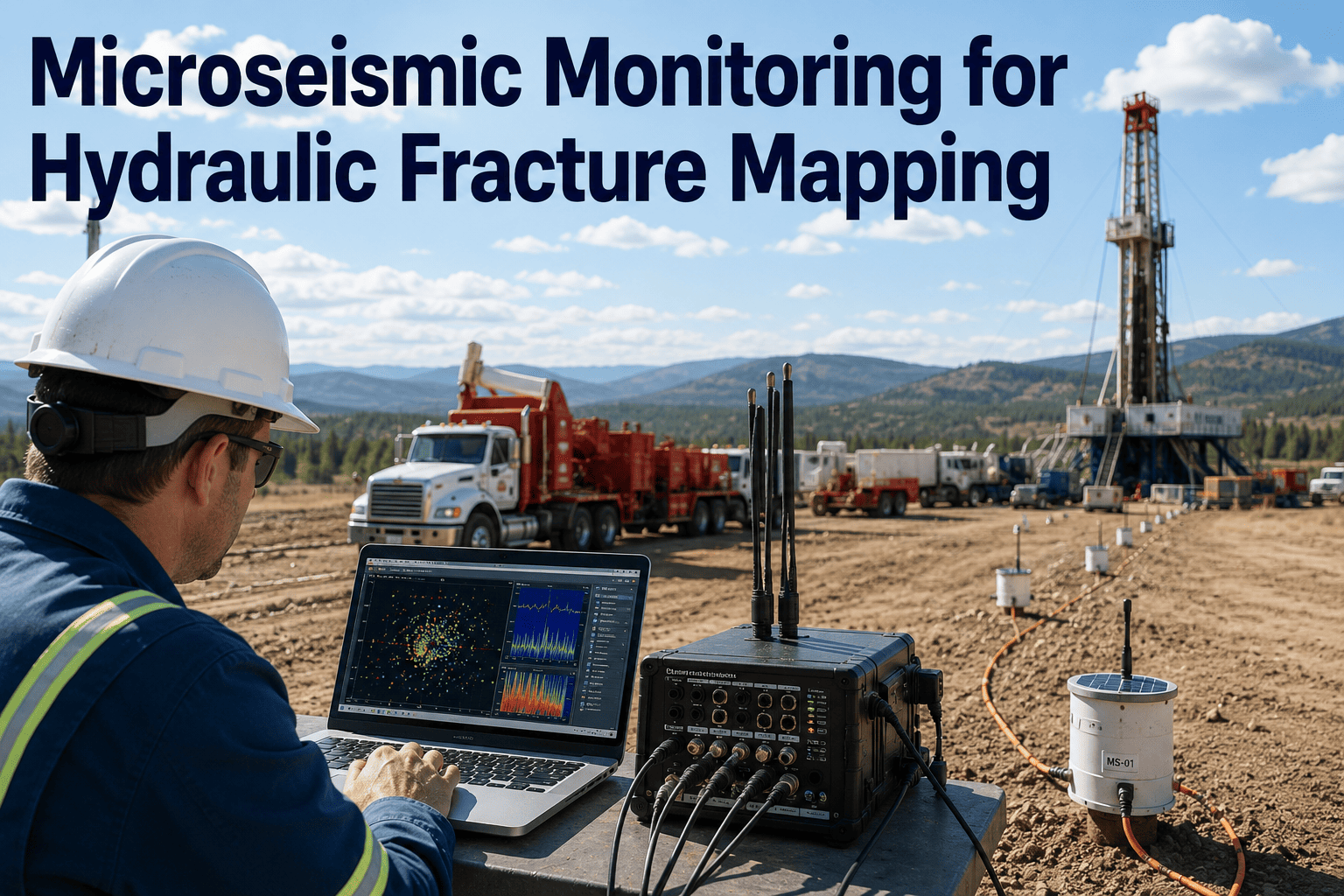
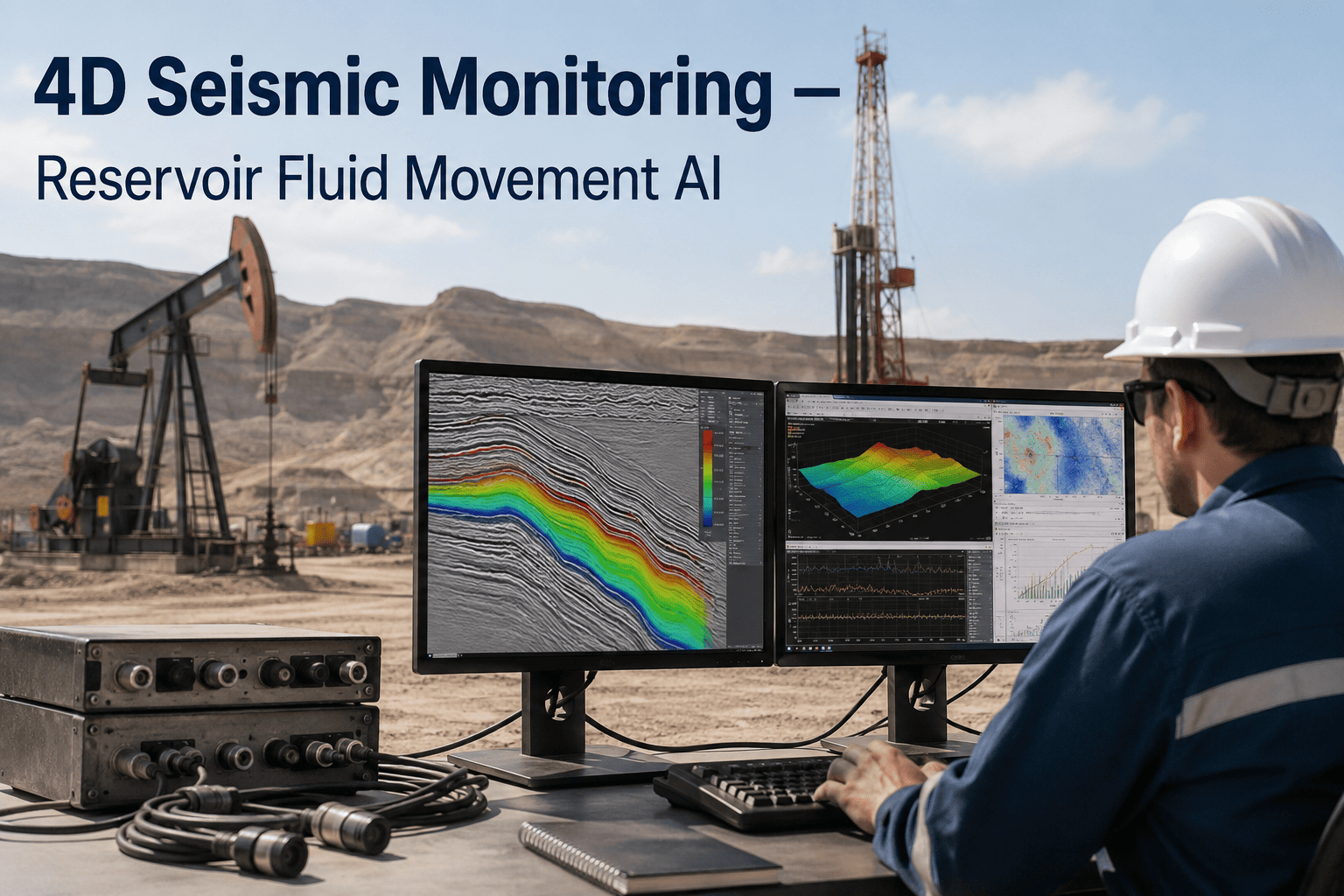
Hydraulic fracturing and wastewater injection operations generate microseismic events that can escalate to magnitudes exceeding regulatory thresholds, triggering mandatory shutdowns, operational delays, and regulatory investigations. Manual seismic monitoring relies on analyst review of event catalogs with 15 to 30 minute detection delays, meaning operators often discover they have exceeded traffic light limits after the event has already occurred. iFactory AI delivers real-time passive seismic monitoring with sub-10-second event detection, magnitude prediction, and automated traffic light protocol enforcement. Book a Demo to see how iFactory deploys AI passive seismic monitoring at your injection or frac operations.
<10 sec
Event detection and location latency vs 15–30 min manual review
92%
Magnitude prediction accuracy for events above M2.0 threshold
85%
Reduction in false traffic light activations vs single-station triggers
4 hrs
Network deployment to live AI monitoring activation
Every Undetected Magnitude Escalation Is a Regulatory Shutdown. AI Passive Seismic Monitoring Stops It in Real Time.
iFactory ingests continuous seismic waveform data from surface and downhole sensor arrays, detects and locates events in under 10 seconds, predicts magnitude trajectories before thresholds are reached, and enforces traffic light protocols automatically — eliminating the detection delays that cause regulatory violations.
Operational Sources That Drive Induced Seismicity Risk
Understanding which subsurface operations generate seismic risk is the first step toward building an effective monitoring programme. Each source category produces distinct seismic signatures that require different detection thresholds and response protocols.
Primary Risk Source
Wastewater Disposal Injection
High-volume wastewater injection into deep disposal formations increases pore pressure along pre-existing fault networks, reducing effective stress and enabling fault slip. This mechanism has produced the largest induced earthquakes recorded globally, including the M5.8 Pawnee Oklahoma event in 2016. Risk accumulates over months to years of sustained injection, making continuous long-term monitoring essential for detecting pressure-driven seismicity migration toward populated areas or critical infrastructure.
Moderate Risk Source
Hydraulic Fracturing Stimulation
Frac operations generate thousands of microseismic events during fluid injection, with a small percentage escalating to felt magnitudes above M2.0–M3.0. Seismicity typically occurs during active pumping and decays rapidly after shut-in, creating concentrated time windows where monitoring intensity must be maximised. The challenge is distinguishing routine frac microseismicity from anomalous event rate increases that signal potential fault reactivation requiring operational response.
Secondary Risk Source
Enhanced Oil Recovery and CO2 Injection
Long-term fluid or gas injection for EOR and carbon sequestration alters reservoir pressure and stress conditions over extended timeframes. While individual events tend to be smaller than disposal-induced seismicity, the decades-long injection duration creates sustained risk that requires continuous baseline monitoring and anomaly detection. Regulatory frameworks for carbon storage increasingly mandate seismic monitoring with specific magnitude thresholds and reporting requirements tied to injection permit conditions.
Traffic Light Protocol: Real-Time Response Framework for Induced Seismicity
Traffic light protocols are the regulatory standard for managing induced seismicity risk during injection and stimulation operations. Each colour tier defines specific magnitude thresholds, required operator responses, and reporting obligations that iFactory enforces automatically.
Magnitude Below Alert Level
Trigger Conditions
All detected events below the regulatory alert magnitude threshold. Event rates within baseline range. No spatial migration patterns toward known fault structures or populated areas.
Operator Response
Continue normal injection or stimulation operations. Maintain continuous monitoring with standard event detection sensitivity. Submit routine seismic reports at regulatory intervals.
iFactory AI Action
Continuous event detection, location, and magnitude calculation. Baseline event rate tracking with statistical anomaly detection. Automated report generation at scheduled intervals.
Magnitude Approaching Threshold
Trigger Conditions
Single event or cumulative event sequence within defined percentage of the red-light magnitude threshold. Event rate exceeding baseline by regulatory multiplier. Spatial migration detected toward mapped faults or sensitive receptors.
Operator Response
Reduce injection rate or暂停 stimulation per regulatory protocol. Implement enhanced monitoring with increased detection sensitivity. Notify regulatory authority within prescribed timeframe. Prepare contingency reduction or shutdown plan.
iFactory AI Action
Automated amber alert generation with magnitude trend projection. Injection rate reduction recommendation calculated from event rate decay models. Enhanced monitoring mode activation. Regulatory notification drafted and queued for operator approval.
Magnitude Exceeds Threshold
Trigger Conditions
Any event exceeding the regulatory red-light magnitude threshold. Multiple events in rapid sequence approaching or exceeding threshold regardless of individual magnitude. Event occurring on known mapped fault structure with slip potential.
Operator Response
Immediate cessation of injection or stimulation operations. Full regulatory notification with event details, response actions, and remediation plan. Ground truth assessment of event parameters. Operations cannot resume until regulatory approval with revised monitoring plan.
iFactory AI Action
Instant red alert with automated notification to operator and regulatory dashboard. Immediate event parameter calculation with uncertainty bounds. Post-event aftershock monitoring mode activation. Compliance report auto-generated with full event timeline.
How iFactory AI Processes Passive Seismic Data in Real Time
iFactory replaces batch-mode seismic processing and manual event review with a continuous AI pipeline that transforms raw waveform data into located events, magnitude estimates, and traffic light decisions within seconds of signal arrival at the sensor network. Talk to our seismic monitoring team about configuring this pipeline for your operation.
01
Continuous Waveform Ingestion
Real-time data streams from surface broadband, geophone arrays, and downhole fiber-optic or conventional sensors ingested via standard protocols. Automated quality control flags noise, gaps, and sensor malfunctions before processing. Supports mixed network geometries and variable sample rates across the monitoring array.
02
AI Event Detection and P-Picking
Deep learning models scan continuous waveforms for seismic event signatures, performing automated P-wave and S-wave arrival picking with accuracy matching or exceeding experienced analysts. Detection sensitivity adapts to ambient noise levels in real time, maintaining consistent magnitude completeness across varying surface conditions and operational noise environments.
03
Rapid Event Location and Magnitude
Detected events located using arrival time differences across the network with velocity model refinement. Local magnitude calculated from amplitude measurements at multiple stations with distance correction. Event location and magnitude published within 10 seconds of detection, with uncertainty estimates that improve as additional station arrivals are incorporated.
04
Magnitude Trajectory Prediction
Machine learning models analyse event rate trends, magnitude-frequency distributions, spatial migration patterns, and injection operational parameters to predict whether the current seismic sequence is likely to escalate beyond traffic light thresholds. Prediction windows of 15 to 60 minutes give operators time to implement rate reductions before red-light conditions develop.
05
Automated Traffic Light Enforcement
Each located event evaluated against configured traffic light thresholds with site-specific magnitude levels and response criteria. Green, amber, or red status assigned automatically with operator dashboard notification, regulatory report generation, and injection rate adjustment recommendations. Full audit trail maintained for every traffic light decision with event data, model confidence, and response timing.
Real-Time Monitoring KPIs from Active Induced Seismicity Deployments
The following performance metrics reflect aggregated results from iFactory passive seismic monitoring deployments at wastewater disposal, hydraulic fracturing, and CO2 injection operations across North America and international basins.
<10 sec
Detection-to-Alert Latency
From waveform arrival to located event with magnitude on operator dashboard
92%
Magnitude Prediction Accuracy
For events above M2.0 within 0.3 magnitude units of measured value
85%
False Alert Reduction
Multi-station cross-validation eliminates noise-triggered single-station false positives
100%
Regulatory Report Compliance
All required event reports generated and submitted within regulatory timeframes
M -0.5
Magnitude of Completeness
Consistent detection sensitivity maintained across varying operational noise levels
45 min
Average Escalation Prediction Window
Advance warning before magnitude escalation reaches traffic light threshold
A Single Red-Light Event Costs More Than Your Entire Annual Monitoring Budget. AI Enforcement Prevents It.
iFactory deploys passive seismic monitoring networks with AI-powered event detection, magnitude prediction, and automated traffic light enforcement — protecting your operations from shutdowns, penalties, and reputational damage with sub-10-second response capability.
AI Passive Seismic Monitoring vs Conventional Manual Review Workflows
The table below compares iFactory's AI-powered real-time monitoring platform against conventional manual seismic monitoring approaches across the operational dimensions that determine regulatory compliance, response speed, and operational continuity.
Field Deployment Outcomes: AI Passive Seismic Monitoring in Active Operations
The following deployment outcomes reflect actual iFactory project results across three induced seismicity monitoring scenarios with distinct regulatory environments and operational risk profiles. Book a Demo to discuss deploying AI seismic monitoring at your operation.
Oklahoma — Wastewater Disposal
Disposal Well Network Monitoring After M4.0 Regulatory Action
An operator managing a 12-well disposal network in the Arbuckle formation deployed iFactory AI monitoring after receiving a regulatory directive to implement enhanced seismic monitoring following a M4.0 event in the area. The platform detected and located 847 events in the first 90 days, with 94% of events located and classified within 10 seconds of detection. AI magnitude trajectory prediction provided advance warning for 6 event sequences that approached the M2.5 amber threshold, enabling proactive injection rate reductions that prevented any red-light activations during the monitoring period. The operator maintained full disposal capacity while demonstrating regulatory compliance, avoiding a potential volume curtailment that would have reduced disposal revenue by an estimated $3.2M annually.
0
Red-light activations in 90 days
$3.2M
Annual disposal revenue preserved
94%
Events located within 10 seconds
Alberta — Hydraulic Fracturing
Multi-Well Pad Frac Monitoring Under AER Traffic Light Protocol
An operator executing a 16-stage frac program on a 4-well pad in the Montney formation deployed iFactory to meet Alberta Energy Regulator traffic light protocol requirements. The platform monitored continuous waveforms from a 12-station surface array, detecting 2,340 frac-related microseismic events over 23 days of active stimulation. AI classification distinguished routine frac events from anomalous sequences with increasing magnitude trends, triggering amber alerts for 3 stages where event rates exceeded baseline by the regulatory multiplier. The operator implemented protocol-mandate pump rate reductions within 5 minutes of each amber alert, and all three sequences decayed below threshold without reaching red-light conditions. Zero regulatory reportable events occurred during the entire program, compared to 2 red-light events at an adjacent pad using conventional monitoring in the same formation.
0
Red-light events vs 2 at adjacent pad
5 min
Average response time to amber alerts
2,340
Events detected and classified in 23 days
Permian Basin — Disposal
Deep Disposal Well Seismicity Migration Detection and Mitigation
A Permian Basin operator injecting into the Ellenburger formation at 12,000 feet deployed iFactory after seismic events began migrating laterally from the injection well toward a nearby producing field. The AI platform detected the spatial migration trend 18 days before events reached within 2 km of producing wellbores, identifying the directional migration velocity and projecting the timeline for potential impact on production infrastructure. Based on iFactory's migration forecast and recommended injection volume reduction, the operator implemented a phased rate reduction that arrested the seismicity migration front within 7 days, preventing potential damage to 8 producing wells with combined production value of $4.8M per month. Post-mitigation monitoring confirmed event rates decayed to baseline levels within 14 days of rate reduction implementation.
18 days
Advance migration detection before well impact
$4.8M/mo
Production value protected at 8 wells
7 days
Migration front arrested after rate reduction
Regulatory Framework Support for Induced Seismicity Compliance
iFactory's passive seismic monitoring platform is pre-configured to meet the traffic light protocols, reporting requirements, and magnitude thresholds of major global regulatory frameworks governing induced seismicity from subsurface injection operations.
Alberta Energy Regulator (AER) Subsurface Order
Traffic light protocol with M2.0 amber and M4.0 red thresholds for hydraulic fracturing. Real-time monitoring within 5 km of operations. Mandatory event reporting within 24 hours of detection. iFactory auto-generates AER-compliant reports with event catalogs, magnitude-frequency distributions, and response action documentation.
Oklahoma Corporation Commission (OCC) Directive
Volume reduction and shutdown protocols triggered by M2.5 and M3.0 thresholds in Arbuckle disposal wells. Regional volume curtailment orders based on spatial seismicity clustering. iFactory tracks cumulative injection volumes against OCC-mandated limits and generates compliance documentation for volume reduction demonstrations.
Texas Railroad Commission (RRC) Seismic Rules
Modified traffic light protocols for disposal wells in seismic response areas with operator-specific magnitude thresholds. Seismic response plans requiring real-time monitoring and injection rate adjustment capability. iFactory configures site-specific thresholds and generates RRC-compliant seismic response plan documentation.
UK Oil and Gas Authority (OGA) Traffic Light
Netherlands Mining Authority (SODM) Protocol
European frameworks with M0.5 to M1.5 red-light thresholds for shale gas operations requiring immediate cessation. Pre-operational baseline monitoring mandates with statistical threshold definitions. iFactory implements low-magnitude detection sensitivity with automated baseline comparison and regulatory notification workflows calibrated to European threshold levels.
Frequently Asked Questions
What sensor network density is required for effective induced seismicity monitoring with iFactory?
Network density requirements depend on the target magnitude of completeness and the monitoring area geometry. For hydraulic fracturing operations, a surface array of 8 to 15 stations within 3 to 5 km of the treatment well typically achieves M -0.5 to M 0.0 completeness. For wastewater disposal monitoring covering larger areas, 12 to 20 stations distributed across a 10 to 20 km radius provides M 1.0 to M 1.5 detection capability sufficient for traffic light protocol compliance. iFactory's deployment team designs the optimal network configuration during the initial site assessment based on your regulatory thresholds, geological noise characteristics, and operational area dimensions. Contact our
support team for a network design consultation specific to your operation.
How does iFactory distinguish induced seismicity from natural tectonic events in the same area?
iFactory applies multiple discrimination criteria including spatial clustering patterns relative to injection points, temporal correlation with injection rate changes, depth distribution within the target injection interval versus deeper basement faults, and magnitude-frequency distribution characteristics. Induced events typically show tight spatial clustering near injection operations, strong temporal correlation with injection pressure or volume changes, and shallow focal depths within or near the disposal or stimulation interval. Natural tectonic events display broader spatial distributions, no temporal correlation with injection operations, and focal depths consistent with regional tectonic activity. The platform assigns a source classification confidence score to each event.
Book a demo to see the source classification workflow applied to your monitoring data.
Can iFactory integrate with existing seismic networks and data acquisition systems already installed at our site?
Yes, iFactory integrates with all major seismic data acquisition systems including Nanometrics, REF TEK, Geotech, and custom telemetry platforms through standard data formats including SEED, MiniSEED, and SAC. For operators with existing surface or downhole sensor networks, iFactory connects to the data stream without requiring hardware replacement. Where existing network density is insufficient for traffic light protocol requirements, iFactory deploys additional sensors that operate seamlessly alongside your existing infrastructure. Integration is typically completed within 2 to 4 hours of sensor deployment. Reach out to
support to discuss integration with your existing seismic equipment.
What happens when the AI magnitude prediction indicates an approaching red-light condition but the current event is still in the green zone?
When the magnitude trajectory prediction model projects a probability of exceeding the red-light threshold within the prediction window, iFactory generates a predictive amber advisory that is distinct from a threshold-based amber alert. This advisory includes the predicted escalation timeline, confidence level, contributing factors such as event rate increase or spatial migration direction, and a recommended preemptive injection rate reduction to arrest the escalation trend before a threshold violation occurs. The operator retains full decision authority for preemptive actions, but the advisory documentation demonstrates proactive risk management to regulators regardless of whether the operator implements the recommended rate reduction.
Book a demo to see the predictive advisory workflow in action.
How does the platform handle aftershock sequences following a red-light event to support restart applications?
Following a red-light event, iFactory automatically activates aftershock monitoring mode with enhanced detection sensitivity and accelerated magnitude-frequency analysis. The platform tracks aftershock decay rates using modified Omori law parameters, compares observed decay against expected tectonic aftershock patterns, and generates a restart readiness assessment when decay metrics fall within regulatory-acceptable ranges. The restart assessment package includes complete event catalogs, magnitude-frequency distributions, spatial-temporal evolution maps, and a statistical comparison to pre-injection baseline conditions formatted for regulatory submission. This documentation package significantly accelerates the regulatory review process for restart approval. Connect with
support to discuss restart assessment requirements for your regulatory jurisdiction.
Stop Relying on 30-Minute Detection Delays to Protect Against Real-Time Seismic Risk. Deploy AI Passive Seismic Monitoring in 4 Hours.
iFactory delivers sub-10-second event detection, magnitude trajectory prediction, and automated traffic light protocol enforcement — with regulatory-compliant reporting, aftershock monitoring, and restart assessment capabilities built into every deployment.