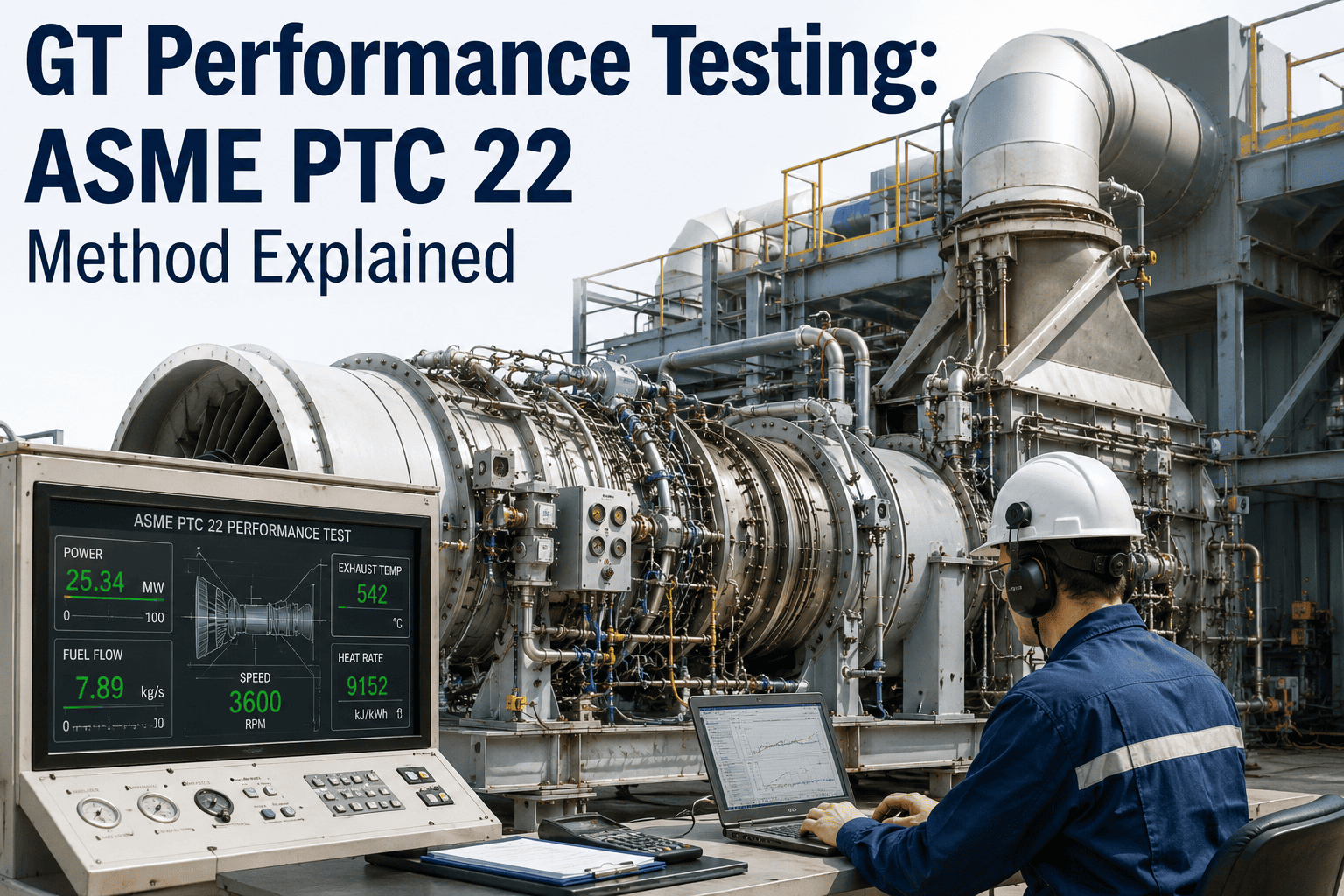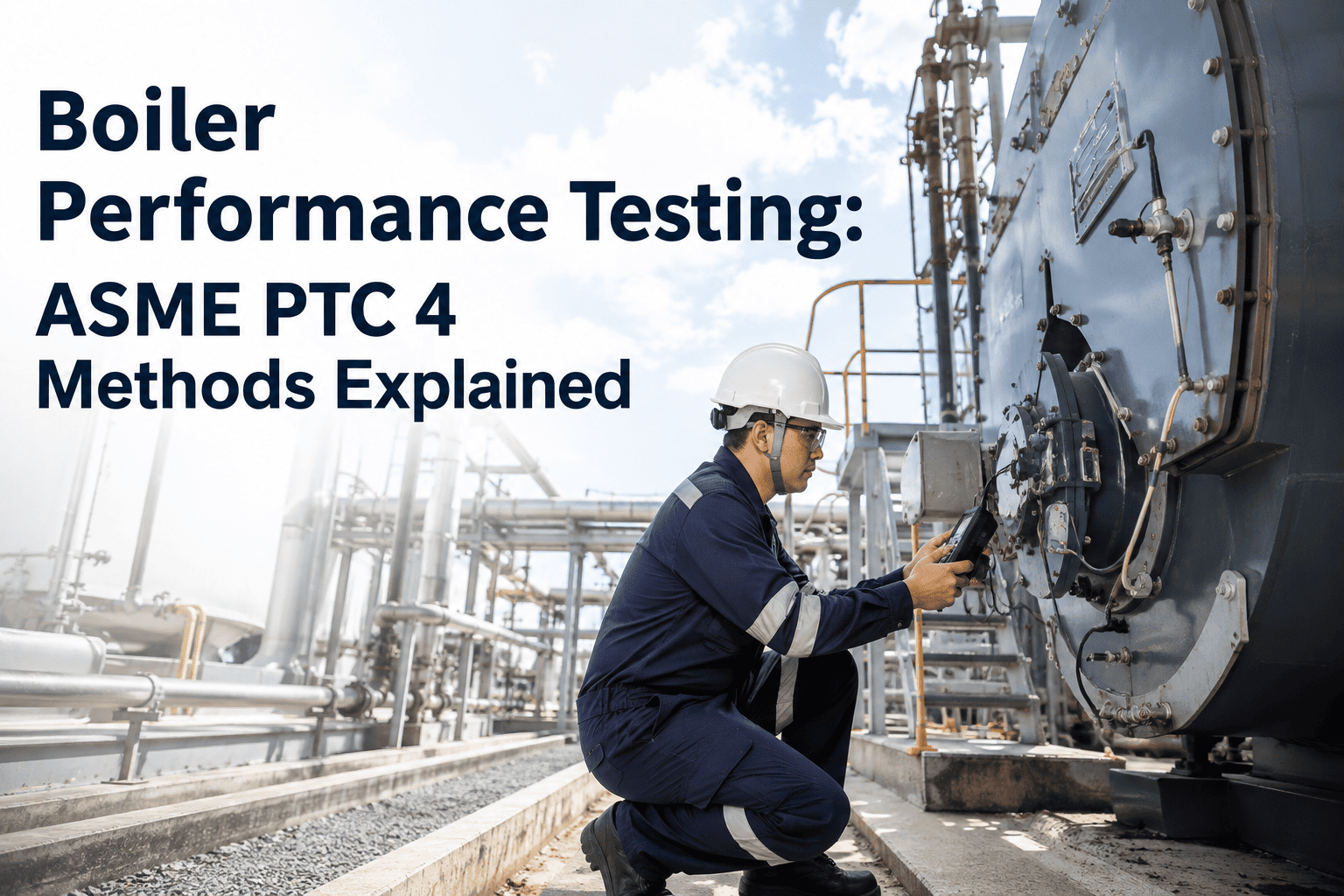
A boiler performance test is only as good as the standard behind it, and for coal-fired and gas-fired units in the United States that standard is ASME PTC 4. Run it correctly and you get a defensible, auditable efficiency number that can settle a performance guarantee dispute, validate a combustion tuning project, or justify a capital upgrade to plant management. Run it loosely — wrong instrumentation class, missed heat loss category, inconsistent sampling window — and the number is not worth the paper it is printed on. Engineering teams that book a demo with iFactory get a platform that automates the PTC 4 heat balance calculation directly from live plant data instead of a spreadsheet built fresh for every test.
ASME PTC 4 Boiler Performance Testing, Explained Method by Method
The heat loss method and the input-output method answer the same efficiency question from opposite directions. Knowing when to use each — and how to instrument, sample, and correct for it — is what separates a defensible performance test from a number nobody trusts in a guarantee dispute.
Why ASME PTC 4 Exists — And Why Plants Still Get It Wrong
ASME PTC 4 is the Performance Test Code for Fired Steam Generators, and it exists because efficiency claims made without a controlled, repeatable test method are essentially unenforceable. A boiler manufacturer's guarantee, an EPC contractor's acceptance criteria, or an internal fuel-savings target all depend on both sides agreeing not just on a number, but on exactly how that number was measured — instrument accuracy classes, sampling locations, correction curves for off-design ambient conditions, and the boundary drawn around what counts as the boiler system. PTC 4 codifies all of that so a test run by one engineering team can be defended against a challenge from another.
The code applies broadly across fuel types, from pulverized coal and stoker-fired units to natural gas and oil-fired boilers, and even to units co-firing biomass alongside a primary fossil fuel. Each fuel type brings its own complications to the test — coal requires careful ash sampling for unburned carbon, biomass requires accurate moisture content determination that can vary significantly load to load, and gas-fired units live or die on the accuracy of the gas flow metering feeding the input-output cross-check. A test engineer who has only ever run PTC 4 on a single fuel type can be caught off guard by how differently the code's sampling and instrumentation requirements play out on an unfamiliar fuel.
In practice, plants get it wrong in a handful of predictable ways: using plant-grade instrumentation where the code calls for a higher accuracy class, skipping a heat loss category because it is small and assumed negligible, running the test during a period of unstable load or ambient conditions, or failing to apply the correction curves that adjust results back to guarantee conditions. Any one of these mistakes can shift the calculated efficiency by a fraction of a percent — which sounds trivial until that fraction is multiplied across a full year of fuel consumption on a large utility boiler, where it represents real money and, in a guarantee dispute, real liability.
The code also matters for reasons beyond contractual disputes. Regulatory reporting in many jurisdictions ties emissions intensity and fuel consumption benchmarks to a documented efficiency figure, and a PTC 4 test provides the auditable basis for that figure. Insurance underwriters and lenders financing plant upgrades increasingly ask for PTC 4-compliant baseline and post-project test results before releasing performance-based incentive payments, which means the code has moved well beyond its original role as a manufacturer-versus-owner acceptance tool into something closer to a universal reference point for any conversation about boiler efficiency that involves money changing hands.
Two Methods, One Boiler: Heat Loss vs. Input-Output
PTC 4 recognizes two fundamentally different ways to arrive at boiler efficiency, and understanding when each applies is the first decision any test engineer has to make before instrumentation is even ordered. Choosing the wrong method for the situation does not just add inconvenience — it can invalidate months of test planning once the pre-test uncertainty analysis reveals the chosen approach cannot meet the required confidence level.
Efficiency is calculated indirectly by identifying and summing every individual loss — dry gas loss, moisture loss, unburned carbon, radiation, and several minor losses — then subtracting the total from 100%.
Efficiency is calculated directly as the ratio of energy absorbed by the working fluid (steam output) to the total energy input from fuel, measured independently on each side of the boiler.
In practice, PTC 4 recommends running the heat loss method as the primary method whenever possible, because boiler losses are individually smaller than the total energy flows involved in input-output, so the same absolute instrument error produces a smaller relative uncertainty in the final efficiency number. Input-output is typically reserved for situations where fuel flow can be metered with very high accuracy, such as gas-fired units with custody-transfer-grade gas metering already in place.
The code does not force a plant to pick one method and abandon the other entirely. A well-resourced test program often runs both methods in parallel during the same test window and uses the input-output result as a cross-check against the heat-loss-derived efficiency. When the two methods agree within the combined uncertainty band, that agreement is itself strong evidence the test was executed correctly. When they diverge beyond expected uncertainty, it usually points to an instrumentation problem — most often a fuel flow meter drifting out of calibration — that would otherwise have gone undetected if only one method had been used.
The Loss Categories Behind the Heat Loss Method
Every loss category in a PTC 4 heat balance represents a physical mechanism by which combustion energy leaves the boiler without reaching the steam. Missing or underestimating any single category understates the true loss and overstates efficiency — which is exactly the failure mode that turns a performance test into a liability during a guarantee dispute rather than the evidence that resolves one.
Dry Gas Loss
Sensible heat carried out of the stack by dry flue gas above ambient temperature. Usually the single largest loss category, driven directly by excess air level and stack exit temperature.
Moisture in Fuel Loss
Energy consumed evaporating and superheating water present in the as-fired fuel. Significant for high-moisture coal and biomass, minimal for natural gas.
Moisture from Hydrogen Combustion
Water formed when hydrogen in the fuel combusts is vaporized and leaves as flue gas moisture, carrying away its latent heat of vaporization.
Unburned Carbon Loss
Combustible carbon that exits the boiler in bottom ash or fly ash without releasing its energy. Requires careful carbon-in-ash sampling and is a key combustion tuning indicator for solid fuel units.
Radiation & Convection Loss
Heat lost through the boiler casing to the surroundings. Typically estimated from standard curves based on boiler size rather than direct measurement.
Minor & Unmeasured Losses
Includes sensible heat in bottom ash, unaccounted losses, and other small categories that PTC 4 requires be estimated rather than ignored entirely.
Together these six categories form the complete accounting required by the code — a test that reports efficiency without explicitly addressing each one, even to declare it negligible with justification, does not meet the PTC 4 standard regardless of how carefully the remaining categories were measured.
Turn a Once-a-Year PTC 4 Test Into a Continuous Efficiency Signal
iFactory automates the heat balance calculation from live combustion, fuel, and steam data, so you can see efficiency drift between formal test windows instead of waiting for the next scheduled test to reveal a gap that has already been costing fuel for months.
Running the Test: A Step-by-Step Sequence
A PTC 4 test is not a single measurement event — it is a structured sequence that starts well before instruments are ever read and continues through post-test correction. The five stages below reflect how test engineers typically plan and execute a formal performance test, and skipping or compressing any single stage is one of the most common ways an otherwise well-run test ends up challenged after the fact.
Pre-Test Planning & Boundary Definition
Define the test boundary, select the applicable method, agree on instrumentation accuracy class with all stakeholders, and confirm the boiler can be held at stable, steady-state load for the required duration.
Instrumentation Verification & Calibration
Calibrate or verify every instrument against the accuracy class required by the test boundary conditions — flue gas analyzers, fuel flow meters, feedwater flow meters, and temperature and pressure transmitters.
Steady-State Data Collection
Hold the boiler at the specified test load for the required stabilization period, then collect readings at fixed intervals across the full test duration, discarding any period where load or fuel drifted outside tolerance.
Fuel & Ash Sampling
Collect representative as-fired fuel samples for ultimate and proximate analysis, and bottom ash and fly ash samples for unburned carbon determination, matched to the same test window as the operating data.
Heat Balance Calculation & Correction
Calculate each loss category, sum them against the input-output cross-check, then apply correction curves to adjust the raw result back to guaranteed or reference conditions before reporting a final efficiency figure.
Instrumentation Accuracy: Where Most Test Uncertainty Comes From
PTC 4 defines uncertainty limits for the overall test result, and those limits cascade down into accuracy requirements for every individual instrument. Test engineers new to the code are often surprised how much of the total test uncertainty budget gets consumed by a single measurement — usually fuel flow in an input-output test, or flue gas oxygen and stack temperature in a heat loss test. This is why PTC 4 test-grade instrumentation is typically a different class than the plant's routine operating instrumentation: a transmitter accurate enough for day-to-day combustion control is often not accurate enough to support a defensible guarantee-level efficiency claim.
Stack temperature measurement illustrates the point well. A routine plant thermocouple reading flue gas temperature to within a few degrees is entirely adequate for combustion trim control, where the operator only cares about the general trend. The same few degrees of error, however, translates directly into a meaningful shift in calculated dry gas loss when it feeds a PTC 4 heat balance, because dry gas loss is usually the single largest loss category and is highly sensitive to the temperature differential between flue gas and ambient air. This is exactly why the code specifies multi-point traversing measurements across the duct cross-section rather than a single fixed-point reading — flue gas temperature and composition are rarely uniform across a large duct, and a single-point reading can be biased by stratification.
A pre-test uncertainty analysis — required by the code before the test is even run — forces the test team to identify which instruments will dominate the final uncertainty band, so that measurement effort and instrument-grade budget get concentrated where they matter most rather than spread evenly across every parameter. Skipping this step is one of the more common ways plants end up with a test result whose stated uncertainty is wider than the performance improvement they are trying to prove, which makes the whole test inconclusive regardless of the calculated efficiency number itself.
Fuel sampling deserves the same rigor as instrumentation, and it is frequently underestimated. Solid fuel is inherently heterogeneous, and a single grab sample from one point on a conveyor can misrepresent the actual as-fired composition burned during the test window by a wide margin. PTC 4 specifies increment-based composite sampling across the full test duration precisely because a representative fuel sample is often the deciding factor in whether a heat loss calculation can be trusted, regardless of how accurate the flue gas and temperature instrumentation happens to be.
From One-Time Test to Continuous Performance Monitoring
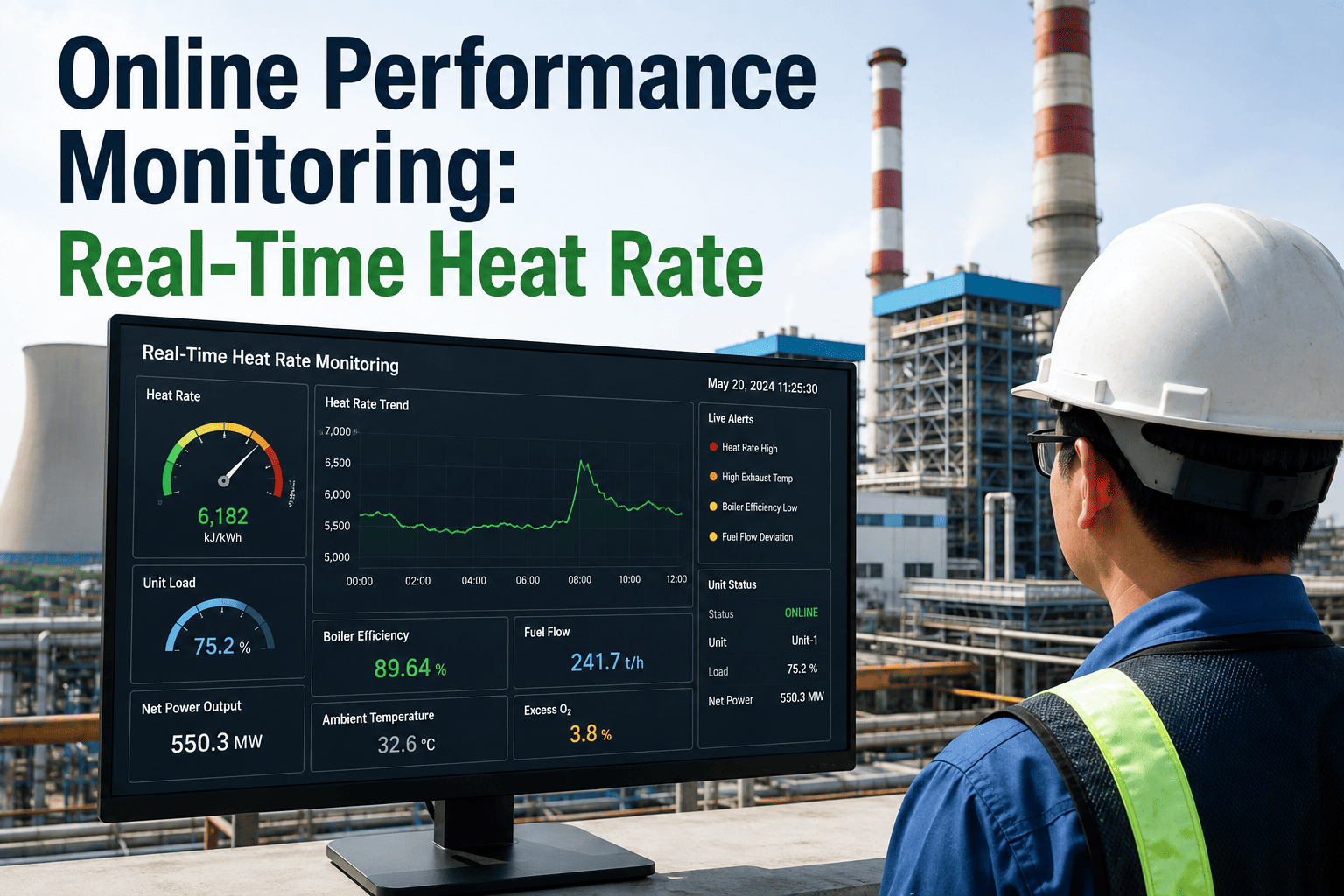
A formal PTC 4 test remains the gold standard for contractual guarantee disputes and capital project acceptance, but it is expensive, disruptive, and time-consuming to run more than once or twice a year. Between formal tests, most plants have no rigorous visibility into whether efficiency is holding steady or drifting — until the next scheduled test reveals a gap nobody caught in time to act on it. iFactory's performance monitoring module addresses this gap by running a continuous, code-informed heat balance calculation from the plant's existing combustion and steam data, using the same loss-category structure as PTC 4 without requiring test-grade instrumentation for daily monitoring.
This does not replace a formal PTC 4 test where contractual certainty is required — it complements it by giving engineering teams an early warning when dry gas loss creeps up from a slipping air heater, or unburned carbon rises after a coal blend change, long before the next scheduled test would catch it. Plants that pair continuous monitoring with periodic formal testing typically catch efficiency degradation months earlier than a testing-only program, and arrive at each formal test with a much better idea of what the result is going to show. Engineering teams building this into their reliability program usually book a demo to see the loss-category breakdown running against a recent data pull from their own boiler.
The value of continuous monitoring compounds over the life of the asset. A single formal test is a snapshot — accurate for the specific conditions on the day it ran, but silent about everything that happens in the months before and after. A continuous loss-category trend, by contrast, shows exactly when dry gas loss started climbing, whether it correlates with a specific fuel delivery or a gradual air heater fouling trend, and how quickly it responded once corrective action was taken. That trend line is often more useful for day-to-day operating decisions than the formal test result itself, precisely because it captures the dynamics a once-a-year test structurally cannot see.
It also changes how plants approach the formal test itself. Rather than treating each PTC 4 test as an isolated event with an uncertain outcome, engineering teams with continuous monitoring data walk into the test window already knowing roughly what result to expect, because the same loss-category logic has been tracking the boiler all along. That foreknowledge lets them investigate any meaningful discrepancy between the continuous estimate and the formal test result as a data quality question in its own right — which instrument drifted, which sampling assumption did not hold — instead of simply accepting whatever number the test produces at face value.
Frequently Asked Questions
Which PTC 4 method should we use for a coal-fired unit with variable fuel quality?
The heat loss method is almost always preferred for coal-fired units with variable fuel quality, because it isolates each loss category individually rather than relying on a single fuel flow measurement that is difficult to meter accurately on solid fuel. It also gives engineers a breakdown showing whether an efficiency shift is coming from moisture content, unburned carbon, or excess air, which is far more actionable than a single input-output number that only tells you the total efficiency changed.
How long does a formal PTC 4 test typically take to run?
A single formal test run typically requires two to four hours of steady-state data collection once the boiler has stabilized at the target load, but the full engagement including pre-test planning, instrumentation calibration, and post-test calculation usually spans one to two weeks. Plants running a guarantee test with a manufacturer or EPC contractor should budget additional time for both parties to review and agree on the pre-test uncertainty analysis before data collection even begins, and additional contingency time is often wise in case unstable weather or load conditions force the test window to be rescheduled.
Can radiation and convection loss actually be measured directly, or is it always estimated?
PTC 4 permits radiation and convection loss to be estimated from standard curves based on boiler surface area and firing rate, and this is the approach used in the overwhelming majority of tests because direct measurement would require instrumenting the entire boiler casing. For most boilers this loss is small enough that the estimation approach introduces negligible additional uncertainty into the overall result, though very large units sometimes warrant a more detailed casing survey.
What is the biggest mistake plants make when preparing for a performance test?
Running the test during unstable operating conditions is the most common and most damaging mistake. PTC 4 requires steady-state load, consistent fuel, and stable ambient conditions throughout the data collection window, and any drift outside the specified tolerance invalidates that portion of the data. Plants that rush a test to meet a schedule deadline, rather than waiting for genuinely stable conditions, frequently end up with a result that is challenged or thrown out entirely. Support on planning a compliant test window is available through support.
Do correction curves apply to both the heat loss and input-output methods?
Yes, correction curves apply regardless of which method is used, because both methods produce a result that reflects the actual ambient and operating conditions on test day, which rarely match the guarantee or reference conditions specified in the contract. PTC 4 requires these curves — covering factors like ambient temperature, barometric pressure, and fuel composition variation — to be applied consistently so the corrected result can be fairly compared against the original performance guarantee regardless of the weather on the day the test happened to run. The correction methodology itself should be agreed between all parties during pre-test planning, not negotiated after the raw results are already in hand.
Ready to Pair Formal PTC 4 Testing With Continuous Efficiency Monitoring?
See iFactory's loss-category heat balance running against your own combustion and steam data before your next scheduled test window arrives.