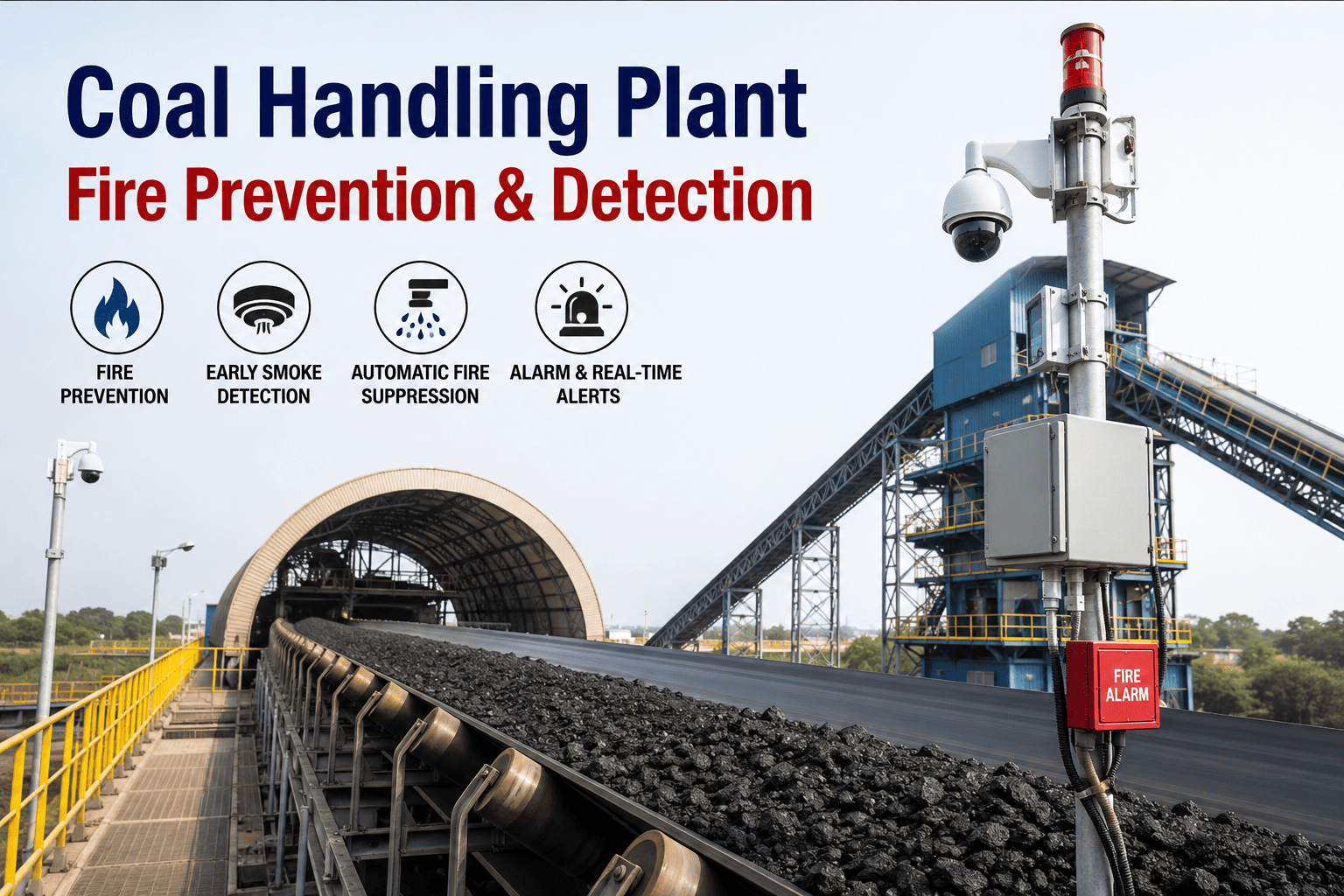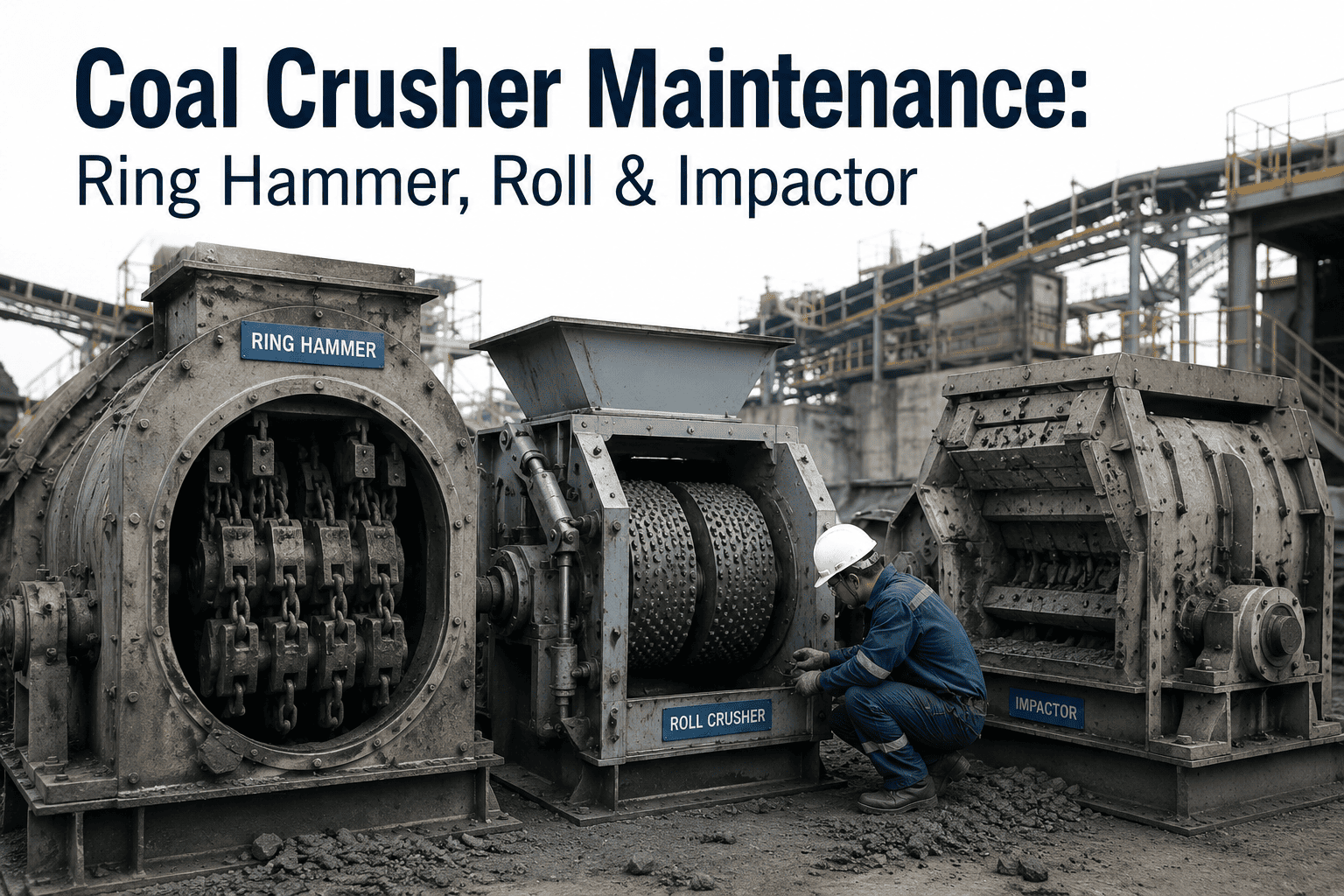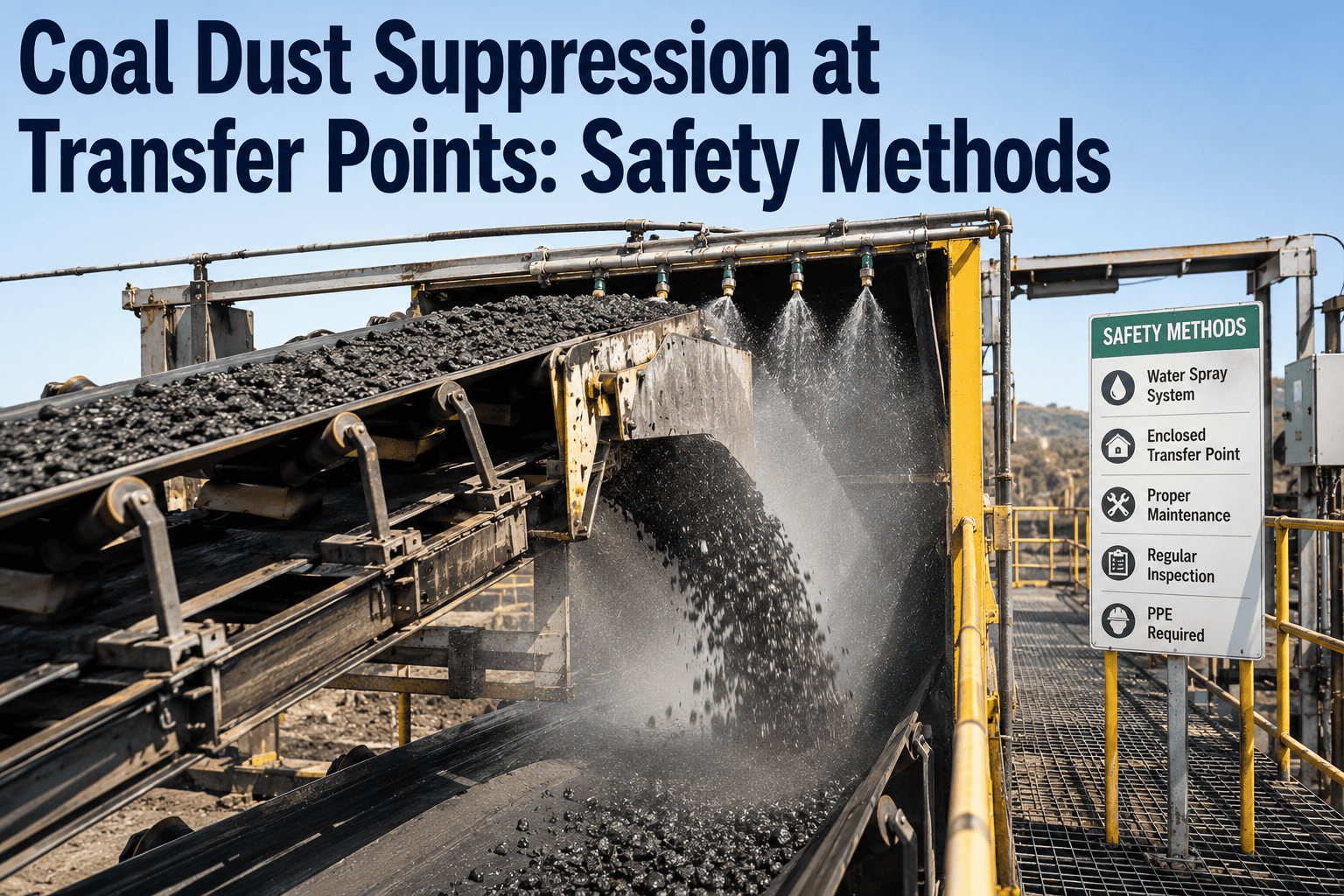
A coal handling system rarely fails at the conveyor belt itself — it fails at the transfer point, where material changes direction, drops onto a new belt, or squeezes through a chute that was sized for dry, free-flowing coal and now has to handle wet, sticky, or fines-heavy material instead. A blocked chute stops the whole line behind it, and clearing it usually means a confined-space entry, lockout-tagout, and hours of lost production for a problem that better design and earlier warning could have prevented. A session with our team can walk through how design and continuous monitoring work together to keep transfer points clear.
Coal Conveyor Failures · Chute Design
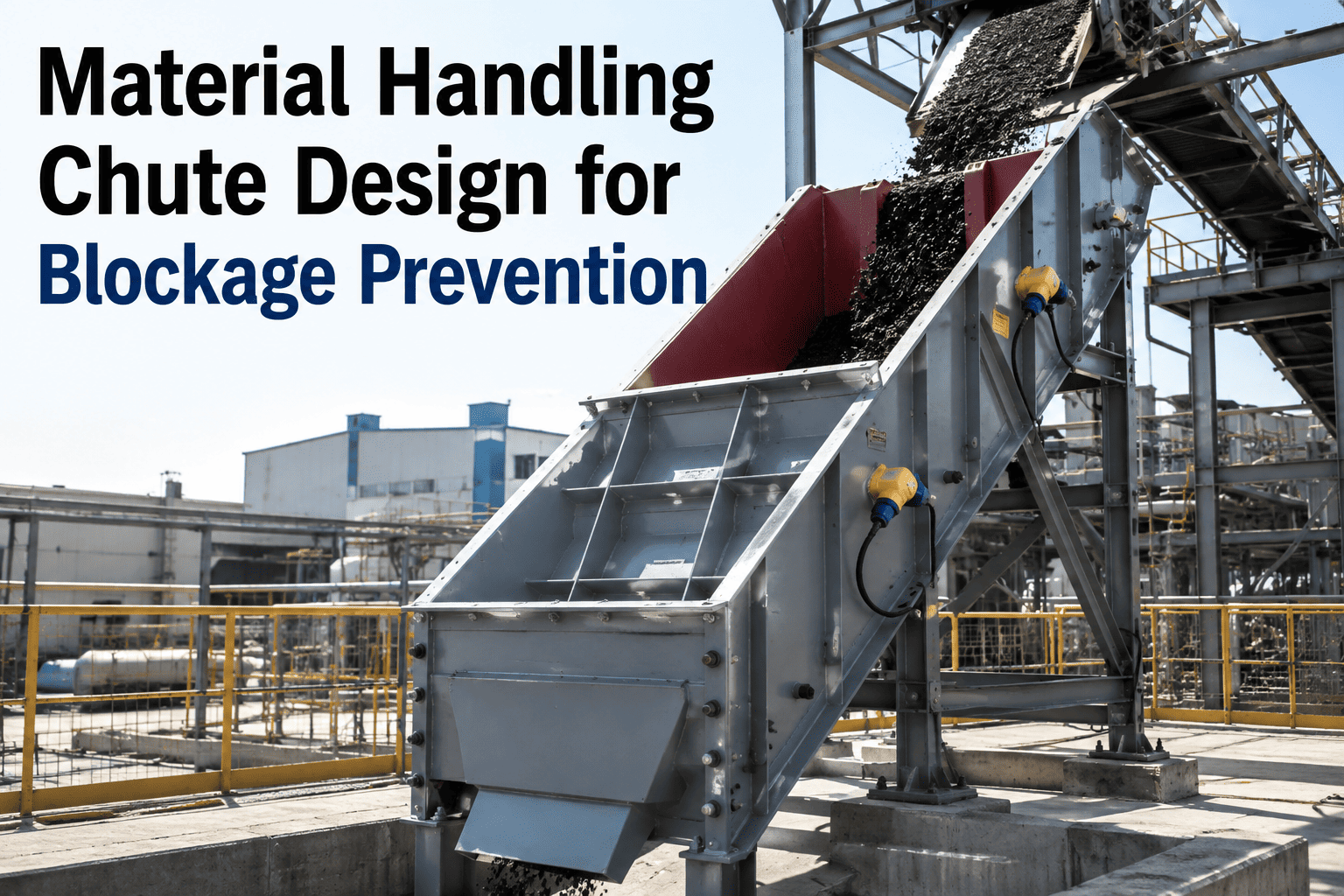
Material Handling Chute Design for Blockage Prevention
Dead zone elimination, impact bed design, and liner selection reduce chute blockages at the source — and continuous level and flow monitoring catches the ones that still start to build before they stop the line.
70%+
of chute blockages start at a dead zone or dead-flow corner
Hours
typically lost per blockage between detection and full clearing
Confined
space entry usually required to physically clear a blocked chute
The Underlying Issue
Why Chutes Block When the Belt Itself Runs Fine
A conveyor belt is a straight, continuous path — coal on it either moves or it doesn't, and a stalled belt is obvious immediately. A transfer chute is a much less forgiving piece of geometry: material has to change direction, sometimes more than once, drop through open space, and land on a new belt without spreading unevenly or piling up against a wall. Any point where the chute geometry creates a corner the material stream doesn't naturally follow becomes a place where coal can settle instead of continuing to flow, and once enough material settles there, incoming coal starts building against it instead of passing through. Moisture content, fines percentage, and particle size all change how forgiving a chute design is of these dead zones, which is why a chute that ran clean for years under one coal source can start blocking regularly the moment a plant switches suppliers or blends in a wetter stockpile.
Where Blockages Actually Start
The Three Zones Inside a Transfer Chute That Matter Most
Impact Zone
Where material first lands after leaving the head pulley — an impact bed or impact bars absorb the drop energy and keep the stream centered instead of scattering material against chute walls.
Transition Zone
Where the chute geometry redirects material toward the next belt — corners and cross-section changes here are the most common location for dead zones to form if the angle doesn't match the material's natural flow path.
Discharge Zone
Where material lands back onto the receiving belt — poor alignment here causes off-center loading, spillage, and belt tracking problems that compound the blockage risk further upstream.
Liner Selection
Matching Liner Material to Where It's Installed
Wear rate, cost, and how well a liner resists material buildup all vary significantly by material, and using the same liner everywhere in a chute usually means overpaying in low-wear areas and under-protecting in high-wear ones.
| Liner Material | Best Suited For | Relative Wear Life | Relative Cost |
|---|---|---|---|
| AR (Abrasion-Resistant) Steel | High-impact zones, general chute walls | Moderate | Low |
| Ceramic Tile | High-wear, high-velocity flow paths | High | High |
| UHMW Polyethylene | Sticky, wet coal prone to buildup | Moderate | Moderate |
| Rubber Sheeting | Low-to-moderate impact areas, noise reduction | Low to Moderate | Low |
See Blockage Risk Before It Stops the Line
Good chute design reduces blockage risk, but material conditions still change day to day. A short session shows how continuous level and flow monitoring catches a building blockage early enough to clear it without a full stoppage.
Where Continuous Monitoring Fits In
Good Design Reduces Risk — Monitoring Catches What Design Can't Prevent
Even a well-designed chute can start blocking when material conditions shift outside what it was designed around — a wetter coal shipment, a higher fines percentage after a crusher adjustment, or a partial liner failure that creates a new dead zone where none existed before. Design reduces how often that happens; it can't eliminate the possibility entirely, which is why continuous level and flow monitoring matters as the second layer of protection. Ultrasonic or radar level sensors at key points in the chute detect material building up against a wall before it fully blocks the flow path, and that early signal gives an operator time to make a manual adjustment, add a vibrator cycle, or schedule a controlled inspection instead of discovering the blockage only when the belt trips on a fully packed chute downstream.
Level SensingUltrasonic or radar sensors at transition points flag material buildup against a chute wall before it becomes a full blockage.
Flow Trend AnalysisComparing current flow behavior against historical patterns for the same chute highlights when something has changed before a stoppage occurs.
Vision-Based InspectionCamera monitoring of transfer points identifies visible buildup, off-center loading, and spillage that a level sensor alone might miss.
Liner Wear TrackingInspection data logged over time shows which liner zones are wearing fastest, so replacement happens before a worn spot becomes a new dead zone.
Applied Example
How an Early Warning Prevents a Full Stoppage
Consider a transfer chute that has run reliably for years under a consistent coal source, with a transition zone geometry that was well matched to that material's flow characteristics. When the plant temporarily blends in coal from a different source with a higher moisture content, the material's flow behavior changes enough that it begins clinging to a chute wall at the transition zone instead of passing straight through, a buildup pattern the original design never had to account for. A level sensor at that transition point detects the material accumulating and flags a flow deviation well before the buildup narrows the flow path enough to trigger a belt trip downstream. Operations schedules a short inspection during the next natural pause in the line, clears the early-stage buildup manually in a fraction of the time a full blockage would have taken, and adjusts the vibrator cycle at that location for the duration of the blended coal delivery — avoiding the confined-space entry and multi-hour stoppage that would have followed if the buildup had gone unnoticed until the belt actually tripped.
Design-Only vs Design Plus Monitoring
Why Chute Design Alone Isn't the Full Answer
A well-engineered chute with the right liner, the right impact bed, and a transition geometry matched to the plant's typical coal is genuinely the foundation of blockage prevention, and no amount of monitoring makes up for a chute that was poorly designed to begin with. But material conditions at most coal plants are not static — supplier changes, weather, stockpile blending, and seasonal moisture swings all shift the material properties a chute has to handle, sometimes for a few days at a time and sometimes for months. A chute designed around one set of conditions will always have some exposure when conditions drift outside that range, and continuous monitoring is what catches that drift while there's still time to act, rather than after the belt has already tripped.
Design Only
Reduces baseline blockage risk but has no way to flag when material conditions drift outside the original design assumptions.
Manual Inspection
Catches visible buildup during scheduled walk-throughs, but gaps between inspections leave blind spots between checks.
Design Plus Monitoring
Continuous sensing flags buildup as it starts, giving time to act before flow is fully blocked.
Financial Impact
What a Blocked Chute Actually Costs Beyond the Downtime Clock
The direct cost of a blocked chute is usually measured in hours of lost conveying capacity, but that number understates the full picture. Clearing a blockage typically requires a confined-space entry with its own permit, standby, and labor cost well beyond the time spent actually removing material, and a chute that blocks repeatedly accelerates wear on the liner and structure around the blockage point, shortening the interval before a full liner replacement is needed. Upstream, a blocked transfer point can back material up onto the belt above it, risking belt damage or a secondary trip that extends the outage further than the original blockage alone would have. None of these secondary costs shows up clearly on a single incident report, but across a coal handling system that blocks even occasionally through a full operating year, the combined cost of downtime, labor, accelerated wear, and secondary damage typically represents a meaningful and avoidable share of total material handling maintenance spend.
Getting Started
What to Confirm Before Adding Monitoring to a Chute
Plants that get useful monitoring in place fastest are usually the ones that walk in already knowing which chutes block most often, what coal sources or blend ratios tend to precede a blockage, and where power and communication already exist near the transfer point for a sensor installation.
| Question | Why It Matters |
|---|---|
| Which chutes have the highest blockage frequency? | Prioritizes where monitoring delivers value fastest |
| Is there a record of coal source or moisture at blockage time? | Helps correlate material conditions with blockage risk |
| Is power and network access available near the chute? | Determines installation complexity for level and flow sensors |
| Who responds when a buildup alert is triggered? | Defines the workflow an early warning needs to reach |
Every plant I've worked with can point to the two or three chutes that block more than everything else combined, and usually they already know roughly why — a tight transition angle, a liner that wears fast in one spot, a coal blend that gives them trouble every winter. What they don't have is a way to see the buildup starting before the belt trips, which is really the whole difference between a five-minute adjustment and a four-hour confined-space clearing job.
Callum Reyes-Whitfield
Material Handling Reliability Specialist · 16 years in coal handling systems for power generation
Common Questions
Chute Blockage Prevention — Frequently Asked
Can monitoring be added to an existing chute without a full redesign?
Yes — level sensors, flow monitoring, and camera inspection can typically be retrofitted to an existing chute without changing its geometry, and the data collected often helps identify whether a future liner or geometry change is actually worth the investment. Book a demo to see how a retrofit installation typically works.
How is a dead zone identified in an existing chute?
Dead zones are usually identified through a combination of inspection history, wear pattern analysis on the liner, and flow monitoring data showing where material consistently slows or accumulates relative to the surrounding flow path. Contact support to discuss identifying dead zones in your chutes.
Does changing coal sources always increase blockage risk?
Not always, but any shift in moisture content, fines percentage, or particle size distribution changes how material behaves inside a chute that was tuned around a previous source, which is exactly the kind of shift continuous monitoring is designed to catch early. Book a session to see how source changes show up in flow data.
How much warning does a level sensor typically give before a full blockage?
This varies by chute and material, but early-stage buildup at a transition zone is usually detectable well before it narrows the flow path enough to stop material movement, often giving enough time for a scheduled inspection instead of an emergency response. Ask our team about typical warning windows for coal chutes.
Is ceramic lining worth the added cost over AR steel everywhere?
Usually not everywhere — ceramic tends to make the most sense in the highest-velocity, highest-wear zones where its longer wear life offsets the higher upfront cost, while lower-wear areas of the same chute are often better served by AR steel at a lower cost. Book a call to review liner selection for your specific chutes.
Design for Flow, Monitor for Everything Design Can't Predict
iFactory adds continuous level, flow, and vision monitoring to coal handling chutes — catching buildup while there's still time to act, before it becomes a full blockage and a lost shift.