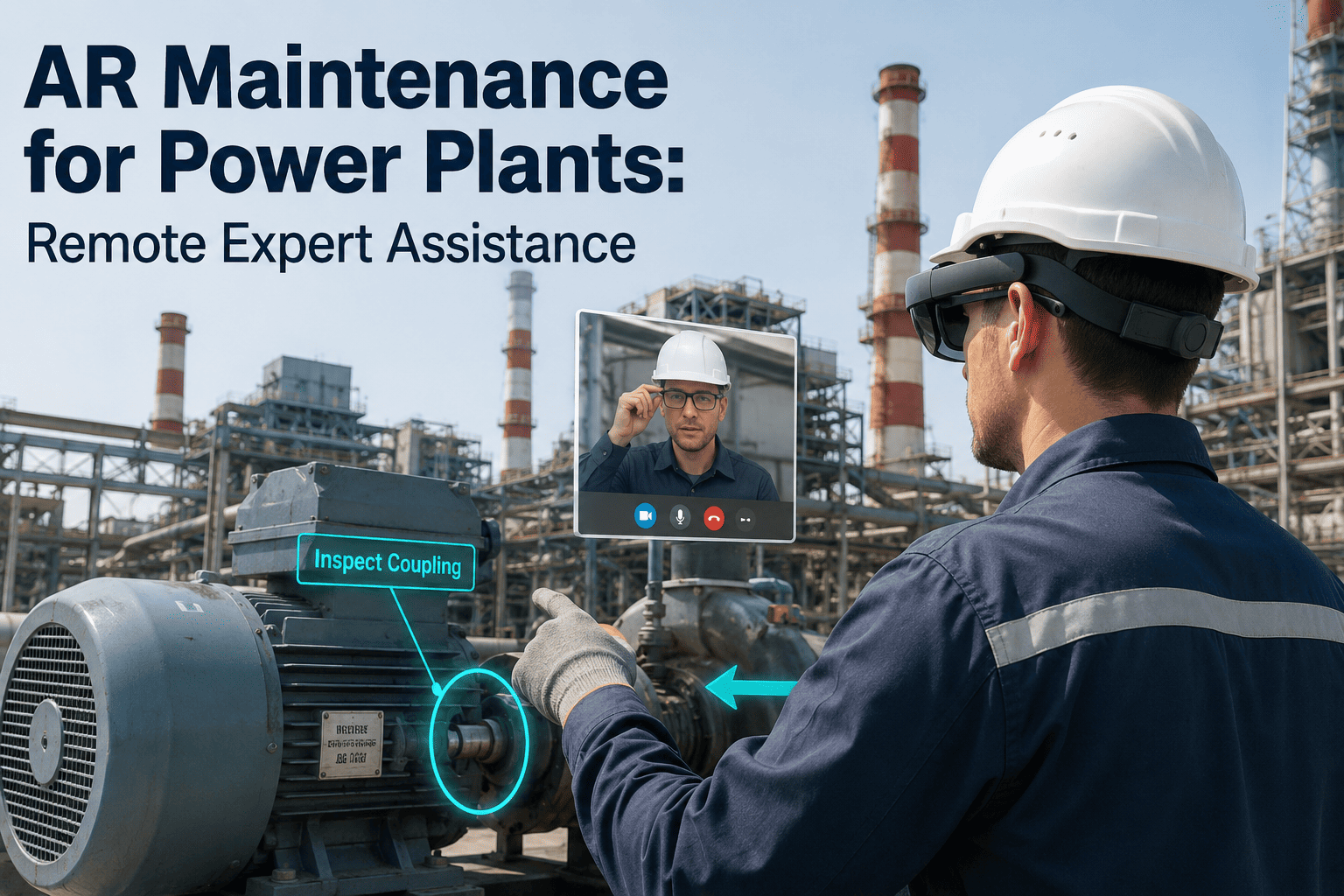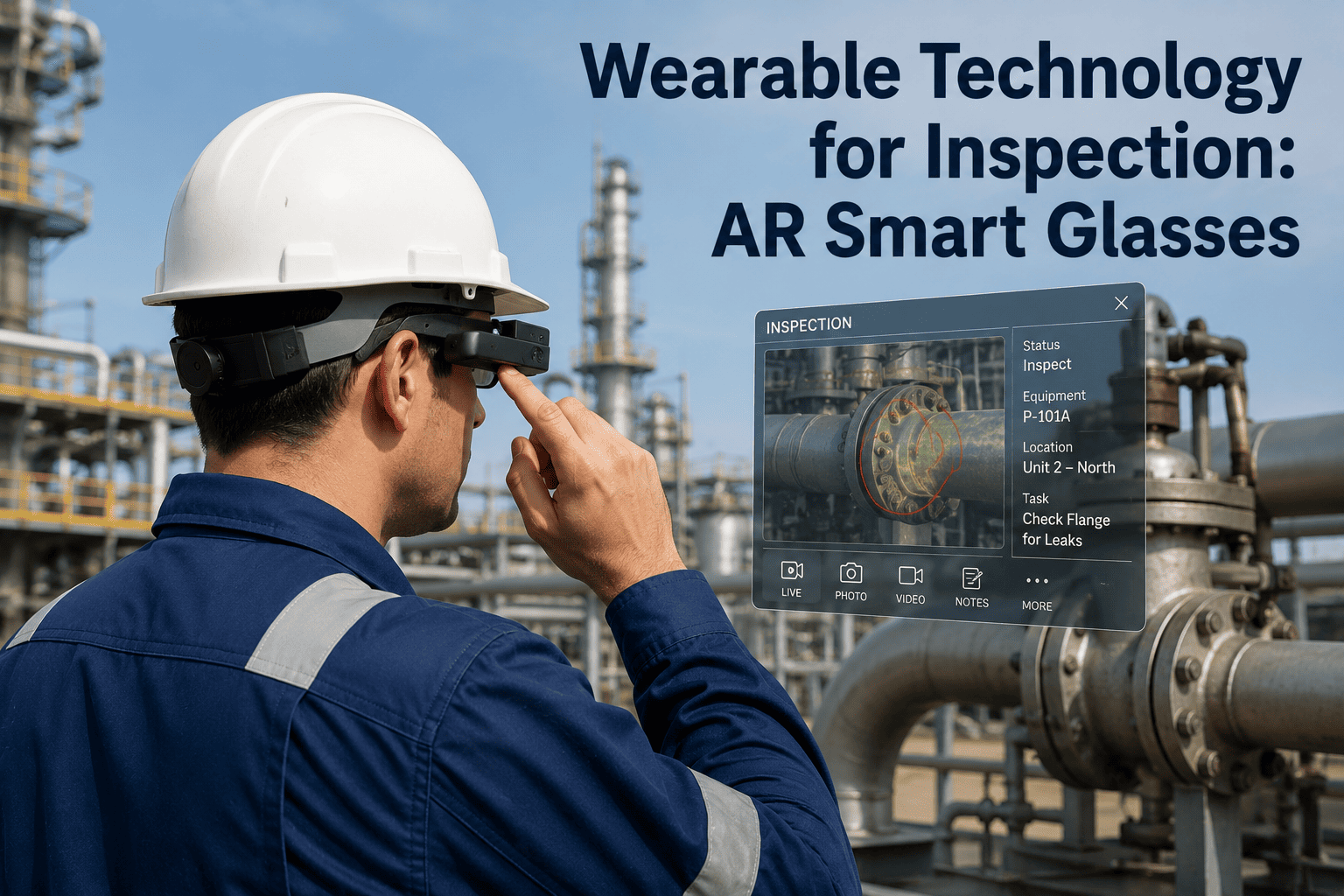
An inspector walking a turbine deck needs three things at once: both hands on the equipment, the drawing in front of them, and a senior engineer who has seen this failure before. Traditional inspection gives them a clipboard, a phone in a pocket, and a callback the next morning. Smart glasses collapse all three into one heads-up view — and every observation becomes a timestamped record instead of a note to be typed up later. Teams that book a demo with iFactory see exactly how that record reaches the work order.
Your Inspectors Are Documenting From Memory. AR Smart Glasses End That.
iFactory streams work orders, P&ID overlays, checklists and live expert sessions into the inspector's line of sight — then writes every photo, reading and finding straight back into the asset record, hands-free.
The Real Problem Is Not the Inspection. It Is the Reconstruction.
Ask any plant engineer where inspection quality actually breaks down and you will rarely hear "the inspector missed it." What you hear is that the finding was seen, mentioned to somebody, written on a damp checklist in glove-thick handwriting, and then reconstructed into a formal report two days later by someone working from memory and a handful of blurry phone photos. Inspection and compliance work is largely paperwork wrapped around a walkthrough — a technician moves through a site, then has to rebuild what they saw and said into a formal record afterward. Every step of that reconstruction is a chance for detail to be lost, for a photo to lose its asset tag, for a measured value to become an approximate one, and for the urgency of what was actually observed to fade into a routine line item.
The wider market has already made its decision. Industrial applications held the largest single share of the smart glasses market in 2025, and manufacturing and industrial use is the leading segment for AR glasses specifically, driven by demand for hands-free digital guidance, remote expert assistance and real-time equipment visualisation. In power generation the case is even sharper than in general manufacturing, because inspection evidence is not just an operational nicety — it is the regulatory product. Compliance failure in a power plant is overwhelmingly a documentation and scheduling problem rather than an operational one. The maintenance gets done; the proof that it was done in the right way, at the right interval, with the right observations recorded, is what breaks.
What an Inspector Actually Sees Through the Lens
The most common misconception about smart glasses is that they fill the inspector's field of view with graphics. They do not. Industrial devices place a small, high-resolution display just off the primary line of sight, so the inspector still sees the equipment, the walkway and the hazard around them — and glances at data the way a driver glances at a mirror. The mock heads-up view below shows the layers iFactory pushes to a device during a routine bearing inspection on a feedwater pump.
Work Order Context, Always Present
The asset, the work order number and the current step stay pinned at the edge of view. The inspector never has to remember which of eleven pumps they are standing in front of, and every capture is automatically bound to the correct asset record.
Specification and History Side by Side
The alarm limit and the last recorded value appear together, so an out-of-trend reading is obvious at the equipment rather than three days later during data review. This single overlay changes more inspection outcomes than any other feature.
Remote Expert With Spatial Annotation
A senior engineer sees the live view and marks it. Spatially anchored annotations pinned to the actual equipment remove the ambiguity of verbal direction — studies show this cuts guidance time nearly in half compared with a plain video call.
Voice Commands, Gloves On
Leading industrial devices are fully voice controlled and work reliably in noisy environments — the RealWear Navigator 520 is rated for voice operation up to 95 dBA, and the Navigator Z1 up to 100 dBA. No screen taps, no removing gloves, no putting a tool down.
A Turbine Hall Walkdown, Timed Two Ways
The productivity argument for wearables is often made in vague percentages. It is more useful to walk a real shift. Below is a representative 90-minute routine inspection round covering a turbine hall and adjacent auxiliary bay — first with a clipboard and a phone camera, then with glasses connected to the asset record. The clock rail is the same in both columns, so the difference is directly readable.
Two things are worth noticing in that comparison. First, the time saving is real but it is not the headline — the headline is that the second round produced a complete, defensible record and the first one did not. Second, the expensive item in the clipboard column is not the inspector's time at all. It is the re-visit two days later, the engineer's blocked decision, and the fact that a leak sat undiagnosed while a photograph was chased. Wearables do not just make inspection faster; they close the loop on the same shift.
See a Live Inspection Round Running on Smart Glasses With Your Own Asset Data
We will load a sample of your equipment list, checklists and drawings into iFactory and walk a round end to end — from voice capture in the field to the closed work order and the audit-ready evidence package.
Five Capabilities That Actually Change Inspection Work
Not every feature on a wearable spec sheet earns its keep in a power plant. Across deployments, five capabilities carry almost all of the value — and the fifth one, drawing overlay, is the one plants consistently underestimate before they try it.
Hands-Free Documentation at the Point of Observation
Photo, video, voice memo, numeric reading and pass-fail result captured by voice while both hands stay on the tool or the handrail. Because capture happens inside a work order step, the asset tag, timestamp, step reference and inspector identity attach automatically. There is no later matching of photos to equipment, which is where most inspection evidence quietly falls apart.
Remote Expert Guidance With Live Annotation
A junior inspector shares their exact field of view with a senior engineer who may be at head office or another site. The expert draws on the live image, and the annotation stays anchored to the equipment rather than sliding around the screen. Sessions are initiated by the technician, authenticated, and connected only to approved contacts — which matters in a plant with restricted areas and sensitive assets.
Guided Digital Checklists With Conditional Logic
The round advances step by step in the inspector's view, and steps branch on what is found — a failed visual check can open the additional measurements and photographs that finding requires. Nothing gets skipped because the sheet was wet, and nothing gets recorded out of order. The completed round is a structured data set, not a scanned page.
Thermal and Live Sensor Data in the Same View
Modular thermal camera options put radiometric imaging on the head-mounted device, so surface temperature anomalies on bearings, motors, breakers and steam lines are seen and captured hands-free. Alongside thermal, live process values from the plant historian can be overlaid so the inspector compares what the instrument says with what the equipment is doing.
Drawing and P&ID Overlay at the Equipment
The relevant sheet — isometric, P&ID, single-line, GA drawing or valve list — is called up by voice at the point of confusion instead of being fetched from a document room afterwards. Isolation boundaries, valve numbering and cable routing get confirmed while the inspector is still standing in front of the plant, which is where confirmation is worth something.
The pattern across all five is the same: each one moves a decision from the office back to the equipment. That is the entire mechanism by which wearables improve inspection quality. Nothing about the inspector's judgement changes — what changes is how much of the relevant information is available at the moment the judgement is made. Teams that want to test that on their own rounds can book a demo and run a live walkthrough with their own checklists loaded.
Device Landscape: Matching Hardware to the Plant Area
Device choice is driven less by display quality than by three practical questions: can it be worn with the required PPE, is it certified for the area classification, and can it be operated with gloves on in noise. The table below covers the classes of device most commonly deployed for industrial inspection today. Pricing for leading industrial devices generally sits in the $2,000 to $3,500 per unit range, with reported payback periods of nine to eighteen months depending on task frequency and complexity.
| Device Class | Representative Models | Control Method | Hazardous Area Rating | Best Fit in a Power Plant |
|---|---|---|---|---|
| Rugged head-mounted display | RealWear Navigator 520 | Fully voice controlled to 95 dBA | Rugged, non-certified areas | Turbine hall, water treatment, workshop, general rounds |
| Intrinsically safe wearable | RealWear Navigator Z1, HMT-1Z1 | Voice controlled to 100 dBA | ATEX Zone 1, IECEx, CSA Class I Div 1 | Fuel handling, hydrogen areas, gas systems, coal dust zones |
| Explosion-proof AR headband | Rokid X-Craft | Voice and gesture | ATEX Zone 1 certified | Classified areas needing a wider display than a monocular unit |
| Monocular smart glasses | Vuzix M400, M4000 | Voice, touchpad, gesture | Rugged, non-certified areas | Warehouse, stores, scanning-heavy inspection, training |
| Thermal-equipped wearable | Navigator 520 with thermal module, Navigator Z1 | Voice controlled | Varies by base device | Electrical inspection, bearing and steam line thermography |
| Lightweight display glasses | Consumer-derived enterprise models | Voice, companion app | Office and light-duty areas only | Walkdowns, audits, training, low-risk documentation rounds |
Two hardware realities deserve to be said plainly. First, weight and PPE compatibility decide adoption more than any feature list — a device that cannot be worn comfortably with a hard hat, ear defenders and safety glasses for a full round will end up in a drawer regardless of how capable it is. Second, area classification is not negotiable. Intrinsically safe certification is granted only after thermal, electrical integrity, mechanical durability and explosion testing, and a non-certified device simply cannot enter a Zone 1 area. Plan the fleet by area, not by preference.
There is also a software point that outlives any hardware decision. Device generations turn over every two to three years, so the platform holding your checklists, evidence and asset history has to be device-independent. iFactory treats the wearable as one client among several — the same round can be executed on glasses, on a tablet in a control room, or on a phone in a stores area — so a hardware refresh never becomes a data migration project.
Where Wearable Inspection Pays in a Power Plant
The value is not evenly distributed across a plant. It concentrates wherever inspection is frequent, evidence requirements are strict, access is awkward, or the person doing the work is not the person who knows the equipment best. These six areas come up first in almost every deployment.
Tube-wall inspection, refractory condition, casing leaks and burner checks in hot, awkward and often elevated positions where a clipboard is a genuine hazard. Voice capture removes the need to let go of a handrail to document a finding.
Hands-free capture is the primary winVibration, bearing temperature, oil condition, seal and coupling checks where the last reading matters as much as this one. Trend context in the field turns a routine number into an early warning rather than a data point reviewed weeks later.
Historical overlay is the primary winThermographic survey of breakers, busbars, terminations and transformers with radiometric images captured hands-free at safe distance. Findings attach directly to the asset with temperature values embedded in the image record.
Thermal integration is the primary winDuring an outage the plant is full of contract crews inspecting assets they do not know well. Guided checklists and a remote plant engineer standardise what gets recorded and stop quality varying by which crew turned up.
Remote expert access is the primary winVessel, duct, silo and tank entries where minimising time inside is a safety objective in itself. One person enters wearing glasses while the engineering team observes and directs from outside, rather than sending several people in.
Reduced exposure is the primary winStatutory examinations, compliance rounds and insurer surveys where the evidence trail is the deliverable. Structured capture produces a retrievable, complete record instead of a folder of photographs nobody can map to a requirement.
Audit-ready evidence is the primary winThe Evidence Chain: What Reaches the Record
Everything above is only worth the hardware cost if the output lands somewhere useful. A wearable that produces a folder of unlabelled videos has moved the documentation problem rather than solved it. The record card below is what iFactory writes automatically from a single voice-captured finding during a round — no typing, no later matching, no reconstruction.
That last row is the one compliance managers care about. Audit exposure in power generation is rarely about work not being performed — it is about evidence that cannot be located, cannot be tied to the right requirement, or cannot be proven complete for the period under review. Structured capture at source is the only reliable fix, because it removes the human step where evidence is supposed to be filed correctly after the fact. Nobody files perfectly at the end of a night shift; the system has to do it as the work happens.
The Objections We Hear, and Honest Answers
Wearable programmes fail for predictable reasons, and most of them have nothing to do with the technology. These are the five concerns raised most often by plant managers, with the answer we actually give rather than the marketing one.
Often true at first, and it is almost always a comfort and consent problem rather than a technology one. Fit-test with the actual PPE combination, run a genuine volunteer pilot rather than a mandate, and be explicit that the camera exists to document equipment and not to monitor people. Programmes that publish a clear recording policy before day one see far higher voluntary uptake than programmes that skip that conversation.
Design for offline first. Rounds should load fully to the device, execute without connectivity, and sync when the inspector reaches coverage. Live expert calls do require a connection, so map which areas support them and plan escalation accordingly. Existing plant Wi-Fi is usually enough — leveraging installed wireless rather than rebuilding connectivity is one of the main reasons early industrial adopters reached payback quickly.
Industrial devices are built for this — ruggedised construction, ingress protection, and voice recognition tuned for high-noise areas. The genuine constraint is area classification, not durability. Any part of the plant with an explosive atmosphere requires an intrinsically safe or explosion-proof certified device, and those certifications follow extensive thermal, electrical and mechanical testing. Plan the fleet by zone from the start.
Reasonable, and the architecture should reflect it. Sessions are initiated by the technician, authenticated against the company identity system, and connected only to pre-approved expert contacts, with the live view transmitted between device and expert rather than broadcast. Review the configuration against your own data governance policy, particularly for zones with sensitive equipment or processes, before the pilot begins.
The usual reason is that the glasses were bought as a device rather than deployed as a workflow. If the checklists, asset register, work orders and evidence store are not connected to the wearable, all it does is add a camera to an existing paper process. The value comes from the round being generated by the system, executed on the device, and closed back into the record — the hardware is the least important part of that chain.
A 90-Day Pilot That Produces a Defensible Number
Do not pilot wearables across the whole plant. Pick one inspection family, run it for a quarter, and measure four things you already measure today so the comparison is credible to a finance team. The scorecard below is the structure iFactory uses, and the point of it is that every target is checked against the plant's own baseline rather than a vendor benchmark.
| Metric | How to Baseline It Now | What Changes With Wearables | Evidence to Capture |
|---|---|---|---|
| Documentation lag | Hours between observation and the record being closed | Record closes at the equipment, within the round | Timestamp gap per finding, before and after |
| Evidence completeness | Sample of findings missing photo, value or asset tag | Capture is bound to the step, so fields cannot orphan | Percentage of findings with full evidence set |
| Expert escalation time | Time from question raised to specialist answer | Expert joins the live view in minutes, not days | Count of sessions, duration, resolution on first contact |
| Repeat visits | Count of re-inspections caused by missing information | Information is captured correctly the first time | Re-visit count and hours per month for the pilot family |
| Round duration | Average clock time per inspection round | Less fetching, less writing, fewer interruptions | Start and end timestamps from the round record |
| Audit retrieval time | Time to assemble evidence for one sampled requirement | Records are retrievable by requirement and period | Minutes to produce a complete package on request |
Run the pilot with three to five devices, one inspection family, and a named owner who is an inspector rather than an IT manager. Publish the baseline before the devices arrive, because a baseline collected afterwards is always contested. At day ninety you will either have four numbers that make the expansion case obvious, or you will have learned cheaply that the workflow needed fixing before the hardware did — which is itself a valuable outcome, and considerably cheaper than a plant-wide rollout that stalls in month five.
One closing thought on the skills question, because it sits underneath all of this. Experienced inspectors are retiring faster than new ones are being trained, and the knowledge that leaves with them is precisely the kind that never made it into a manual — which sounds are wrong, which flange always weeps, which reading matters. Remote expert sessions and recorded annotated captures are the only practical mechanism most plants have for holding on to that knowledge, because they capture it in context, at the equipment, as a by-product of work that was happening anyway.
AR Smart Glasses for Inspection: Frequently Asked Questions
What do industrial AR smart glasses cost, and how quickly do they pay back?
Leading industrial devices generally fall in the $2,000 to $3,500 per unit range, and manufacturers deploying AR glasses have reported payback periods of nine to eighteen months depending on how frequent and how complex the maintenance and inspection tasks in scope are. The hardware is rarely the deciding cost — the platform, integration and change management usually matter more to the total figure. The fastest payback tends to come from inspection families with high repeat-visit rates, heavy evidence requirements, or frequent escalation to a specialist who currently has to travel. If you want a payback estimate built from your own round volumes and escalation counts, book a demo and we will work through it with your numbers.
Can smart glasses be used in classified or explosive-atmosphere areas of a plant?
Only if the specific device carries the right certification. Intrinsically safe wearables such as the RealWear Navigator Z1 hold ATEX Zone 1, IECEx and CSA Class I Division 1 certification, and explosion-proof AR headbands such as the Rokid X-Craft are ATEX Zone 1 certified — meaning they are approved for use where flammable gases, vapours, mists or combustible dusts may be present. That certification is granted only after thermal, electrical integrity, mechanical durability and explosion testing. A standard rugged device, however tough, cannot substitute. Most plants end up running a mixed fleet: certified units for classified zones, standard rugged units everywhere else.
How much does AR guidance actually reduce inspection errors?
The published range is wide but consistently positive. Peer-reviewed work from 2025 and 2026 reports error reductions from around 40% on maintenance and assembly tasks up to 86% in remote quality inspection, where one study measured error rates falling from 20.19% without assistance to 2.88% with XR assistance. Separate work found an adaptive AR assistance architecture cut task execution time by roughly 16.7% against conventional methods, and industry reporting has described first-time fix rates rising from 67% to 91% with AR-assisted field service. Treat these as directional rather than as a promise — your own result depends heavily on task complexity and the quality of the underlying instructions.
Do inspectors need to be technically skilled to use smart glasses?
No, and this is one of the few areas where the technology is genuinely simpler than what it replaces. Leading industrial devices are operated entirely by voice, work with gloves, hard hats, safety glasses and ear protection in place, and function reliably in noise up to 95 to 100 dBA depending on the model. A typical inspector is productive after a short familiarisation session because the command set is small and task-specific. The real training investment goes into the checklists and workflows behind the device, not the device itself. If you would like help scoping that content work, contact support and our team can review your existing round sheets.
How does wearable inspection data connect to our existing maintenance system?
iFactory generates the round from the asset register and work order schedule, pushes it to the wearable with drawings, limits and history attached, then writes every capture straight back into the same record — photographs, measured values, voice notes, thermal images and recorded expert sessions all bound to the asset, the work order and the step. Findings raise defect notifications automatically and flow into the planner queue. Because the platform is device-independent, the same round can be executed on glasses, a tablet or a phone, so a hardware change never becomes a data migration and inspectors without a device are never locked out of the workflow.
Put the Drawing, the History and the Expert Inside Your Inspector's Field of View
iFactory connects AR smart glasses to your asset register, work orders and compliance records — so inspection rounds close at the equipment with complete evidence, and your senior engineers can guide any inspector on any asset without leaving their desk.