Electricity does not cost the same at every hour, and a steel plant that ignores the clock pays for it. Time-of-use tariffs set higher rates in peak periods and lower rates off-peak, so the same melt can cost noticeably more or less depending on when it runs. Moving energy-hungry work into cheaper hours is one of the most reliable ways to cut cost, provided the shift pattern and process can follow. Plants that want to test that can ask iFactory AI how time-of-use savings are modelled against furnace schedules.
Melt When Power Is Cheap and Pause When It Is Not
iFactory AI aligns heat timing, shift schedules and tariff periods, so energy-hungry steps run in cheaper hours without breaking the production plan.
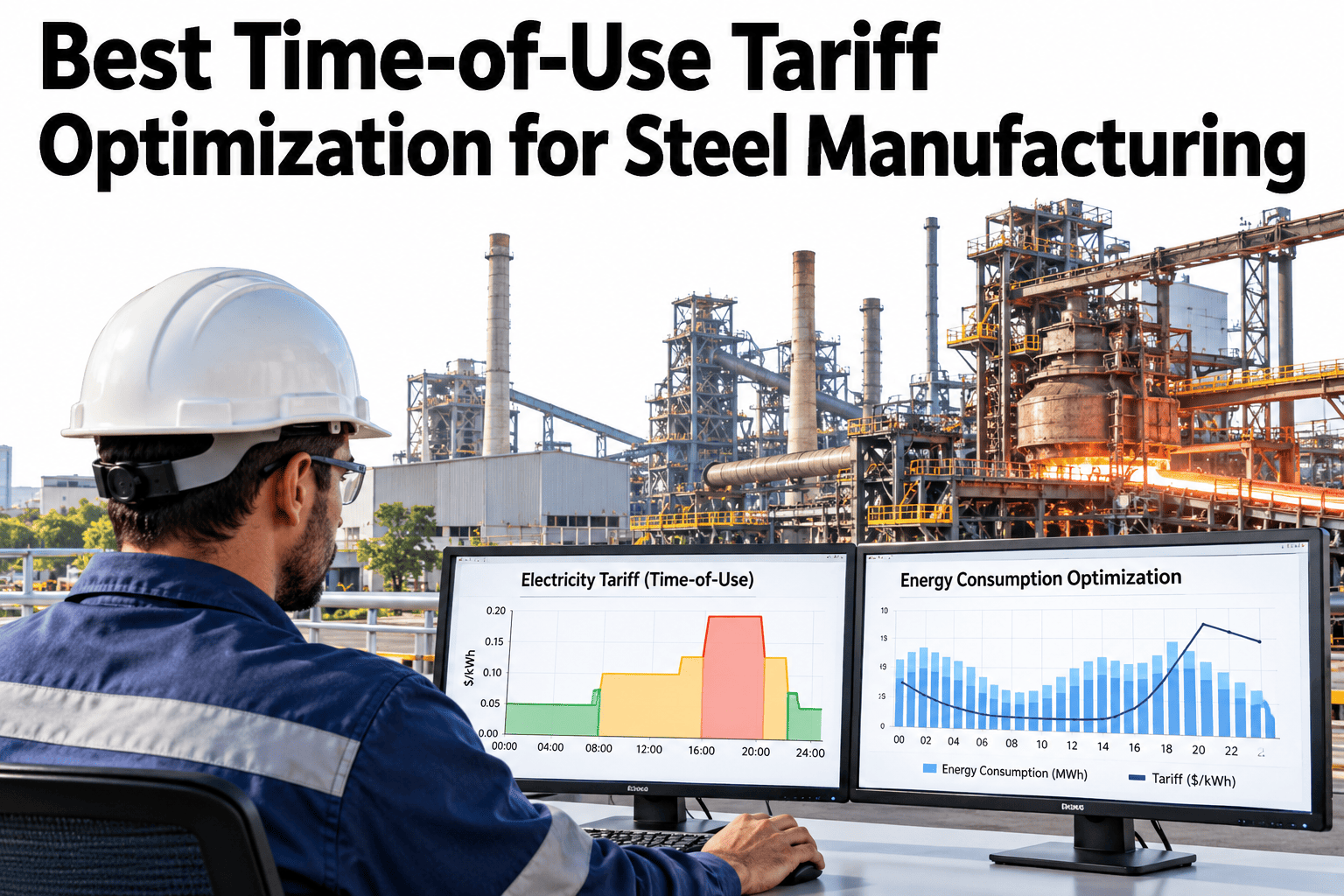
A Typical Day Through a Time-of-Use Tariff
Tariffs split the day into bands. The bar shows an illustrative day, since real hour bands and multipliers differ by utility and region.
Why Time-of-Use Matters So Much to an EAF
An arc furnace is among the largest single loads in a plant. Timing it well moves a large share of the bill.
Large, concentrated load
Melting draws far more power than most operations, so shifting it moves real cost.
Flexible start times
Within limits, heats can start earlier or later without upsetting the plan.
Repeatable cycles
Predictable tap-to-tap patterns make planning around tariff bands practical.
Linked to demand charges
Shifting load also tends to reduce peaks that drive demand charges.
What Can Shift and What Cannot
Not every step can move. The matrix, shown as an illustration, ranks typical steps by how freely they can follow the tariff.
| Step | Shift Flexibility | Process Constraint |
|---|---|---|
| Scrap preparation and charge baskets | High | Low |
| EAF melting | Moderate | High |
| Ladle furnace treatment | Moderate | Moderate |
| Continuous casting sequence | Low | High |
| Reheating and rolling | Moderate | High |
| Compressors, pumps and fans | High | Low |
The Levers Behind Tariff Savings
Savings come from a few practical changes. Each one has a limit.
| Lever | How It Saves | Limit |
|---|---|---|
| Off-peak melting | Concentrates melting in cheaper hours | Downstream capacity and crew availability |
| Peak-hour avoidance | Pauses or slows heavy loads in the highest-rate hours | Cost of idle time and restart |
| Shift schedule redesign | Aligns crews with the cheaper hours | Labour rules and agreements |
| Auxiliary load shifting | Moves compressors and pumps off-peak | Process tolerance for delay |
Find Out What the Clock Is Costing Your Plant
Book a 30-minute session and iFactory AI will review your tariff bands and heat times to show how much cost a smarter schedule could remove.
Running to the Clock or Running to the Tariff
Most plants plan around crews and customers, not tariff bands. Adding the tariff to the plan changes the outcome.
Where Tariff-Aware Planning Pays Most
The gain varies by plant. The chart shows an illustrative ranking of where savings usually come from.
Five Steps to a Tariff-Aware Schedule
A clear sequence avoids disruption to production.
Record tariff bands, rates and seasons.
Find where heats and loads fall across the bands.
Plan one week with small shifts and compare cost.
Fix the constraints that blocked the plan.
Make tariff cost a standard part of the daily plan.
Daily Tariff Check
Use this list at the start of each shift. Each box should be answerable from the plan.
A Composite Scenario: Moving the Heat That Cost Most
This is a composite example, not a named plant. It shows how small shifts add up.
Common Mistakes in Tariff Optimisation
These habits erase savings quickly.
Moving load without checking downstream capacity
A shifted heat that waits for a ladle saves nothing.
Ignoring seasonal band changes
Bands and rates change, so last year's plan may be wrong.
Forgetting labour rules
A schedule crews cannot follow will not be followed.
Optimising energy but not demand
Shifting can create a new demand peak.
What iFactory AI Adds to Tariff Optimisation
iFactory AI is smart manufacturing and industrial software for steel and other heavy industry. Explore tariff-aware planning in a live product tour on realistic furnace data.
A 30-Day Plan to Start
A month is enough to test shifts on one furnace and measure the effect.
Review of Time-of-Use Optimisation in Steel
A practical review of what makes tariff savings last, written as editorial guidance rather than a named expert quote.
Put the tariff in the plan
Savings appear when tariff cost is visible to the planner, not just finance.
Check the whole chain
A shifted heat is only a saving if downstream units can follow.
Measure per heat
Cost per heat shows whether the shift really paid.
Frequently Asked Questions
How much can time-of-use optimisation save a steel plant?
Plants often target single-digit to mid-teen percentage reductions in electricity cost, depending on tariff spread and flexibility. See your potential on live data in a short demo. Your tariff and process limits set the real figure. Tariff bands, multipliers and seasonal changes differ by utility, so load your own tariff before estimating any saving.
Does shifting load hurt production?
Not when the downstream chain and crews can follow. The plan should check ladles, caster sequence and staffing first. Small shifts usually deliver much of the gain. Start with flexible steps such as scrap preparation and auxiliary loads, and move furnace timing only where the downstream chain can follow.
Do we need to redesign shifts?
Sometimes, but many plants gain first from shifting start times and auxiliary loads. Ask support how shift patterns are tested before changes are made. Shift redesign can follow once savings are proven. Shift changes usually need agreement with crews, so test small start-time moves before proposing a bigger redesign.
How does this relate to demand charges?
Shifting energy changes the load shape, which can reduce or create peaks. The plan should optimise both together. Looking at energy alone can move the problem. Check demand charges whenever energy is shifted, because moving a large load into one band can create a new peak.
How soon can we see savings?
Many plants see a measurable effect within a month on one furnace. Book time to scope a tariff optimisation pilot with your energy team. Tracking cost per heat makes the result clear. Cost per heat is the cleanest measure, since it shows the effect of each decision against your baseline.
Stop Paying Peak Rates for Work That Can Wait
iFactory AI plans heats around tariff bands so energy-hungry steps run when power is cheaper. Book a walkthrough to see it on your own schedule and tariff.