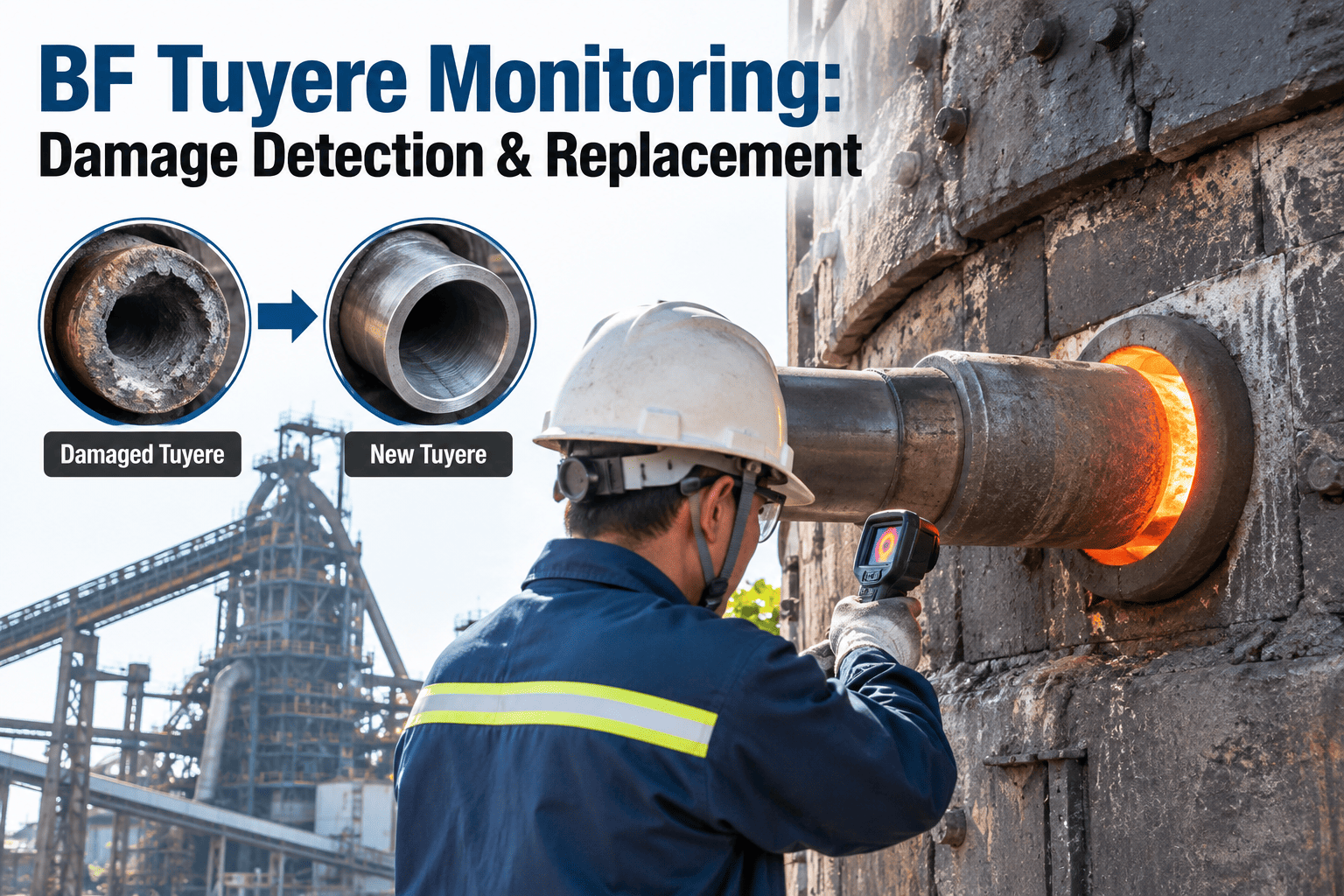
A tuyere does not fail on a schedule. One of the dozens ringing a blast furnace's circumference can be running perfectly normal at the start of a shift and carrying a cracked cooling pipe by the end of it, and the only signals anyone gets are a few extra drips of water, a slightly duller flame color, or a flow meter reading that drifted two percent and nobody flagged it. By the time a leak is big enough to see from the casthouse floor, the furnace has usually already been running colder than it should for hours. iFactory's monitoring layer watches every tuyere's cooling and combustion signals continuously so damage gets caught while it is still a maintenance job, not an emergency shutdown.
BLAST FURNACE — TUYERE HEALTH
Catch a Failing Tuyere Before It Becomes a Blast Interruption
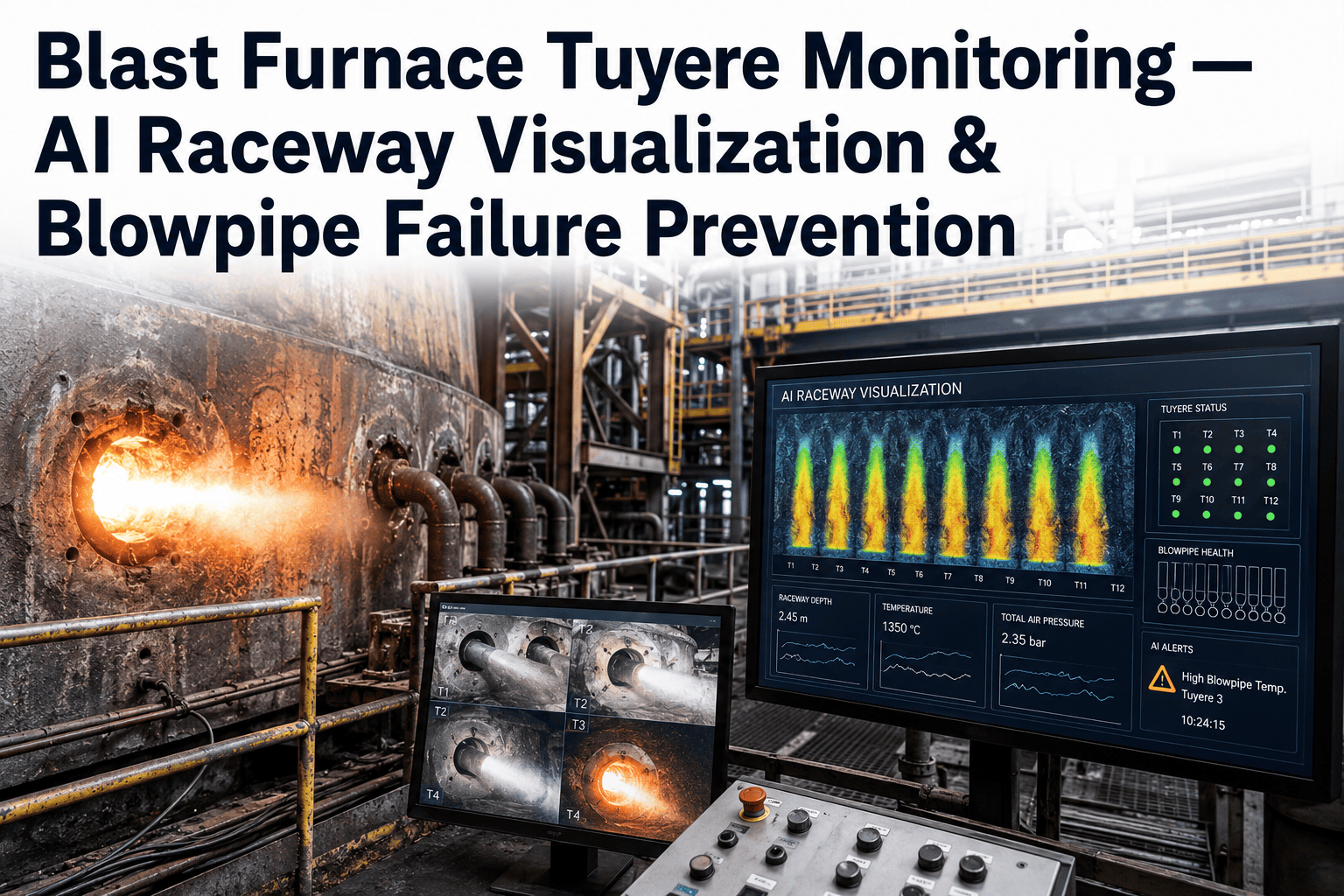
Cooling water leaks and refractory erosion at the tuyere rarely announce themselves loudly. iFactory watches camera feed, cooling water flow, and supply-return temperature differential on every tuyere continuously, so a developing problem reaches the maintenance team as a work order, not a forced blast reduction.
Flow Rate per Circuit
Watch
Flame Color & Shape
Normal
How a Small Leak Becomes a Forced Shutdown
A cracked cooling pipe inside a tuyere nose starts small — a few drips of water entering the raceway where nobody can see it happen. Left unnoticed, that small leak does not stay small, and each stage it passes through narrows the plant's options for a controlled response.
Hour 0
A cooling pipe develops a hairline crack. Water begins entering the raceway in amounts too small for any flow meter to flag on its own.
Hour 2–4
The raceway zone around that tuyere runs measurably cooler. Combustion efficiency drops locally, though the furnace-wide average still looks acceptable.
Hour 6–10
The crack widens under thermal cycling. Water flow into the furnace increases, raising the risk of a steam and hydrogen reaction inside the raceway.
Hour 12+
The leak becomes visible or audible from the casthouse floor. Blast reduction and emergency tuyere isolation are now the only options left.
What a Tuyere Camera Actually Watches For
A properly aimed tuyere camera is reading the same visual cues an experienced blower operator learns to trust over years on the platform — it just does it on every tuyere, every minute, without needing a walk-round to notice.
Flame Color
A uniform, steady flame color from the nose is the baseline. A dull, wavering, or unusually pale flame often signals combustion disturbance ahead of any flow meter change.
Bright Spots on the Nose
A localized bright spot on the tuyere nose is one of the clearest early indicators of thinning metal ahead of a burn-through, and the sign operators are trained to react to fastest.
Flame Length & Shape
Flame should stay confined to the nose tip. A flame reaching further back toward the blowpipe can indicate a burned-through nose or a coal injection lance issue at that tuyere.
Raceway Glow Consistency
Comparing raceway brightness and depth tuyere to tuyere flags an individual position running colder or hotter than its neighbors, often before any single sensor confirms why.
Cooling Water Leak Detection — Beyond a Single Flow Meter
Every tuyere already has a cooling water flow meter, but a flow meter alone struggles to catch a leak early. A crack has to grow large enough to move the flow reading outside normal shift-to-shift variation before anyone notices, and by then the leak is no longer small.
The stronger signal is the supply-return differential — comparing inlet and outlet temperature and flow for each circuit rather than watching either number in isolation. A widening differential on one tuyere's circuit, even while its raw flow reading still looks normal, is one of the earliest reliable indicators that water is escaping into the furnace.
| Detection Method |
What It Catches |
Typical Limitation |
| Manual Visual Round |
Visible steam, water pooling, obvious flame irregularity |
Only as frequent as the round schedule; misses gradual drift entirely |
| Single Flow Meter |
Large, established leaks with clear flow deviation |
Slow to react to a small or early-stage crack |
| Supply-Return Differential |
Small leaks as they begin widening a temperature or flow gap |
Needs continuous monitoring across every circuit, not periodic sampling |
| Continuous Camera + Sensor Fusion |
Combines visual combustion cues with cooling data for earliest, most specific alerts |
Requires connecting camera and instrumentation data into one system |
Watch Every Tuyere's Cooling and Combustion Signals in One Screen
iFactory connects your tuyere cameras and cooling water instrumentation into a single live view, flagging the specific tuyere and the specific signal behind any developing issue.
From Alert to Safe Replacement — The Steps That Matter
An alert on a specific tuyere is only useful if the team behind it has a clear, repeatable path from detection to a safely replaced unit. The sequence below reflects the core steps most blast furnace maintenance teams already follow, tightened by having the exact tuyere and exact failure signal identified in advance.
1
Isolate the Blowpipe
Close the blowpipe isolation valve on the flagged tuyere and confirm blast pressure has dropped to zero before any further step.
2
Shut Cooling to That Circuit Only
Shut cooling water to the affected tuyere's circuit while keeping every adjacent circuit at full flow to protect the surrounding staves.
3
Cool, Lock Out, Extract
Allow the nose to cool below 200°C, complete lock-out/tag-out with supervisor sign-off, then release the holder clamps and extract the assembly.
4
Classify the Failure
Photograph the erosion pattern, measure bore diameter, and record mass loss on the removed tuyere before it goes into the failure history log.
5
Inspect Seat and Reinstall
Check the tuyere seat for skull buildup or shell damage, clean the surface, apply sealing compound, and install the replacement unit.
The Four Failure Modes Behind Most Tuyere Replacements
Not every tuyere comes out of the furnace for the same reason. Classifying which failure mode is actually driving replacements at your furnace is what turns a reactive spare-parts budget into a targeted maintenance and procurement decision.
Cooling Pipe Rupture
A crack or split in the internal cooling channel lets water enter the raceway directly — the failure mode with the highest safety urgency.
Nose Erosion
Gradual thinning of the copper nose from continuous raceway heat and abrasive burden material, eventually leading to burn-through if unmanaged.
Skull Buildup at Seat
Solidified material accumulating at the tuyere seat that distorts fit and airflow on the next installed unit if not cleared before reinstallation.
Mechanical Impact Damage
Physical damage from burden material or foreign objects striking the tuyere nose, often showing up as an irregular rather than gradual wear pattern.
Manual Rounds vs. Continuous Monitoring — Where the Time Actually Goes
The gap between a scheduled platform walk and a continuously monitored tuyere is not a matter of accuracy alone — it is a matter of how many hours pass between a problem starting and someone learning about it.
Manual Visual Round
Hours between rounds
Single Flow Meter Alarm
Only after leak has grown large
Continuous AI Monitoring
Minutes from signal drift to alert
Frequently Asked Questions
How early can a cooling water leak realistically be detected?
With continuous supply-return differential monitoring on every circuit, leaks equivalent to just a few drips per minute can be flagged well before they show up on a single flow meter reading. The earlier the differential starts widening, the more options the maintenance team has for a planned rather than emergency response. Most teams gain a window of several hours between the first measurable drift and any visible sign of the leak on the platform, which is enough time to schedule an isolation instead of reacting to one.
Do we need to replace our existing tuyere cameras and flow meters?
No — iFactory connects to the cameras and flow instrumentation already installed at your tuyeres rather than requiring a hardware swap. An initial assessment maps your current camera angles and sensor coverage against what continuous fineness and leak detection actually need, and only the genuine coverage gaps get flagged for supplemental hardware. Most furnaces start with a mix of existing sensors and a small number of added units on the positions that need better angle or resolution. You can
talk to our team about what your current setup already supports.
Can the system tell the difference between a leak and a normal cooling water variation?
Yes — the model learns the normal supply-return differential range for each individual circuit rather than applying one fixed threshold across every tuyere. That circuit-specific baseline is what allows it to flag a genuine drift while ignoring ordinary shift-to-shift variation caused by blast temperature changes or burden composition shifts. The same baseline approach applies to flame color and nose brightness, since two tuyeres on the same furnace can run at slightly different visual norms without either one being at risk.
What happens when the system flags a possible bright spot on a tuyere nose?
A flagged bright spot generates an immediate, tuyere-specific alert to the platform team so the location can be visually confirmed within minutes, following the same isolation and safety procedure already used for a suspected burn-through. The alert includes the exact tuyere position and a short clip of the flagged frame, so the operator walking out to confirm it already knows precisely where to look instead of scanning the whole platform.
How long does it take to get tuyere monitoring live on our furnace?
Most furnaces have monitoring running on a first set of pilot tuyeres within a few weeks of connecting existing cameras and flow data, with full coverage typically following once the baseline behavior for each circuit is established. The pilot phase is also when circuit-specific normal ranges get calibrated, so the alerts your team sees once full coverage goes live are already tuned rather than generating noise while the system learns.
Book a demo to see a realistic timeline for your furnace.
Stop Finding Out About a Failing Tuyere From a Steam Cloud
Cooling water leaks and nose erosion give off warning signals long before they force a blast reduction. iFactory turns those signals into an early, tuyere-specific alert your team can act on while it is still routine maintenance.