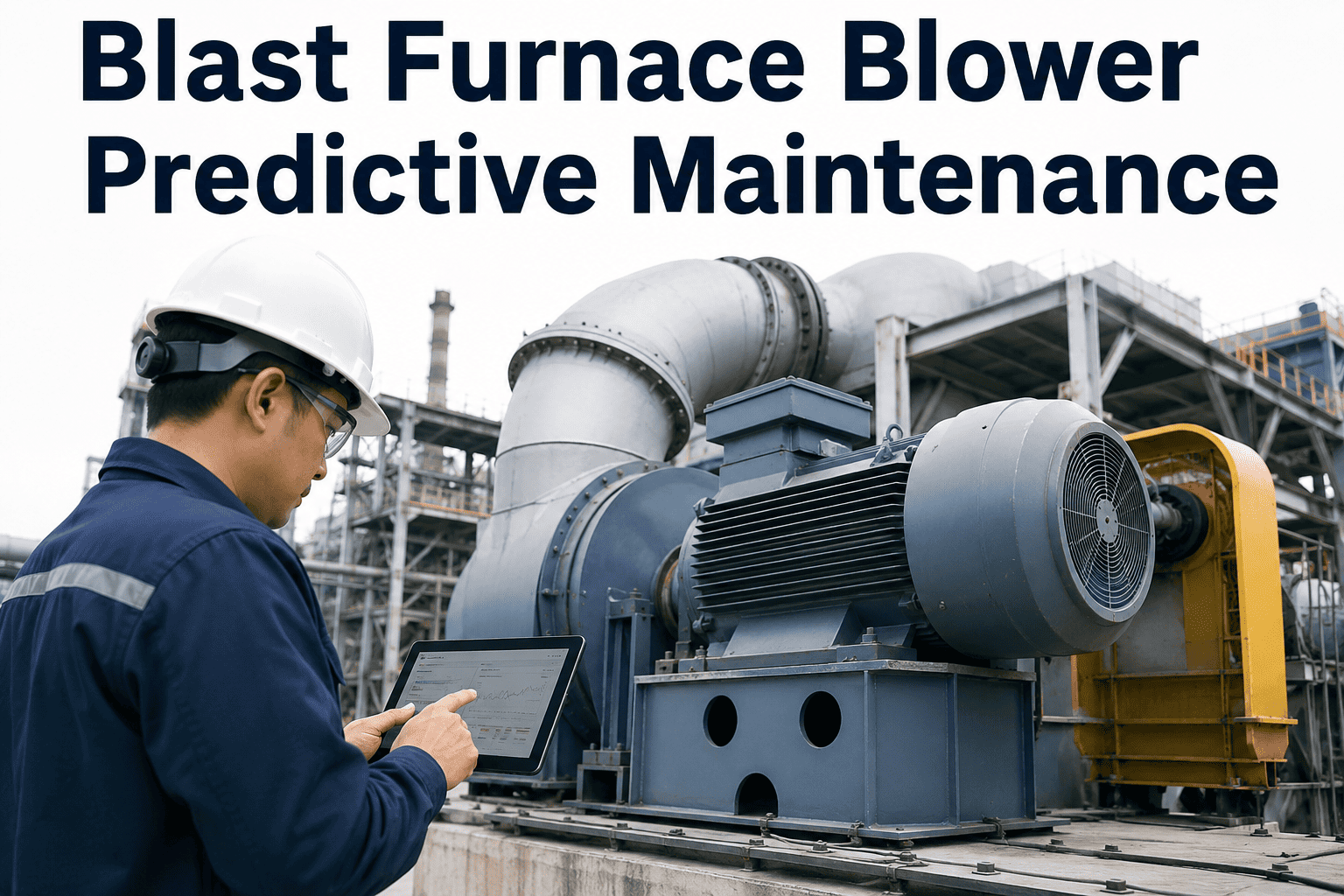
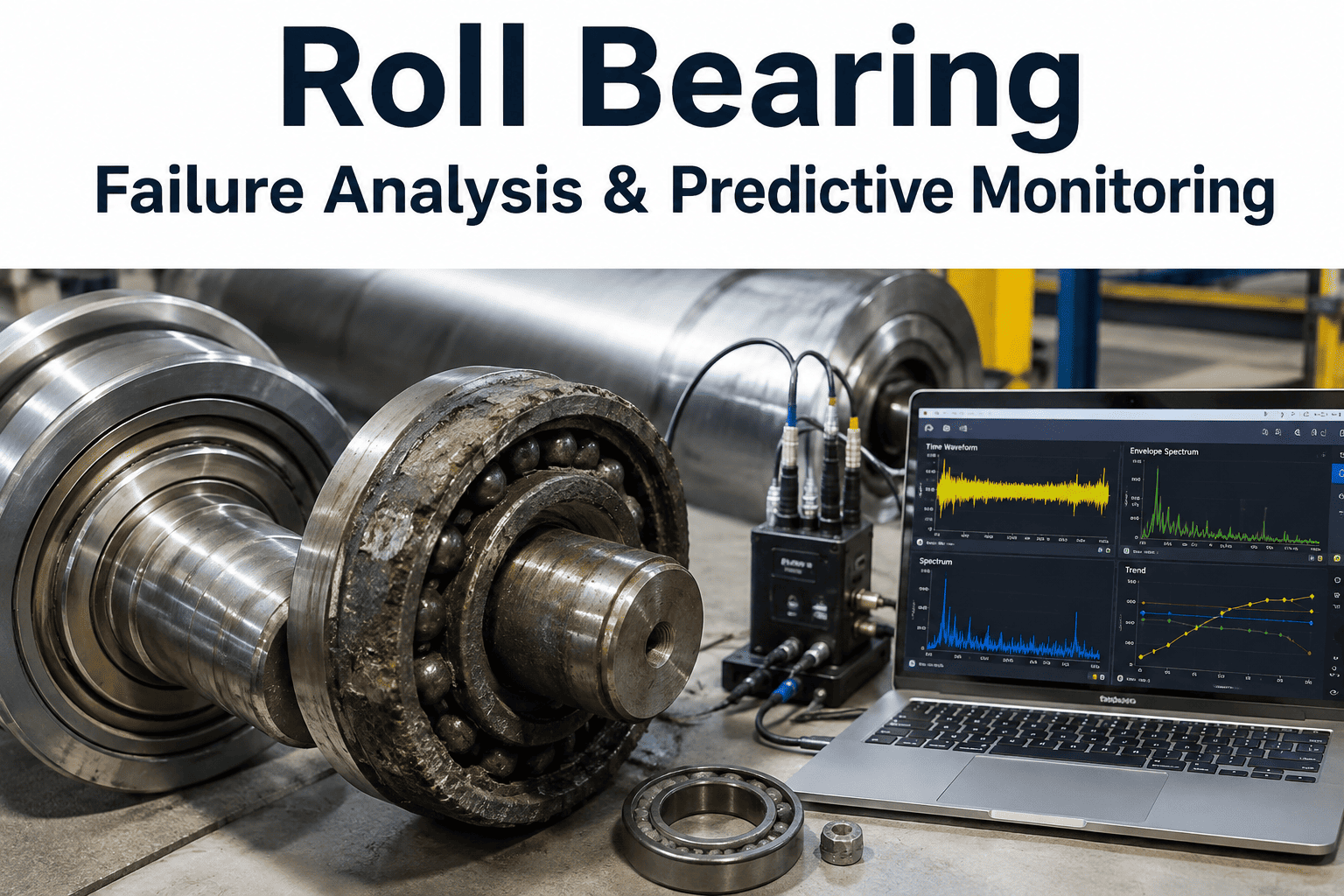
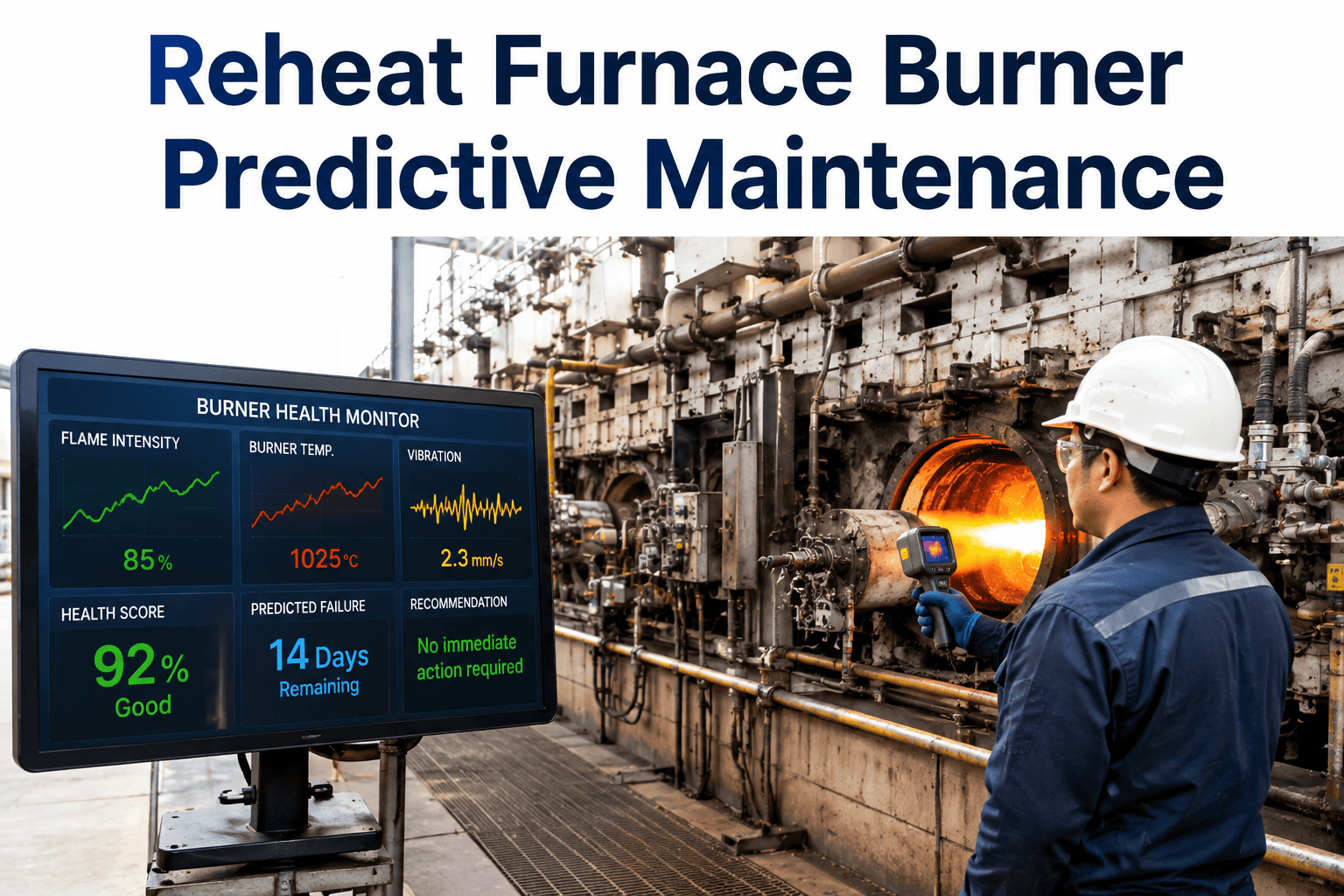
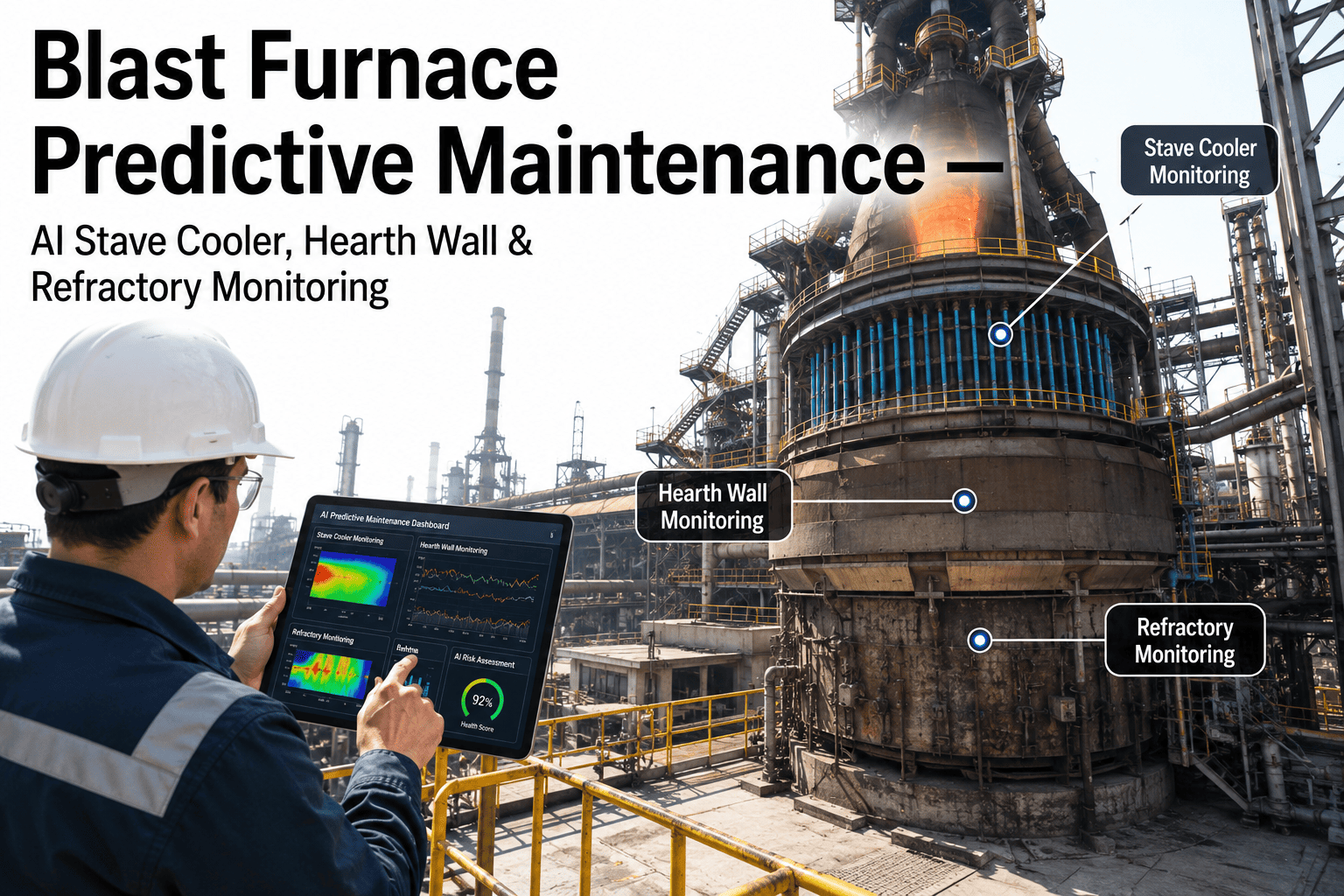
The blast furnace blower is the one piece of rotating equipment that cannot fail without stopping the furnace — every cubic meter of air reaching the tuyeres passes through it. Running at up to 10,000 RPM under continuous thermal and mechanical stress, these turbo-blowers give maintenance teams very little margin between an early warning and a catastrophic shutdown; bearing vibration can cross a trip limit in under a second once it starts moving. A single unplanned blower failure typically costs $4 million or more in lost production, repair, and thermal cycling damage to the furnace itself. The good news is that every major blower failure mode develops progressively, generating detectable signals weeks before it reaches the threshold of forced shutdown — and you can see how that detection works before deciding what your blower house needs.
Blast Furnace Reliability
Your Blower Doesn't Fail Gracefully. It Fails in Seconds.
AI-driven vibration analytics reads bearing, impeller, and surge signals weeks before failure — turning a $4M emergency shutdown into a repair scheduled around your next planned outage.
Five Failure Modes, Each With a Detectable Signature
Bearing Degradation
Progressive wear shows in bearing pass frequencies weeks before vibration reaches trip limits.
Impeller Fouling & Imbalance
Gradual buildup shifts the vibration spectrum at blade pass frequency, well before efficiency visibly drops.
Surge & Stall Events
Flow reversal produces distinct low-frequency pulsation that predictive models flag before it becomes violent.
Oil System Contamination
Particle and moisture trending in oil analysis catches lubrication breakdown before it accelerates bearing wear.
Shaft Seal Deterioration
Leakage trends and pressure differential drift are tracked continuously to catch seal wear before air loss becomes significant.
Reading the Vibration Spectrum
Shaft rotation frequency
Misalignment & looseness
Bearing pass frequency
Race & roller wear
Blade pass frequency
Impeller imbalance & fouling
Structural natural frequency
Foundation & casing looseness
A Bearing Alarm Shouldn't Be the First Time You Hear About It
iFactory analyzes the full vibration spectrum against machine-specific baselines, distinguishing genuine degradation from normal operating variation across every blower in your blast furnace house.
Planned Repair vs. Emergency Shutdown
| Scenario | Recovery Time | Cost Range |
|---|
| Planned overhaul (AI-scheduled) | During existing outage window | $500K-$2M |
| Unplanned bearing failure | 24-72 hours | $2M-$8M |
| Catastrophic blower shutdown | Multi-day recovery plus furnace impact | $4M-$12M+ |
What Continuous Monitoring Delivers
92%
Reduction in unplanned blower-related shutdown events reported
$6.8M
Average annual avoided production loss per furnace
2-8 wks
Typical advance warning before failure threshold
<2 mo
Payback period on a typical monitoring investment
Frequently Asked Questions
Why is the blast furnace blower considered more critical than other rotating equipment?
Every cubic meter of air delivered to the tuyeres passes through the blower, and there's typically no redundant unit to switch to if it fails, which means a blower outage stops the furnace directly rather than degrading performance gradually. Combined with operating speeds that can reach 10,000 RPM and failure modes that can progress from a detectable anomaly to catastrophic shutdown within hours, the margin for error is far tighter than on most other plant equipment.
How early can vibration analysis actually catch a developing blower problem?
Documented deployments show bearing degradation detected weeks to months before a predicted failure point, giving maintenance teams enough lead time to schedule a repair during an already-planned production hold rather than reacting to an emergency. The key is analyzing the full frequency-resolved vibration spectrum against a machine-specific baseline rather than relying on a single broadband amplitude alarm, which tends to miss early-stage degradation entirely.
What sensors are actually needed to monitor a blower this way?
A typical setup includes proximity or accelerometer vibration probes at each bearing, a keyphasor probe for speed and phase reference, and periodic or continuous oil condition monitoring. These can generally be retrofitted onto existing blowers without major modification, and the investment is modest compared to the cost of even a single unplanned shutdown — you can review typical sensor architecture through
our support resources.
Can this same approach cover other turbo-machinery in the plant?
Yes, the same vibration-spectrum approach applies to oxygen plant compressors, BOS gas recovery turbines, power generation turbines, and other high-speed rotating equipment across the plant. Because this class of equipment often represents tens of millions of dollars in installed value with outsized downtime consequences, many plants extend monitoring here immediately after proving the approach on the blast furnace blower.
What's a realistic first step if we've never monitored our blower this closely?
Most programs start with a focused assessment of the highest-criticality blower or turbine in the plant, instrumenting it first to prove the approach before expanding coverage.
Booking a blower health review lets our team map your specific equipment and failure history against what a monitoring program would realistically catch.
The Next Blower Failure Doesn't Have to Be an Emergency
See how iFactory turns vibration, oil, and performance data into scheduled maintenance — keeping your blast furnace running through planned outages instead of unplanned ones.