A breakout at the continuous caster is one of the few events that can shut down an entire line for a full day and put crew safety at risk in the same moment. Molten steel escaping a ruptured shell means an immediate emergency stop, a multi-day repair and cleanup, and a bill that regularly runs $1–5M once lost production, equipment damage, and repair labor are added up. Most casters still rely on mold thermocouple trends read by an experienced operator's eye, which works right up until it doesn't — sticker breakouts in particular can develop faster than a person watching a trend line can react. iFactory's breakout prediction module was built to give operators the extra seconds that make the difference between a caught event and a shutdown.
Fifteen to one hundred eighty seconds is all the warning you need — if something is actually watching
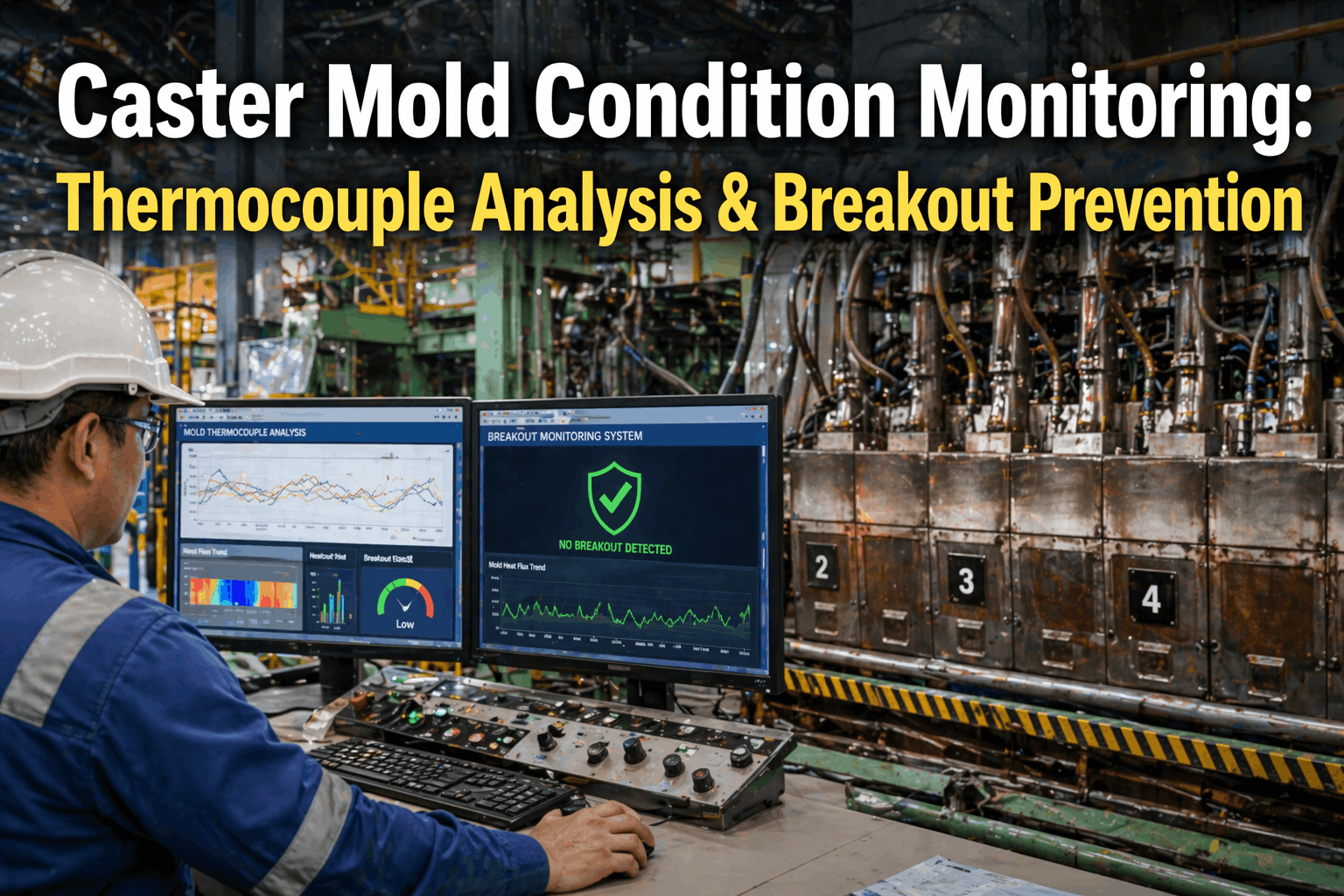
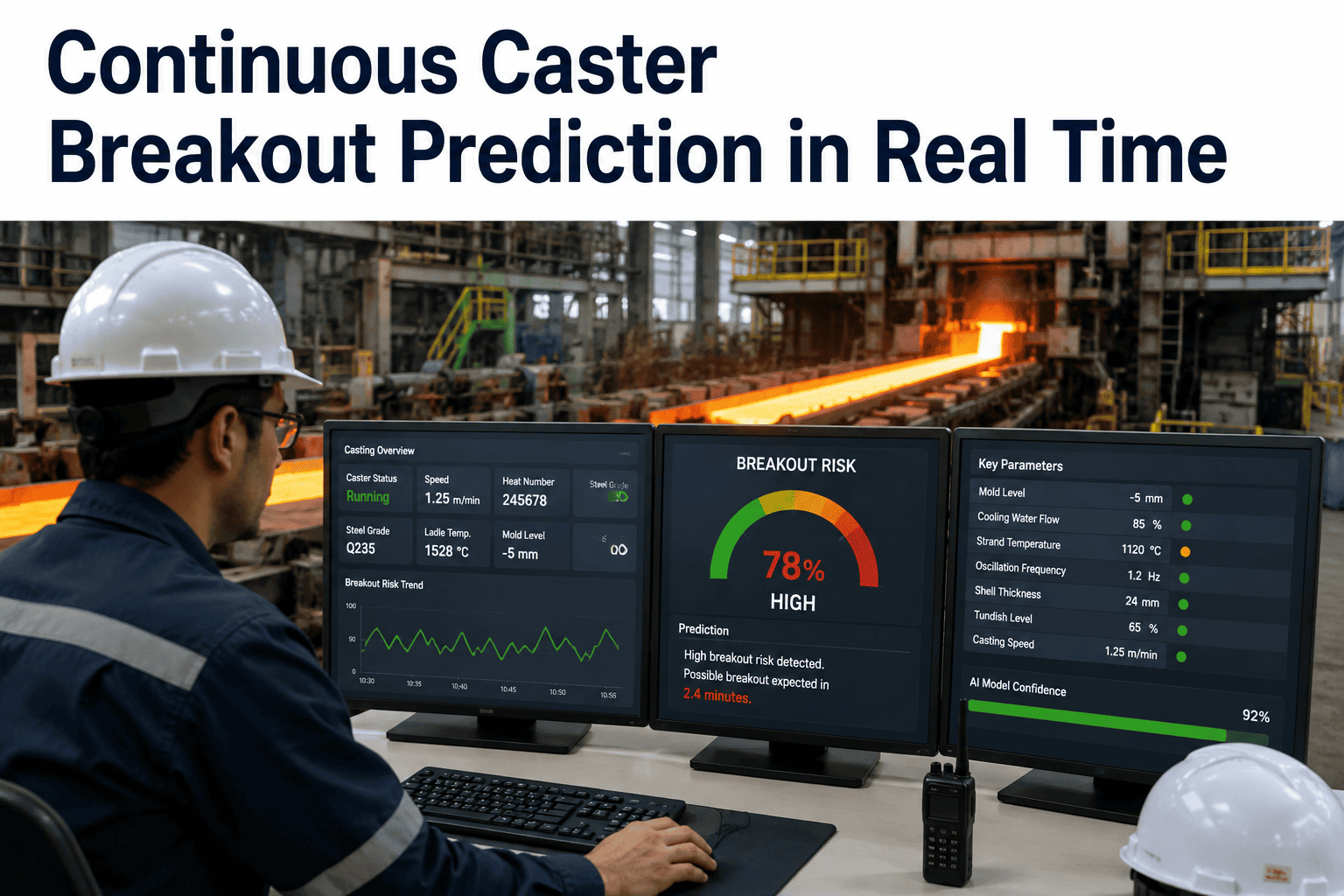
iFactory reads mold thermocouple patterns in real time to predict breakouts before they happen, giving operators a reliable early warning instead of a trend line they have to interpret under pressure.
One breakout event, several ways it costs you
A breakout doesn't just stop the caster. It cascades through the shop in ways that are easy to underestimate until you add them up.
Direct downtime cost
Repair, cleanup, and requalification typically take 24–48 hours, during which the caster produces nothing while fixed costs continue.
Equipment damage
Mold, segment rolls, and sometimes the strand guide system can be damaged by escaping steel, adding equipment repair cost on top of lost production.
Crew safety exposure
Molten steel escape is one of the most serious safety events in a steel shop, and every prevented breakout is also a prevented injury risk.
Upstream disruption
BOF or EAF heats scheduled for that caster often have to be held or rerouted, disrupting the whole melt shop schedule for the day.
Downstream schedule slip
Hot mill and finishing schedules built around expected slab output get disrupted, sometimes cascading into missed customer ship dates.
Insurance and reporting burden
Serious breakout events often trigger internal safety review and, depending on severity, external reporting requirements that consume management time.
The warning window is real, but it's short
Sticker-type breakouts follow a recognizable thermal signature in the mold thermocouples as the shell sticks and thins, but the pattern develops over seconds, not minutes, which is why manual monitoring struggles to catch every event reliably.
Shell sticks to the mold wall
Local sticking creates an abnormal thermocouple reading pattern that differs from normal solidification cooling behavior.
Shell continues thinning at the sticker point
As the strand withdraws, the stuck section thins further while surrounding shell continues normal solidification, widening the thermal anomaly.
Thermocouple pattern crosses risk threshold
iFactory's model identifies the developing pattern here, typically 15–180 seconds before shell failure, and issues an operator alert.
Operator responds: slow down or stop
With early warning, operators can reduce casting speed or initiate a controlled stop before the shell actually fails.
The difference between a caught sticker and a full breakout is often measured in single-digit seconds of decision time. Book a walkthrough to see how much warning time your current setup is actually giving operators.
Faster casting speeds leave less room for a slow reaction
Casters have pushed casting speeds higher over the past decade to increase throughput, and higher speed directly compresses the warning window available before a developing sticker becomes an actual breakout. A shell that might have given an operator two minutes of reaction time at older casting speeds can give far less at today's higher-speed operation, which means the manual thermocouple-watching approach that worked reasonably well a generation ago is now working against a much tighter margin for error.
Workforce experience is a real factor here too. Recognizing an early sticker pattern on a thermocouple trend screen is a skill built over years of watching both real events and near-misses, and as experienced caster operators retire, that pattern-recognition capability is walking out the door faster than it can be replaced through training alone. A model trained on your specific caster's historical event data effectively encodes that experience in a form that doesn't depend on any one operator's tenure or attention level during a specific shift.
There's also a growing safety and insurance dimension. Serious breakout events increasingly trigger more rigorous internal safety reviews and, in some jurisdictions, external regulatory reporting requirements that add cost and scrutiny well beyond the immediate production loss. Plants that can demonstrate a proactive early-warning system in place are often better positioned during these reviews and in broader safety audits than plants relying solely on reactive manual monitoring.
What the breakout prediction module does
Real-time thermocouple pattern analysis
Continuously scans mold thermocouple data across every strand for the thermal signatures associated with developing breakouts.
Early warning alerts
Issues alerts 15–180 seconds ahead of predicted shell failure, giving operators time to slow down or stop the strand safely.
Mold heat flux monitoring
Tracks heat flux distribution across the mold face, flagging asymmetric cooling that often precedes sticking events.
Casting speed recommendation
Suggests speed reduction levels calibrated to the severity of the detected risk pattern, rather than a blanket slowdown.
Multi-strand monitoring
Watches every strand on multi-strand casters simultaneously, so operators aren't limited by how many trend screens they can watch at once.
Event logging and review
Every alert and near-miss event is logged for post-event review, building a record that improves future model sensitivity.
What casters achieve within one quarter
What a breakout prediction pilot includes
Uses your existing thermocouples
Connects to mold thermocouple instrumentation already installed, with no new sensors required for the pilot.
On-premise, low-latency deployment
Runs on plant-network hardware close to the caster, minimizing the delay between signal and alert.
8–10 week pilot
Includes historical breakout and near-miss data calibration followed by live shadow-mode validation.
Multi-strand and single-strand casters
Deployed across slab, bloom, and billet casters with varying strand counts.
Operator training included
Alert response protocols are built together with your caster operations team, not delivered as a black box.
24x7 managed monitoring
iFactory's operations team monitors model performance and alert accuracy on an ongoing basis.
Why breakout prediction is often the first caster investment plants make
Breakout prevention tends to be an easy internal case to build because the cost of a single missed event is so large and so visible that the return on prevention rarely needs much justification once leadership has seen the number attached to a recent incident. Unlike optimization projects where the benefit accrues slowly across many small improvements, avoiding even one breakout event during the pilot period alone can cover the cost of the deployment many times over, which is part of why caster operations managers often lead with this module when building the broader case for AI investment across the shop.
It's also a natural entry point because it doesn't require changing established casting practice. Operators keep the same authority over speed and stop decisions they've always had; the difference is that they now have a reliable early signal instead of relying entirely on trend-line pattern recognition built up over years of experience. Many caster teams find that once this module proves out, it becomes the reference point for how the broader plant thinks about where AI can add value without disrupting operational control.
Breakout prediction, explained plainly
Give your operators the seconds they need
iFactory turns mold thermocouple data into real early warning, before a sticker becomes a shutdown. Book a demo and we'll walk through it on your own caster data.